Can Abdominal Liposuction Lift a Sagging Belly? — [Case Review] Circumferential Liposuction Through the Bra-Line Back, Waist, and Flanks
In the clinic, we often hear, “My belly sags and folds down over my waistband,” and “If I have abdominal liposuction, will my sagging belly lift as well?” With age, childbirth, or weight changes, the lower abdomen does not simply protrude; it begins to hang downward. These patients usually look only at their belly in the mirror, but in many cases the flanks, waist, and back bother them as well.
Today, through an abdominal liposuction case of a patient with abdominal sagging (ptosis), I would like to explain how we judge a sagging belly, and why circumferential liposuction, which treats the whole trunk in one continuous band including the bra-line back, waist (paralumbar region), and flanks rather than the belly alone, is needed. I will also explain how to look at photos taken one week after surgery.

A sagging abdomen is assessed in three layers: skin, fat, and fascia
A sagging belly is not automatically a case for abdominal liposuction
Not every sagging belly is treated with the same operation. A sagging belly is assessed in three layers: skin, fat, and fascia with muscle. According to the classification in the literature, if there is a lot of fat but the skin is not severely lax and the rectus muscles are not separated, liposuction is the main approach; depending on whether the rectus muscles are separated or how much excess skin remains, abdominoplasty may be considered together [1].
| Condition of the abdomen | Approach described in the literature |
|---|---|
| Excess fat only, without skin laxity; no rectus diastasis | Liposuction |
| Moderate excess fat with rectus diastasis | Mini abdominoplasty or endoscopic abdominoplasty |
| Marked skin laxity and excess, with rectus diastasis | Standard abdominoplasty |
The table above summarizes the classification in the literature [1]; in practice, the decision is made after we examine all three layers directly at the consultation.
When a lot of excess skin remains, abdominoplasty may be the better fit
When there is very little fat, a large hanging skin apron, widespread stretch marks, or separated rectus muscles, it is known to be difficult to achieve the desired shape with liposuction alone [2]. In such cases, abdominoplasty is the more suitable choice. Abdominoplasty differs from liposuction in its indications, since it corrects excess skin and fat of the abdomen, laxity of the muscles, and defects of the abdominal wall [3]. A staged approach has also been reported: liposuction first, and then, if the skin has contracted insufficiently after a period of follow-up, a separate abdominoplasty [2][4].
We compared the two in detail, with a case, in the Venus Clinic Doctor’s Column [Case Review] Abdominoplasty and Liposuction — Improving Sagging in a Lax Abdomen.
Why abdominal liposuction can make a sagging belly look lifted
When the fat layer becomes thinner, the skin retracts over the reduced volume
A sagging belly can look lifted after abdominal liposuction because, as the volume of the fat layer decreases, the skin retracts again to fit the reduced volume. If only the deep fat is suctioned, a thick, heavy fat layer remains under the skin, and loose skin has difficulty retracting. For this reason, at Venus Clinic we use superficial liposuction, which evenly suctions the shallow layer close to the skin, to make the tissue beneath the remaining skin thinner and lighter and to encourage skin retraction. The abdomen has been reported to have an excellent capacity for skin retraction, especially in younger patients [2].
Skin retraction varies from person to person
The degree of skin retraction differs depending on age, skin elasticity, stretch marks, and how much the belly sags. If elasticity has declined considerably or there is a lot of excess skin, wrinkles may remain.
The lower and upper abdomen retract to different degrees
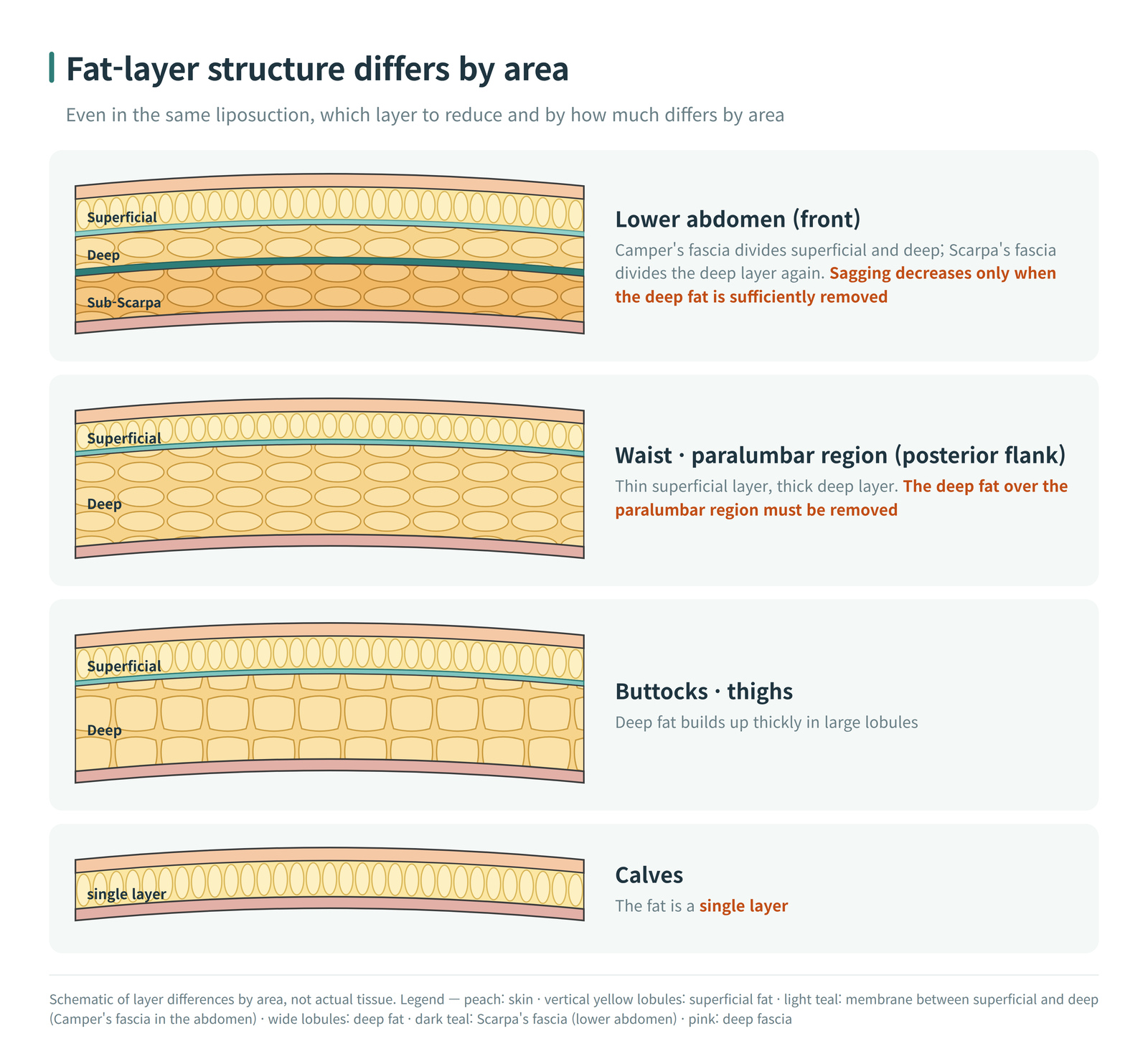
Abdominal fat is divided by Camper’s fascia into a shallow superficial layer and a deeper layer of deep fat, and in the lower abdomen the deep fat is divided once more by Scarpa’s fascia. The lower abdomen tends to retract relatively well. In the upper abdomen, on the other hand, Scarpa’s fascia merges with the abdominal fascia and disappears, so there is no such compartment; retraction is weaker there, and horizontal wrinkles tend to remain. For this reason, we refine the upper abdomen more carefully, all the way to the shallow layer. A sagging-abdomen case is also covered in the Doctor’s Column [Case Review] Circumferential (360°) Liposuction for a Lax Abdomen.
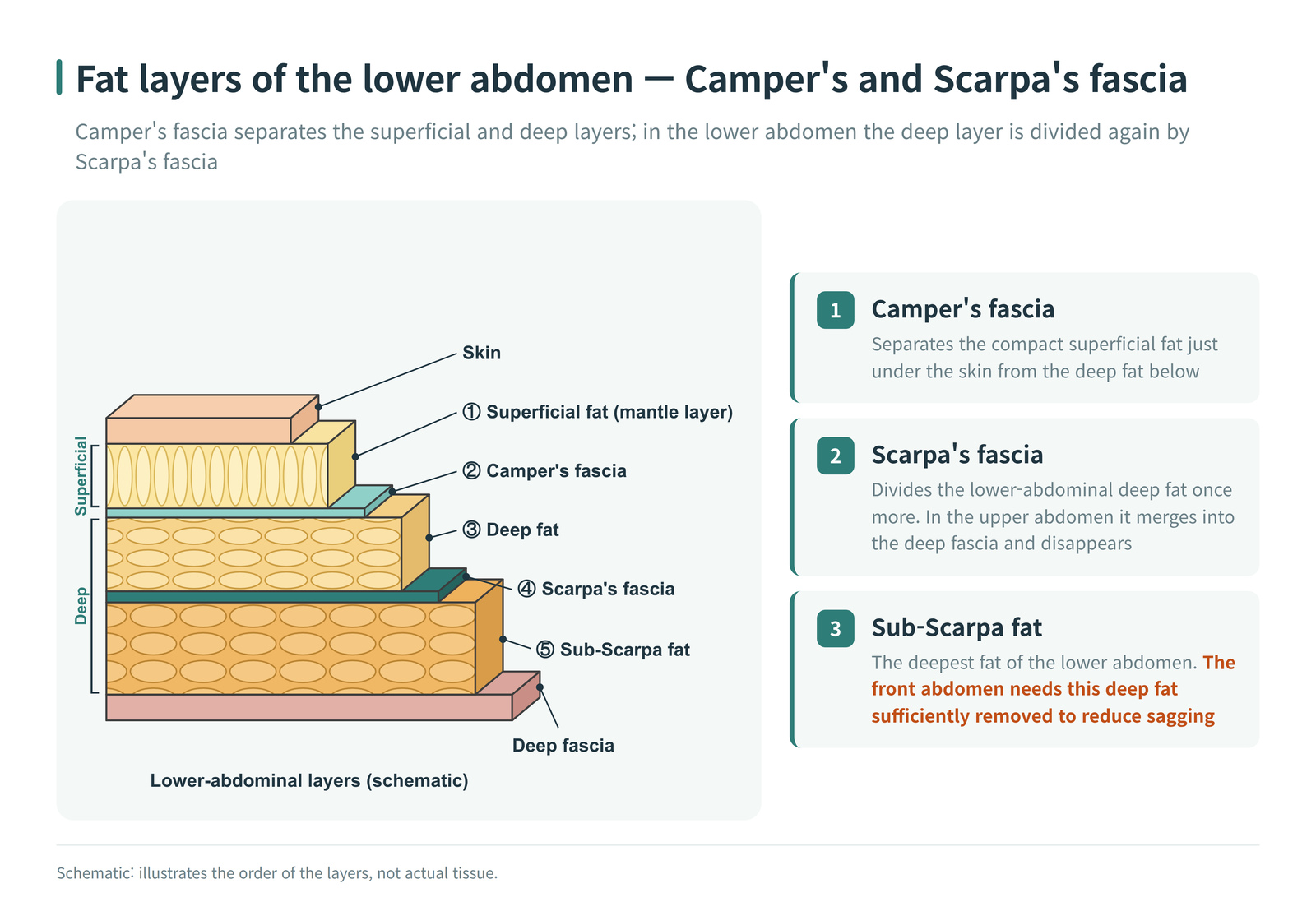
As we grow into adulthood, the deep fat of the lower abdomen, especially the fat beneath Scarpa’s fascia, becomes thicker and pushes the belly forward. That is why, in the front of the abdomen, the deep fat must also be removed sufficiently for the sagging to lessen. Superficial fat is dense and firm and supports the skin, so it does not increase much even when a person gains weight, whereas deep fat acts as an energy-storage layer that expands greatly with weight gain.
The two layers also differ in character. Superficial fat is a layer just beneath the skin in which small fat lobules line up in a single row like vertical columns [6]; its septa are dense and relatively firm, so it does not readily expand to more than about twice its size even with weight gain, and it helps hold the skin toward the fascia. Deep fat has loose, obliquely oriented septa and is an energy-storage layer that can expand to ten times its size or more with weight gain. As a result, when body weight increases, it is mainly the deep layer that thickens, and its weight pulls the skin downward so that the belly sags. In a sagging belly, it has been reported that the volume of the heavy deep layer must first be reduced sufficiently, and the superficial layer just beneath the skin must be evenly thinned, so that the skin can retract over the reduced volume [7].
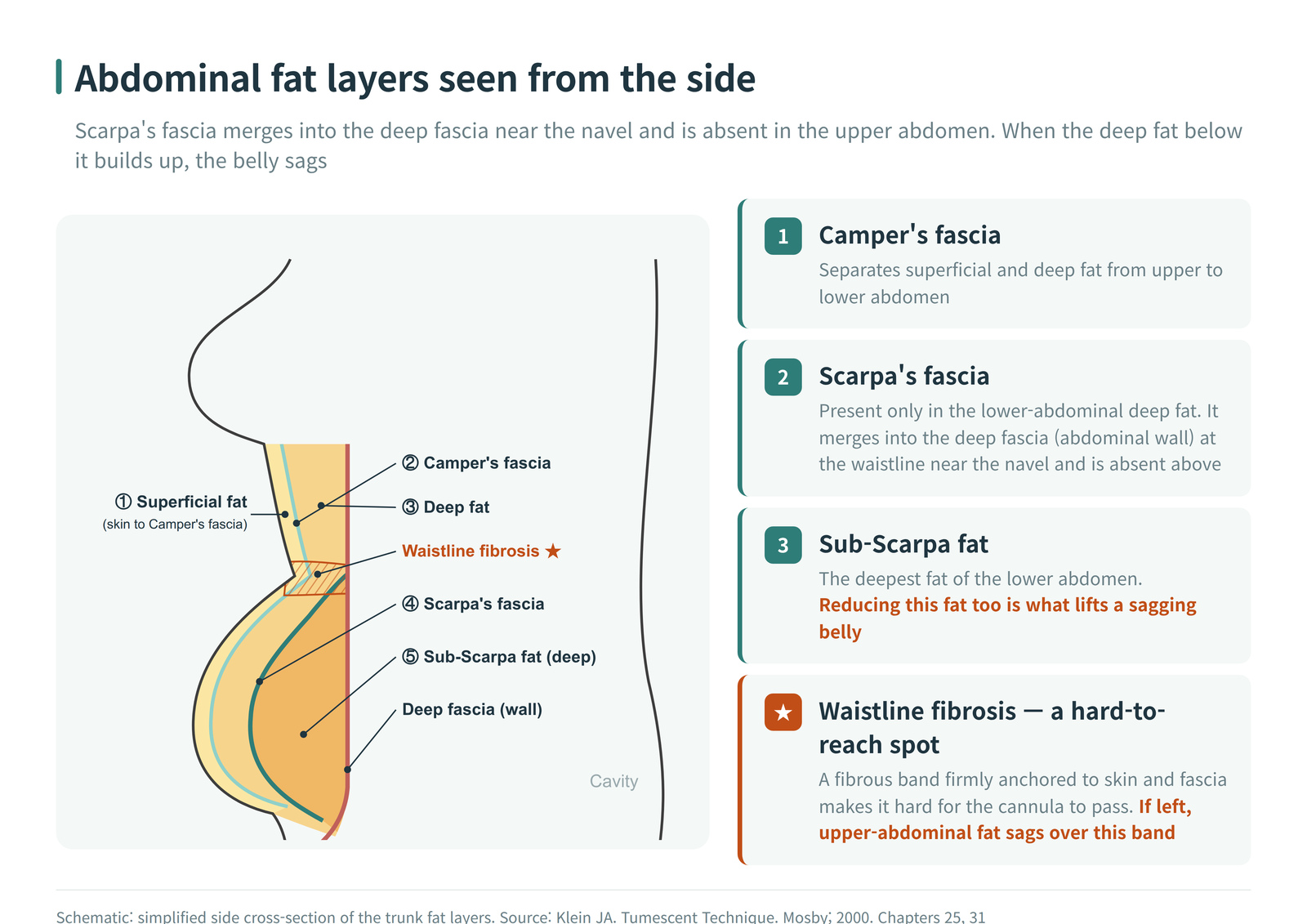
Seen from the side, Camper’s fascia, which separates the superficial and deep layers, runs from the upper abdomen to the lower abdomen, but Scarpa’s fascia exists only in the lower abdomen. Scarpa’s fascia in the deep layer of the lower abdomen merges with the abdominal fascia at the waistline at the level of the navel (near the navel) and disappears in the upper abdomen. At this location there is a fibrous band that anchors the skin and fascia (waistline fibrosis), and it divides the abdominal fat into upper and lower parts. The sub-Scarpa fat, the deepest fat compartment of the lower abdomen, is known to be thickest in the center and to become thinner toward the sides and downward [6]. When this fat accumulates and becomes heavy, the lower abdomen hangs downward, so lifting a sagging belly requires reducing this deep fat as well.
Waistline fibrosis — a difficult area to suction
At the waistline at the level of the navel there is waistline fibrosis, in which fibrous tissue gathers like a band, and it is present in almost everyone. This fibrous band is firmly attached upward to the skin and, on the deep side, to the midline of the abdomen, the rectus sheath, and the external oblique muscle [6]. Because the skin and fascia are attached in this way, it is hard for the cannula to pass, and it is a difficult area to approach from the lower abdomen toward the upper abdomen.
If this area is skipped and only the lower abdomen is thoroughly suctioned, the weight of the remaining upper-abdominal fat sags down over the fibrous band, and horizontal wrinkles tend to remain at the waist. For this reason, we use a thin cannula to suction the fat between the fibrous tissue evenly in both the superficial and deep layers, continuing up to the upper abdomen. We explained this, with a case, in the Doctor’s Column [Case Review] Revision Liposuction of the Upper Abdomen.
The structure of the fat layers differs by area
The structure of the fat layers differs from area to area. In the waist and paralumbar region (posterior flank), the superficial layer is thin and the deep layer is thick, so the deep fat over the paralumbar region must be removed for the lines of the waist and back to be refined. In the buttocks and thighs, the deep fat accumulates thickly in large masses, and in the calves the fat layer consists of a single layer. This is why, even in the same liposuction, which layer is reduced and by how much differs by area. In fact, when we measure with ultrasound at Venus Clinic, the fat layer of the paralumbar region (posterior flank) is mostly the two deep layers, and the higher the degree of obesity, the thicker the deep layer becomes.
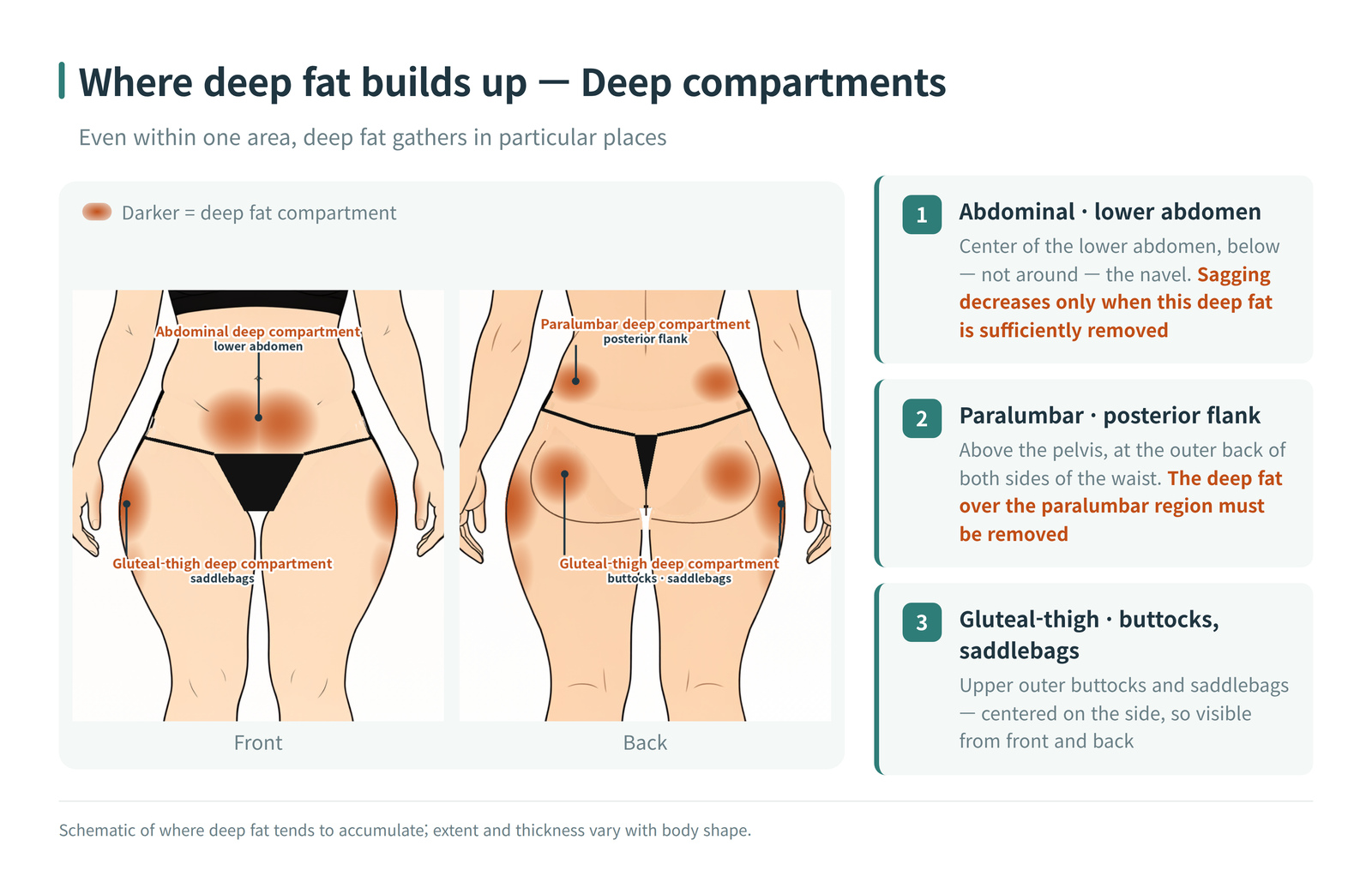
The deep fat also gathers thickly in set locations within each area. In the abdomen, it accumulates most thickly not around the navel but in the center of the lower abdomen below the navel (abdominal deep compartment), and becomes thinner toward the sides and downward from the center [6]. On the back side, it gathers in the paralumbar region (posterior flank), the outer and rear area on both sides of the waist above the pelvis (paralumbar deep compartment); in the lower body, it gathers in the upper outer buttock and the saddlebags, the upper outer thigh attached to the buttock (centered on the side, so it is visible from both the front and the back) (gluteal-thigh deep compartment), and how far it spreads downward varies from person to person. This is why, in circumferential abdominal liposuction, we do not miss the deep layer of the center of the lower abdomen and the paralumbar region.
Why we operate on the whole trunk in a circumferential pattern, not just the belly
Step-offs arise at the “boundary” between suctioned and unsuctioned areas
What we must be most careful about in abdominal liposuction is the step-off (contour irregularity). A step-off does not arise inside the suctioned area; it arises at the boundary where suctioned and unsuctioned areas meet. If only the sagging belly is reduced and the surrounding area is left as it is, a ledge can form at the boundary with the remaining upper-abdominal, flank, and waist fat, and the line of the trunk can look awkward.
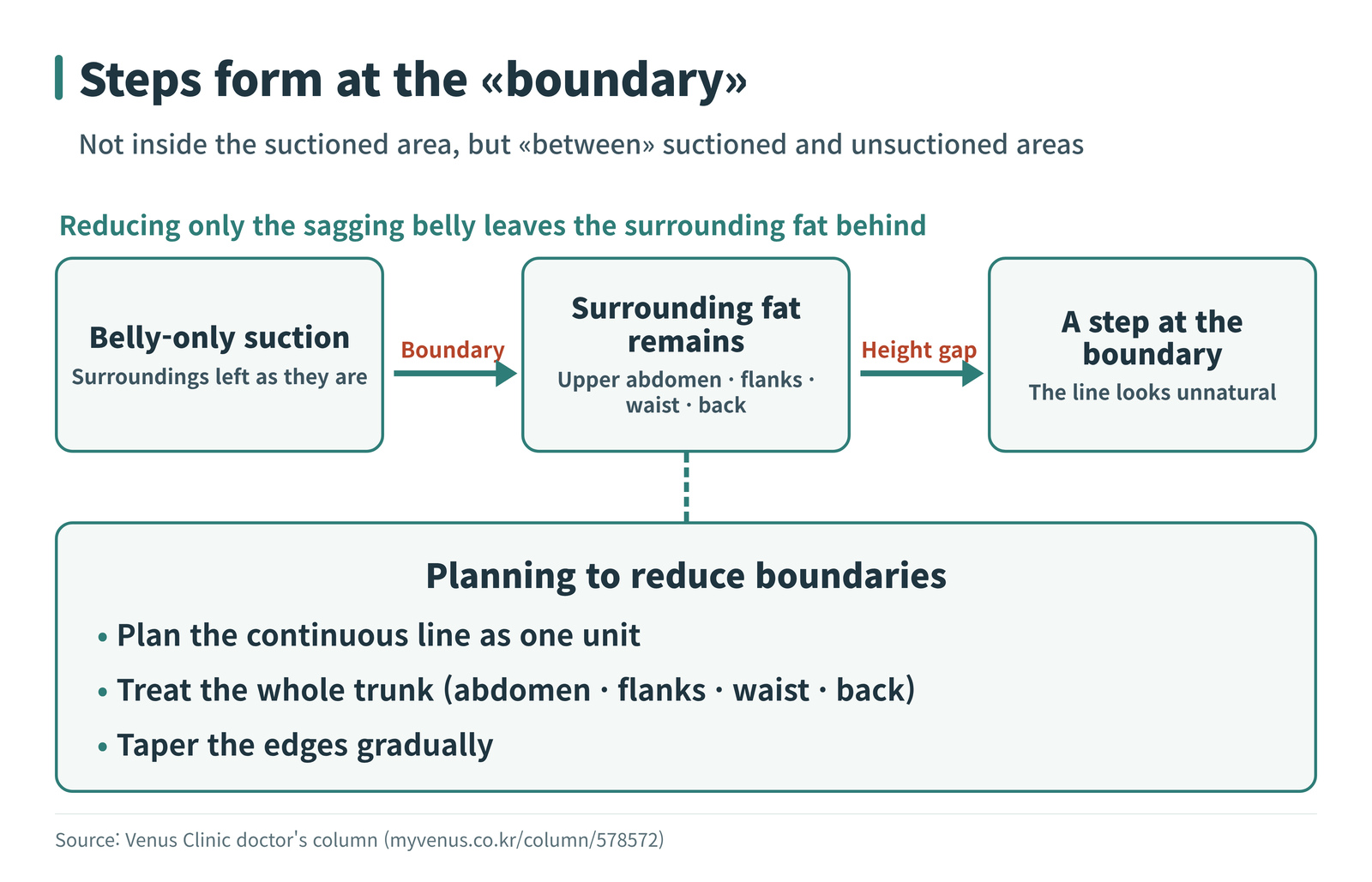
In a sagging belly in particular, fat from higher up has also slid downward. The fat over the upper ribs and the bra-line back stays in place while lying down, but when standing it sags with gravity and creates wrinkles toward the waist and flanks. For this reason, if this area is left out and only the lower abdomen is refined, the result may not be satisfying.
We plan the abdomen, flanks, waist (paralumbar region), and bra-line back as one unit
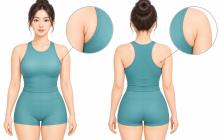
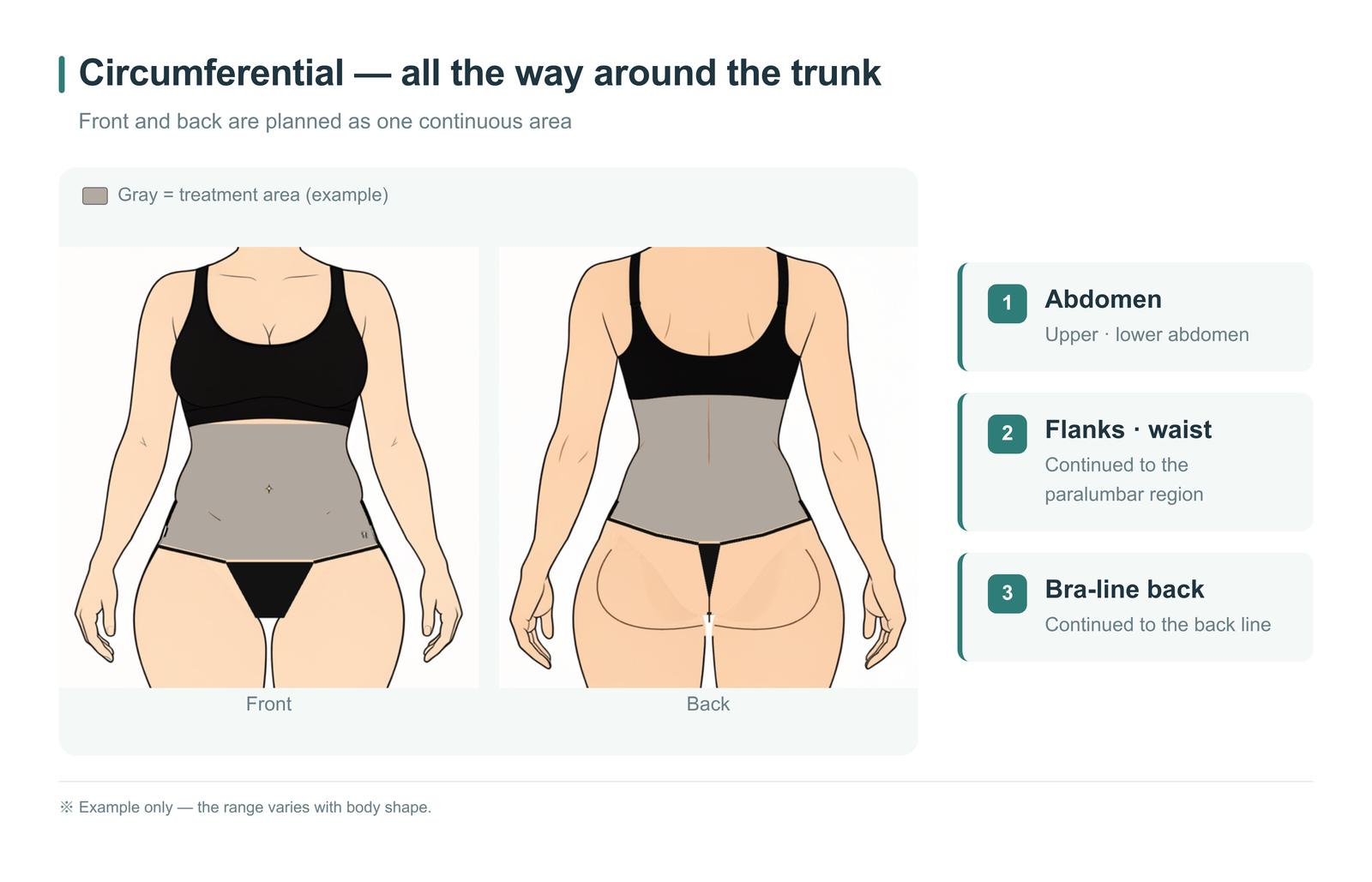
For these reasons, for a sagging belly, Venus Clinic recommends circumferential (360°) liposuction, in which the whole continuous line is planned as a single range, going around the trunk through the abdomen, flanks, waist (paralumbar region), and bra-line back, rather than dividing the areas one by one. Fat accumulated on the back tends to settle in layers like a curtain, and in women this fat is known to look more prominent because of the bra [2]. Because the back has areas where fibrous tissue gathers in bands, fat tends to fold into several parallel creases (rolls) [9], which is why the back fat below the bra line looks layered. In a woman’s back, the contour of the side looks attractive when the back is wider at the level of the ribs and pelvis and narrower in the middle of the waist [8], so it is important to refine the back and waist together with the belly in a single circuit. The gray area in the figure below is an example that illustrates the range of circumferential liposuction; the actual range varies with body shape.
How abdominal liposuction is performed
We mark the range with the patient standing
Before surgery, we mark the suction range with the patient standing, drawing it like contour lines. This is because when a person lies down, the sagging tissue flattens and the real shape is hard to see. The edges of the range do not end abruptly; they are carried on so that they gradually become thinner and the boundary does not show.
We suction the trunk continuously through small incisions
After tumescent anesthesia, a thin cannula is inserted through a small incision to suction the fat. To suction the trunk continuously from front to back, several incisions are needed; the position and number of incisions are explained in detail in Liposuction Incisions — How Many, Where, and How Small? We remove the fat that needs to go as thoroughly as possible, and smooth the line so that it is not bumpy.
It is not an operation that makes everything the same; it reduces sagging
Abdominal liposuction reduces the fat layer so that the skin retracts on its own; it therefore cannot correct separated rectus muscles, and stretch marks do not disappear. If your weight increases, fat in areas that were not suctioned can become more noticeable, so weight management after surgery is also important. It is more accurate to understand it not as “making it brand new,” but as an operation that reduces sagging and refines the line.
References
- Shiffman MA, Di Giuseppe A (eds). Liposuction: Principles and Practice. Springer; 2006. Chapter 23.
- Shiffman MA, Di Giuseppe A (eds). Liposuction: Principles and Practice. Springer; 2006. Chapter 22.
- Abdominoplasty. In: StatPearls [Internet]. Treasure Island (FL): StatPearls Publishing. https://www.ncbi.nlm.nih.gov/books/n/statpearls/article-17029/
- Klein JA. Tumescent Technique: Tumescent Anesthesia & Microcannular Liposuction. Mosby; 2000. Chapter 8.
- Dixit VV, Wagh MS. Unfavourable outcomes of liposuction and their management. Indian J Plast Surg. 2013;46(2):377–392.
- Klein JA. Tumescent Technique: Tumescent Anesthesia & Microcannular Liposuction. Mosby; 2000. Chapter 25, Chapter 31.
- Gasperoni C, Salgarello M. MALL liposuction: the natural evolution of subdermal superficial liposuction. Aesthetic Plast Surg. 1994;18:253–257.
- Serdev N, ed. Advanced Techniques in Liposuction and Fat Transfer. InTech; 2011. Chapter 4, Lipoplasty of the Back.
- Klein JA. Tumescent Technique: Tumescent Anesthesia & Microcannular Liposuction. Mosby; 2000. Chapter 33.
Before-and-After Photos
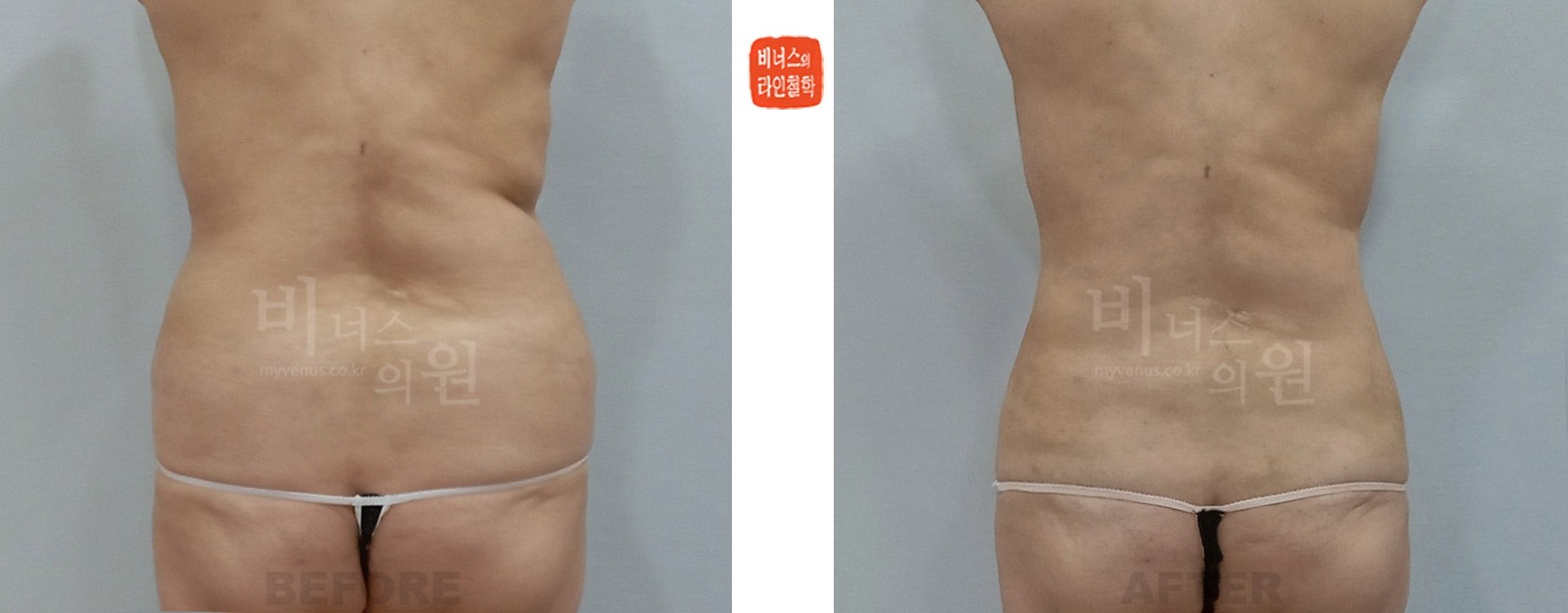
Below is a circumferential abdominal liposuction case of a patient with abdominal sagging, and all of the postoperative photos were taken one week after surgery. At one week, swelling and bruising are still present, so this is not the final result, and the shape may change a little more as the swelling goes down. The recovery process is organized by time period in Recovery Timeline After Liposuction — 1 Week, 1 Month, 3 Months, 6 Months.
Case of abdominal sagging (ptosis) + circumferential liposuction
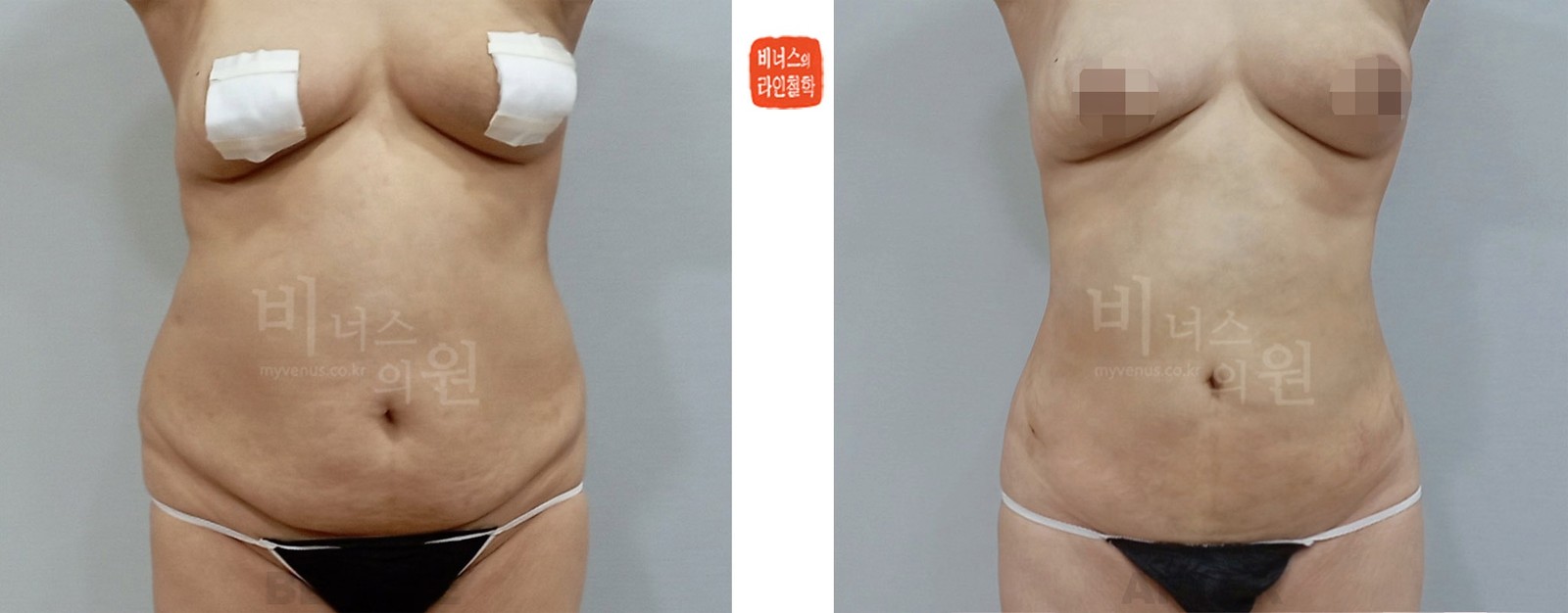
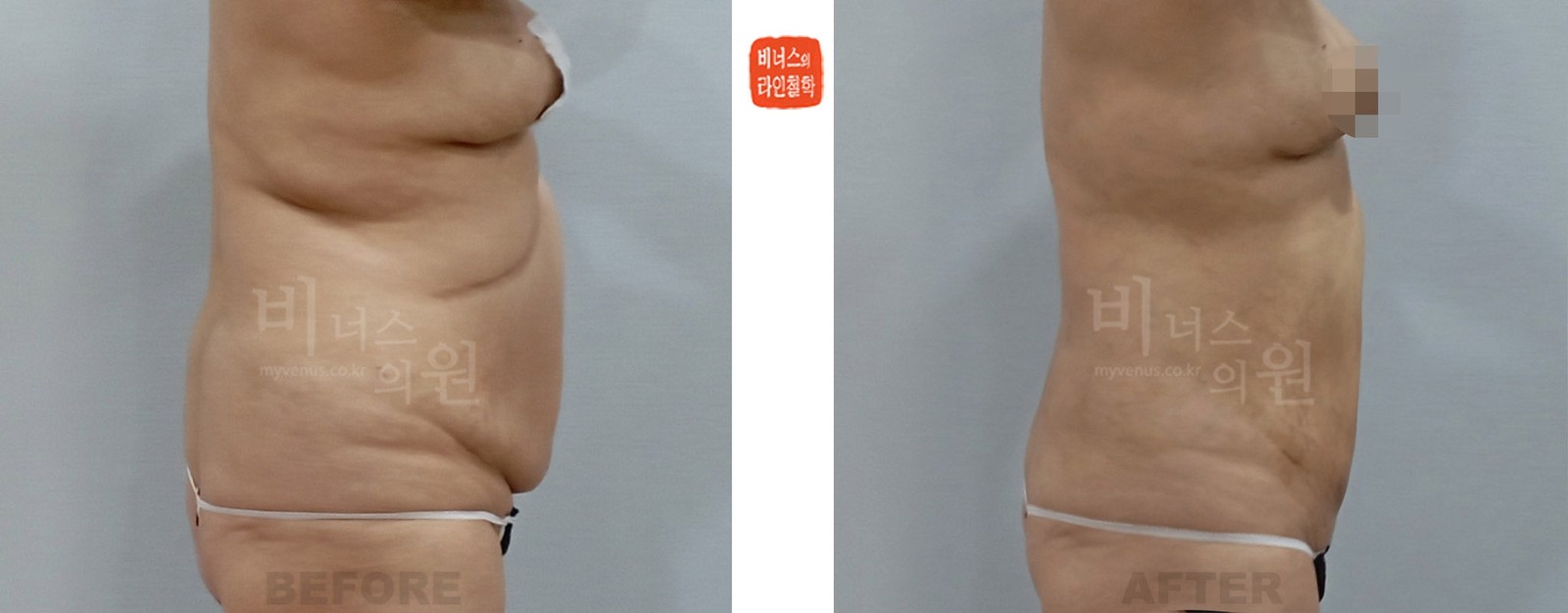
This is a case with abdominal sagging (ptosis). In the front view, before surgery the lower abdomen sagged forward and folded over the underwear line, and the waistline was close to straight. One week after surgery, the sagging appears reduced and the waist appears more defined. In the side view, where the sagging of the lower abdomen is easiest to see, the belly that hung downward before surgery appears flatter afterward, and the folds of the back below the bra line also appear reduced.
In the back view, the range treated with circumferential liposuction can be seen. Before surgery there were bulges of flesh at the sides of the waist and on the back and paralumbar region; after surgery, a waist curve appears and the lines of the flanks and back appear more refined. Because the bra-line back, paralumbar region, posterior flank, and flanks were treated in continuity rather than the belly alone, the change in line can be seen not only in the front and side views but also from behind.
In the postoperative photos, only the color of the bruising remaining at around one week has been corrected; the body shape has not been altered. Bruising begins right after surgery, is darkest at around 7 to 10 days, and has been reported to resolve usually within 2 to 4 weeks after surgery [5]. Please keep in mind that the one-week photos show the appearance during recovery, not the result.
| Information on the Posted Liposuction Before-and-After Photos | |||
|---|---|---|---|
| - Same person | Surgery performed at Venus Clinic; same person | - Date taken | Taken around 2024; comparison at 1 week after surgery |
| - Same conditions | Edited to the same posture and size as closely as possible | - Side effects | https://en.myvenus.co.kr/should_know/38861 |
Breast liposuction the same patient had earlier
About two months before the abdomen, this patient first had liposuction of the breasts, accessory breast tissue, the area beside the breasts, the armpits, and the bra-line back, and then had circumferential surgery of the abdomen. This is a case in which the trunk was refined together in stages rather than all at once. The point that reducing only the breasts can make the belly look relatively larger is explained in Disproportionate Obesity After Liposuction — Why the Belly Looks Bigger When Only the Breasts Are Reduced.
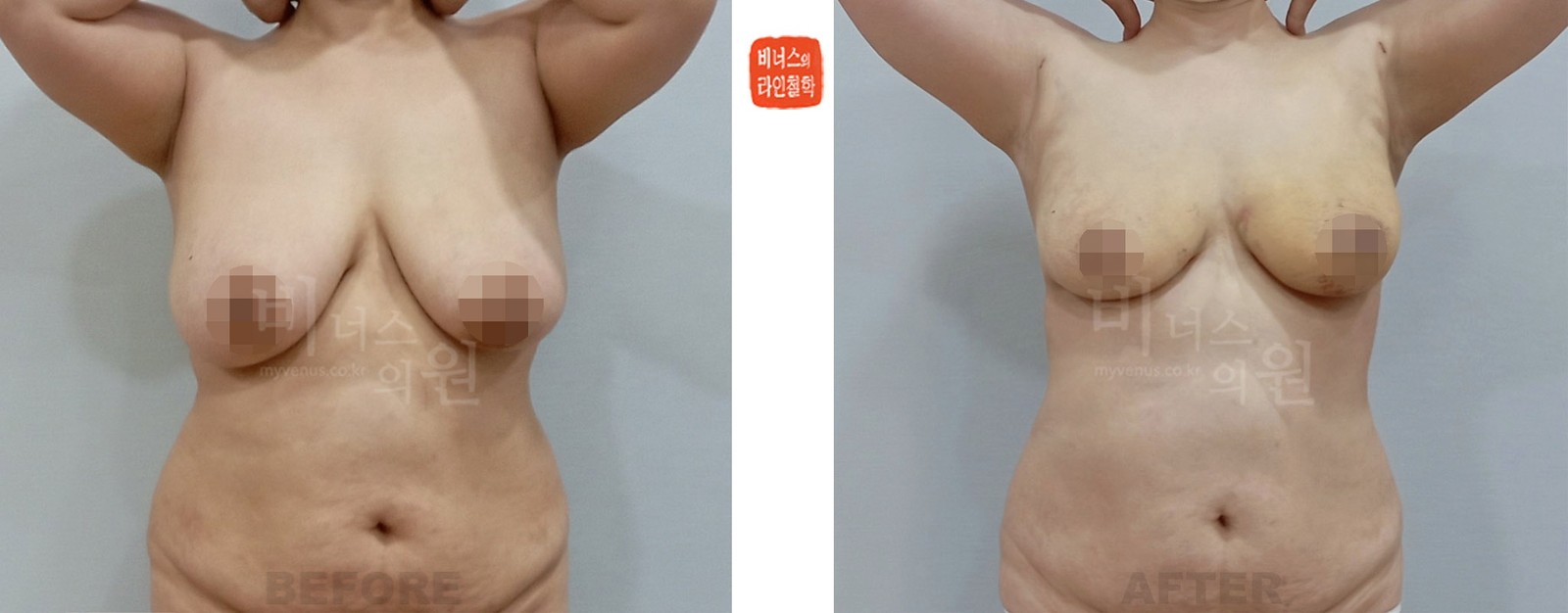
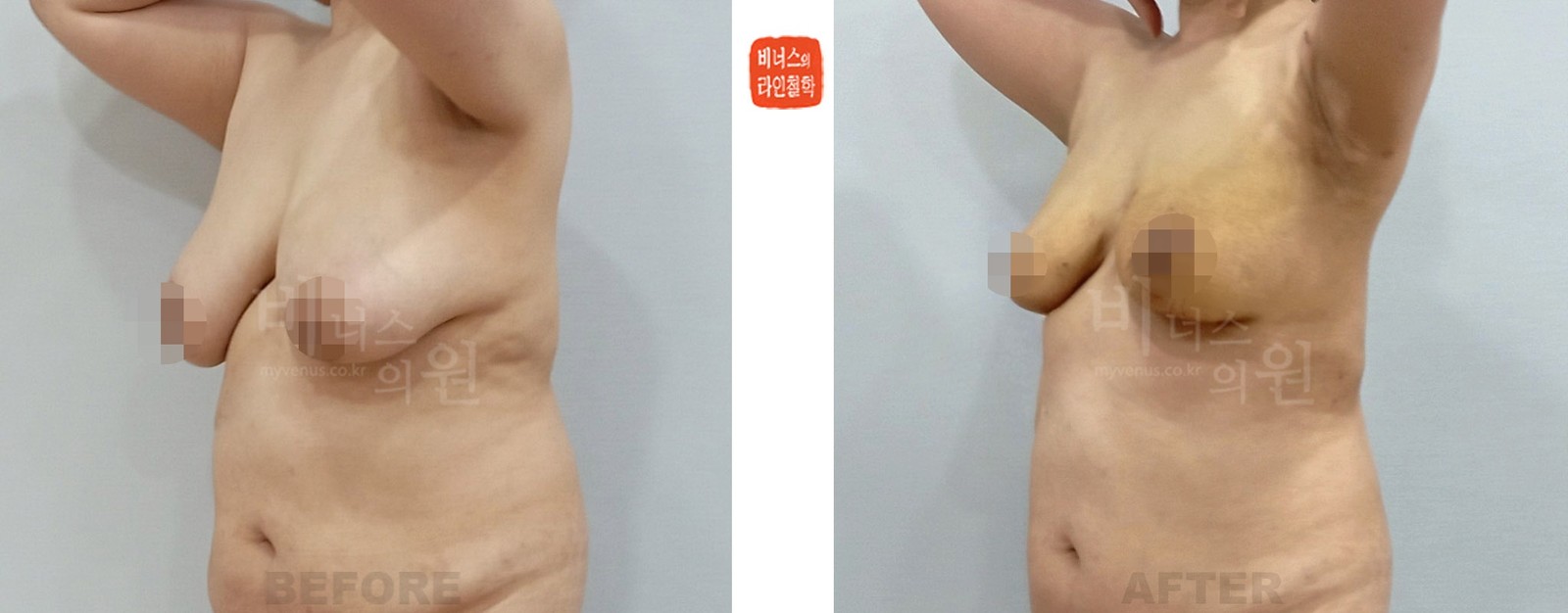
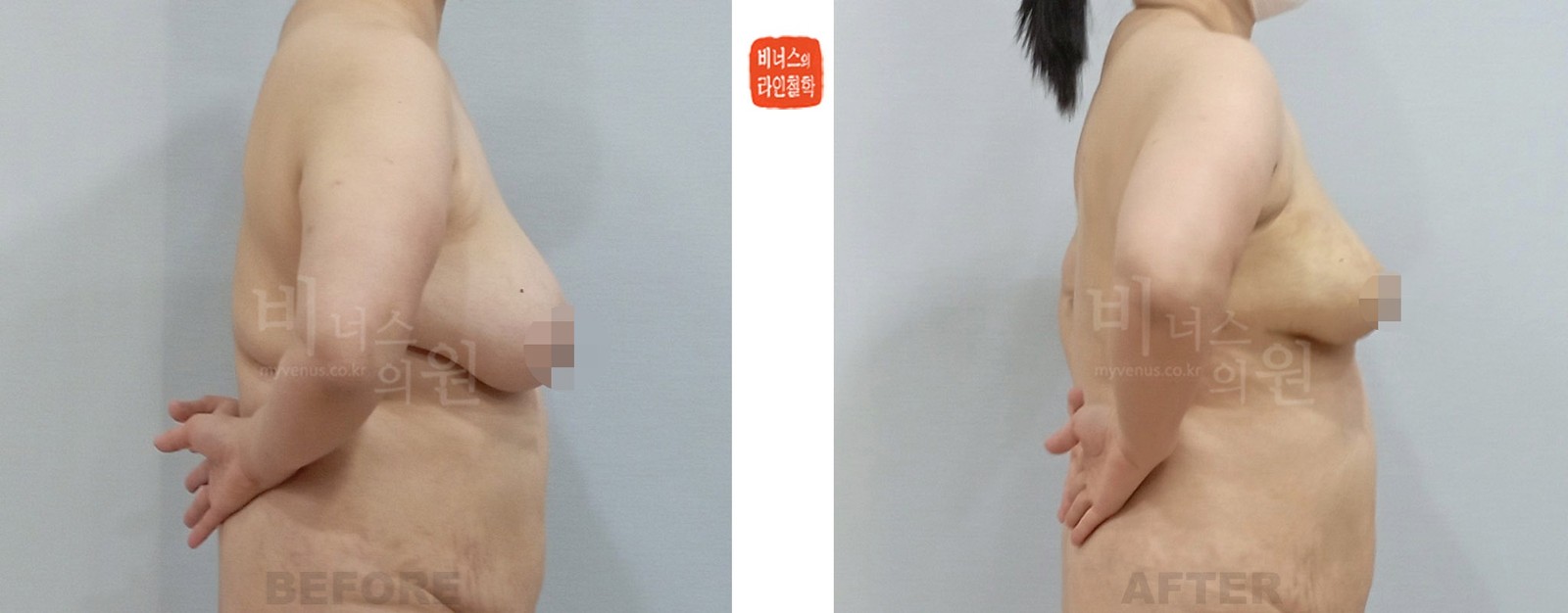
This is a case with large, sagging breasts. In the one-week postoperative photos, the breasts appear smaller, the inframammary fold and nipple position appear higher, and the lines of the armpit and the side of the breast also appear more refined. Only the color of the bruising at around one week has been corrected in the postoperative photos.
| Information on the Posted Liposuction Before-and-After Photos | |||
|---|---|---|---|
| - Same person | Surgery performed at Venus Clinic; same person | - Date taken | Taken around 2024; comparison at 1 week after surgery |
| - Same conditions | Edited to the same posture and size as closely as possible | - Side effects | https://en.myvenus.co.kr/should_know/38861 |
In Closing
When assessing a sagging belly for abdominal liposuction, the three layers of skin, fat, and fascia should be examined first, and when fat is the main issue, planning should continue through the flanks, waist, and bra-line back, not the belly alone, so that no ledge forms at the boundary. In this case, the one-week photos showed less abdominal sagging and a more refined line of the waist and back. As time passes and the swelling and bruising subside, the shape will change a little more.
References: Recovery Timeline After Liposuction Circumferential (360°) Liposuction Abdominoplasty and Liposuction Why Step-Offs Occur After Liposuction Disproportionate Obesity After Liposuction
Dr. Hakjun Kim, Director, Venus Clinic