Revision Liposuction of the Thighs and Buttocks - case study
The most common reason for thigh liposuction revision is dysharmonious obesity. Dysharmonious obesity is a long-term side effect of liposuction in which partial fat removal leads to an imbalanced body contour over time. For more details, please refer to our Doctor's Column article, "What is Dysharmonious Obesity?"
The areas most commonly affected by dysharmonious obesity following thigh liposuction include:
- Lateral buttocks: Excessive fat removal causes the buttocks to appear atrophic and aged. The images below help illustrate this condition.
- Lateral thighs (saddlebag area): Overly aggressive removal creates depressions, straightening the outer thigh contour and eliminating the natural feminine curvature.
- Thigh-only liposuction without buttock treatment: Only the thigh volume decreases while the buttocks remain unchanged, making them appear disproportionately large and ptotic. Additionally, damage to the infragluteal ligament (banana fold) can cause buttock ptosis or double infragluteal creases, elongating the buttocks and making the thighs appear shorter.
- Upper thigh-only liposuction leaving suprapatellar fat: While the upper thigh initially appears slimmer, creating a temporarily elongated leg appearance, the residual fat above the knee eventually becomes more prominent, resulting in an aesthetically imbalanced contour.
If the inner thigh is divided into three zones, the middle third naturally has a slight concavity in all body types. If this anatomical fact is overlooked and excessive fat is removed from this area, it deepens the depression and creates a bow-legged (O-shaped) inner thigh contour that looks unnatural.
For thigh liposuction, the focus should not be on maximizing fat removal volume but rather on achieving even, artistically sculpted fat reduction to create a balanced and natural body contour.
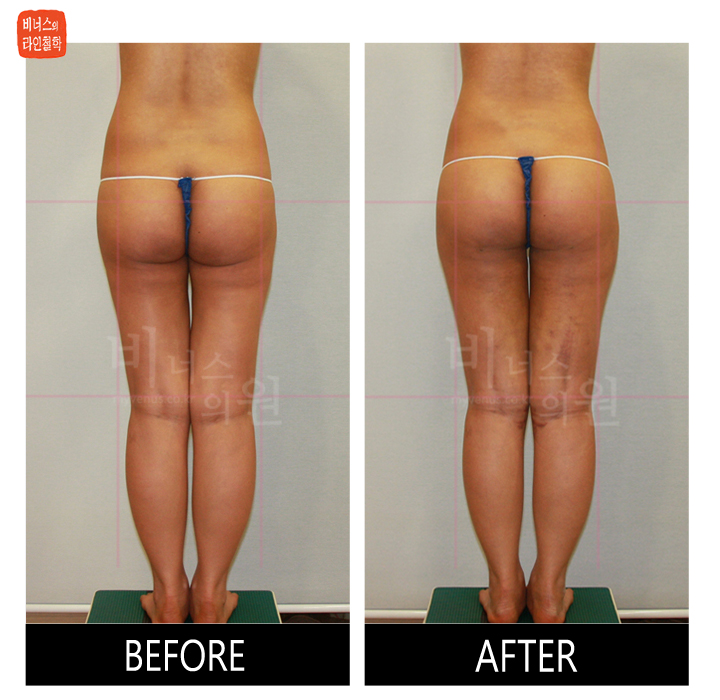
The images below illustrate a case where excessive lateral buttock fat removal caused contour deformity. Since only the thighs were treated, the buttock area (marked in blue) protrudes in a triangular shape, appearing disproportionately large. Comprehensive liposuction of the thighs, buttocks, and knees combined with fat grafting to both buttocks restored a well-balanced body contour.
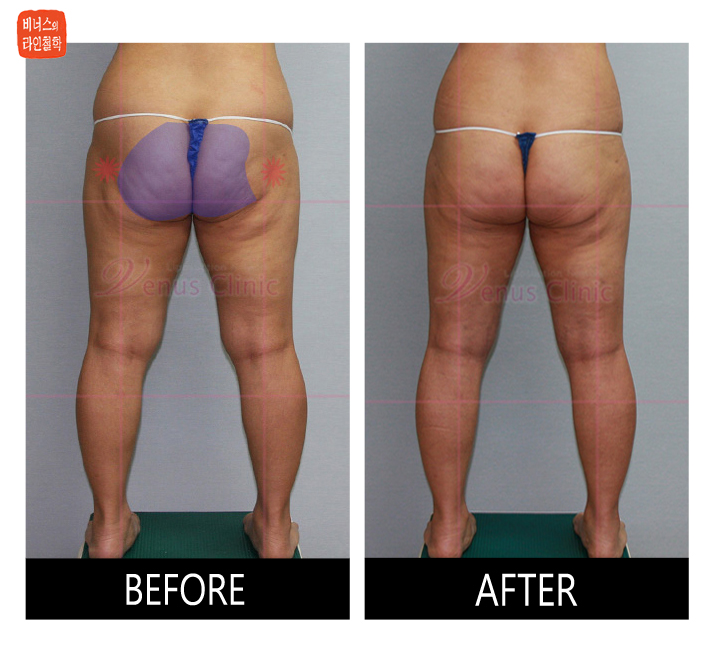
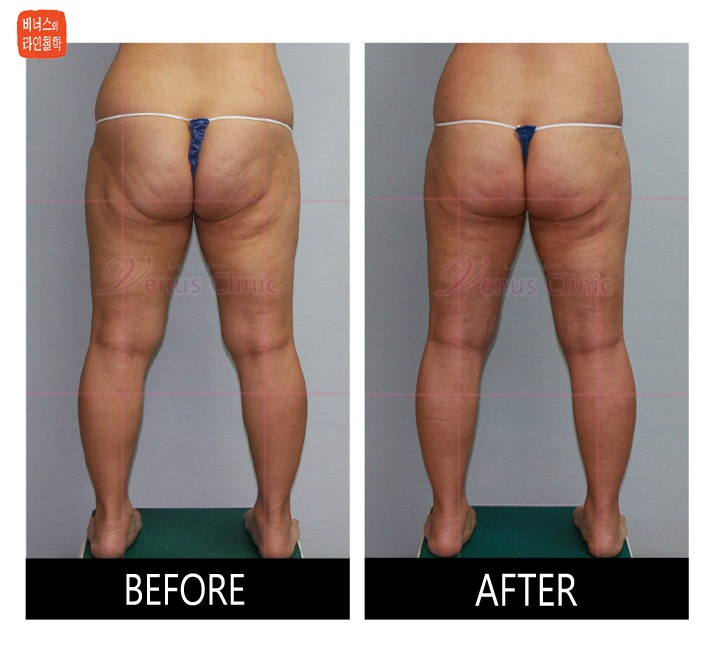
In the case below, thigh-only liposuction resulted in relatively enlarged and ptotic buttocks, with significant skin surface irregularity due to uneven fat removal. Specifically, fat removal from the upper thighs and medial knees was insufficient, while the inner mid-thighs and lateral thighs were over-suctioned, creating depressions.
The revision procedure included comprehensive liposuction, buttock reduction with volume-up reshaping, and fat grafting to the depressed areas.
CASE I
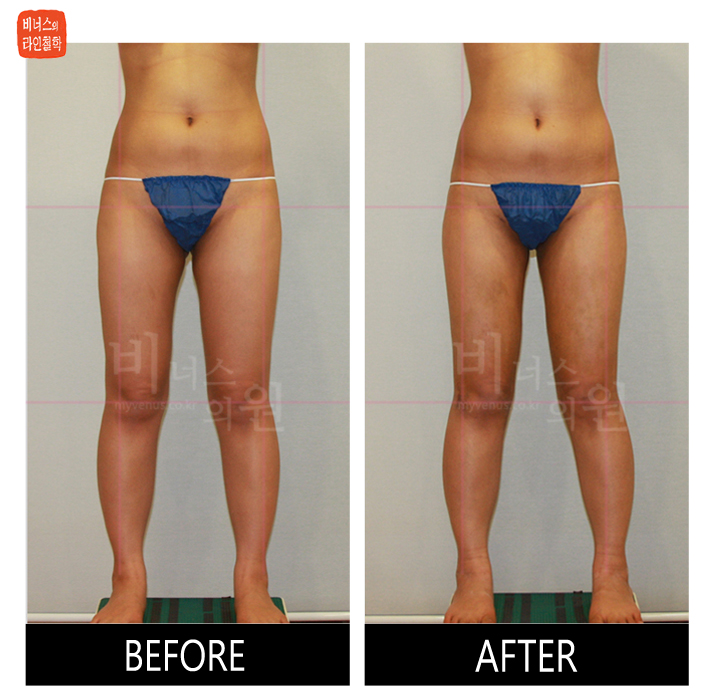
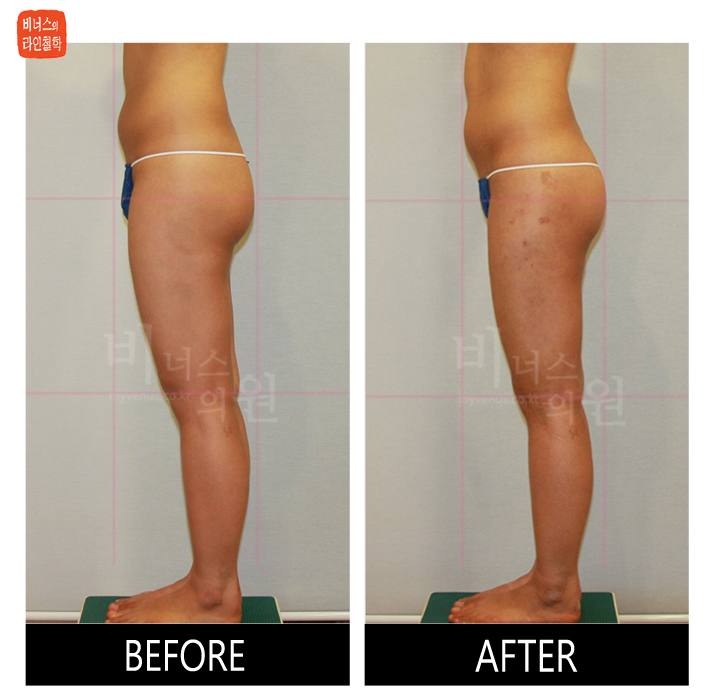
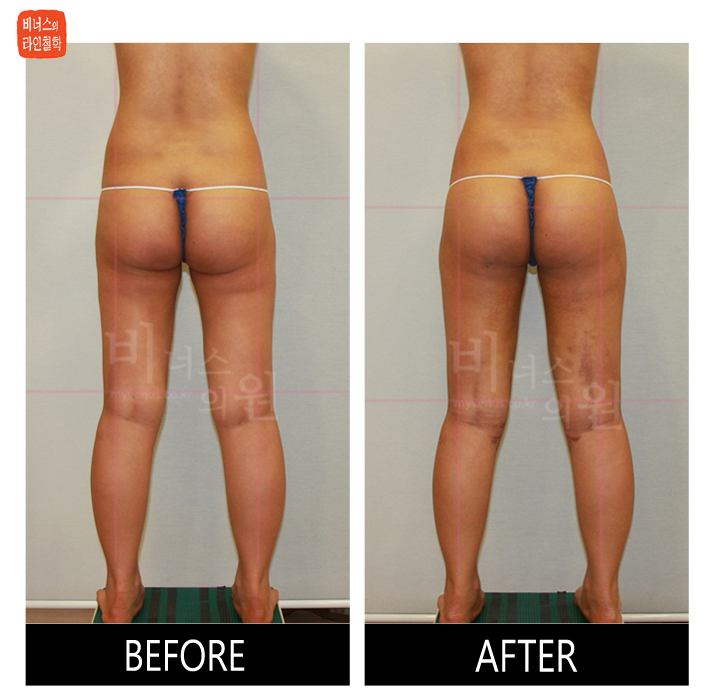
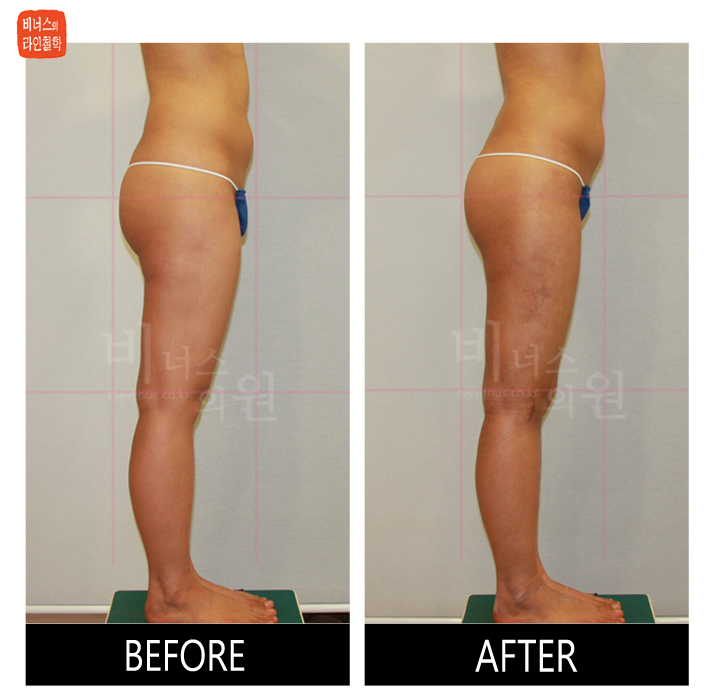
The images below show cases where thigh-only liposuction left the buttock size unchanged while reducing only the thigh volume, causing the buttocks to appear disproportionately large and ptotic. Liposuction of the buttocks and hips effectively reduced buttock size and corrected the ptosis.
CASE II
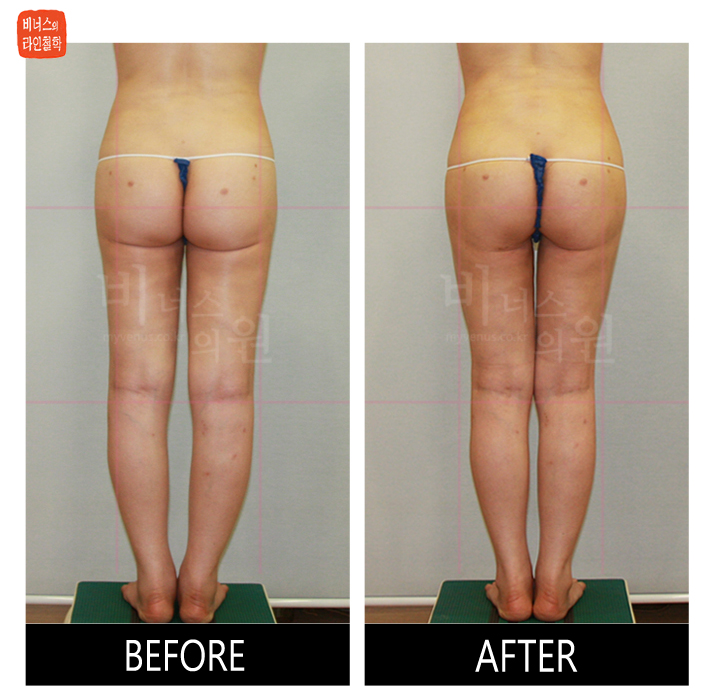
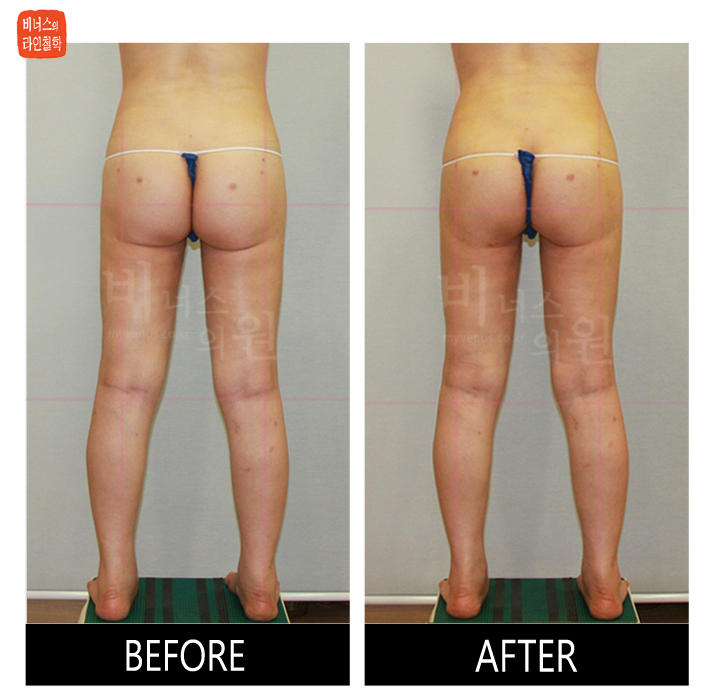
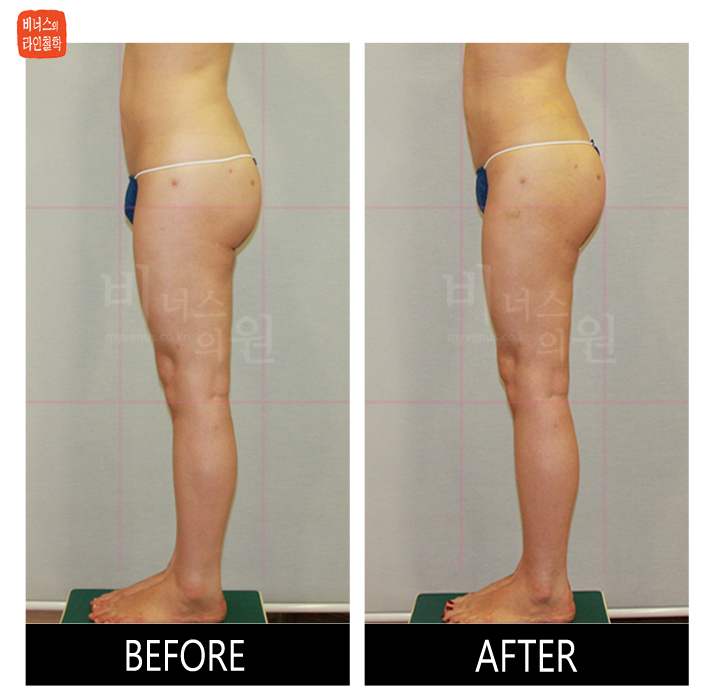
Thigh liposuction that disregards the overall harmony between the thighs and buttocks not only creates a size imbalance but frequently results in buttock ptosis and damage to the infragluteal fold.
In severe cases, as shown below, the buttocks become ptotic with elongated infragluteal creases, and damage to the supporting Luschka ligament results in double infragluteal folds. Buttock reduction with simultaneous lift and correction of the double creases successfully restored thigh length.
CASE III
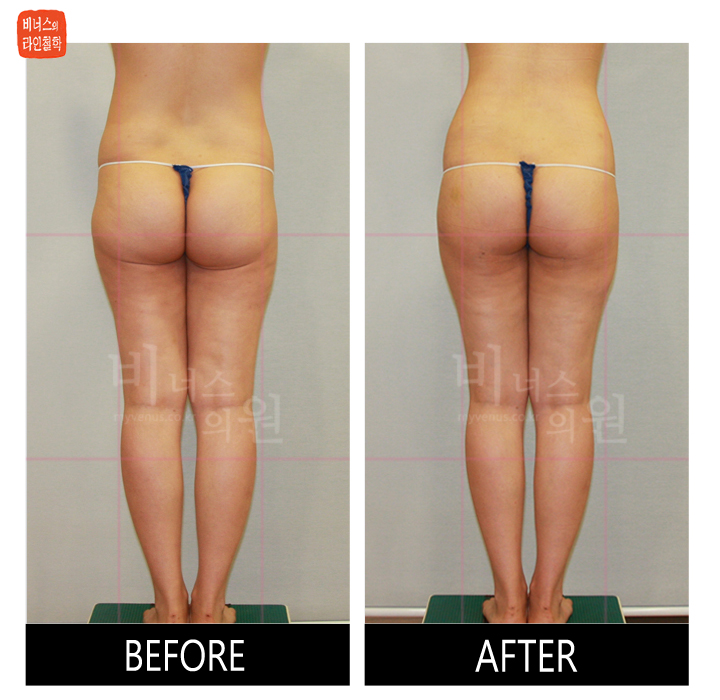
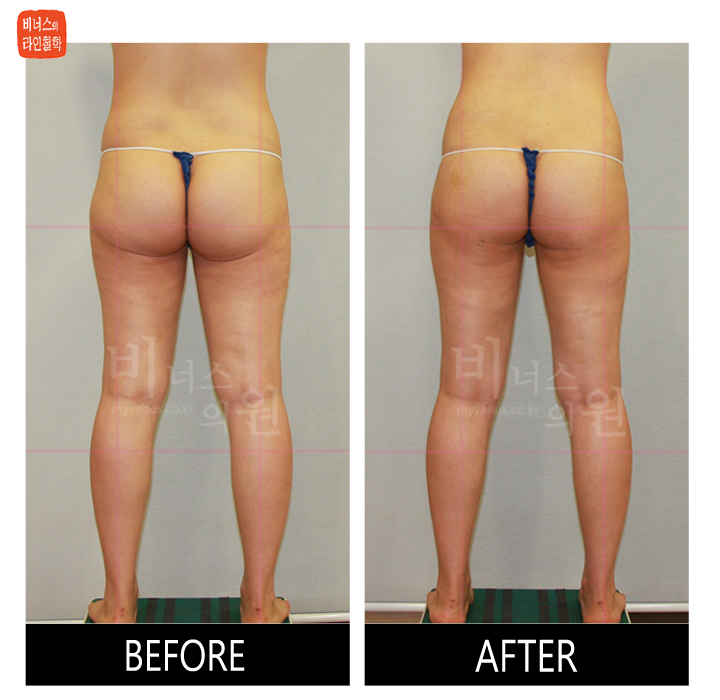
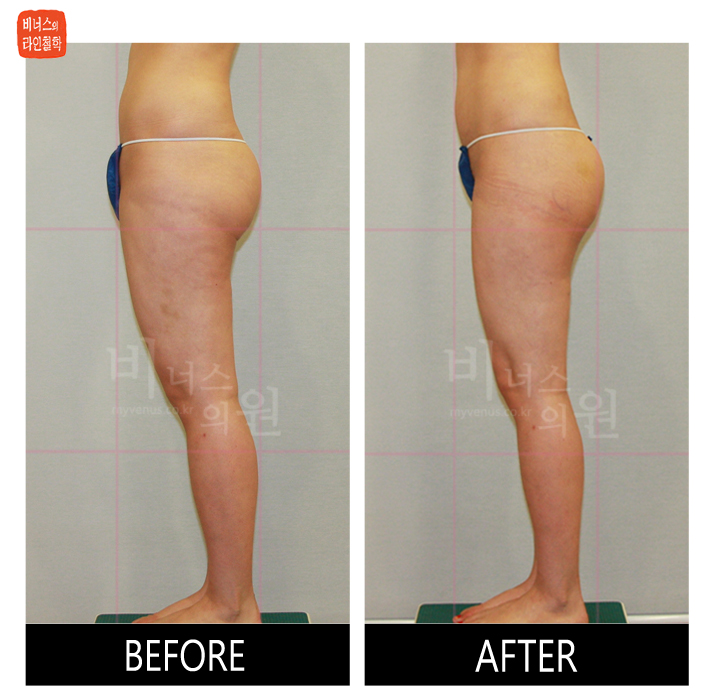
The final case demonstrates buttock ptosis and double infragluteal creases resulting from damage to the supporting ligaments. The buttocks had elongated and descended toward the thighs. While the revision surgery did not achieve complete resolution, the double creases were significantly improved, and the buttocks were lifted to a more natural, elevated position.
CASE IV
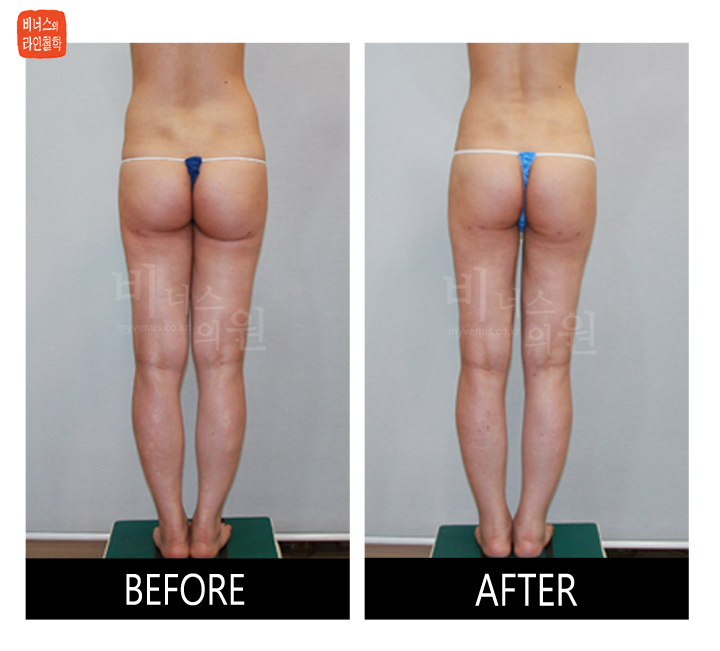
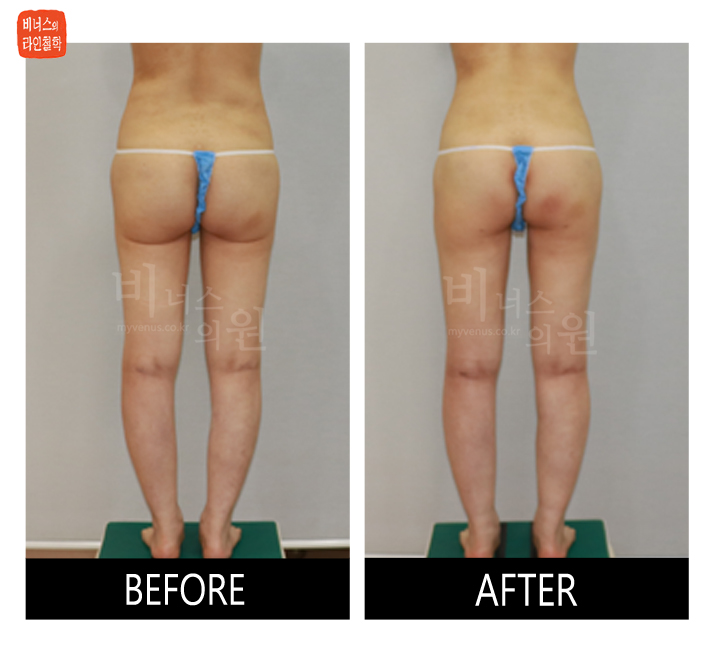
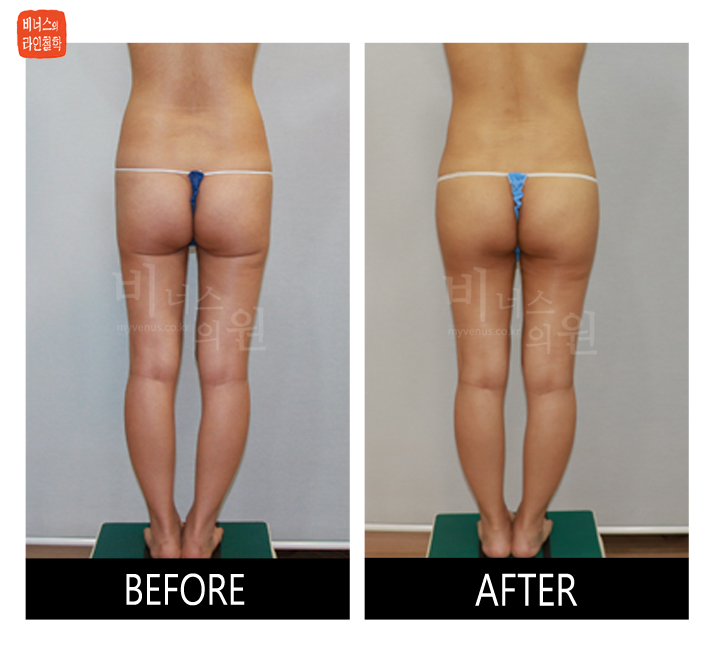
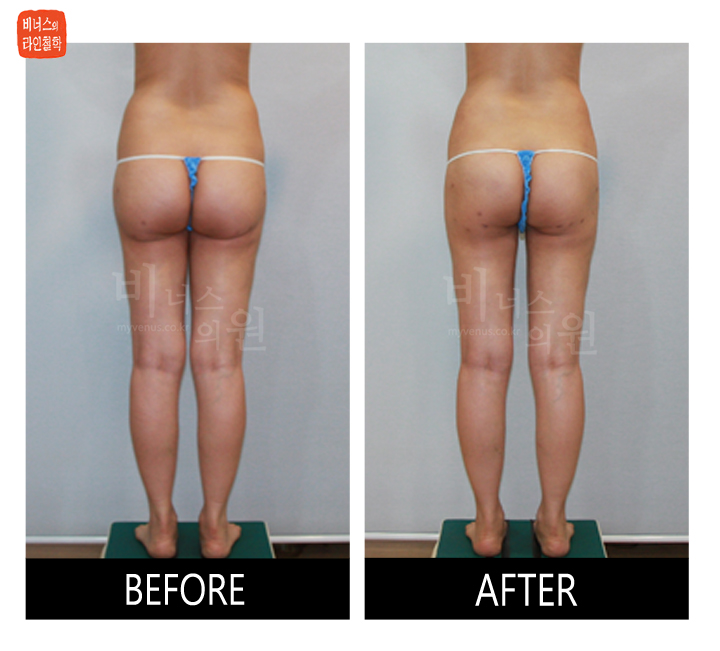
| Information on the Posted Liposuction Before-and-After Photos | |||
|---|---|---|---|
| - Same person | Surgery performed at Venus Clinic; same person | - Date taken | Taken around 2011; comparison at 1 month after surgery |
| - Same conditions | Edited to the same posture and size as closely as possible | - Side effects | https://en.myvenus.co.kr/should_know/38861 |