[Case Review] Circumferential (360-Degree) Liposuction for a Sagging Abdomen
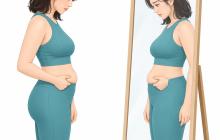
During consultations, I often hear patients say, "My belly hangs down and folds over the top of my pants," or "The fat folds in layers all the way around my flanks and back." When a large amount of fat builds up in the abdomen and the skin stretches as well, the lower belly does not just push forward; it begins to hang downward. This is called abdominal ptosis (a sagging abdomen). In most of these patients, fat has accumulated not only in the lower belly but throughout the whole trunk, including the flanks, the back, and the area over the ribs.
Today I would like to introduce cases of circumferential (360-degree) liposuction, in which a sagging abdomen is treated by working all the way around the trunk. I will focus on three points: why liposuction of a sagging abdomen often becomes a large-volume procedure, how we flatten the uneven, folded fat layer during surgery so it can be suctioned evenly (MASST), and how to read photos taken one week after surgery.

Liposuction of a Sagging Abdomen Is Often Large-Volume
Liposuction for patients with abdominal ptosis is often large-volume liposuction. If the belly hangs down, the fat is usually not limited to the lower abdomen; it is spread wide and thick over the entire trunk. If only the hanging belly is reduced and the surrounding areas are left untouched, a visible border forms and the contour of the trunk looks unnatural. That is why the treatment area becomes wider and the amount of fat removed increases accordingly.
Fat from the Upper Trunk and Back Also Slides Down into a Hanging Belly
When you lie down, the fat over the ribs and along the bra line stays toward the chest. When you stand, however, gravity pulls it down, and it hangs toward the abdomen and waist, creating folds. If this area is neglected, the result of abdominal liposuction suffers as well. In addition, the fat of the lower abdomen is divided into a superficial layer and a deep layer, separated by a fibrous sheet called Scarpa's fascia, so even a hanging lower belly tends to show good skin retraction after surgery. The upper abdomen, on the other hand, has no such layer, so the skin retracts less and folds are more likely to remain. That is why it is important to treat the fat evenly, including the superficial layer just beneath the skin.
Sagging and Ptosis of the Flanks and Back: The Back Roll (Dorsal Roll)
Many patients with a sagging abdomen also have back fat tissue that has stretched and folded downward. These horizontal bulging folds on the back are called a back roll or dorsal roll in English, and I believe the most fitting description is sagging and ptosis of the flanks and back. Published literature describes that the back can develop as many as five rolls: below the armpit, along the bra line, below the shoulder blade, over the lower ribs, and above the buttocks. Because these rolls consist of skin and fat, liposuction is generally considered first when the skin quality is acceptable and fat is the main cause, and reducing the flank and back rolls with circumferential liposuction around the trunk has been reported to help many patients.
That Is Why We Treat the Whole Circumference of the Trunk
At Venus Clinic, for a sagging abdomen we recommend circumferential (360-degree) trunk liposuction, which works all the way around the trunk: the lower and upper abdomen, the flanks, the area over the ribs, the back at the bra line, and the lower back. Contouring the front, back, and sides together keeps sagging fat from being left on one side and folding over, and helps create a trunk contour that flows continuously from every angle.
| Area | What we see with a sagging abdomen |
|---|---|
| Lower abdomen | Fat builds up in two layers, hangs down, and covers the underwear line. Even when sagging, this area tends to show good skin retraction after surgery. |
| Upper abdomen and area over the ribs | When standing, fat slides down and makes the belly look even more saggy. The skin here retracts relatively less. |
| Flanks and lower back | Fat folds in layers along the sides and back of the trunk, and the waistline disappears. |
| Back at the bra line | Back fat tissue stretches and forms horizontal folds called a dorsal roll, which hang toward the waist when standing. |
An Hourglass Abdomen Means a 360-Degree Cylindrical Trunk
When people hear "hourglass figure," most think only of a narrow waist seen from the front. In liposuction, however, an hourglass abdomen means a rounded, barrel-like trunk, that is, a 360-degree cylinder. Liposuction textbooks advise checking first whether the abdomen has this rounded, barrel-like shape before operating, and explain that because the flanks and waist are part of the hourglass abdomen, good results usually require treating the hips as well, and the back when needed. Recent papers also say that the waist should be contoured as a three-dimensional structure, not just as the width seen from the front.
That is why, at Venus Clinic, we aim for a 360-degree cylindrical, or hourglass, shape by suctioning continuously around the trunk: not only the front of the abdomen but also the flanks, the lower back, and the back. It depends on body type, but suctioning the trunk continuously without gaps requires at least three incisions. The narrow waistline you see from the front emerges as a result of contouring the entire circumference of the trunk evenly in this way.
MASST: Flattening a Fat Layer That Will Not Lie Flat
Liposuction begins by infiltrating tumescent solution into the treatment area, which swells the fat layer and makes it firm. In a typical abdomen, the cannula can then move at an even depth within this swollen, firm fat layer. A sagging abdomen is different. Because the skin and fat layer hang and fold, the fat layer stays uneven and does not lie flat, even during surgery. In this state it is difficult to keep the cannula at a constant depth, and suctioning as it is would remove too much in some spots and leave too much in others, producing an uneven result.
An Assistant Flattens the Fat Layer by Hand into an Even Plane
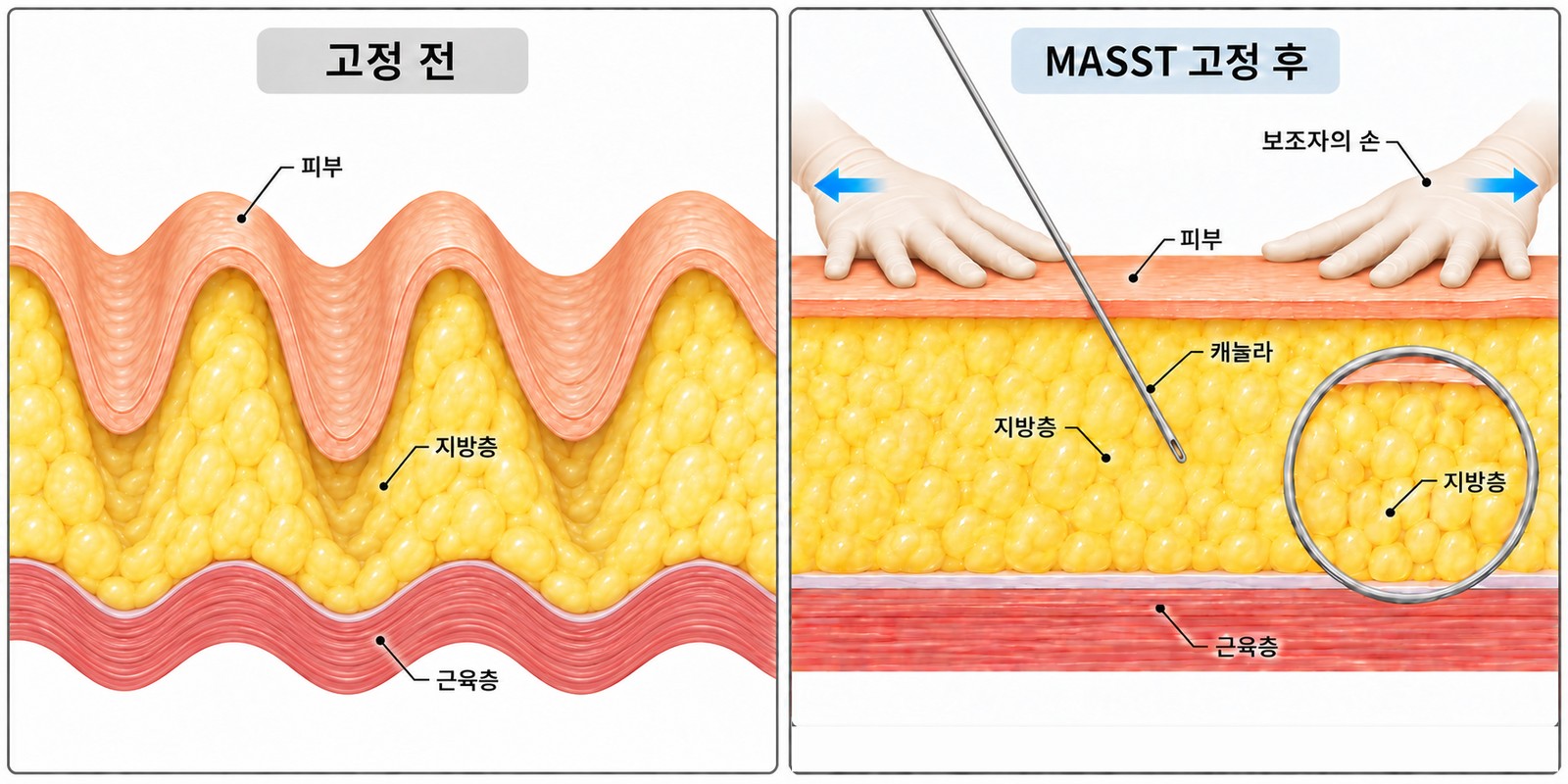
For this reason, liposuction of a sagging abdomen can only be performed when an assistant flattens the fat layer into an even plane using MASST (manually assisted skin stabilization technique). A skilled assistant stands beside the area being treated and holds the skin and fat layer horizontally with both hands, turning the folded fat layer into a flat surface. The key point is not to twist or pull the tissue to one side and change its original anatomical position. Suctioning tissue while it is twisted can over-suction certain areas and actually cause unevenness, so the core of this technique is to keep a steady tension without twisting.
The cross-section diagram below makes this easier to understand. As on the left, in a sagging abdomen the skin, the fat layer, and even the muscle layer beneath are deeply rippled and folded, like a hanging curtain, so a straight cannula cannot be inserted in this state. As on the right, when the assistant places both hands on the skin with fingers spread wide and stretches them horizontally to hold the tissue in place, as if smoothing out a curtain, the fat layer becomes a flat plane of even thickness, and only then can the cannula be inserted. The tip of the cannula, entering through a small opening in the skin, then moves at the same depth within the fat layer.

MASST as Described in the Textbook
A liposuction textbook (Shiffman, "Tissue Stabilization in Liposuction Surgery") explains why MASST is needed as follows. As suction proceeds during surgery and about 20-30% of the tumescent solution is removed, the solution's effect of firmly supporting the subcutaneous tissue gradually decreases. This can increase tissue trauma, raising pain during surgery and leading to cosmetic problems after surgery. To make up for this decreasing stabilization, a method was devised in which a skilled assistant stabilizes the tissue horizontally by hand.
The same textbook also includes a small comparative study of 20 patients. In the same operation on the same person, MASST was applied on one side and not on the other, and the two sides were compared. The results are shown below.
| Comparison item (average) | Side with MASST | Side without MASST |
|---|---|---|
| Fat volume removed | 1.15 L | 0.95 L |
| Pain score (1-10) | 2.9 | 3.5 |
| Additional pain medication used | 1 | 2 |
| Time suction could be continued | 35 min | 25 min |
Here, the time suction could be continued means the time until suction had to stop because the aspirate began to contain a lot of blood or the patient began to feel uncomfortable. Endoscopic observation of the tissue also reported less tissue damage on the side where MASST was applied.
How Should This Study Be Read?
This was a small preliminary study of 20 patients, and the treated areas were the buttocks and flanks, the outer thighs, the arms, and the knees and calves. Therefore, the effect of MASST cannot be stated definitively from these numbers, and results vary by individual. Still, I think it is a good illustration of why stabilizing the tissue evenly by hand during surgery is necessary. When the fat layer does not flatten on its own, as in a sagging abdomen, this kind of stabilization becomes even more important.
A Demanding and Physically Exhausting Procedure
Circumferential liposuction of a sagging abdomen is a demanding and physically exhausting procedure. A large amount of fat must be removed over a wide area, the surgeon must work around the front, back, and sides of the trunk, and an even depth must be maintained with the cannula while working in step with the assistant to flatten a fat layer that will not lie flat. On top of this, superficial liposuction, which evenly treats the fat in the thin layer right beneath the skin to help sagging skin retract, requires not only precision but also a great deal of persistence and stamina.
We Use 3-4 mm Cannulas, Not Micro-Liposuction
Micro-liposuction, which uses thin cannulas with an inner diameter of 2.2 mm or less (micro cannulas), allows precise and even suction, but the thin cannulas are fragile and their small bore often clogs with fat. That is why this kind of large-volume liposuction cannot be done with micro-liposuction, and we use cannulas with a bore of 3-4 mm.
Two Surgeons Operate Together
In liposuction, the longer the operation, the higher the risk of bleeding and complications. That is why, at Venus Clinic, we perform this type of large-volume liposuction as two-surgeon liposuction, with two doctors operating at the same time. Because two surgeons work together, the operating time can be shortened, and with more physical reserve we can take our time to treat even the superficial fat evenly. Superficial liposuction, which encourages sagging skin to retract, takes a lot of effort and is a difficult option to choose, but because two doctors share the work, it can also be applied to a sagging abdomen.
Not All Sagging Skin Will Retract
Even suction up to the superficial layer can encourage sagging skin to retract, but if skin elasticity was already considerably reduced before surgery or there is a large amount of excess skin, retraction may not be sufficient and some folds may remain. The upper abdomen in particular retracts less than the lower belly. Also, liposuction is not a weight-loss operation; it is a body-contouring procedure that leaves the remaining fat layer evenly to refine the balance and contour of the trunk, so the result follows the shape of each person's own skeleton and muscles. If weight increases again after surgery, the remaining fat cells can grow and the contour may change, so weight management is also needed.
Recovery After Surgery: 1 Week, 1 Month, 6 Months
After large-volume liposuction, swelling and bruising continue for a certain period. If you know the recovery process in advance, you will not need to worry when you see how things look around one week after surgery.

1 Week After Surgery: The Skin Has a Faint Yellow Tint
Around one week after surgery, the skin of the treated area often has a faint yellow color. This color appears as the bruising that formed right after surgery is absorbed and fades, and it disappears over time. Swelling and bruising usually last about 1-3 weeks.
Most Results at About 1 Month, Recovery at About 6 Months
At one week after surgery, a lot of swelling still remains. The contour keeps changing as the swelling goes down, so most of the result can be seen only after about one month, and recovery takes about six months, by which time firmness in the treated area and reduced sensation also resolve. Retraction of sagging skin also happens gradually over this period.
| Time | What it looks like around this time |
|---|---|
| 1 week after surgery | As bruising fades, the skin has a faint yellow tint, and a lot of swelling remains. |
| About 1 month after surgery | Much of the swelling has gone down, and most of the result can be seen. |
| About 6 months after surgery | Firmness and changes in sensation resolve, skin retraction takes place, and recovery is reached. |
The speed of recovery varies from person to person depending on the treatment area, the volume removed, skin elasticity, compression garment wear, and daily care.

Before-and-After Photos
Below are photos of two patients who had circumferential liposuction for a sagging abdomen at Venus Clinic. All post-operative photos were taken one week after surgery. As mentioned above, the yellow tint of the skin is part of the bruise fading, and a lot of swelling still remains, so these are not the final results.
Case 1
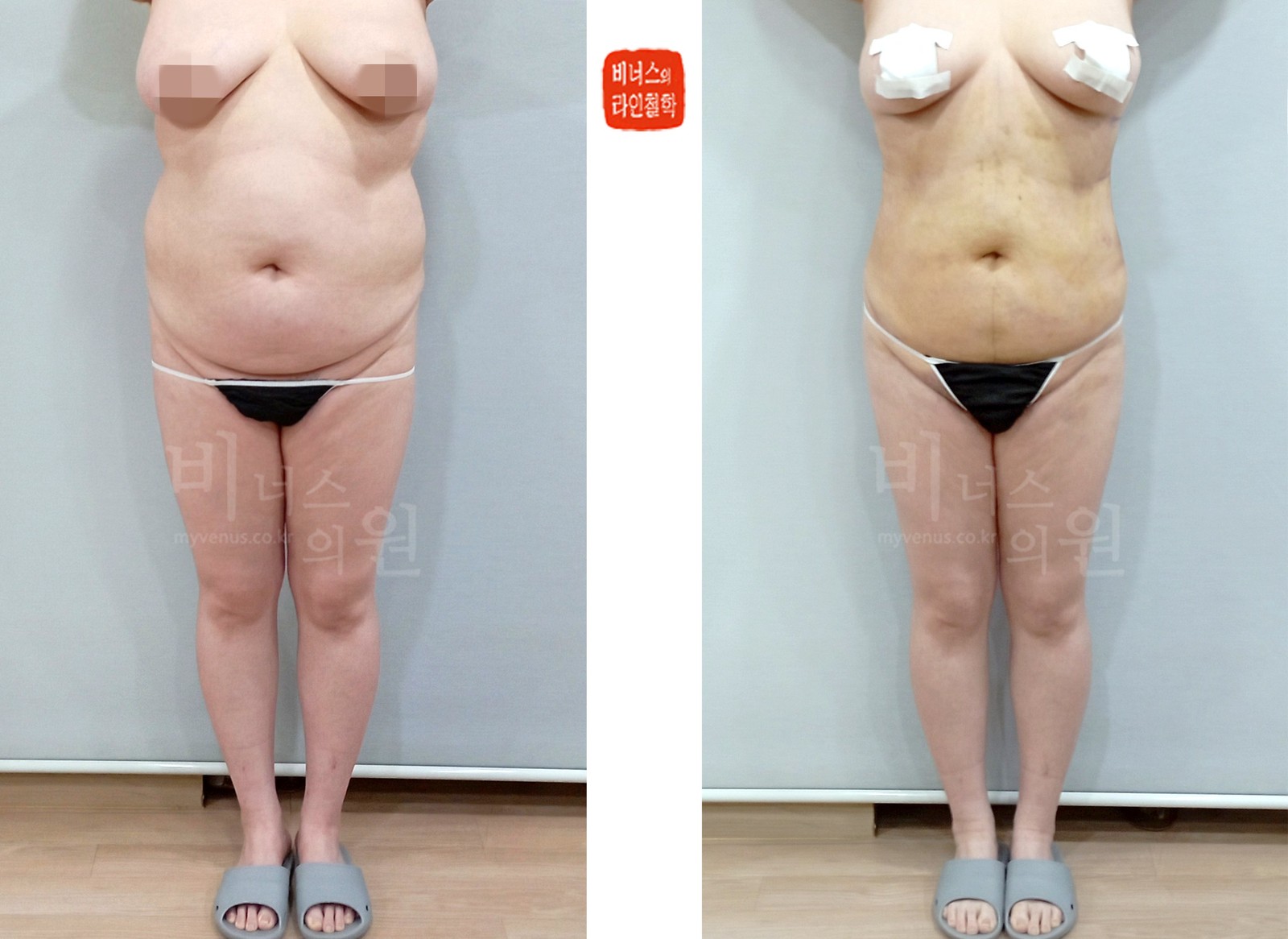
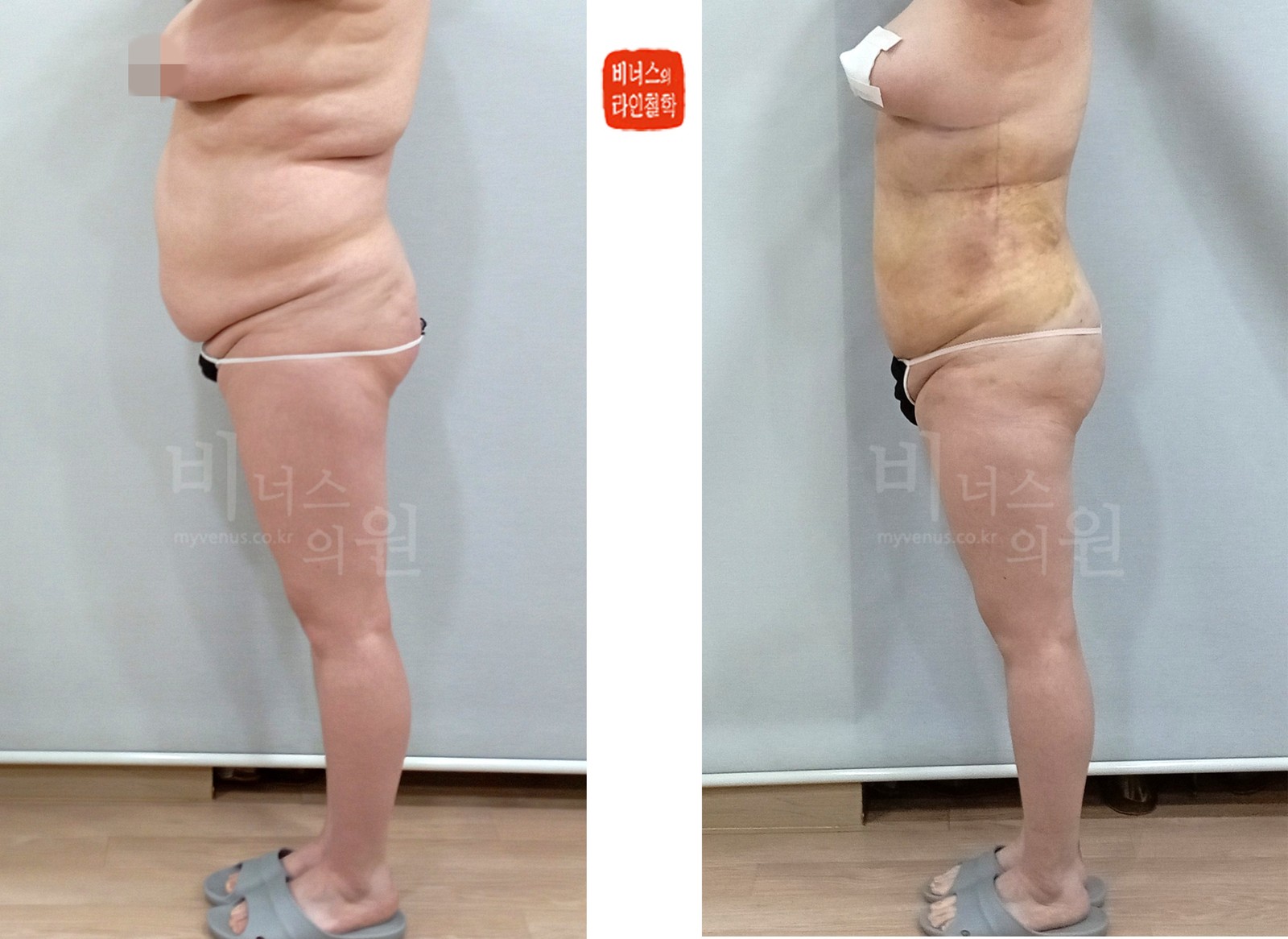
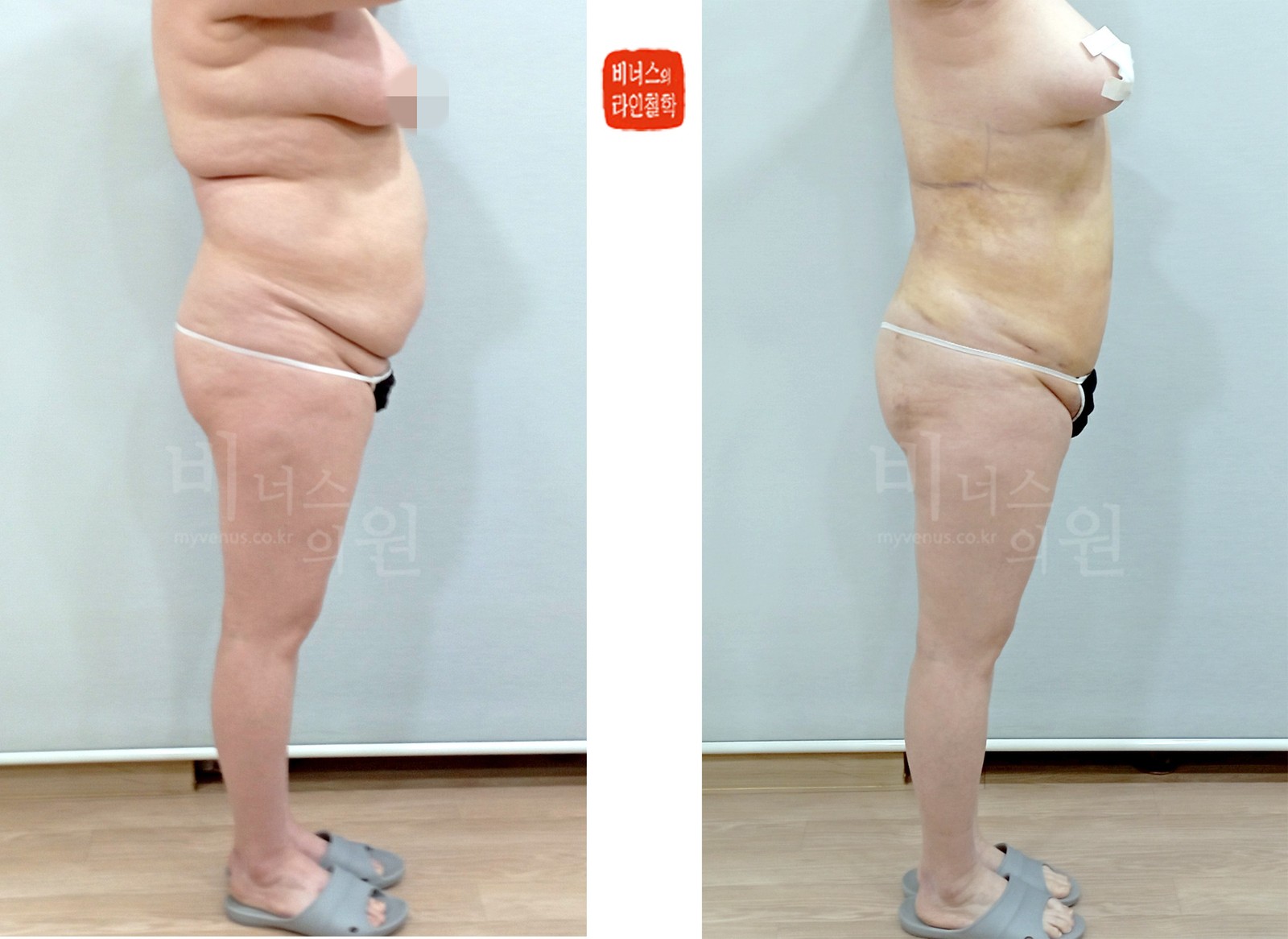
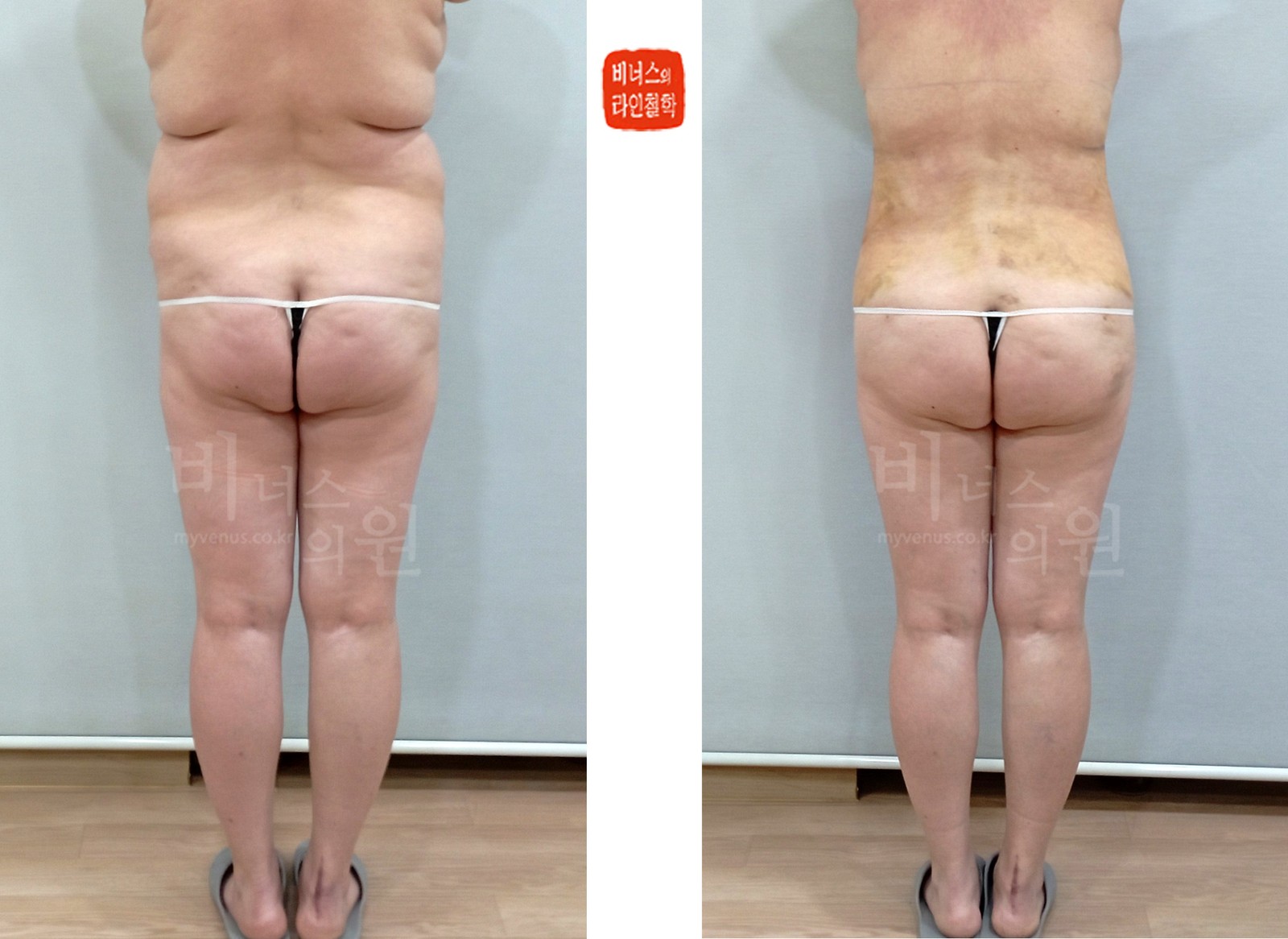
This is a case of a sagging abdomen. Circumferential abdominal liposuction, that is, 360-degree trunk liposuction, was performed. Before surgery, the lower belly hung down and covered the underwear line; from the side, the belly drooped forward and downward, and fat was folded in layers on the flanks and back. In particular, this patient had a dorsal roll, in which back fat tissue had stretched and folded downward, so along with the abdomen there was sagging and ptosis of the flanks and back. We therefore also performed liposuction on the back, and in the back-view photo one week after surgery, the folded sagging of the back is barely visible. In the front and side views as well, the sagging of the lower belly decreased so that the underwear line is visible, and the folds on the flanks decreased so that the trunk contour flows more continuously. The yellow tint of the skin is part of the bruise fading, and since a lot of swelling still remains at this stage, the contour will continue to change.
| Information on the Posted Liposuction Before-and-After Photos | |||
|---|---|---|---|
| - Same person | Surgery performed at Venus Clinic; same person | - Date taken | Taken around 2023; comparison at 1 week after surgery |
| - Same conditions | Edited to the same posture and size as closely as possible | - Side effects | https://en.myvenus.co.kr/should_know/38861 |
Case 2
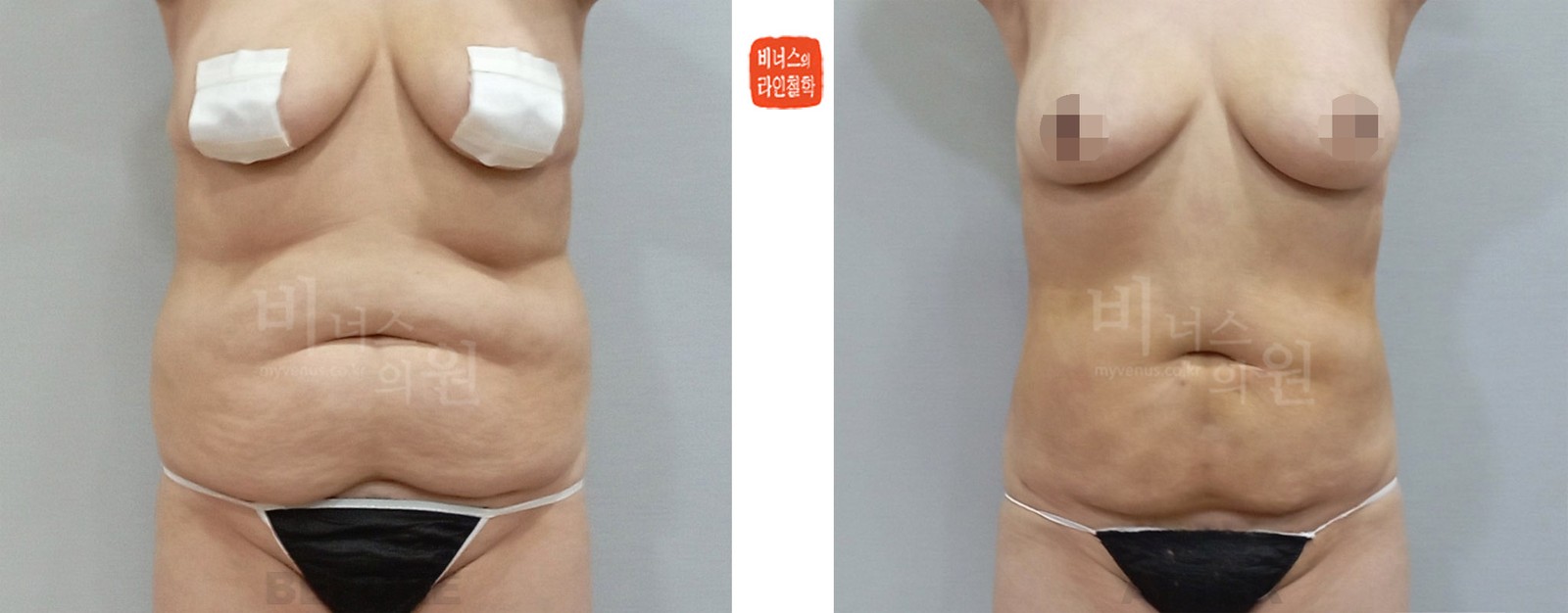
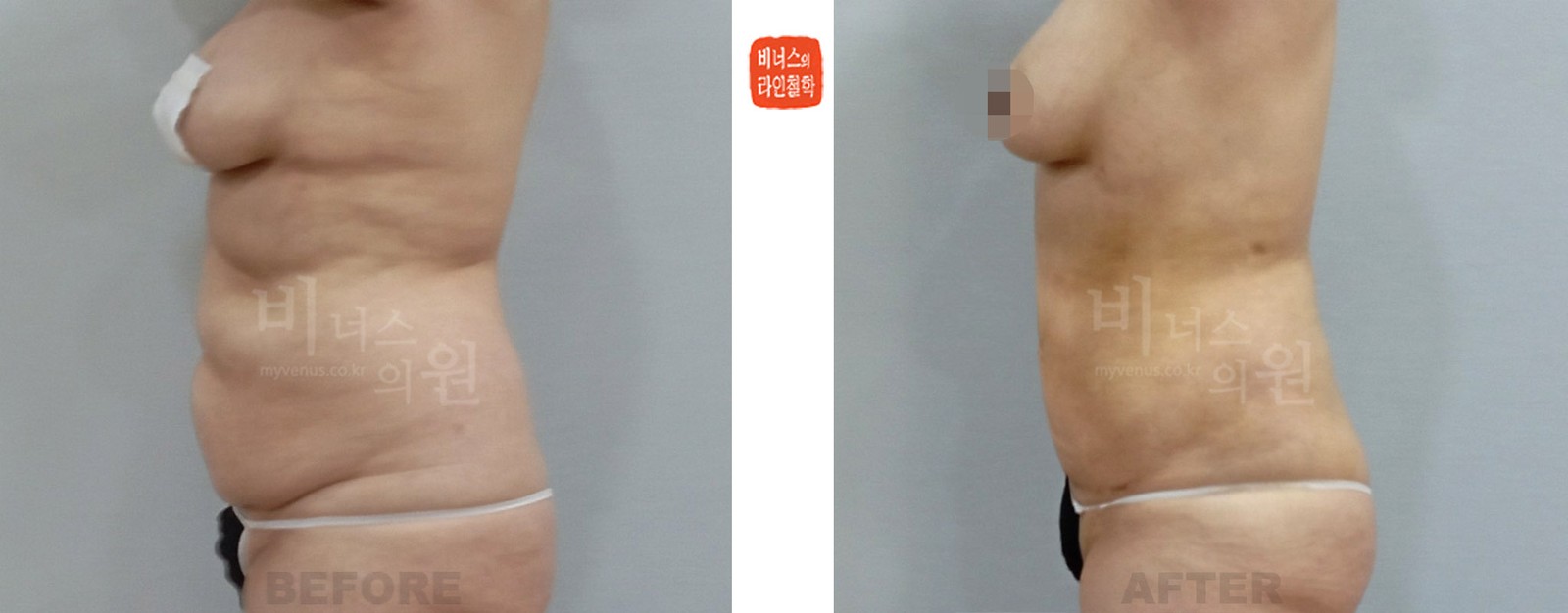
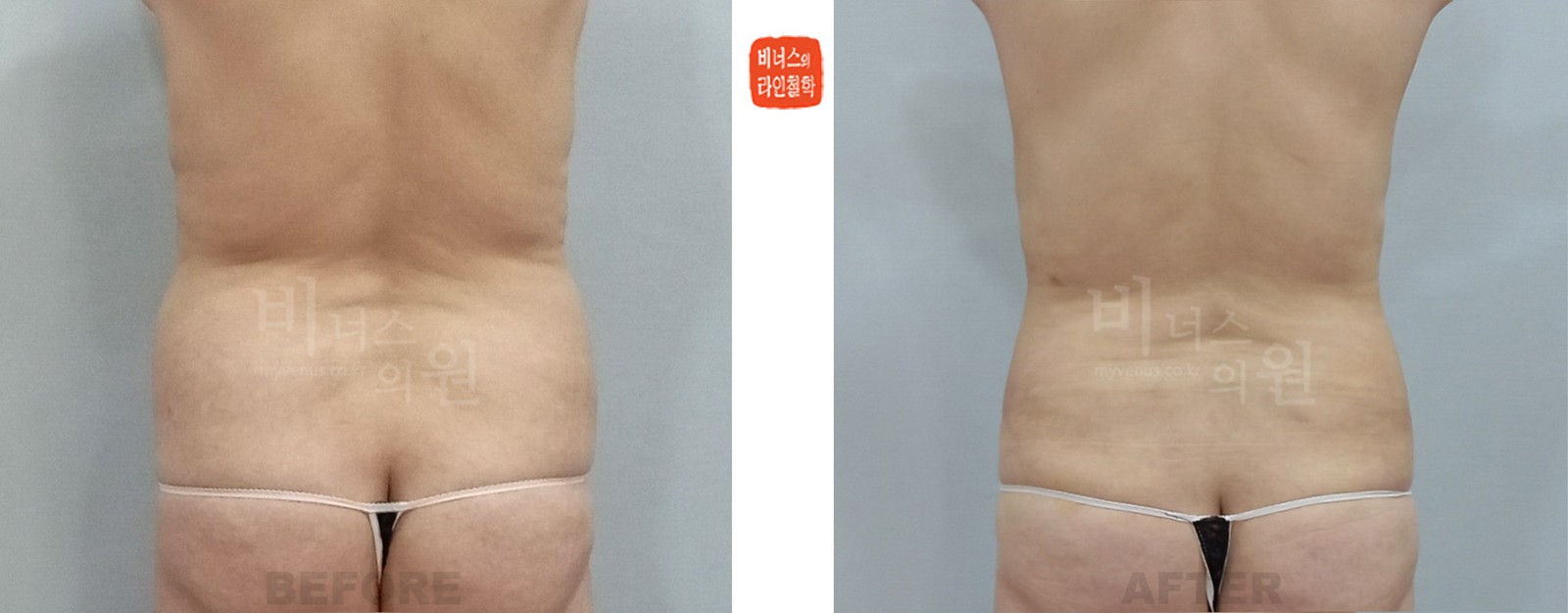
This is a case of a sagging abdomen. As in Case 1, this patient had 360-degree cylindrical liposuction, suctioning continuously around the trunk, in other words hourglass abdomen liposuction. Before surgery, the upper and lower abdomen were folded horizontally and overlapped; from the side, the belly protruded forward; and from the back, fat had built up on the lower back and flanks so that the waistline could not be seen. In the photos one week after surgery, the folds of the belly decreased, and both the protrusion of the belly seen from the side and the thickness of the lower back seen from behind were reduced, so the trunk contour flows more continuously from the front, side, and back. Even at the same one week after surgery, this patient had almost no bruising; how much bruising and swelling remains differs from person to person.
| Information on the Posted Liposuction Before-and-After Photos | |||
|---|---|---|---|
| - Same person | Surgery performed at Venus Clinic; same person | - Date taken | Taken around 2024; comparison at 1 week after surgery |
| - Same conditions | Edited to the same posture and size as closely as possible | - Side effects | https://en.myvenus.co.kr/should_know/38861 |
In Closing
Liposuction of a sagging abdomen is often a large-volume procedure with a wide treatment area and a large volume removed, and it is a difficult operation because the fat layer does not flatten on its own during surgery, so an assistant must smooth it out by hand for even suction. At Venus Clinic, two doctors operate together and stabilize the fat layer flat with MASST while performing circumferential liposuction that evenly contours the entire circumference of the trunk. If there is also sagging and ptosis of the flanks and back, such as a back roll, the back should be treated as well to help create a contour that flows continuously even from behind. The yellow tint and swelling one week after surgery are part of the recovery process, so please follow the changes at one month and six months as well.
References: Abdominal Liposuction and the Characteristics of Each Sub-Area The Difference Between Diet/Exercise and Liposuction
Dr. Hakjun Kim, Director, Venus Clinic