Why Breasts Sag — When the Skin Cannot Keep Up
In consultations, we often hear things like, “My breasts were fine before, but at some point they seemed to drop,” or “My breast shape changed after childbirth or dieting.” Many people want to understand “why this happened” even more than they care about the sagging itself.
Today I would like to explain why breasts sag from this perspective: the volume of the breast has changed, but the skin that enveloped that volume has not kept up. We will look in turn at the paths that lead to sagging, how much support the skin provides to the breast, and how the degree of sagging is graded, and then explain what liposuction can do and where its limits lie.
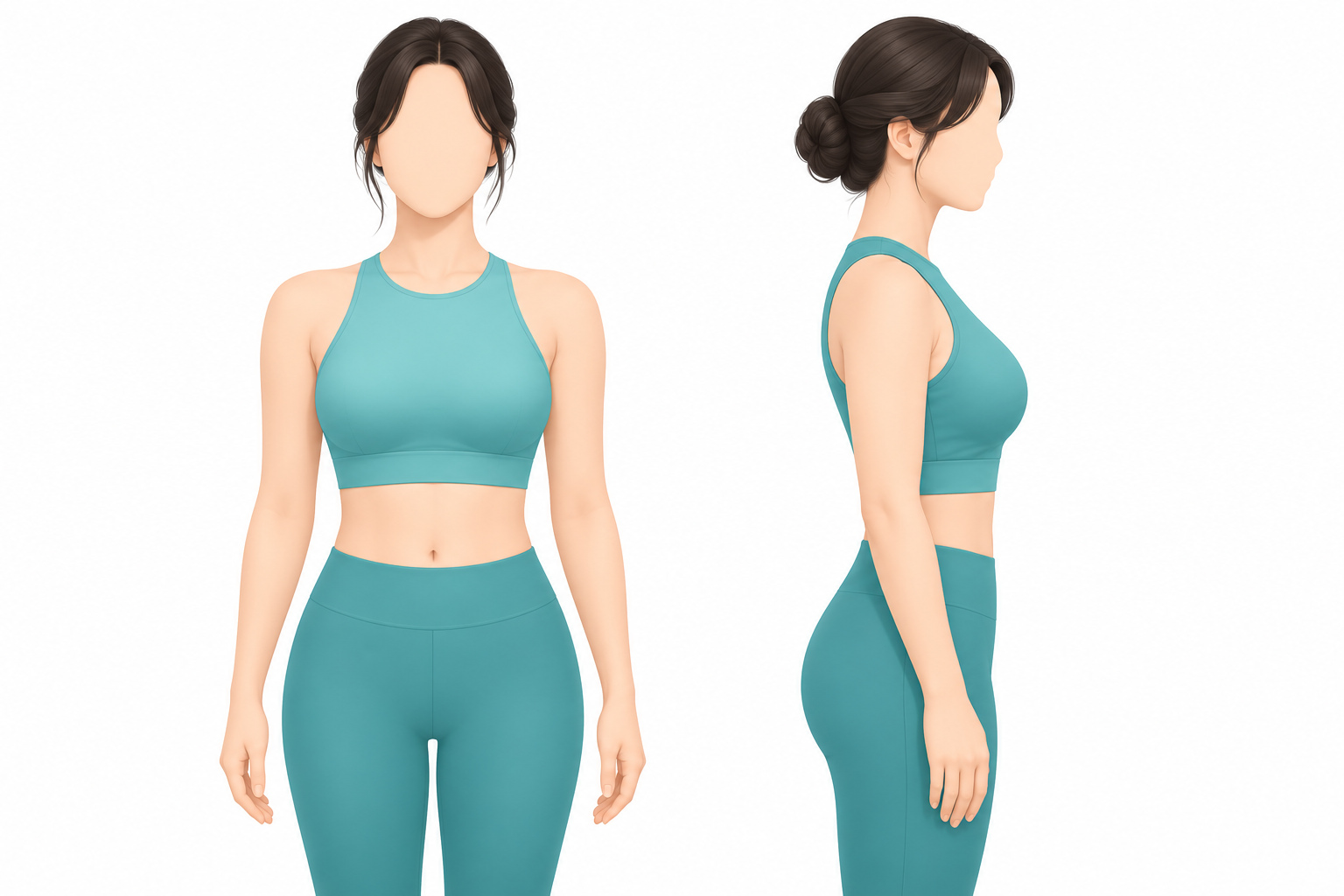
Breasts sag “when the volume has changed but the skin cannot keep up”
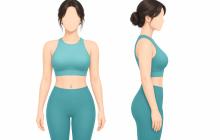
The breast is a structure in which fat and glandular tissue are enveloped by skin. When the volume inside changes — through pregnancy and breastfeeding, weight gain or loss, or dieting — the shape is maintained as long as the skin stretches and shrinks along with it at the same pace. But if the volume decreases and the skin cannot shrink to the same extent, the excess skin hangs downward and the breasts appear to sag. The medical literature likewise describes the mechanism of sagging as the ligaments and skin that support the breast failing to keep up appropriately with changes in the volume of breast tissue [11].
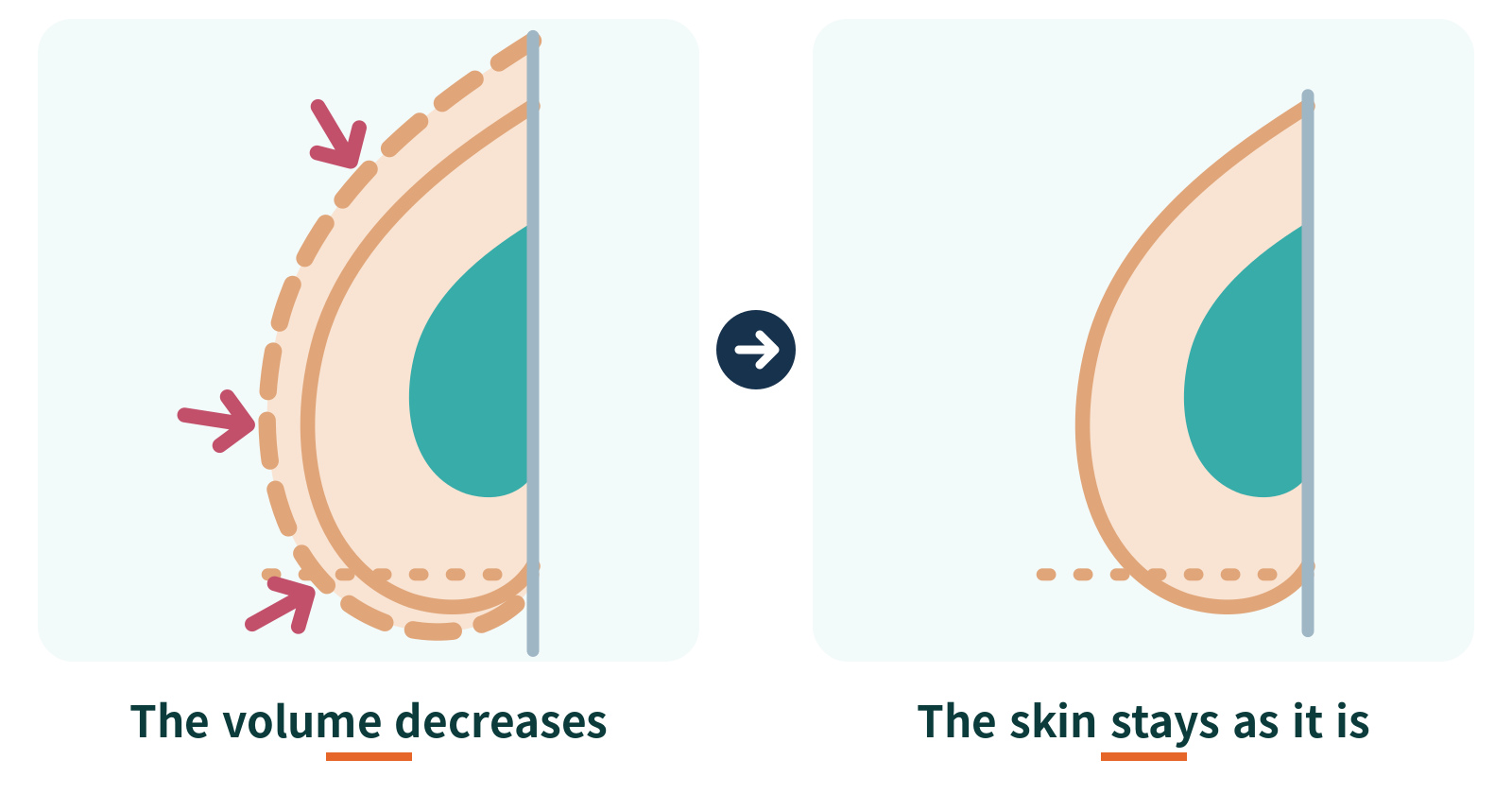
The dotted line in the left illustration shows the volume before it decreased. If the skin cannot shrink at the same pace while the volume decreases, a downward-hanging shape remains, as in the right illustration. At Venus Clinic, we explain that even when a breast enlarged during pregnancy becomes smaller after delivery, skin that has once stretched may not shrink back along with it (column on sagging breasts after childbirth), and the same principle applies when volume decreases through dieting (column on the differences between dieting and liposuction).
Three paths that lead to sagging
Studies cite several factors as causes of breast sagging, including weight loss, pregnancy, breastfeeding, menopause, and aging, and explain that the effect of these factors is often greater when combined with an inherited tendency to sag [1]. In the clinic, we broadly describe this in terms of three paths.

When size changes through childbirth, breastfeeding, or weight changes
During pregnancy the breasts become larger, and after breastfeeding ends they become smaller again. The size of the breasts also changes as weight goes up and down. If the skin that was stretched around the enlarged breast cannot shrink along with the reduced volume, the excess skin results in a sagging shape. Changes in weight and age are also factors that affect breast shape.
When volume decreases through dieting
When weight is lost through dieting, the fat inside the breast also decreases and the volume becomes smaller. Here too, if the skin cannot shrink at the same pace, the sagging becomes noticeable. The shape is maintained only when the skin shrinks in proportion to the volume lost, and depending on how much the skin has been stretched, that does not always happen.
When the supporting structures weaken with age
The location of the fold beneath the breast is known to be the point where the lower part of the breast is anchored to the chest wall, and it is said that with age the breast sags relative to this point [2]. There is also an explanation that when some of the anchoring ligaments weaken with aging, the soft tissue above the firmly attached area sags downward by comparison [2]. However, this is presented as a hypothesis put forward by earlier researchers, and it cannot be pinned on a single cause.
Other factors that affect sagging
Besides these three paths, other factors are known to make sagging more likely. Skin elasticity, breast tissue density, and ligament strength are influenced by genetics, so some people sag more easily even after the same changes, and smoking is described as reducing blood flow to the skin and hastening the loss of collagen and elastin. After menopause, estrogen declines and both glandular tissue and skin elasticity decrease, which may affect sagging [5].
The size and composition of the breast may also have an influence. It is summarized that the larger and heavier the breast, the more it is affected by gravity and the more likely it is to sag over time, and that breasts with a higher proportion of fatty tissue than glandular tissue sag more easily [5]. Sagging is commonly mentioned together with aging, large breasts, weight loss, pregnancy, and hormonal changes [11]. There are also explanations that exercise involving repeated impact without support, or not wearing a supportive bra, may contribute to sagging, but no study has confirmed that these measures prevent sagging [5].
How much support the skin around the breast provides
The amount and quality of the skin that envelops the breast (the skin envelope) are known to have a major influence on breast shape [3]. An appropriate amount of skin supports the breast tissue like a well-fitting bra [3]. Conversely, excess skin in any direction may lead to an awkward shape and early sagging [3]. This is why, even when the volume decreases by the same amount, the timing and degree of sagging may differ depending on how much skin remains.
The skin is like a bra that supports the breast
Just as a well-fitting bra supports breast tissue, an appropriate amount of skin supports the breast. When excess skin remains, sagging may appear earlier.
How is the degree of sagging graded?
The degree of sagging is graded by comparing the position of the nipple with the fold under the breast (the inframammary fold). In the widely used Regnault classification, Grade 1 is when the nipple is at the same level as the inframammary fold; Grade 2 is when the nipple is below the fold but is not the lowest point of the breast; and Grade 3 is when the nipple is at the lowest point of the breast [4][5]. When the nipple is at or above the fold but the majority of the breast tissue has dropped below the fold, it is classified separately as pseudoptosis [5].
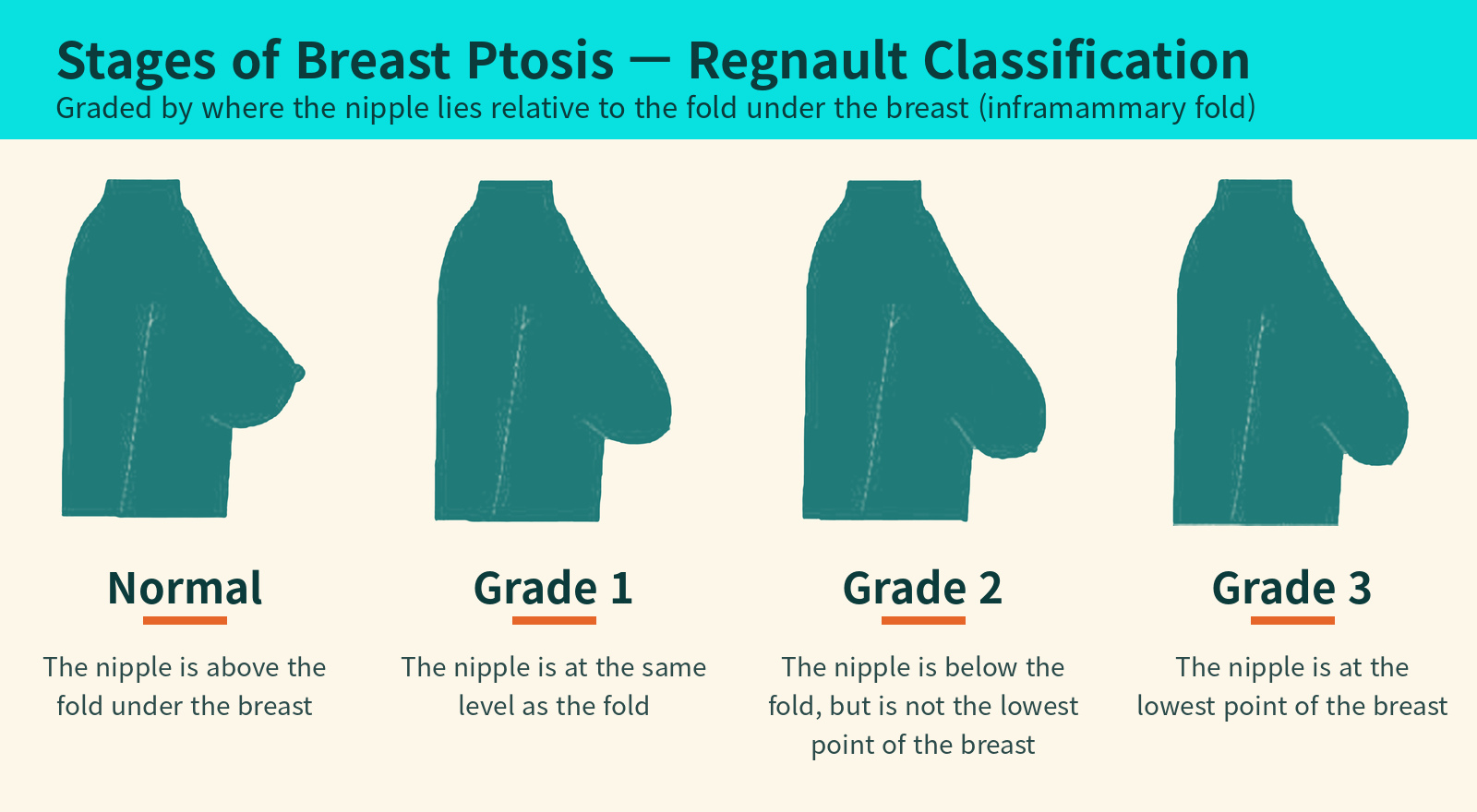
| Grade | Position of the nipple relative to the fold under the breast |
|---|---|
| Normal | The nipple is above the fold under the breast. |
| Grade 1 | The nipple is at the same level as the fold under the breast. |
| Grade 2 | The nipple is below the fold under the breast, but is not the lowest point of the breast. |
| Grade 3 | The nipple is at the lowest point of the breast. |
| Pseudoptosis | The nipple is at or above the fold, but the majority of the breast tissue is below the fold. |
In 2002, Kirwan proposed a new classification that subdivides this system, grading sagging in 1 cm increments from A to F [6]. Whichever classification is used, the key point is the same: the degree of sagging is estimated by looking at how far the nipple has descended relative to the fold under the breast.
What liposuction can do
Many people think liposuction is not suitable if the breasts are sagging. At Venus Clinic, however, we believe liposuction can be considered even for sagging breasts. When the breast volume decreases, the weight pulling downward becomes lighter, and when fat is removed evenly through to the superficial layer, skin contraction may be induced, which may help improve sagging (column on sagging breasts after childbirth).
Evenly through to the superficial layer, not only the deep layer
If only the fat in the deep layer is removed, the volume decreases, but a thick, heavy layer of fat remains beneath the skin, making it difficult for the loosened skin to contract. That is why we perform superficial liposuction, which removes fat evenly through to the shallow layer close to the skin so that the remaining tissue becomes thin and light. The thinned skin contracts again and fits closely over the reduced volume, and this is the principle by which it helps improve sagging in sagging breasts. A chapter on applying liposuction to the breast likewise explains, in describing an ultrasound-assisted method, that skin contraction occurs well when the procedure is performed close to the layer just beneath the dermis [7].
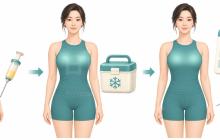
It is also something we have explained at Venus Clinic that, even when the size does not decrease greatly, there are cases in which improving sagging is still meaningful (related column). The illustration below is a simulated side-view picture, without exaggeration, of the change in which the degree of breast sagging looks different through this approach.
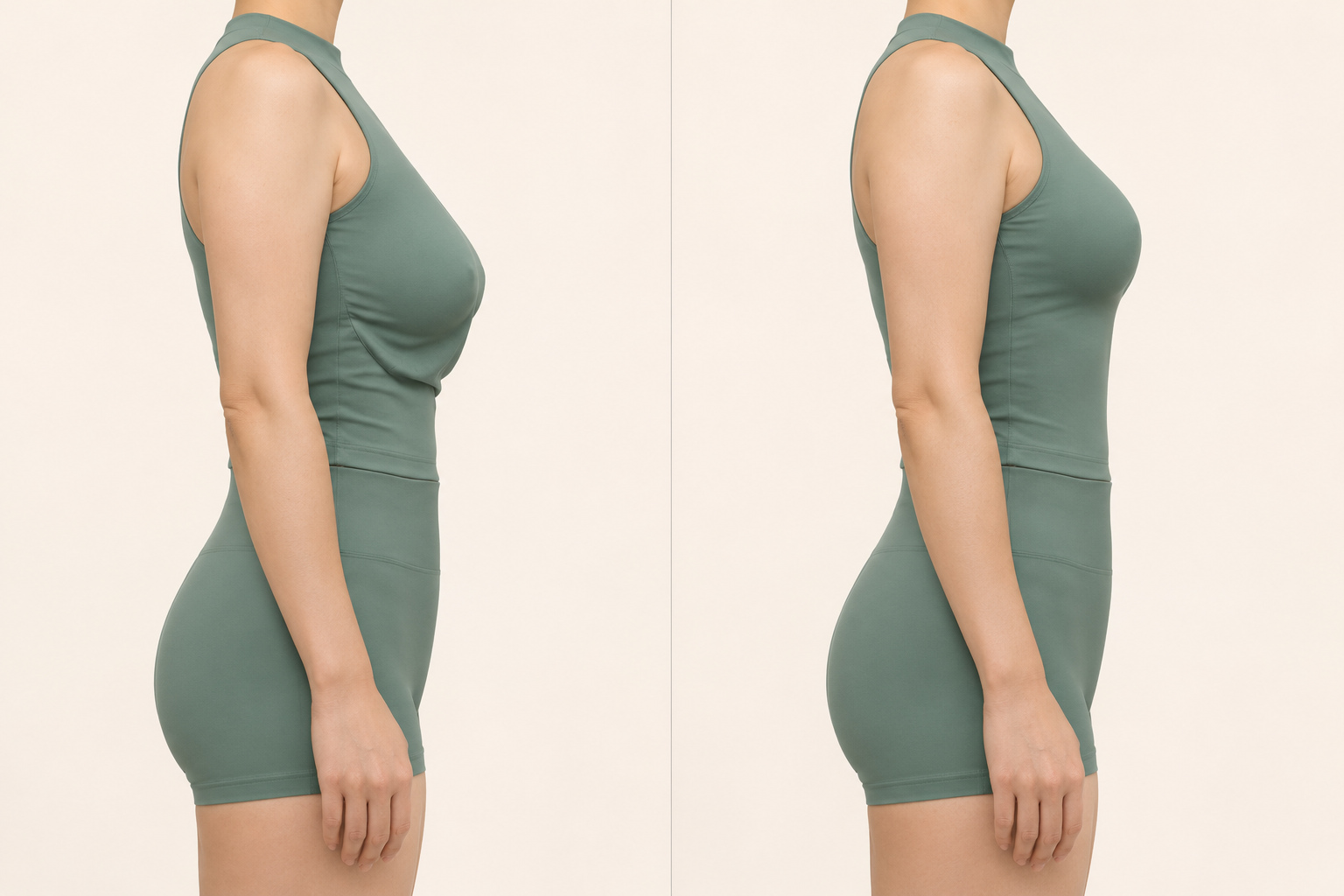
※ This is a simulated image. Actual results may vary by individual.
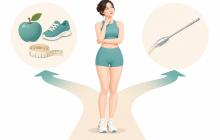
Areas that remain even after losing weight are addressed with liposuction
When you lose weight through dieting, fat decreases throughout the body, but even after losing enough weight, there may still be certain areas where fat remains. When weight is lost, fat cells tend to become smaller in volume but not fewer in number [8], and where and how much fat accumulates differs from person to person and is known to be strongly influenced by genetics [9]. So even if you diet and exercise more, there are cases in which that area does not keep getting smaller, and the literature regards this kind of diet-resistant local fat as a target for contouring surgery [10].
Liposuction is a method that reduces the number of fat cells in the area that remains, and fat cells removed surgically are known not to regrow [9][10]. In the breast, fat often remains not only in the breast itself but also in the accessory breast tissue and the armpit area (column on the differences between dieting and liposuction). At Venus Clinic, we explain that you may try weight management first, and if an area still bothers you, you may consider liposuction rather than dieting further. However, the remaining fat cells can enlarge if weight is regained [9], so weight management is still needed after surgery.
Limits — the range of what you can expect
Degree of sagging and individual differences
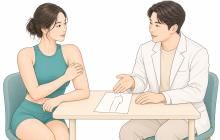
As noted, liposuction may help with sagging, but it cannot completely correct it, and results differ between individuals depending on the degree of sagging, skin elasticity, and the proportion of fat in the breast. We explain the details in the consultation.
Side effects and individual differences
After liposuction, side effects such as bleeding, infection, hematoma, skin irregularity, altered sensation, pigmentation, and swelling may occur, and results may vary by individual. Detailed information about side effects is available in the side effects information.
References
- Mastopexy Utilizing a Dermoglandular Hammock Flap. Aesthetic Surgery Journal. 2005 Jan/Feb. (Discussion)
- Muntan CD, Sundine MJ, Rink RD, Acland RD. Inframammary Fold: A Histologic Reappraisal. Plastic and Reconstructive Surgery. 2000;105(2).
- Blondeel PN, Hijjawi J, Depypere H, Roche N, Van Landuyt K. Shaping the Breast in Aesthetic and Reconstructive Breast Surgery: An Easy Three-Step Principle. Plastic and Reconstructive Surgery. 2009.
- Sabiston Textbook of Surgery, 21st ed. Elsevier; 2022. Chapter 69. Plastic Surgery.
- Mastopexy (Breast Lift). In: StatPearls. StatPearls Publishing.
- Kirwan L. A Classification and Algorithm for Treatment of Breast Ptosis. Aesthetic Surgery Journal. 2002.
- Shiffman MA, Di Giuseppe A (eds). Liposuction: Principles and Practice. Springer; 2006. Chapter 36. Mastopexy (Breast Lift) with Ultrasound-Assisted Liposuction.
- Klein JA. Tumescent Technique: Tumescent Anesthesia & Microcannular Liposuction. Mosby; 2000. Chapter 28.
- Shiffman MA, Di Giuseppe A (eds). Liposuction: Principles and Practice. Springer; 2006. Chapter 26. Liposuction and Lipotransfer for Facial Rejuvenation in the Asian Patient.
- Shiffman MA, Di Giuseppe A (eds). Liposuction: Principles and Practice. Springer; 2006. Chapter 18. Facial Recontouring with Liposuction.
- Breast Ptosis. In: StatPearls. StatPearls Publishing.
In Closing
Breasts sag because the volume inside has changed and the skin that enveloped it cannot keep up at the same pace. Childbirth, breastfeeding, and weight changes; dieting; and age-related changes in the supporting structures are all different paths within this same story. At Venus Clinic, we believe liposuction can be considered even for sagging breasts, and we perform surgery with the aim of helping improve sagging by reducing volume and removing fat evenly through to the superficial layer to induce skin contraction.
References: Breast Reduction Liposuction for Sagging Breasts After Childbirth Differences Between Dieting and Liposuction
Dr. Hakjun Kim, Director, Venus Clinic