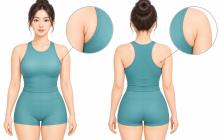
Disharmonious Obesity After Liposuction — Why the Abdomen Can Look Bigger After Reducing Only the Breasts
In the clinic, we often hear comments like "After one area was reduced, another area looks bigger," or "The surgery went well, but when I gain weight, it shows up in unexpected places first." When the size balance between areas treated with liposuction and areas left untreated looks off, we call this disharmonious obesity. It refers to a state in which the overall balance and proportion of the body are disrupted after liposuction, and it is not limited to any single area.
In a previous column (Y-Zone Liposuction for Disharmonious Obesity), we looked closely at one region: the mons pubis, pelvis, and inner thighs. Today we will widen the view and look at the number and size of fat cells, energy balance, and where the remaining fat goes, together with research findings. We will then show, step by step, the progress of one patient who first had breast surgery and then went on to have abdominal surgery because the abdomen looked relatively larger afterward.

Fat Cells Change in "Size," but Their "Number" Does Not Change Easily
To understand disharmonious obesity, we first need to understand how fat cells behave. The number of fat cells increases until puberty; after that, fat gain happens mainly through each individual cell getting larger. Where fat tends to accumulate on the body is strongly influenced by genetics.[3]
The Number of Fat Cells in Adults Stays Constant
A Swedish research team tracked the lifespan of adult fat cells by measuring how much carbon-14—released into the atmosphere during nuclear weapons testing—remained in fat cell DNA. They found that the number of fat cells in adults stayed constant in both lean and obese people, and it stayed the same even after major weight loss. About 10% of fat cells are replaced each year, but the total number remains unchanged.[1]

The same is true when you lose weight. During weight loss, each fat cell simply shrinks in volume while the number of cells stays the same, and in people who were previously obese, the fat tissue contains a higher proportion of fibrous tissue, so the result may be less noticeable.[2] Liposuction, on the other hand, removes the fat cells themselves from the treated area. As a result, even within the same body, the "number of fat cells" differs between treated and untreated areas. When weight is gained later, areas with fewer cells tend to enlarge relatively less, and areas where the cell count is unchanged may become noticeably larger first.[3]
Removing Fat Also Lowers Energy Expenditure
Another point to consider is energy balance. After liposuction, body weight decreases by the weight of the removed fat, and the basal energy expenditure—the energy the body uses at rest—decreases by a corresponding amount. If food intake and activity stay the same as before surgery, there will be leftover calories, so weight can gradually increase and eventually rise to an equilibrium close to the pre-surgery level.[2]
Regaining weight after surgery does not mean the surgery went wrong; it happens because energy balance works the same way it always does. That is why diet and exercise after liposuction are an essential part of maintaining results over the long term.
Where Does the Added Fat Go? — What Studies Show
Several studies have looked at where the remaining fat goes when weight is gained after liposuction. These studies involved anywhere from a few dozen to about a hundred participants and mainly looked at changes in breast, abdominal, and visceral fat, so they should not be read as meaning this happens to everyone.
Reports That Even Slight Weight Gain Went to Remaining Areas, Especially the Breasts
The most striking finding comes from a Dutch research team. Of 48 patients who had abdominal liposuction, 19 (40%) were found to have an increase of at least one bra cup size. In the control group, who had abdominoplasty only, the figure was 11%. And 47% of those whose cup size increased had experienced a small weight gain of about 4% as measured by body mass index (BMI), compared with 3% among those whose cup size did not increase.[4] In other words, the remaining areas may respond first even to a slight weight gain, without a large weight increase. Earlier, a U.S. study found that 34% of 73 patients who had power-assisted liposuction reported that their breasts felt larger, and this was associated with suction of the abdomen and buttocks.[5] This phenomenon is explained as one form of disharmonious obesity, in which untreated areas such as the breasts look relatively larger compared with areas where the number of fat cells has been reduced.[3]
Changes When Lifestyle Was Not Changed
This has also been examined in a randomized controlled trial. When 32 non-obese women (14 in the surgery group, 18 in the control group) were followed for one year, the difference in body fat percentage between the two groups was 1.82 percentage points at 6 weeks, but after one year the difference was no longer statistically significant. The thighs remained reduced, but fat reaccumulated in the abdomen. Keep in mind that the participants in this study had agreed not to change their lifestyle during the study period.[6] In a study of 36 normal-weight women who had small-volume abdominal liposuction, the group that did not exercise after surgery showed about a 10% increase in visceral fat and a decrease in energy expenditure after 6 months, while these changes did not appear in the group that exercised for 4 months. The reduction in subcutaneous abdominal fat was maintained in both groups.[7] The decrease in energy expenditure mentioned earlier was actually observed in research.
| Study | Participants and Methods | What Was Observed |
|---|---|---|
| van der Lei 2007 [4] | 48 abdominal liposuction patients, 53 abdominoplasty controls (retrospective study) | Increase of at least one bra cup size in 40% of the liposuction group (11% of controls) |
| Yun 2003 [5] | 73 power-assisted liposuction patients (retrospective review) | 34% reported breast enlargement; associated with abdominal and buttock suction |
| Hernandez 2011 [6] | 32 non-obese women, randomized controlled, 1 year | After 1 year, the difference in total body fat percentage disappeared, with reaccumulation in the abdomen |
| Benatti 2012 [7] | 36 normal-weight women, randomized to exercise or no-exercise groups | About 10% increase in visceral fat and lower energy expenditure in the no-exercise group; none in the exercise group |
There Is Also Evidence to the Contrary
Not all studies point in the same direction. In a prospective study using photographic measurements of 301 cases, mostly non-obese patients, there was no difference in upper-body measurements between the group that had liposuction combined with abdominoplasty and the group that had breast surgery only, and among 46 patients followed for more than a year, no evidence of fat reaccumulation was found.[8] However, this study has a level of evidence of III (observational study) and mainly involved non-obese patients, while most of the studies above looked at cases where weight was gained—both points should be considered together. In summary, the interpretation that best reconciles these studies is that if weight is maintained, redistribution may not be noticeable, but if weight is gained, the remaining areas may stand out first. We should also be honest that results differ from study to study.
Disharmonious Obesity Seen Through a Case — Breaking the Results into Stages
Now let us look at one patient's progress. Because the breasts were large, this patient first had breast liposuction. Once the breasts became smaller, an imbalance in which the abdomen looked relatively larger became noticeable, so the patient went on to have liposuction of the abdomen, flanks, waist, and back. According to the surgical records, the interval between the breast surgery and the abdominal surgery was 16 days. To explain how disharmonious obesity looks, we have separated the results into the stages below.
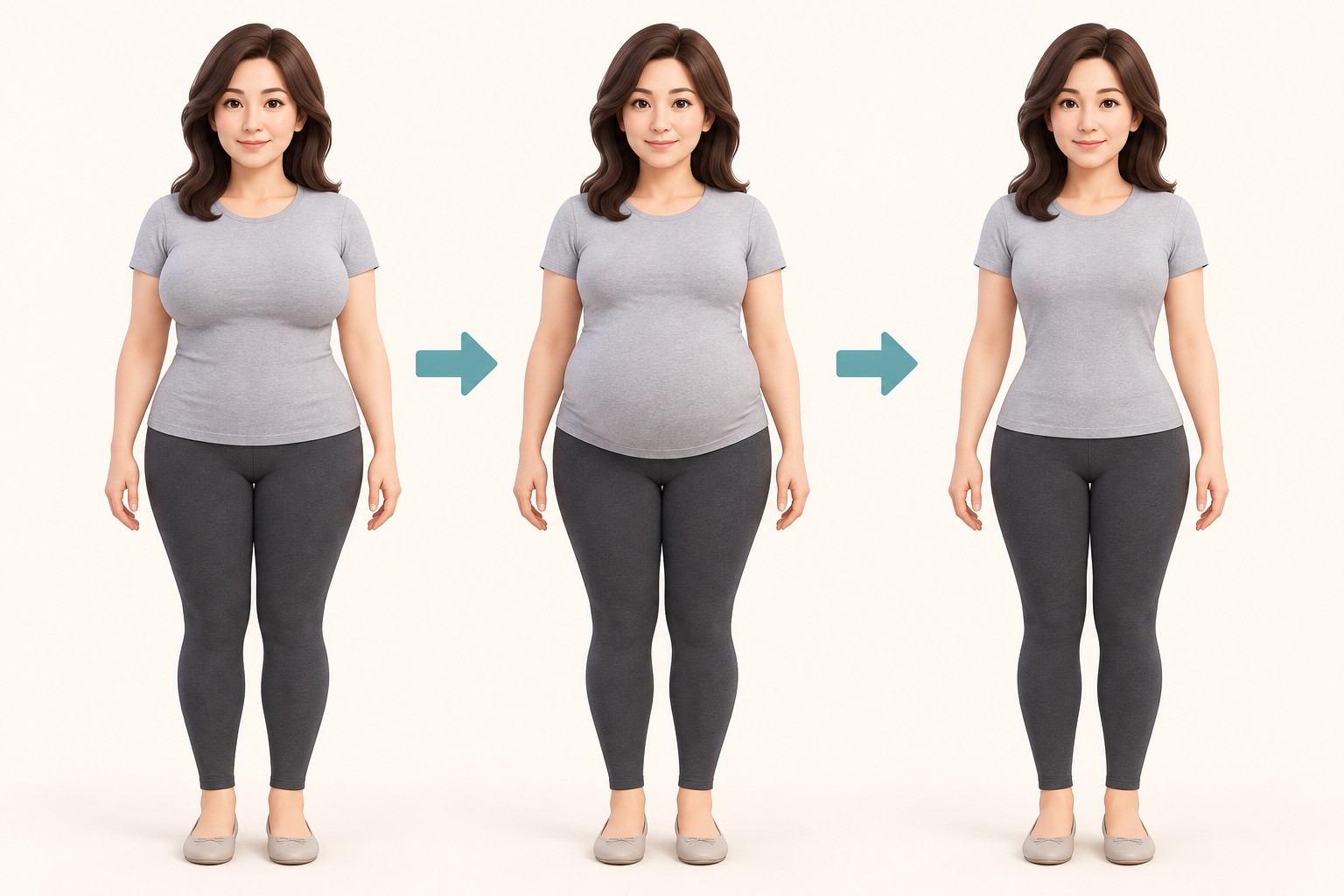
| Stage | Timing and Surgery | Appearance |
|---|---|---|
| ① Before surgery | Day of breast liposuction | The breasts are large and sagging, so the volume of the upper body is concentrated in the breasts. |
| ② After breast surgery | 9 days after breast surgery · before abdominal surgery | As the breasts became smaller, an imbalance in which the abdomen looked relatively larger appeared. |
| ③ After both surgeries | Surgery of the abdomen, flanks, waist, and back 16 days after breast surgery → photographed 3 weeks later | The upper body and abdomen came into similar proportion. |
| ③-2 Abdominal result | About 3 months after abdominal surgery | The abdominal result was checked again. Thigh surgery took place during this interval. |
Planning Surgery by Cosmetic Unit and Line, Not by Isolated Area
Disharmonious obesity is also a matter of surgical planning. If only one area is greatly reduced, the neighboring areas left behind can easily look relatively larger. That is why we at Venus Clinic look at the body not as separate parts but as one cosmetic unit and line—a group of connected areas that the eye reads together as a single shape—when deciding the extent of surgery. The reason we work to reduce step-offs follows the same logic (Why We Operate Along Lines, Not Isolated Areas). As in the case above, when the abdomen looks relatively larger after the breasts have been reduced, continuing on to contour the abdomen based on the proportions of the whole body is one option.
Before surgery, we explain these possibilities in advance. We also emphasize the importance of managing weight and exercising regularly. For cases in which disharmonious obesity developed after liposuction, an approach combining corrective liposuction, if needed, with aerobic exercise and a low-glycemic-index diet has been reported.[3] Research showing that post-surgery exercise prevented an increase in visceral fat points in the same direction.[7]

Liposuction Is Not a Treatment for Metabolic Disease
A systematic review of 11 studies involving 271 people that examined the effects of surgery removing abdominal fat (abdominal lipectomy) on metabolic syndrome markers and insulin sensitivity found no significant metabolic effect in most of the studies.[9] Liposuction is body contouring surgery that refines the body's outline and proportions; it is not surgery to treat diabetes or metabolic disease.
Individual Differences Are Large
Whether disharmonious obesity develops, and which area stands out first, varies from person to person depending on genetics, constitution, pre-surgery body shape, and lifestyle after surgery. The studies above also involved only a few dozen to about a hundred participants, so their findings do not apply to everyone in the same way.
References
- Spalding KL, Arner E, Westermark PO, et al. Dynamics of fat cell turnover in humans. Nature. 2008;453(7196):783-787.
- Klein JA. Tumescent Technique: Tumescent Anesthesia & Microcannular Liposuction. Mosby; 2000. Chapter 25, Chapter 28.
- Shiffman MA, Di Giuseppe A (eds). Liposuction: Principles and Practice. Springer; 2006. Chapter 26, Chapter 51 (Fulton JE Jr, Kerendian F. Disharmonious Obesity Following Liposuction).
- van der Lei B, Halbesma GJ, van Nieuwenhoven CA, van Wingerden JJ. Spontaneous breast enlargement following liposuction of the abdominal wall: does a link exist? Plast Reconstr Surg. 2007;119(5):1584-1589.
- Yun PL, Bruck M, Felsenfeld L, Katz BE. Breast enlargement observed after power liposuction: a retrospective review. Dermatol Surg. 2003;29(2):165-167.
- Hernandez TL, Kittelson JM, Law CK, et al. Fat redistribution following suction lipectomy: defense of body fat and patterns of restoration. Obesity (Silver Spring). 2011;19(7):1388-1395.
- Benatti F, Solis M, Artioli G, et al. Liposuction induces a compensatory increase of visceral fat which is effectively counteracted by physical activity: a randomized trial. J Clin Endocrinol Metab. 2012;97(7):2388-2395.
- Swanson E. Photographic measurements in 301 cases of liposuction and abdominoplasty reveal fat reduction without redistribution. Plast Reconstr Surg. 2012;130(2):311e-322e.
- Seretis K, Goulis DG, Koliakos G, Demiri E. The effects of abdominal lipectomy in metabolic syndrome components and insulin sensitivity in females: a systematic review and meta-analysis. Metabolism. 2015;64(12):1640-1649.
Before-and-After Photos
Below are photos of two patients who had breast liposuction at Venus Clinic, followed by liposuction of the abdomen, flanks, waist, and back, divided by surgical stage. In both patients, the breast surgery was done first; the surgery of the abdomen, flanks, waist, and back followed 16 days later in the first case and 139 days later in the second case. In the first case, the after photos were taken about 5 weeks after breast surgery (about 3 weeks after abdominal surgery) and about 3 months after abdominal surgery. In the second case, the after photo for the breast surgery was taken about 9 days after breast surgery, and the after photo for the abdominal surgery was taken about 10 days after abdominal surgery. Swelling may still be present at these points, so these are not final results.
First Case — Abdominal Surgery 16 Days After Breast Surgery
First Pair — Before Breast Surgery and After Both Surgeries
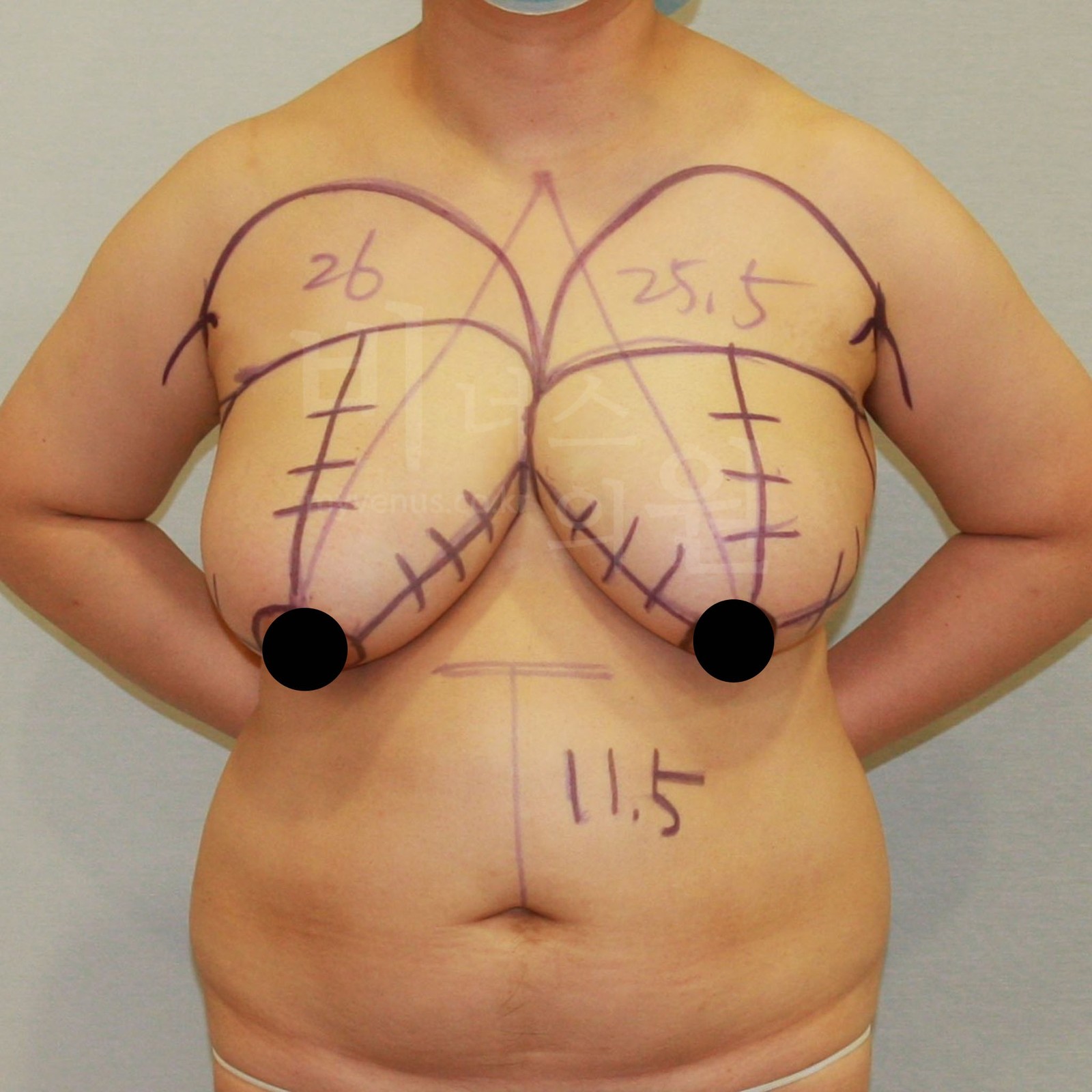
① Before surgery — Front view · Photo taken on the day of breast surgery.
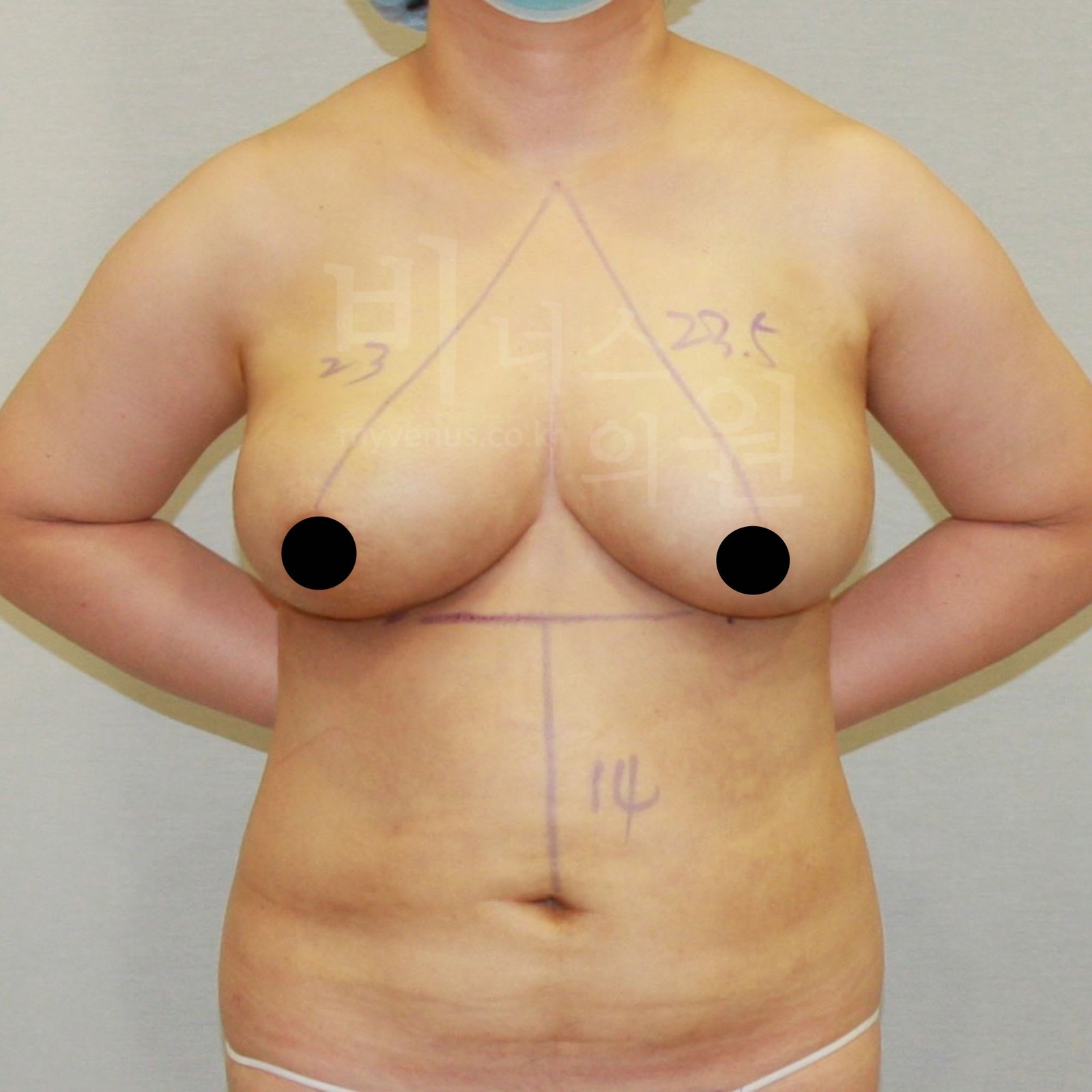
③ After both surgeries — Front view · About 5 weeks after breast surgery and about 3 weeks after abdominal surgery.
This is a case with large breasts and a prominent abdomen. The left photo was taken on the day of breast surgery, and the right photo about 5 weeks after breast surgery and about 3 weeks after abdominal surgery. The photos still show the measurement lines I drew myself to plan the surgery and check the changes. The distance from the center of the collarbone to the nipple changed from 26 cm and 25.5 cm to 23 cm and 23.5 cm, and the distance from the breast fold to the navel changed from 11.5 cm to 14 cm. Based on these values, the breasts appear to have moved up by about 2.5 cm. This change is the combined result of both the breast surgery and the abdominal surgery, and because the two surgeries were 16 days apart, it also includes the effect of continued skin contraction after the breast surgery. It cannot be described as the result of the breast surgery alone.
| Information on the Posted Liposuction Before-and-After Photos | |||
|---|---|---|---|
| - Same person | Surgery performed at Venus Clinic; same person | - Date taken | Taken around 2012; comparison at about 5 weeks after breast surgery (about 3 weeks after abdominal surgery) |
| - Same conditions | Edited to the same posture and size as closely as possible | - Side effects | https://en.myvenus.co.kr/should_know/38861 |
Second Pair — Before and After Abdominal Surgery
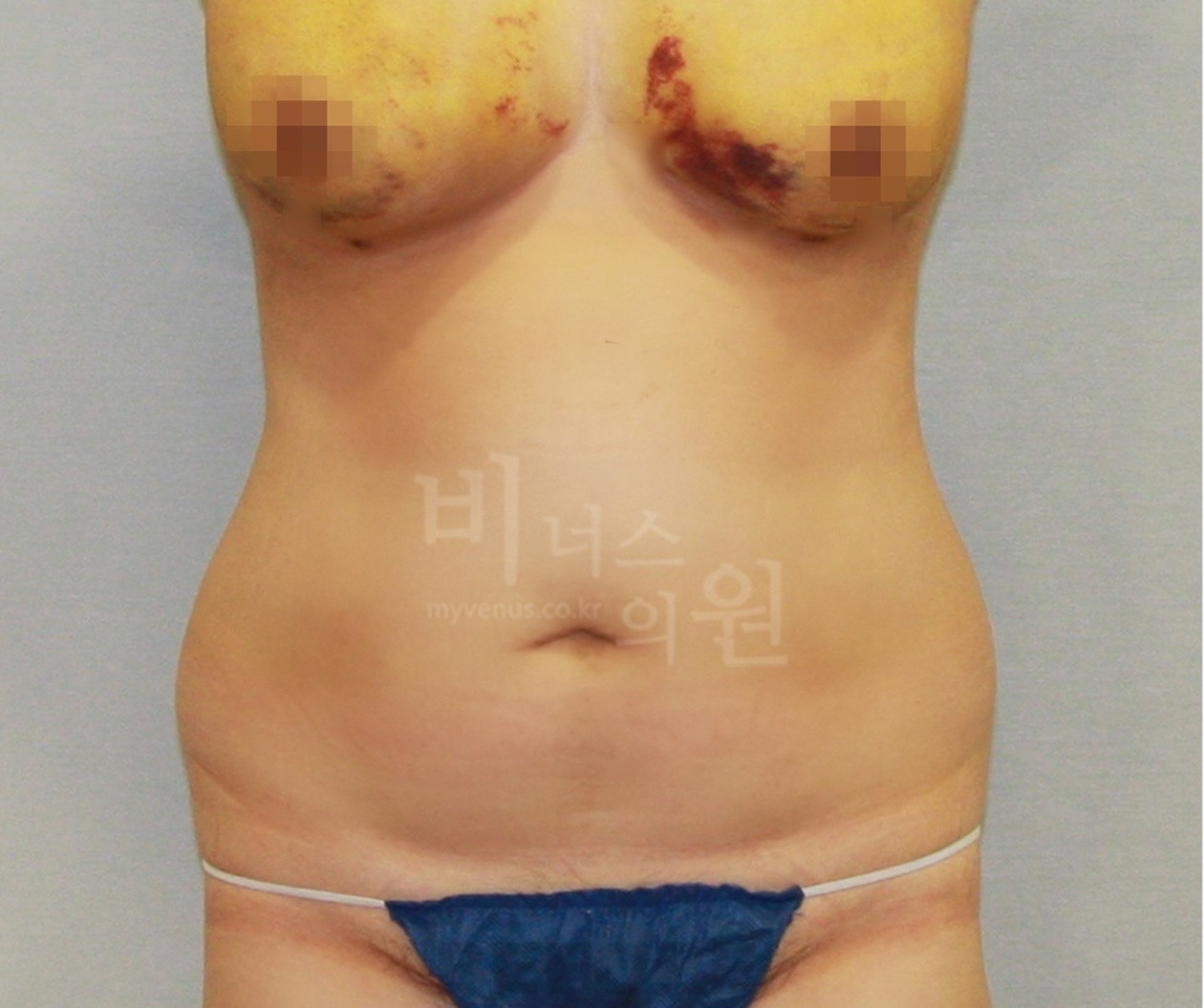
② After breast surgery · Before abdominal surgery — Front view · 9 days after breast surgery, 7 days before abdominal surgery.
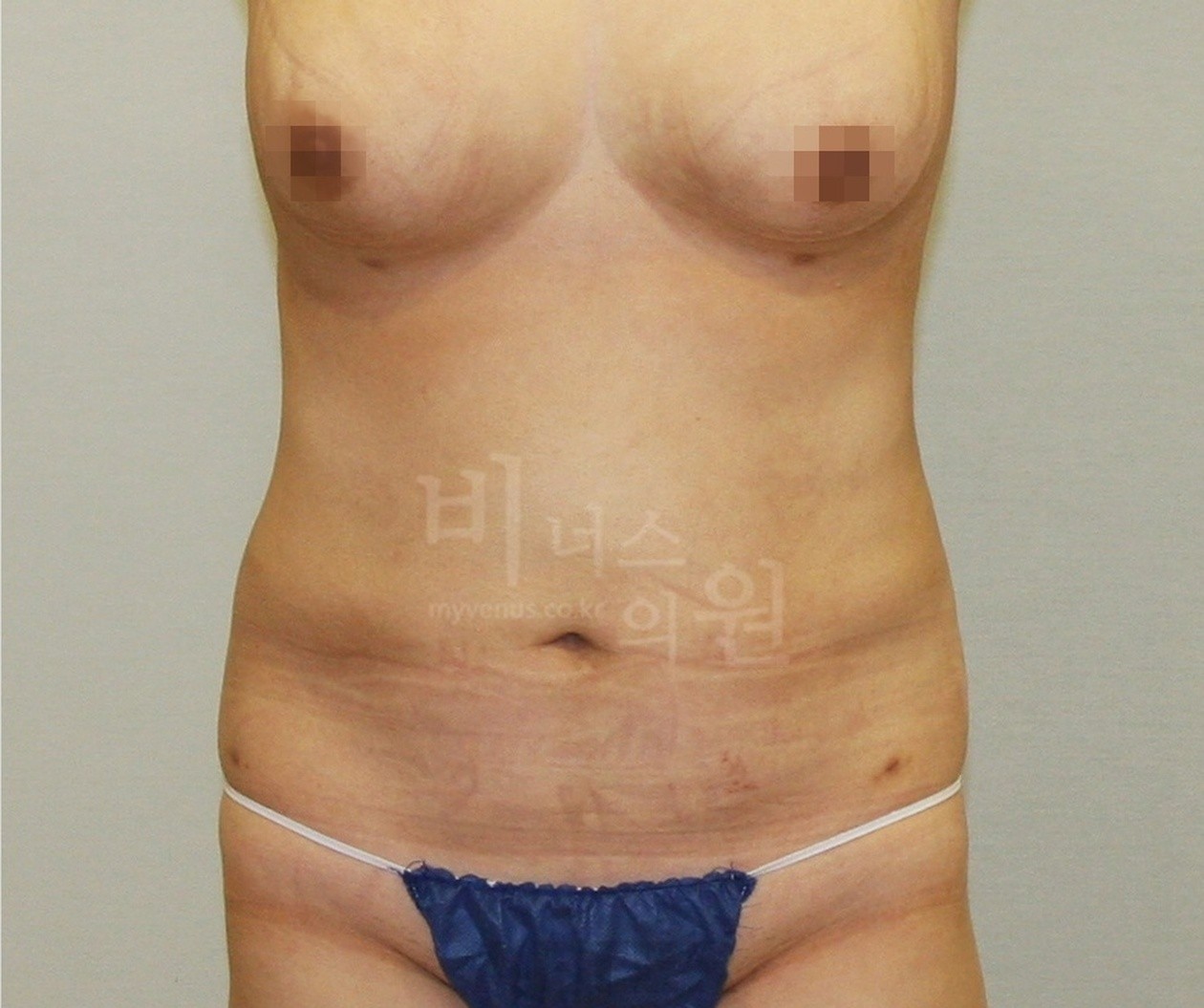
③-2 After abdominal surgery — Front view · About 3 months after abdominal surgery.
This is a case in which the abdomen looked relatively larger after the breasts were reduced first. The left photo was taken 9 days after breast surgery and 7 days before abdominal surgery, and bruising is still visible on the breasts. As the breast volume decreased, the abdomen below looked relatively more prominent—this is the imbalance stage described in this column. The right photo was taken about 3 months after liposuction of the abdomen, flanks, waist, and back, and the proportions of the whole torso have come into balance. This point was also one month after thigh surgery.
| Information on the Posted Liposuction Before-and-After Photos | |||
|---|---|---|---|
| - Same person | Surgery performed at Venus Clinic; same person | - Date taken | Taken around 2012; comparison at about 3 months after abdominal surgery |
| - Same conditions | Edited to the same posture and size as closely as possible | - Side effects | https://en.myvenus.co.kr/should_know/38861 |
Second Case — Abdominal Surgery 139 Days After Breast Surgery
First Pair — Before and After Breast Surgery
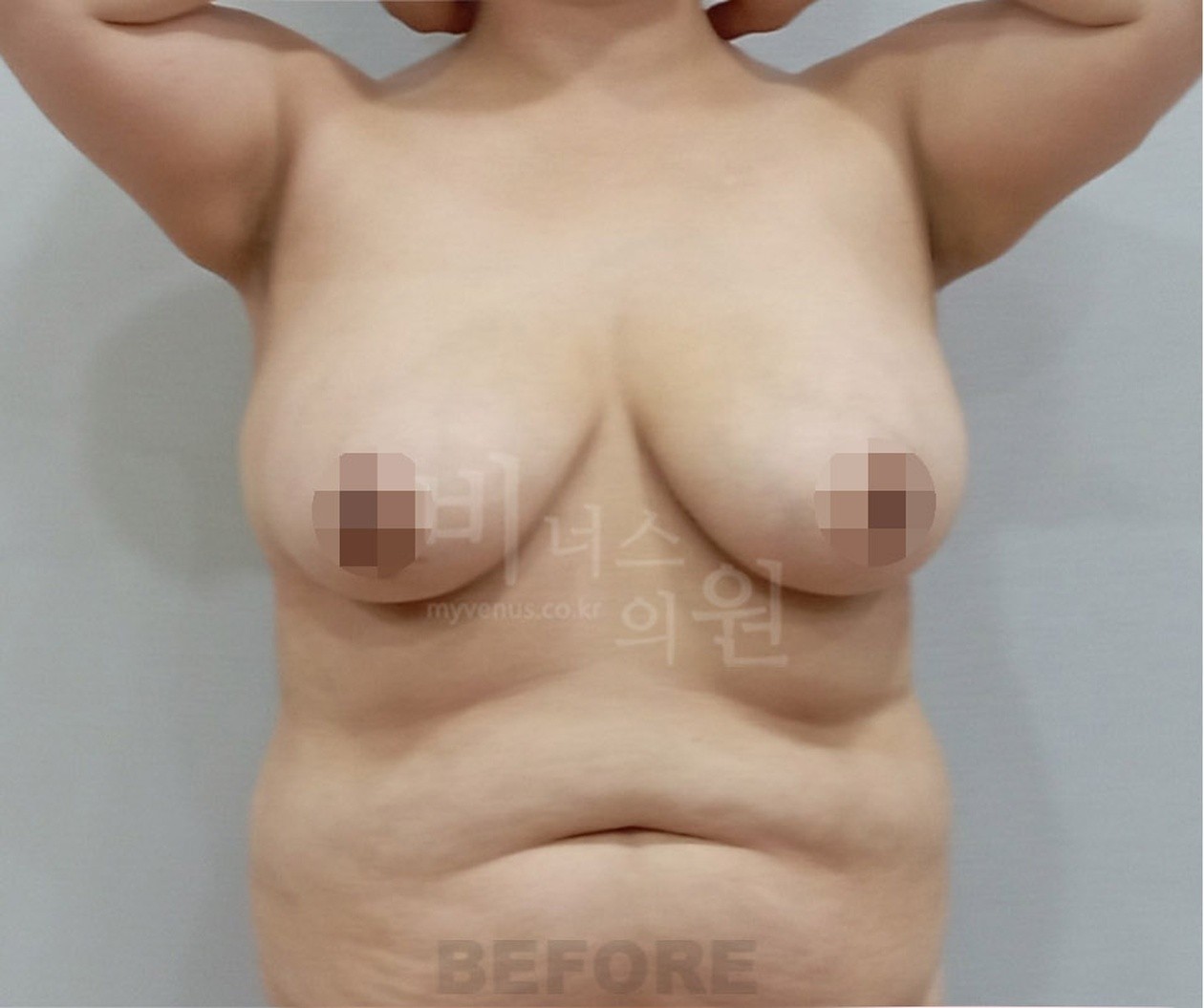
Before breast surgery — Front view · Photo taken on the day of breast surgery.
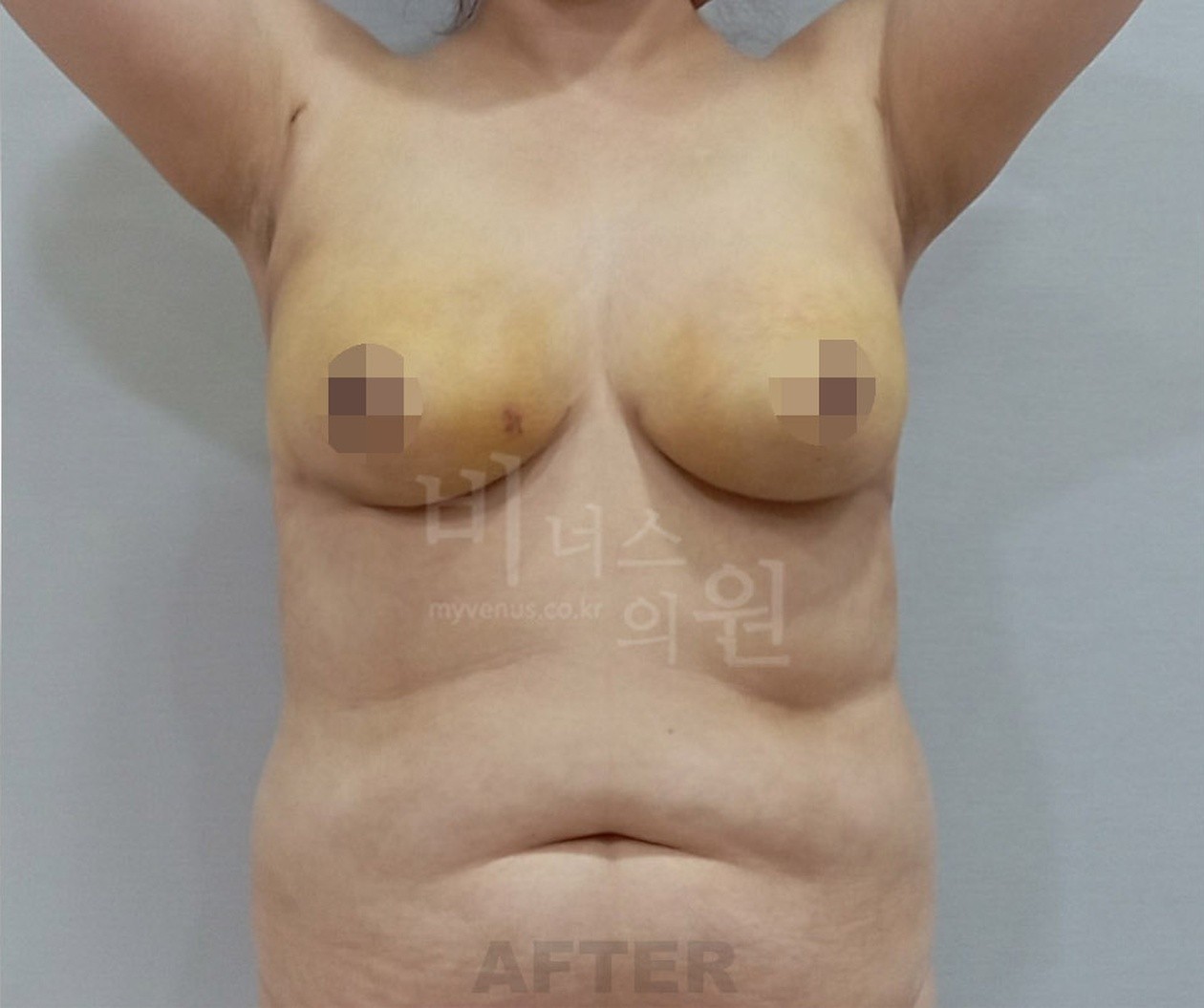
After breast surgery — Front view · 9 days after breast surgery.
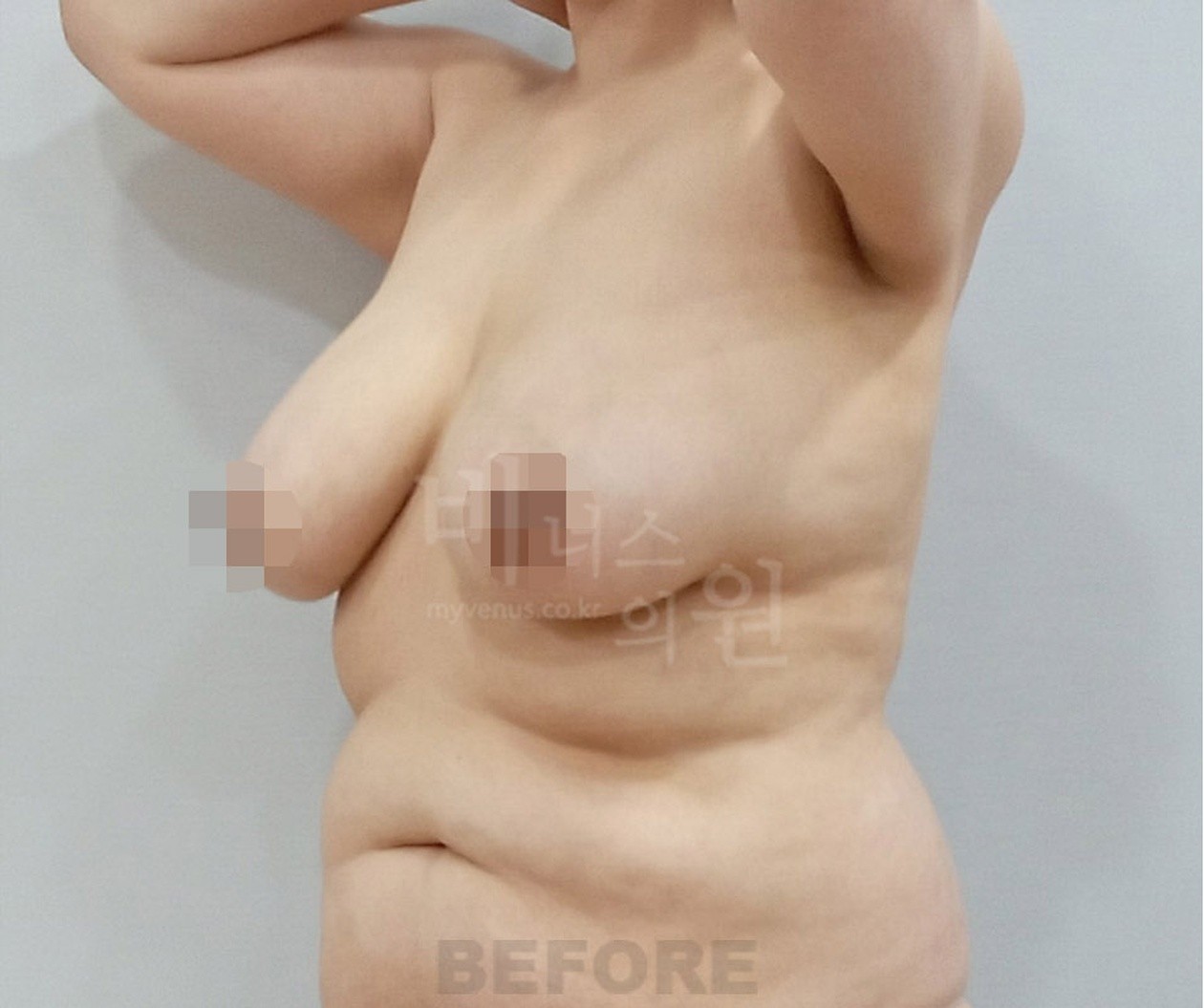
Before breast surgery — Oblique view · Photo taken on the day of breast surgery.
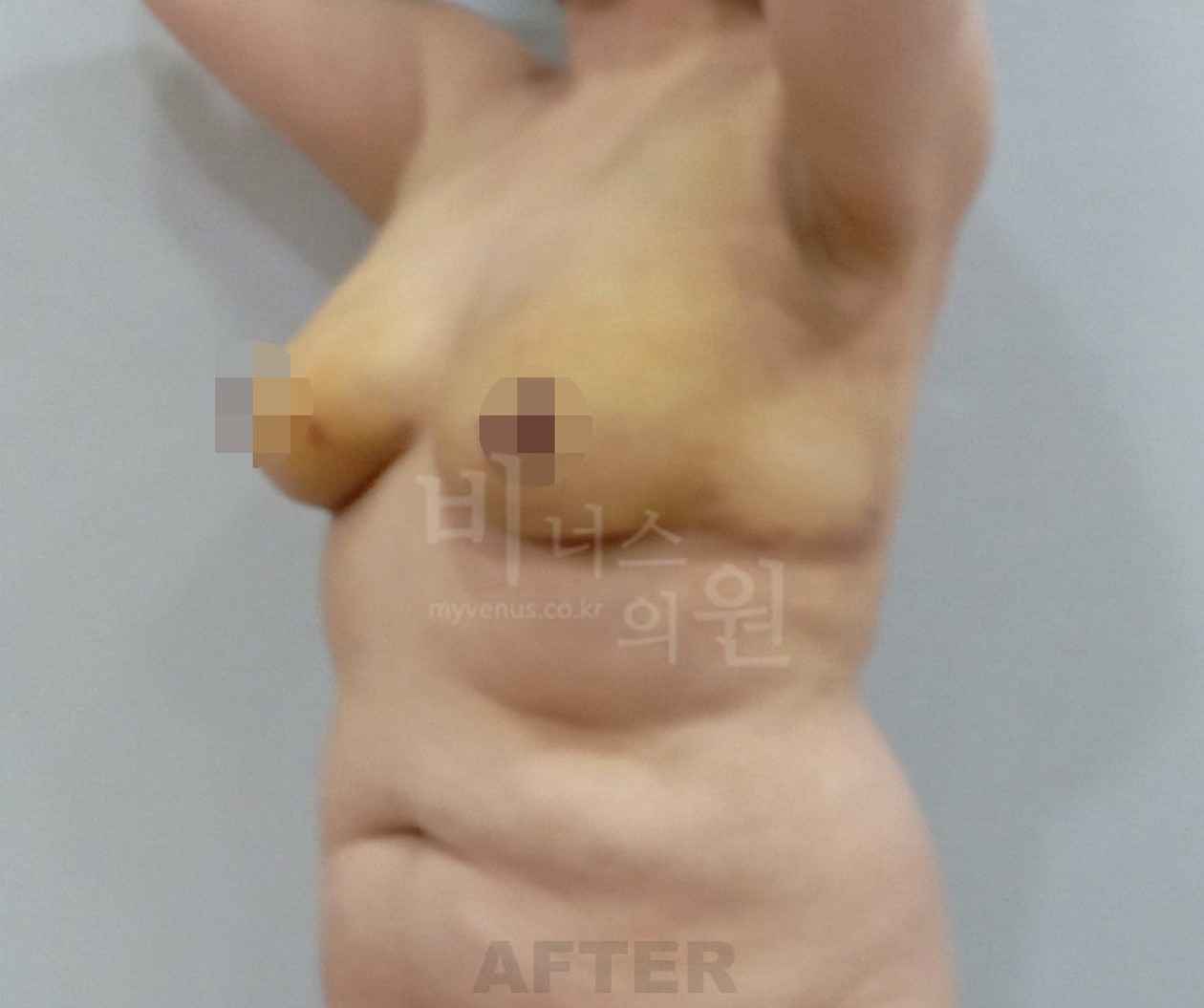
After breast surgery — Oblique view · 9 days after breast surgery.
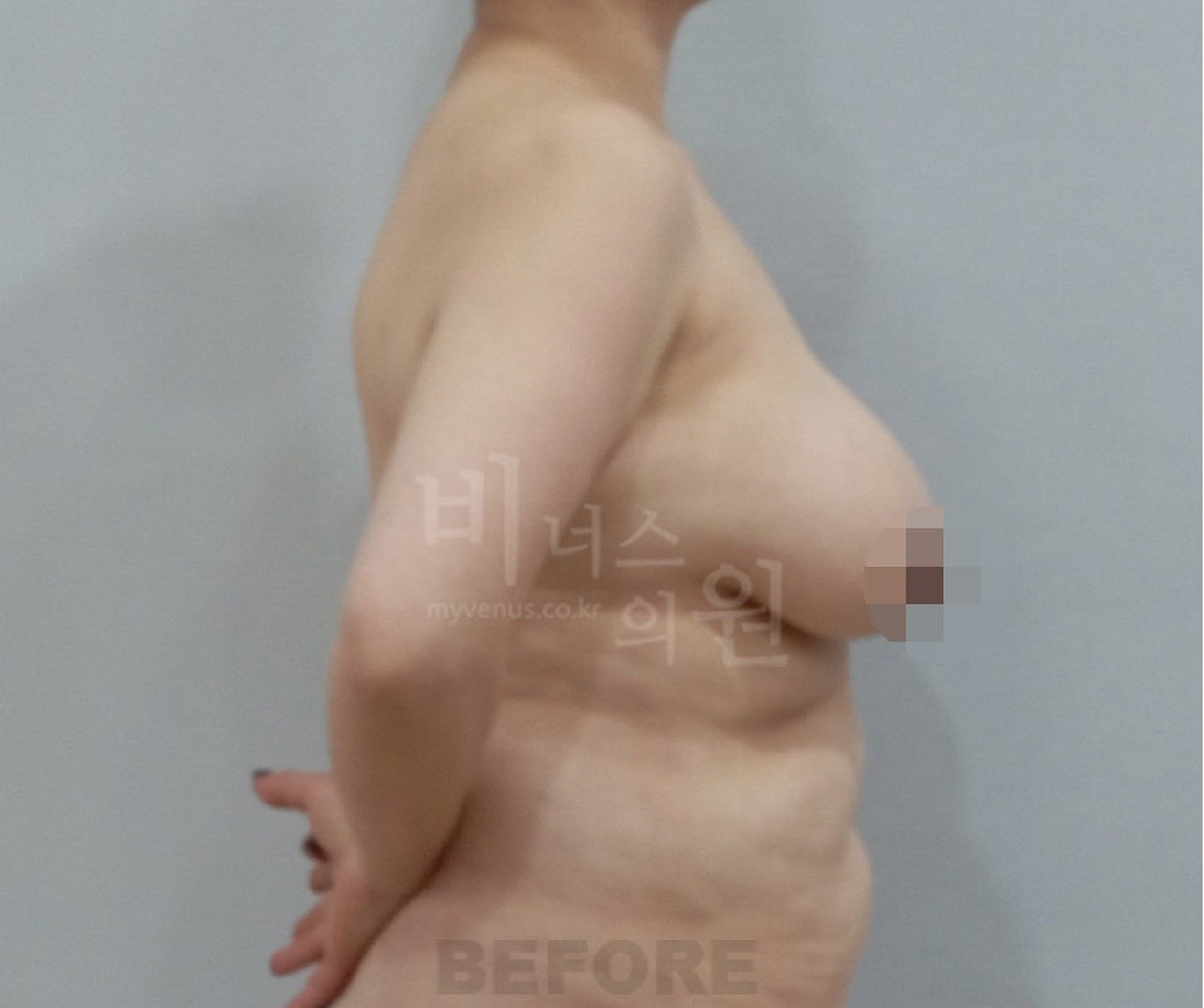
Before breast surgery — Side view · Photo taken on the day of breast surgery.
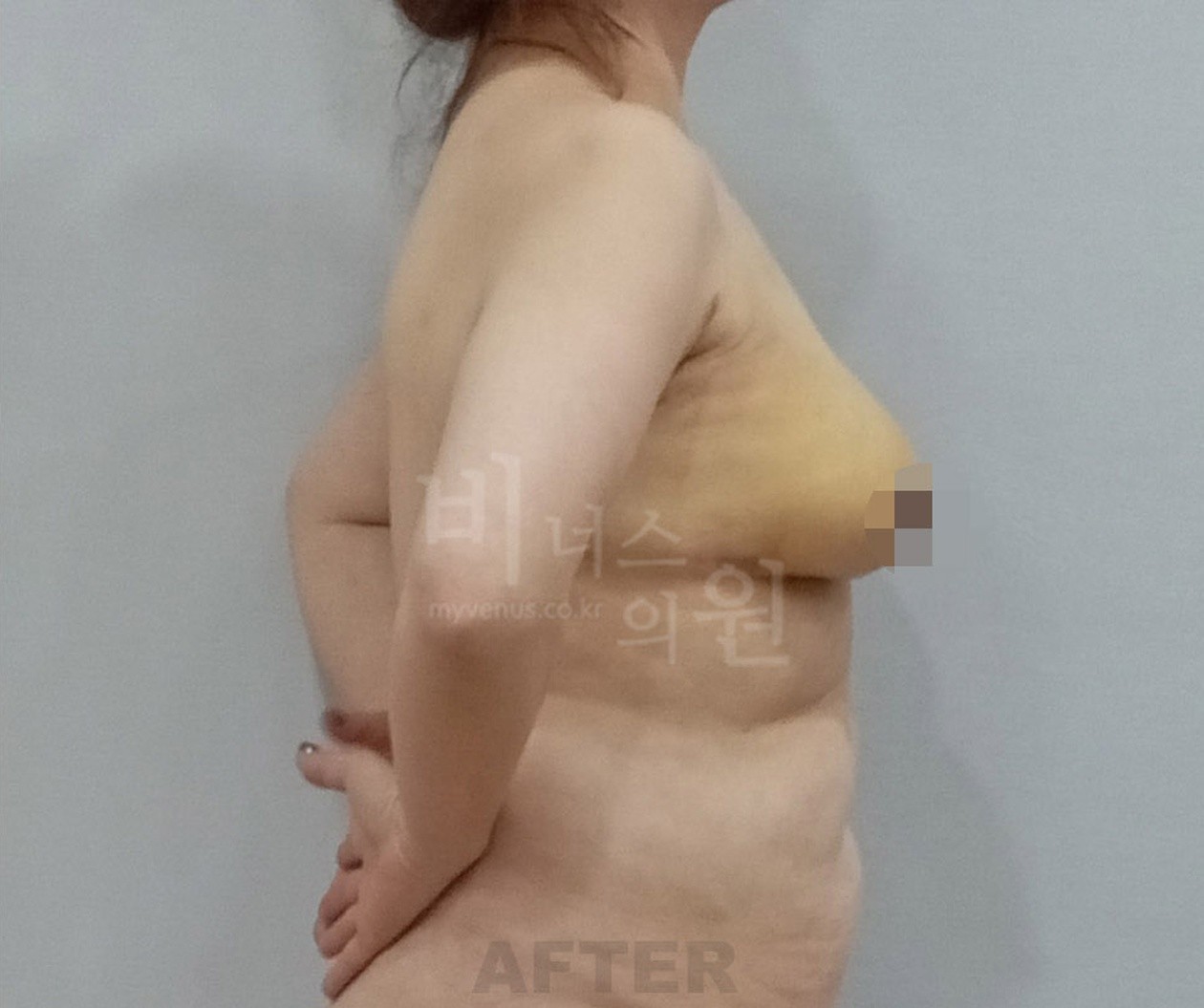
After breast surgery — Side view · 9 days after breast surgery.
This is a case with large, sagging breasts. The patient had breast liposuction including the underarm area, and the right photos were taken 9 days after breast surgery, when bruising and swelling are still present. As the breast volume decreased, the volume of the abdomen—which had been less visible because the breasts covered it before surgery—begins to stand out relatively more.
| Information on the Posted Liposuction Before-and-After Photos | |||
|---|---|---|---|
| - Same person | Surgery performed at Venus Clinic; same person | - Date taken | Taken around 2024; comparison at about 9 days after breast surgery |
| - Same conditions | Edited to the same posture and size as closely as possible | - Side effects | https://en.myvenus.co.kr/should_know/38861 |
Second Pair — Before and After Abdominal Surgery, 139 Days After Breast Surgery
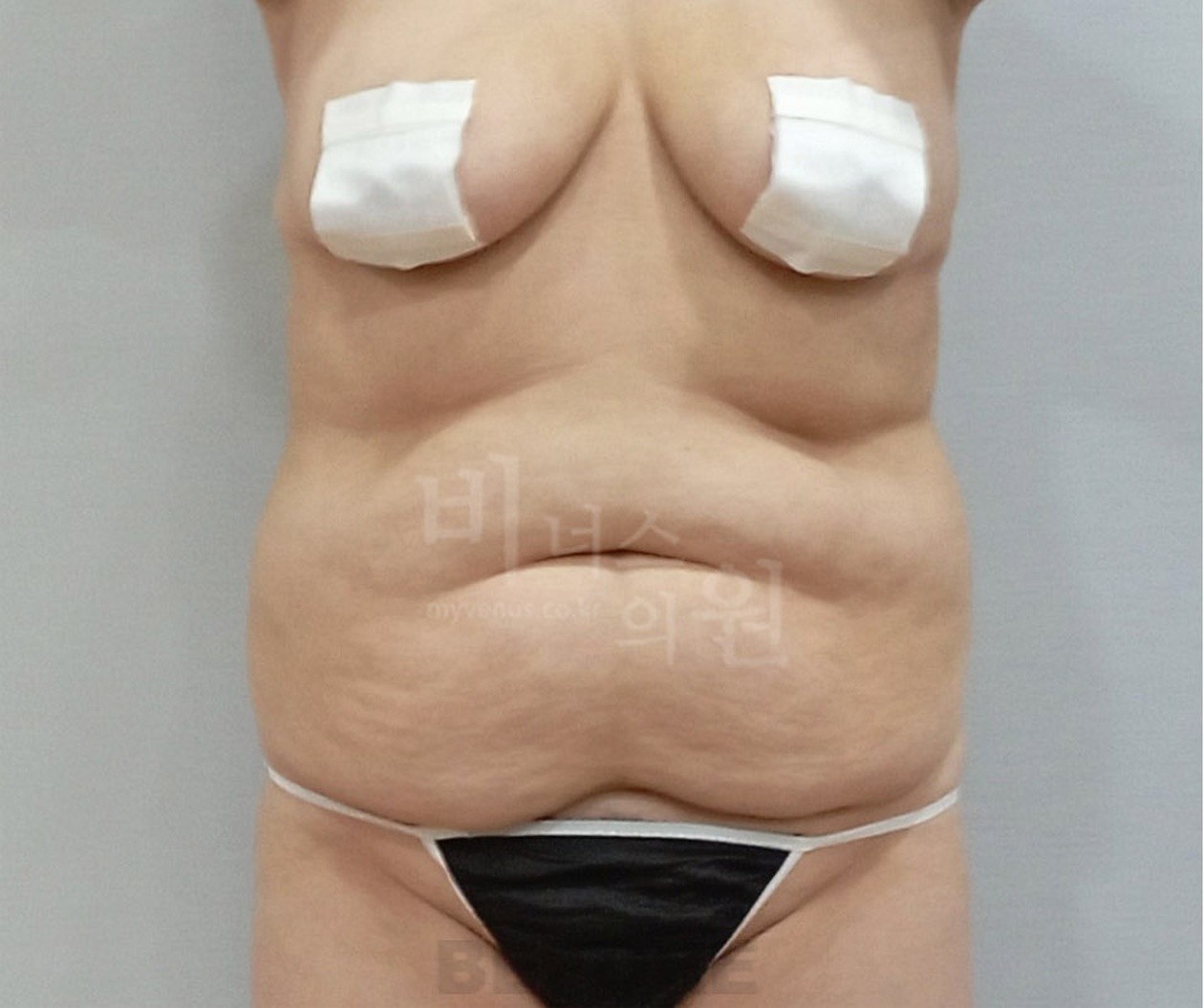
Before abdominal surgery — Front view · 139 days after breast surgery; photo taken on the day of abdominal surgery.
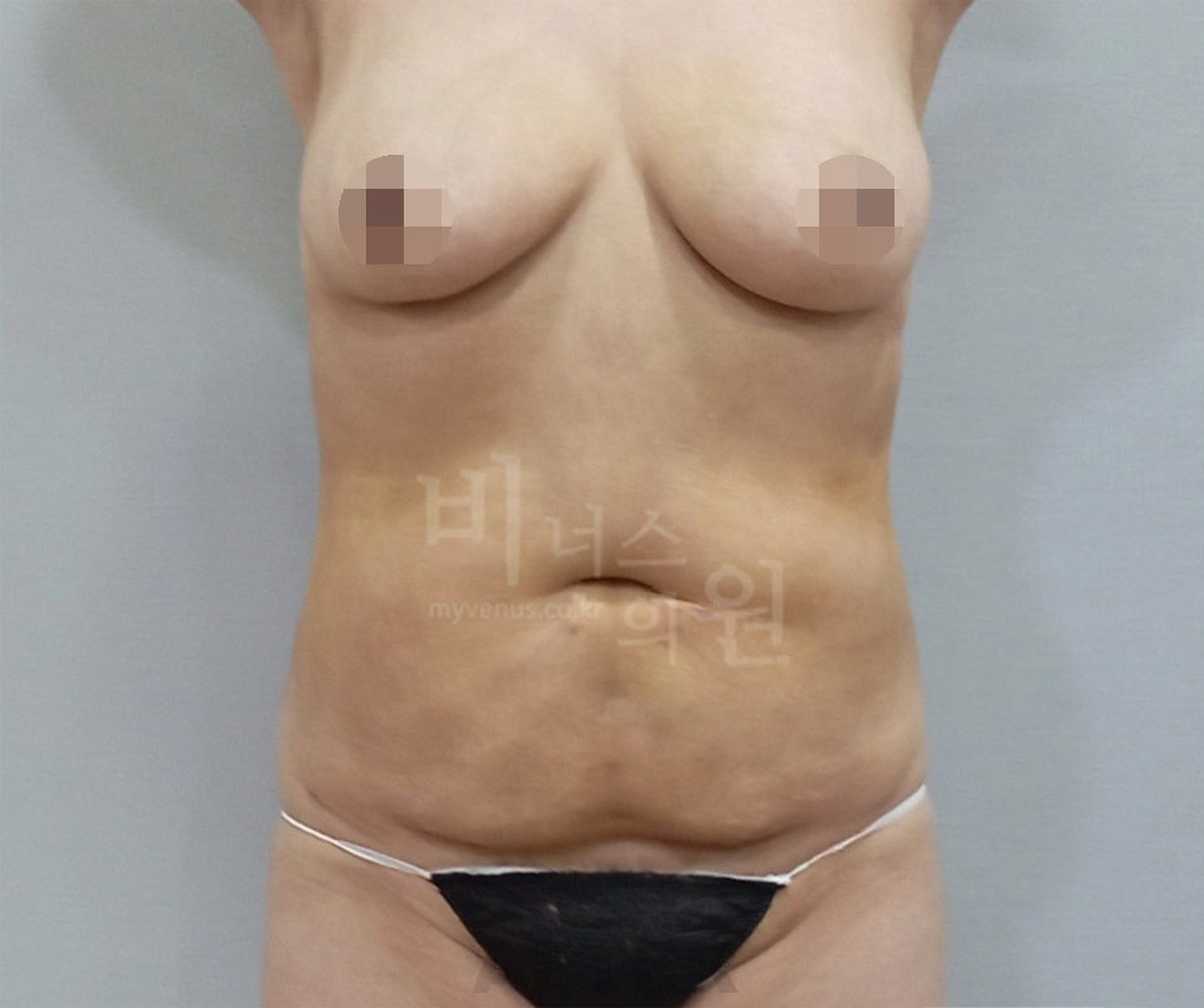
After abdominal surgery — Front view · 10 days after abdominal surgery.
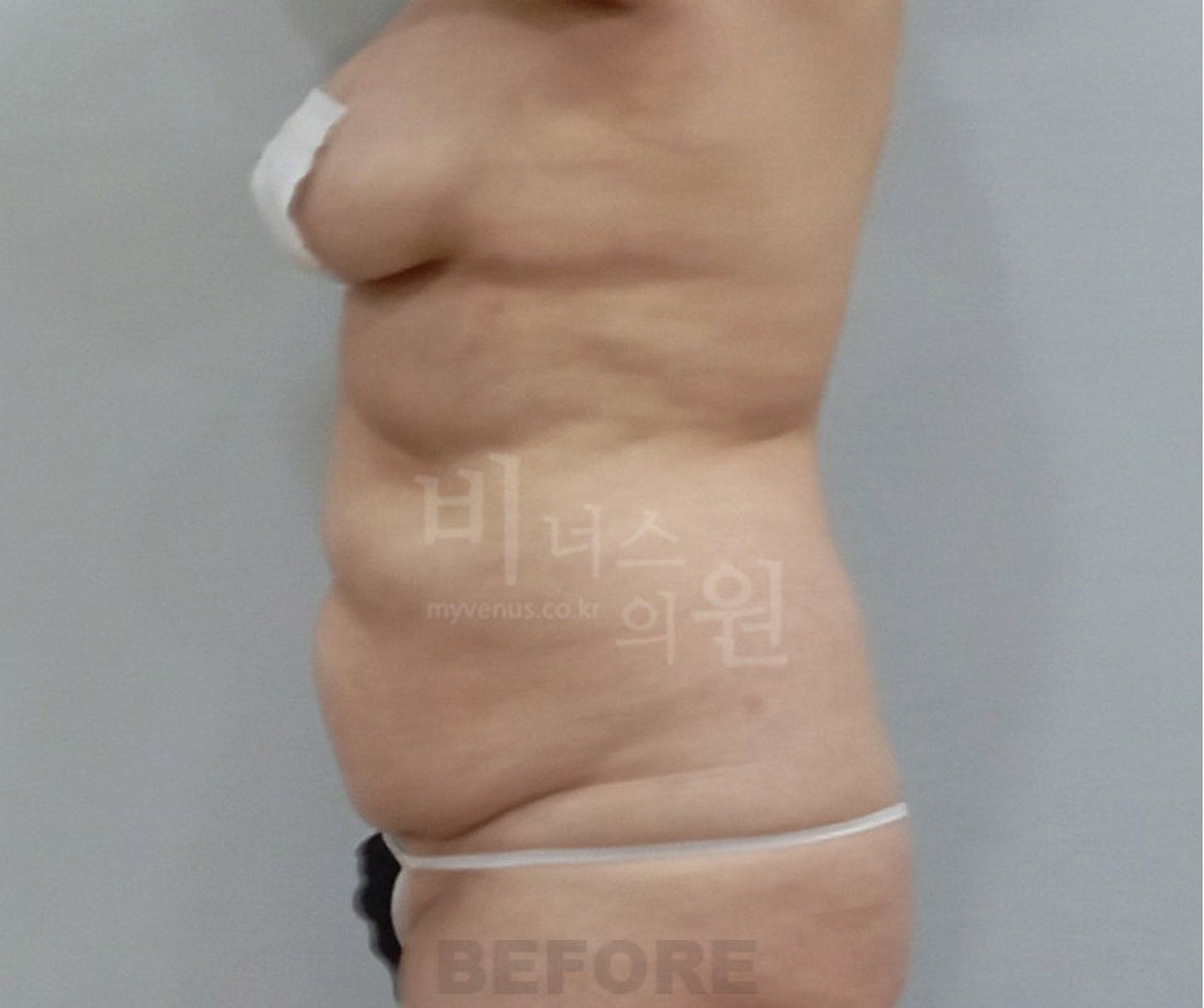
Before abdominal surgery — Side view · 139 days after breast surgery; photo taken on the day of abdominal surgery.
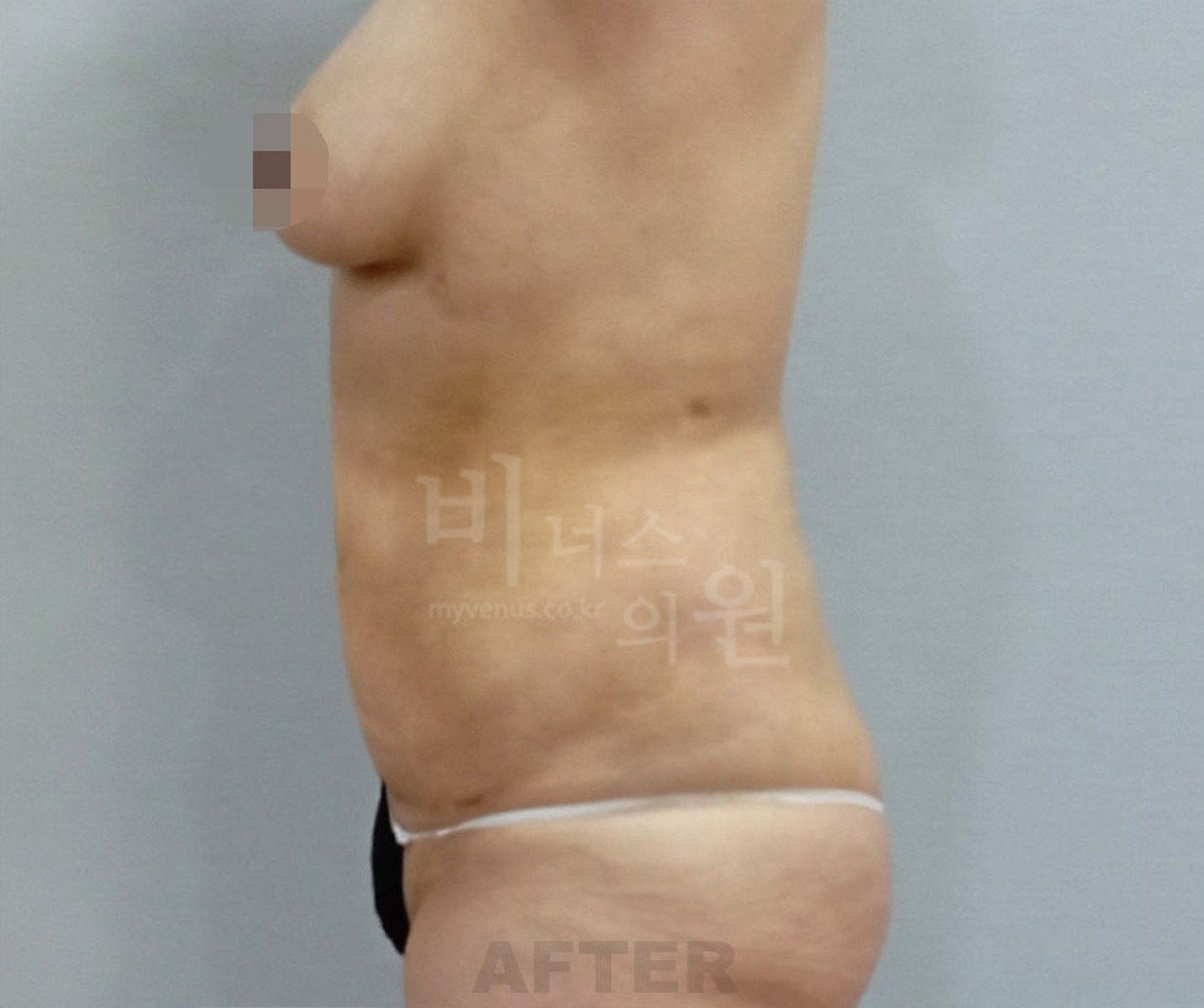
After abdominal surgery — Side view · 10 days after abdominal surgery.
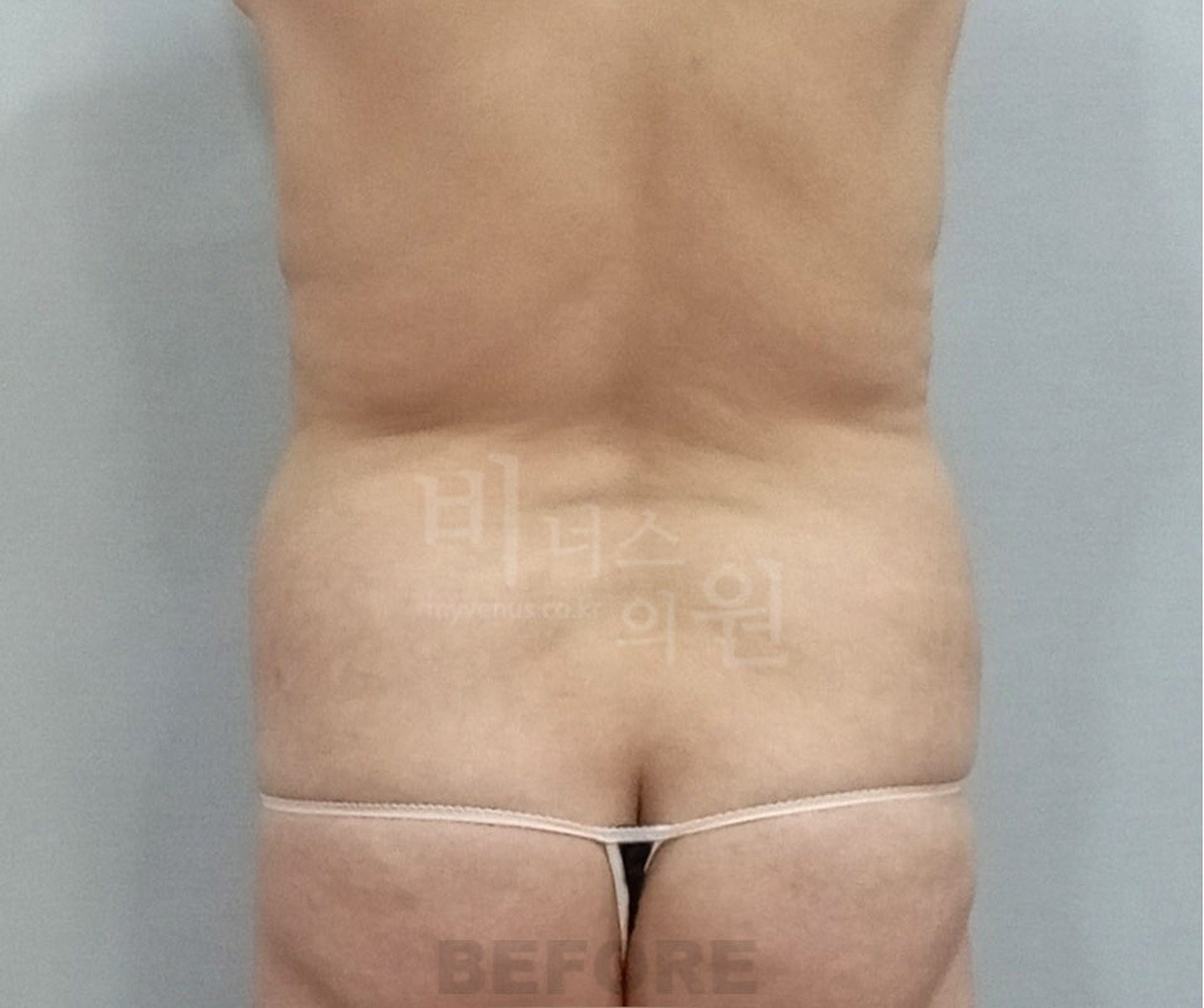
Before abdominal surgery — Back view · 139 days after breast surgery; photo taken on the day of abdominal surgery.
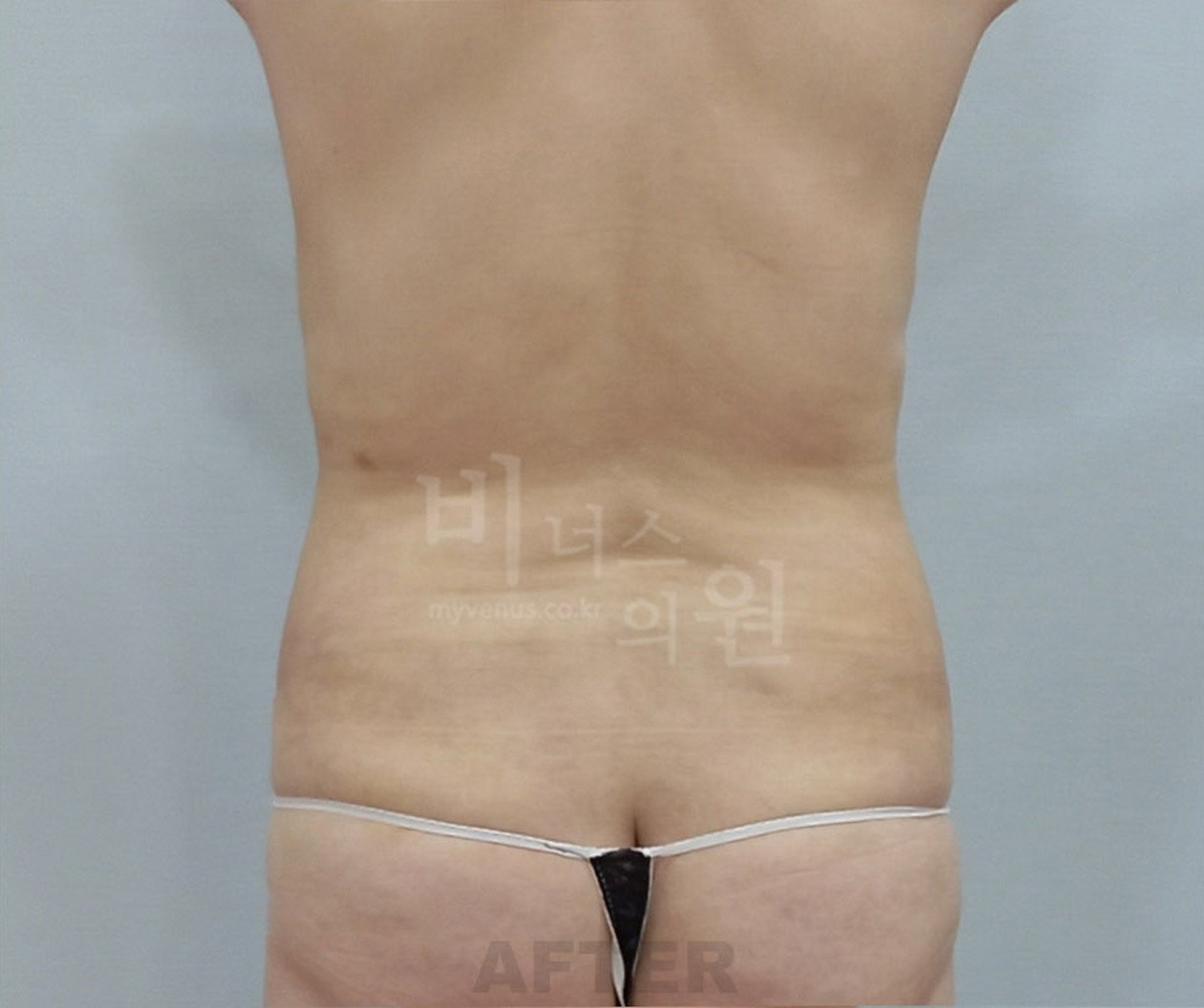
After abdominal surgery — Back view · 10 days after abdominal surgery.
This is a case in which the abdomen looked relatively larger after breast surgery. The left photos were taken 139 days after breast surgery, on the day of abdominal surgery. The breasts have been reduced, but the volume of the abdomen and flanks remains, so the proportions of the torso look weighted toward the lower part. This is the imbalance described in this column. The right photos were taken 10 days after liposuction of the abdomen, flanks, waist, and back. Swelling is still present at this point, but in the front, side, and back views alike, the lines of the torso are coming into proportion with the breasts.
| Information on the Posted Liposuction Before-and-After Photos | |||
|---|---|---|---|
| - Same person | Surgery performed at Venus Clinic; same person | - Date taken | Taken around 2024; comparison at about 10 days after abdominal surgery |
| - Same conditions | Edited to the same posture and size as closely as possible | - Side effects | https://en.myvenus.co.kr/should_know/38861 |
In Closing
Once you reach adulthood, the number of fat cells does not change easily, and liposuction reduces the number of fat cells in the treated area. That is why, if weight is gained after surgery, untreated areas may become noticeable first. I believe the way to reduce disharmonious obesity is to plan based on the proportions of the whole body rather than a single area, and to manage weight through diet and exercise after surgery as well. Please also keep in mind that results vary between studies and that individual differences are large.
References: What Is Disharmonious Obesity? Y-Zone Liposuction for Disharmonious Obesity Step-Offs: Why We Operate Along Lines
Dr. Hakjun Kim, Director, Venus Clinic