Why Liposuction When You Could Just Diet and Exercise?
Liposuction has become an almost inevitable procedure for modern people, who live in environments of plenty with too little exercise, and it is now one of the most frequently performed and most popular cosmetic surgeries worldwide.
Even so, during consultations at Venus Clinic, we find that many people seem to think liposuction is a dangerous procedure. Thanks to continuous technical advances, modern liposuction is a generally safe procedure that can be performed under local anesthesia alone.
In 2002, Housman et al. reported that among 94,000 people who underwent liposuction under local anesthesia, there were no liposuction-related deaths at all, providing strong support for the safety of tumescent local-anesthesia liposuction.
Comparing the risk of liposuction with that of other operations, hysterectomy has been reported to carry a mortality rate of 1 in 1,000 (Sloan, 1986) and mastectomy 1 in 333 (Sloan, 1986). Even compared with procedures for conditions that are commonly treated by surgery, liposuction is a relatively safe procedure.
Compared with other cosmetic surgeries, face lifts have been reported at 1 in 5,000 (Baker, 1997) and abdominoplasty at 1 in 600 (Grazer, 1977).
Reference: Is Liposuction Really a Dangerous Surgery?
So liposuction is a generally safe procedure, and beyond the point that "it can reshape the areas you want in a short time" compared with diet or exercise, it has another important advantage.
It is easy to assume that because liposuction removes the fat layer between the skin and the muscle, the skin will lose elasticity and sag after surgery. On the contrary, in many cases the skin actually gains firmness and contracts after liposuction. Even in people with excessive fat accumulation whose skin has stretched and sagged, the loose skin often contracts after surgery, giving a cosmetic improvement along with size reduction.
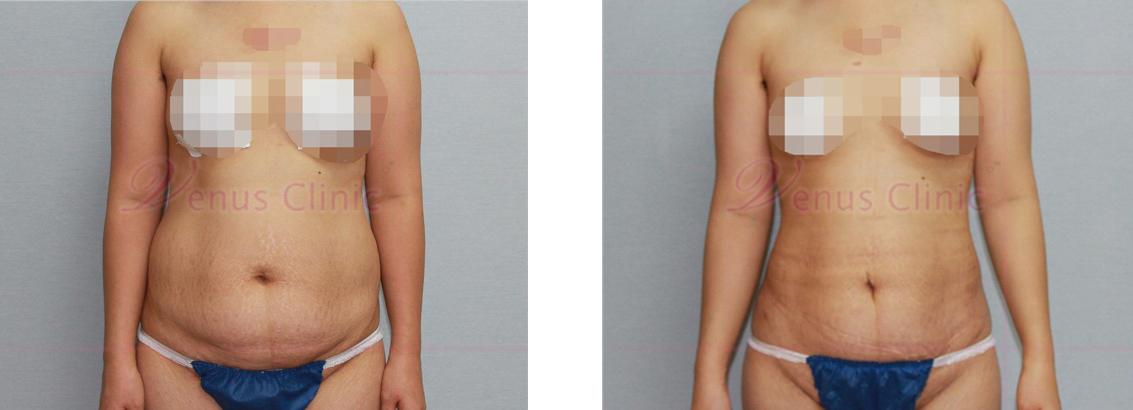
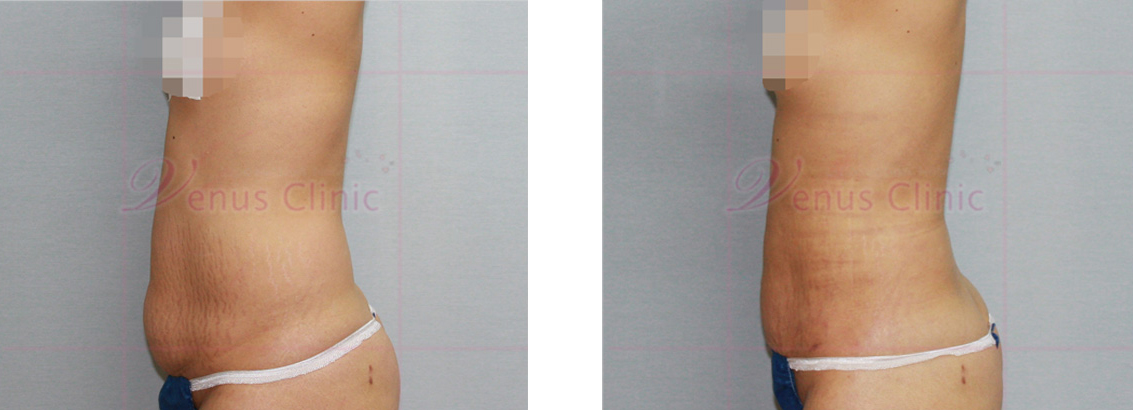
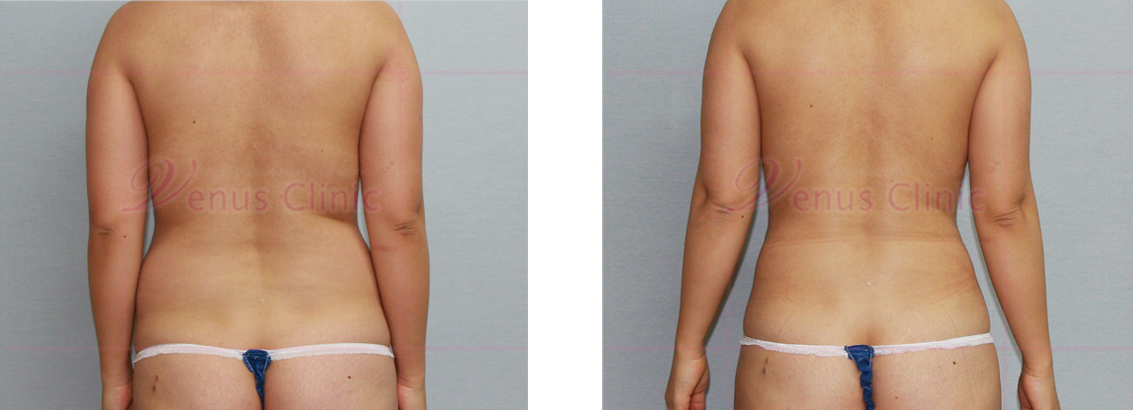
The photos above show a woman in her 30s treated at Venus Clinic, 4 weeks after liposuction of an abdomen whose skin had lost elasticity, developed stretch marks, and become loose after childbirth. The skin contracted well after surgery, and the looseness has improved.
Especially after middle age, loss of skin elasticity and sagging inevitably come along with obesity. Many people already have glucose intolerance, which makes them resistant to dieting, so losing weight is not easy. Even if a diet succeeds, areas such as the face lose fat and look older, and the slimmed areas often end up with loose skin that has lost elasticity, producing a poor cosmetic result.
In addition, if fat removed during liposuction is grafted to the face, it can give a natural look and perhaps even bring back something of a youthful face. In this respect, I think liposuction could also make a wonderful "filial gift" — cosmetic surgery that children give their parents.
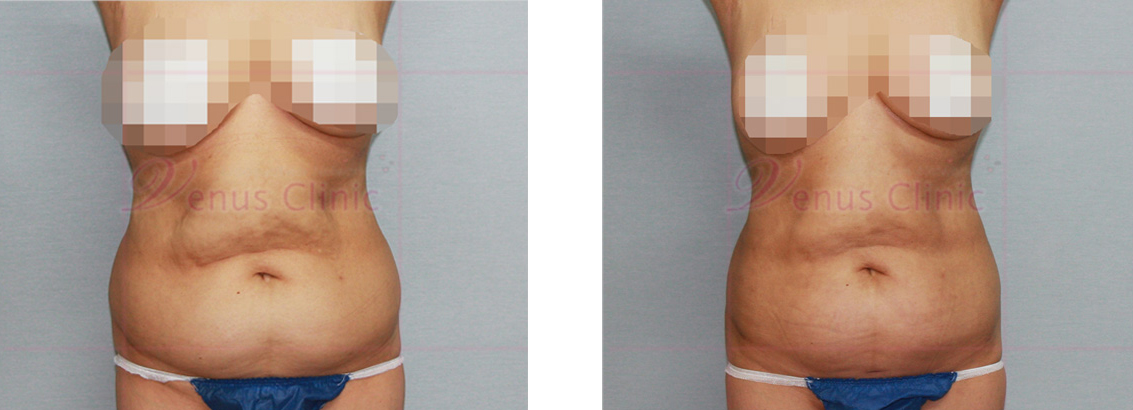
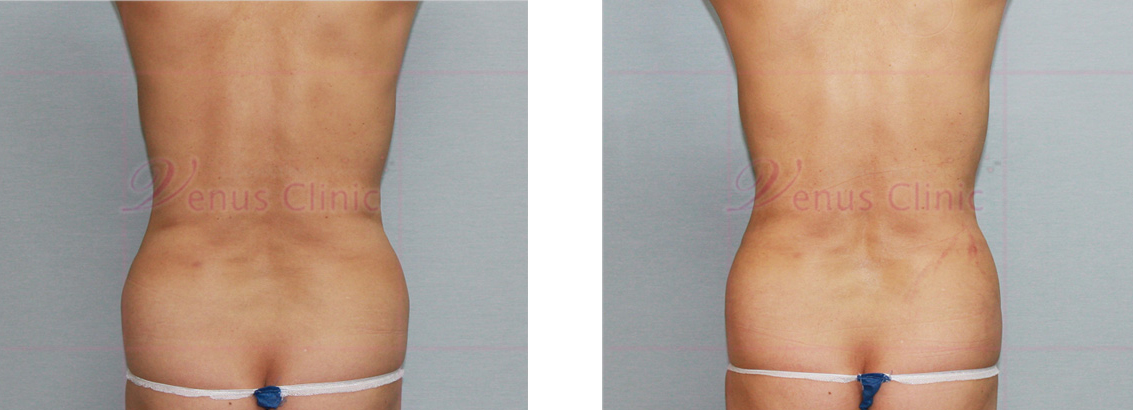
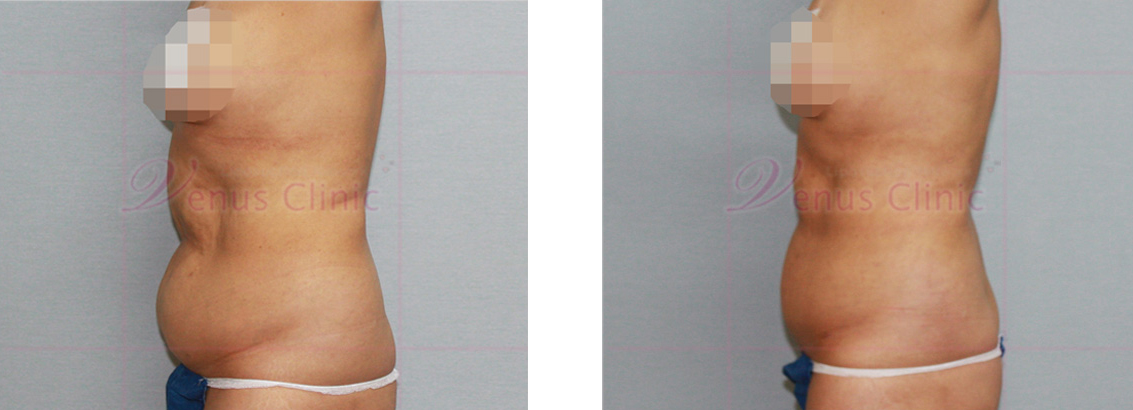
The before-and-after photos above show a woman in her mid-60s who had not only fat accumulation but also poor skin elasticity and a lax abdominal wall. Her body was reshaped without noticeable skin sagging even after the fat was removed.
[ Dr. Jung, Director, Venus Clinic ]
Reference: How Do Dieting and Liposuction Differ in Changing Your Body Shape?