The Structure of the Subcutaneous Fat Layer and Liposuction
Liposuction is a type of cosmetic surgery that suctions out fat from the fat layer beneath the skin to create a more attractive body shape.
If we analyze the structure of the subcutaneous fat layer, it can be divided broadly into two layers.
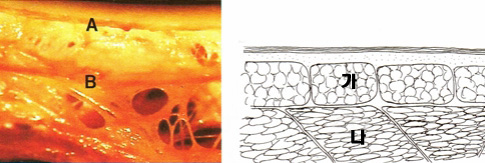
In the abdomen, membrane A is called Camper's fascia and membrane B is called Scarpa's fascia. The membrane that separates fat layer Ga from fat layer Na is generally called the superficial fascial system (SFS).
The fat layer of portion Ga (areolar layer) is relatively firm and does not grow more than about twofold even when weight increases. It acts as structural fat that also helps anchor the skin to the fascia,
whereas the fat layer of portion Na (lamellar layer) plays only a weak role in supporting the skin, and when you gain weight it can expand more than tenfold, so it serves mainly as the body's energy store. Not every part of the body has a thick lamellar layer, but areas where it is thick should be treated during liposuction to prepare for possible future weight gain. In women, these areas are the abdomen, flanks, thighs, inner thighs, inner knees, and back of the arms.
In fact, many people who choose liposuction do so as a last resort after trying diets or medical injection treatments without success, or choose it to refine their figure after controlling their weight to some degree through dieting.
However, if you have liposuction after dieting, the fat cells in the lamellar layer, the deep layer that should be treated, have become smaller, so the areas that actually need suctioning may not be treated sufficiently.
In other words, once liposuction has been done thoroughly, that is, once the fat in the lamellar layer has been sufficiently removed, and as long as weight is properly managed after surgery, fat cells are not regenerated, so it is uncommon for those areas to gain fat again later.
This is because the superficial areolar layer is considered the structural fat that is decisive for body shape, and it changes little when you gain or lose weight; so if the deep lamellar layer is sufficiently removed, a long-lasting body shape can be achieved.
Conversely, if this deep layer is not suctioned sufficiently, you should expect that you may gain weight again after liposuction.
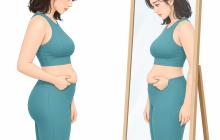
One of the differences between dieting and liposuction is skin contraction and adherence. If someone with severe obesity tries to lose weight by dieting, the daily calorie requirement is high, so it is hard and quickly exhausting, and even if it succeeds, the yo-yo effect is common and weight often comes back. And even if you diet very hard and succeed, you are now faced with a new worry: loose, sagging skin.
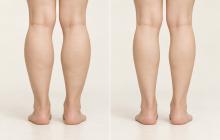
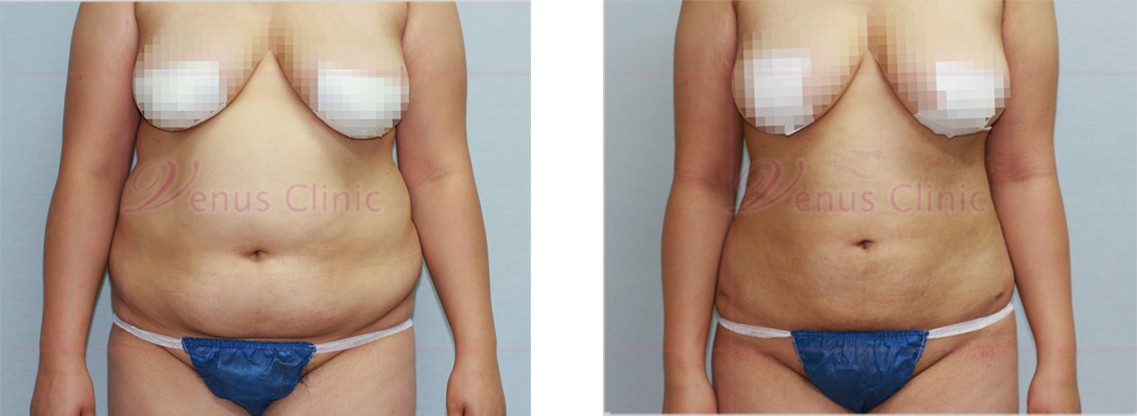
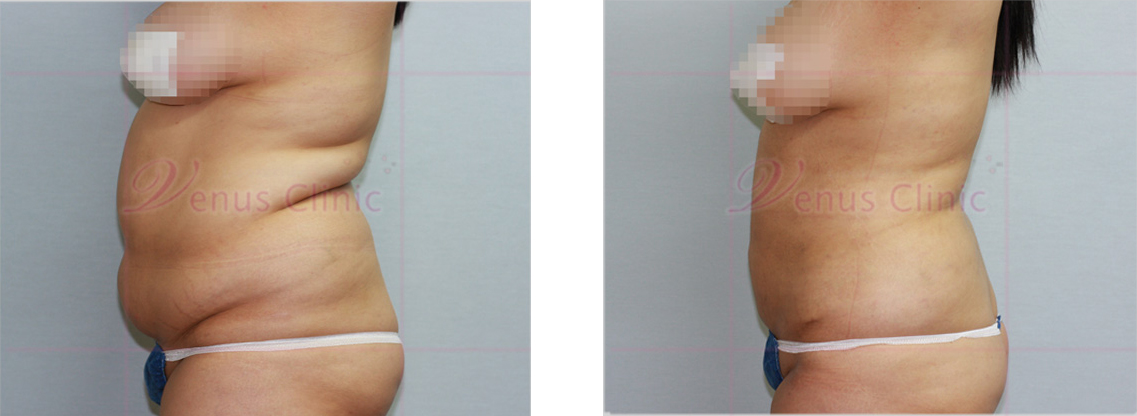
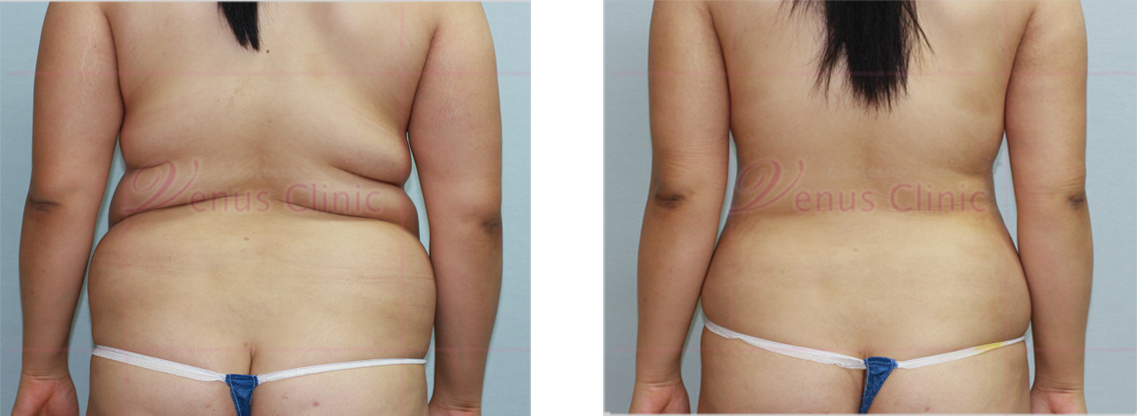
Liposuction can make it easier to lose volume, and in addition, as in the photos below, skin contraction occurs after surgery, so a satisfying contour can be created without skin excision.
For this to happen, fat close to the skin must also be removed sufficiently, in what is called full-layer liposuction or superficial liposuction, so that the thinned skin contracts well and adheres after surgery. To suction the subcutaneous fat layer as thinly and evenly as possible with full-layer liposuction, a persistent and meticulous procedure using fine suction tubes called micro cannulas is required. Of course, this demands a lot of stamina from the surgeon.
At Venus Clinic, we perform micro-liposuction using micro cannulas, and for large-volume liposuction in patients with severe obesity, two surgeons operate at the same time, which we call "two-doctor" (Tudak) liposuction. This allows thorough fat removal and full-layer liposuction in a shorter time, helping us aim for a safe and smooth result.
The more deep fat is left behind, the softer and less bumpy the result, but skin contraction is reduced in return. Also, because more of the fat layer remains, you may gain weight again later.
In conclusion, skin contraction occurs well only when surgery is done while you still have the weight on. Many clinics seem to tell patients with severe obesity to lose weight first, but if liposuction is done after dieting, the skin is already loose, so it does not adhere sufficiently after surgery.
Liposuction is body-contouring surgery, not surgery for weight management. So if you have already decided to have surgery, considering it while you still have enough weight on may be the better choice.
[Dr. Jung, Director, Venus Clinic]
References: How do dieting and liposuction differ in changing your figure?