Liposuction Incision Sites — How Many, Where, and How Small
During liposuction consultations, we often hear questions like "How many holes will you make?", "Where will the incision sites be?", and "Will I be left with scars?" For people undergoing body surgery for the first time, the number of holes is directly tied to their worry about scarring.
Today I will explain what an incision site is in liposuction, how its size, number, and location are decided, and how it is cared for after surgery. Although it varies by area and extent, at Venus Clinic we perform surgery with as few holes and as small incision sites as possible.
What Is an Incision Site?
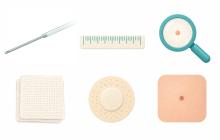
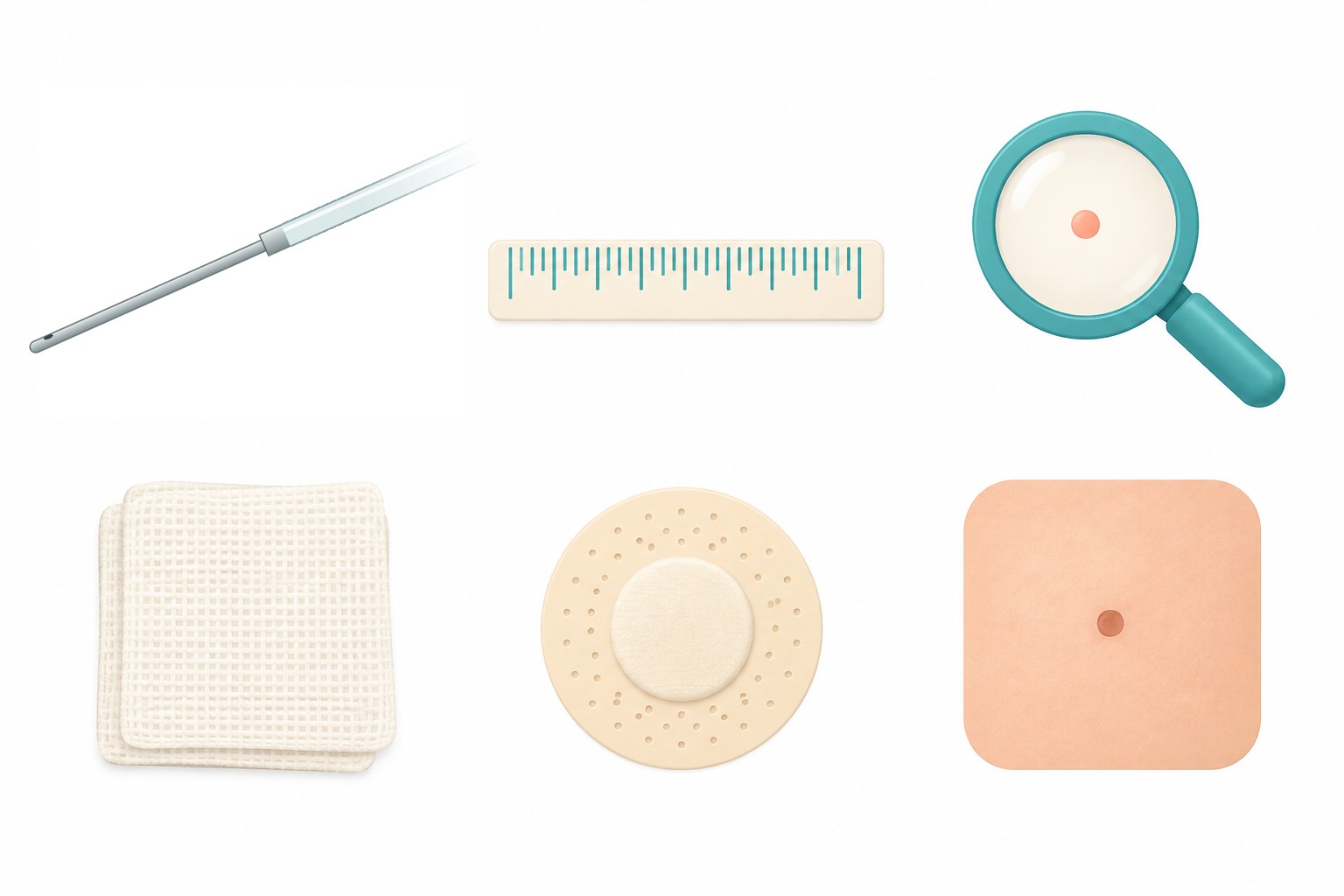
Liposuction removes fat from the body, but the skin is not opened lengthwise. We make a small opening just large enough for a thin suction tube (cannula) to pass through, inject tumescent solution through it, and then suction out the fat. This small opening is called an incision site. Unlike excision procedures, liposuction does not leave a long incision line.
The Size Is a Few Millimeters
The incision sites at Venus Clinic are a few millimeters in size, and in areas where a thin cannula is used, such as the arms, about 1.5mm. The literature also notes that keeping the incision small is an essential approach for scars that are barely noticeable [4]. It also explains that the incision is made slightly larger than the cannula so that the suction tube does not rub against and irritate the skin [3].
How Many Incision Sites Are Made?
This is the question we receive most often, but we cannot give a single number. In a wide treatment area or an area with complex body contours, the cannula needs to reach more directions, so more incision sites may be needed; a smaller area may need fewer.
The number depends on the area and the extent
Our approach at Venus Clinic is to operate with as few holes and as small incision sites as possible. Fewer holes means fewer places where scars could remain. How many sites your treatment area needs can be confirmed with you directly at the consultation.
Several Directions From One Incision Site
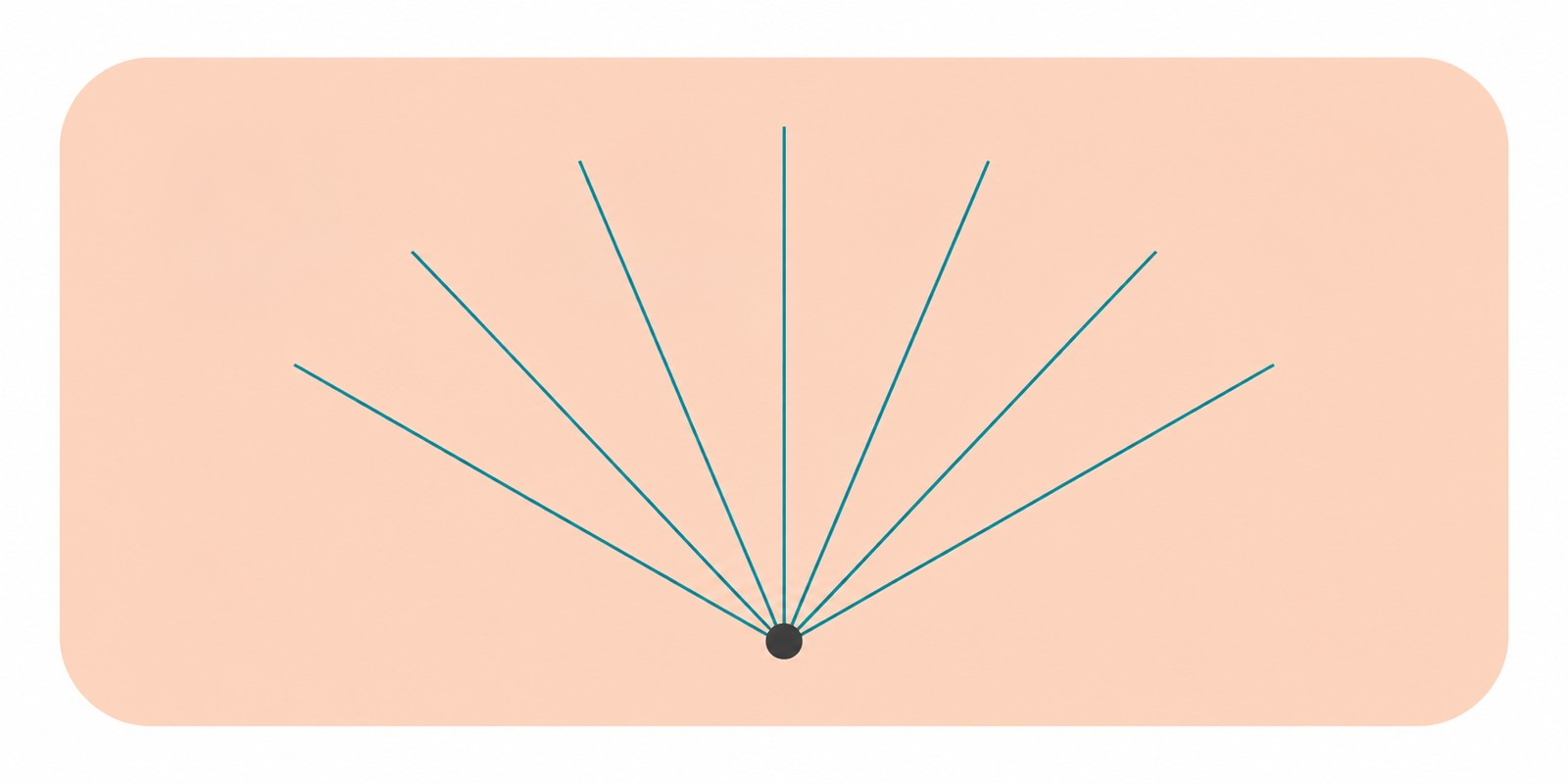
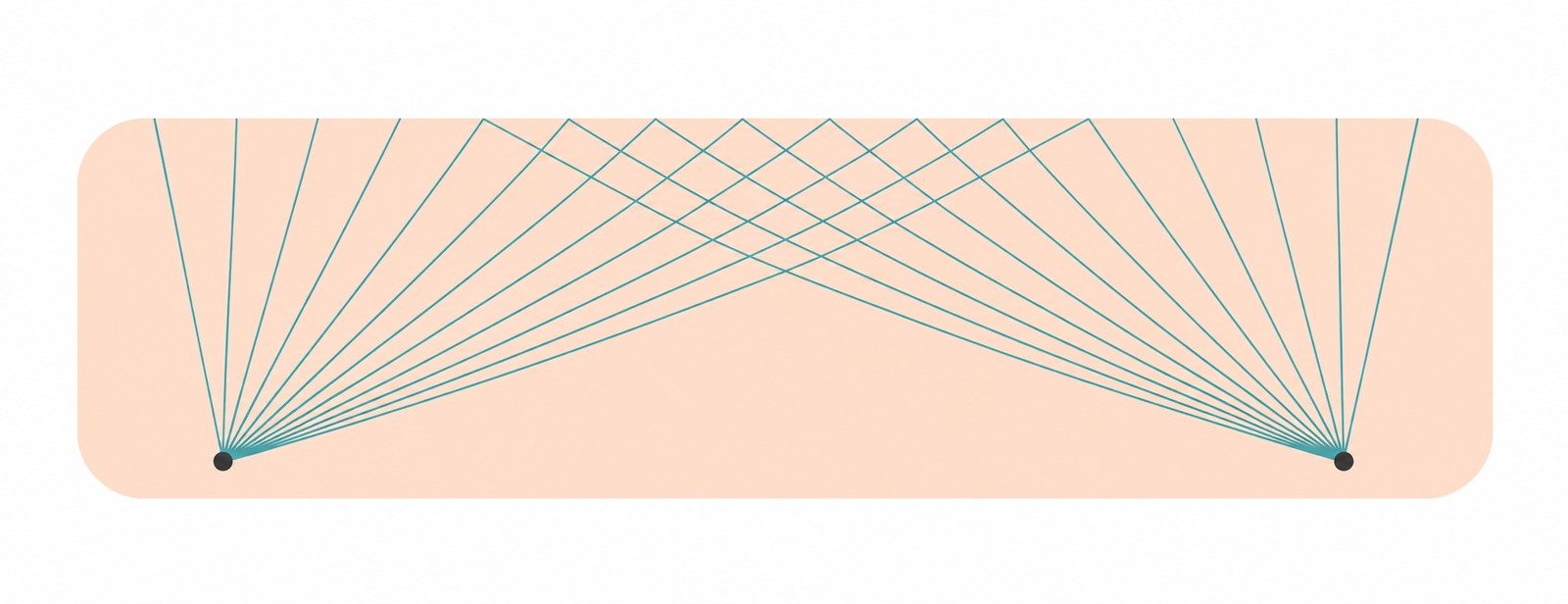
The reason a wide area can be treated evenly with few holes is that the cannula is not moved in only one direction. When the cannula is fanned out from a single incision site, tunnels run in several directions, and when they cross over the tunnels made from neighboring incision sites, the fat can be removed evenly without concentrating on one spot [2]. It is also explained that limiting the amount of fat removed through each incision site is important [2].
Reducing Them Is Not the Goal
Reducing the number of holes is not in itself the purpose of surgery. A smooth and even contour after surgery comes first, and within that range we reduce the number and size of the holes as much as possible.
Where Are the Incision Sites Placed?
Incision sites are placed where they are hard to see after surgery. Common places are where the skin folds, such as the crease under the breast, the armpit crease, and below the crease behind the knee. The literature also summarizes inconspicuous locations for each area.
| Area | Examples of incision site locations | Notes |
|---|---|---|
| Breast | Crease under the breast, armpit crease | No long incision line around the breast; hidden within the creases |
| Knee | Below the crease behind the knee | An inconspicuous location |
| Abdomen | Above the pubic bone, outer upper abdomen, and the navel | The incision site at the navel is well hidden once it heals [2] |
| Back | As far to the outer (side) area as possible | Incision sites on the back tend to cause more pigmentation than those on the outer side [1] |
| Arm | Around the elbow and the shoulder blade | Arm liposuction mainly involves long strokes along the back of the arm [2] |
Locations Vary With the Body and Skin
The table above gives examples; the actual locations vary with the treatment area and extent, and with the condition and color of the skin. The literature explains that incisions are sometimes placed symmetrically and sometimes irregularly to conceal them, and reports that most incisions heal well enough to be barely visible in about a year [5]. However, how much scarring remains differs depending on each person's skin type, so we cannot say that no scar will remain at all.
Caring for the Incision Sites After Surgery
After surgery, tumescent anesthetic fluid mixed with a little blood drains out through the incision sites where fat was suctioned, for several days. This is called drainage, and drainage goes well when a compression garment presses evenly on the treated area. After the drainage stops, the incision sites are kept clean for a month by applying a prescribed ointment.

They May Become Red or Irritated
As the cannula moves back and forth repeatedly, the incision sites can become irritated and the skin around the scar may turn red. The literature also explains that such cases can be managed with ointment [3]. The scar of an incision site seen on the surface and a scar that forms inside the fat layer under the skin are different things. Firmness or lumps felt after surgery are not from the incision sites but are part of the recovery process within the fat layer; the schedule and care after surgery are explained in detail in a separate article (Liposuction Recovery Timeline).
References
- Klein JA. Tumescent Technique: Tumescent Anesthesia & Microcannular Liposuction. Mosby; 2000. Chapter 33. Female Hips and Back and Male Flanks.
- Shiffman MA, Di Giuseppe A (eds). Liposuction: Principles and Practice. Springer; 2006. Chapter 27. Microcannula Liposuction.
- Shiffman MA, Di Giuseppe A (eds). Liposuction: Principles and Practice. Springer; 2006. Chapter 50. Prevention and Treatment of Liposuction Complications.
- Shiffman MA, Di Giuseppe A (eds). Liposuction: Principles and Practice. Springer; 2006. Chapter 63. Large-Volume Liposuction for Obesity.
- Duncan DI (ed). Enhanced Liposuction — New Perspectives and Techniques. IntechOpen; 2022. Chapter 19. Posterior Torso and Buttocks Contour Enhancement.
Incision Site Example
Below is an incision site example. It is a rear view one week after arm and back liposuction, and the circled spots at the elbows are the small marks left by the incision sites.
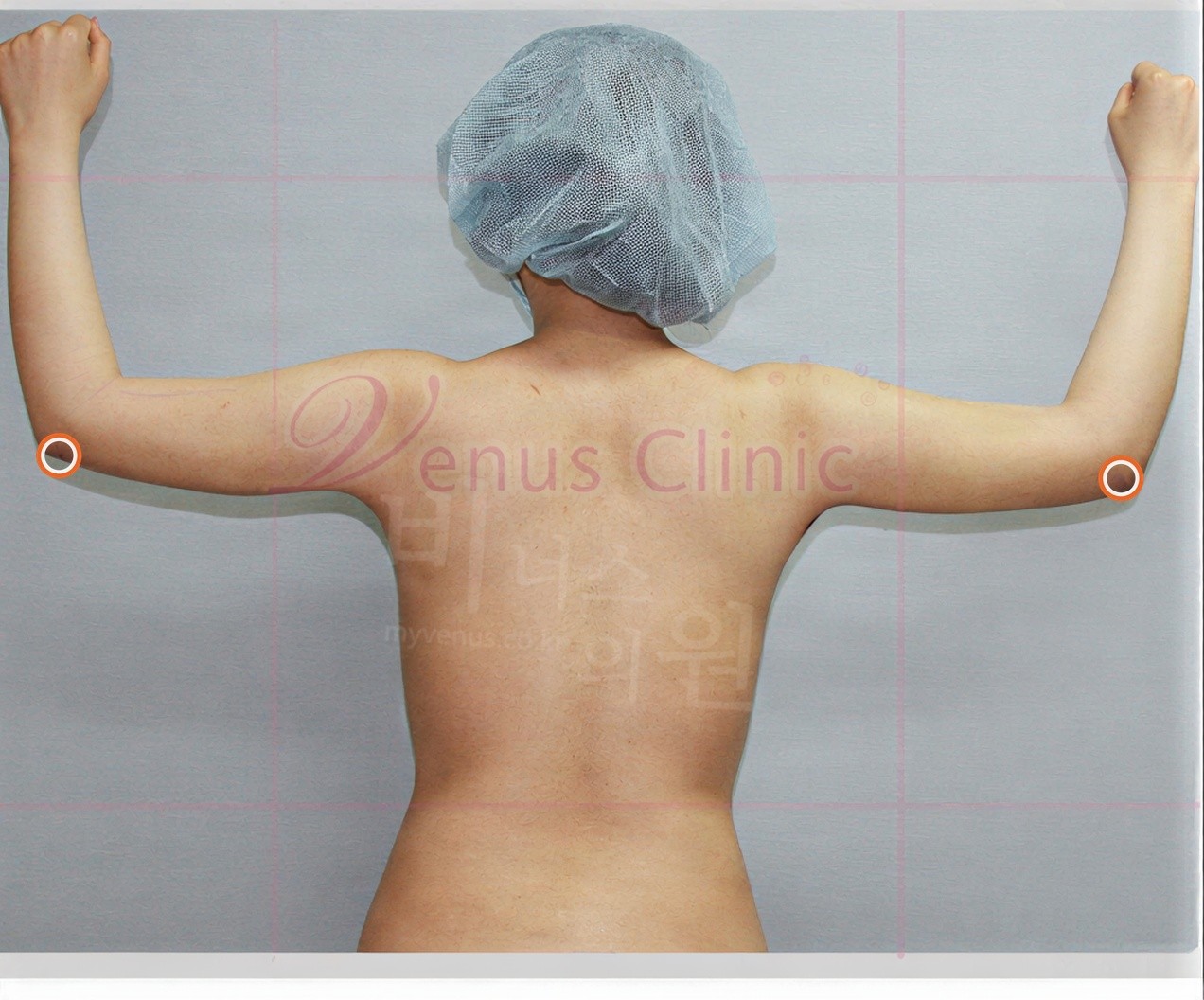
| Information on the Posted Liposuction Photo | |||
|---|---|---|---|
| - Photo type | Incision site example (1 week after surgery, circled) | - Date taken | No record of the date taken (material posted by Venus Clinic) |
| - Source | Post-surgery photo of a patient operated on at Venus Clinic | - Side effect information | https://en.myvenus.co.kr/should_know/38861 |
In Closing
The incision site is the smallest yet an important part of liposuction when it comes to scarring. Although it varies by area and extent, our principle at Venus Clinic is to use as few holes and as small incision sites as possible, placed where they are not noticeable after surgery. At your consultation, be sure to ask how many incision sites will be made in your area, where, and at what size.
Related Articles: For Smooth Liposuction Liposuction Recovery Timeline Arm Liposuction Inner Knee Liposuction Liposuction After Mastectomy
Dr. Hakjun Kim, Director, Venus Clinic