Recovery After Liposuction: What Changes at 1 Week, 1 Month, 3 Months and 6 Months
In consultations, the questions we hear most are "How many days after surgery can I go back to work?", "When will the bruising fade?" and "It has been a month and the area is still hard. Is that okay?" Recovery after liposuction is relatively quick, and many people can resume daily life from the day after surgery, but inside the body, healing continues for several months. If you know this process in advance, you will not need to be alarmed by how the body looks at any stage after surgery.
In this article, we divide recovery after liposuction into four stages: immediately after surgery to 1 week, 2 weeks to 1 month, 1 to 3 months, and 3 to 6 months, and explain what is happening in the body at each stage. We then summarize when you can return to work, shower and exercise, along with compression garment and posture care that support recovery, and finally show one patient's recovery course in photos taken from the same posture.

Induration Is a Scar That Forms and Then Fades
Liposuction reduces the fat layer between the skin and the muscle to refine body contour. When the fat layer becomes thinner, the skin above it remains and has to retract to fit the reduced volume. During this time, the treated area becomes firm and lumpy for a while, which is called the induration process. Induration is, in essence, a scar that forms in the places where fat was removed, that is, inside the fat layer. Medically it is described as non-infectious inflammatory fibrosis[1], and the fibrosis that forms during tissue formation and tissue remodeling as the wound heals is what makes the skin retract[2]. It is different from the scars of the small incisions you can see on the surface: this is a scar inside the fat layer under the skin.
The Four Stages of Wound Healing
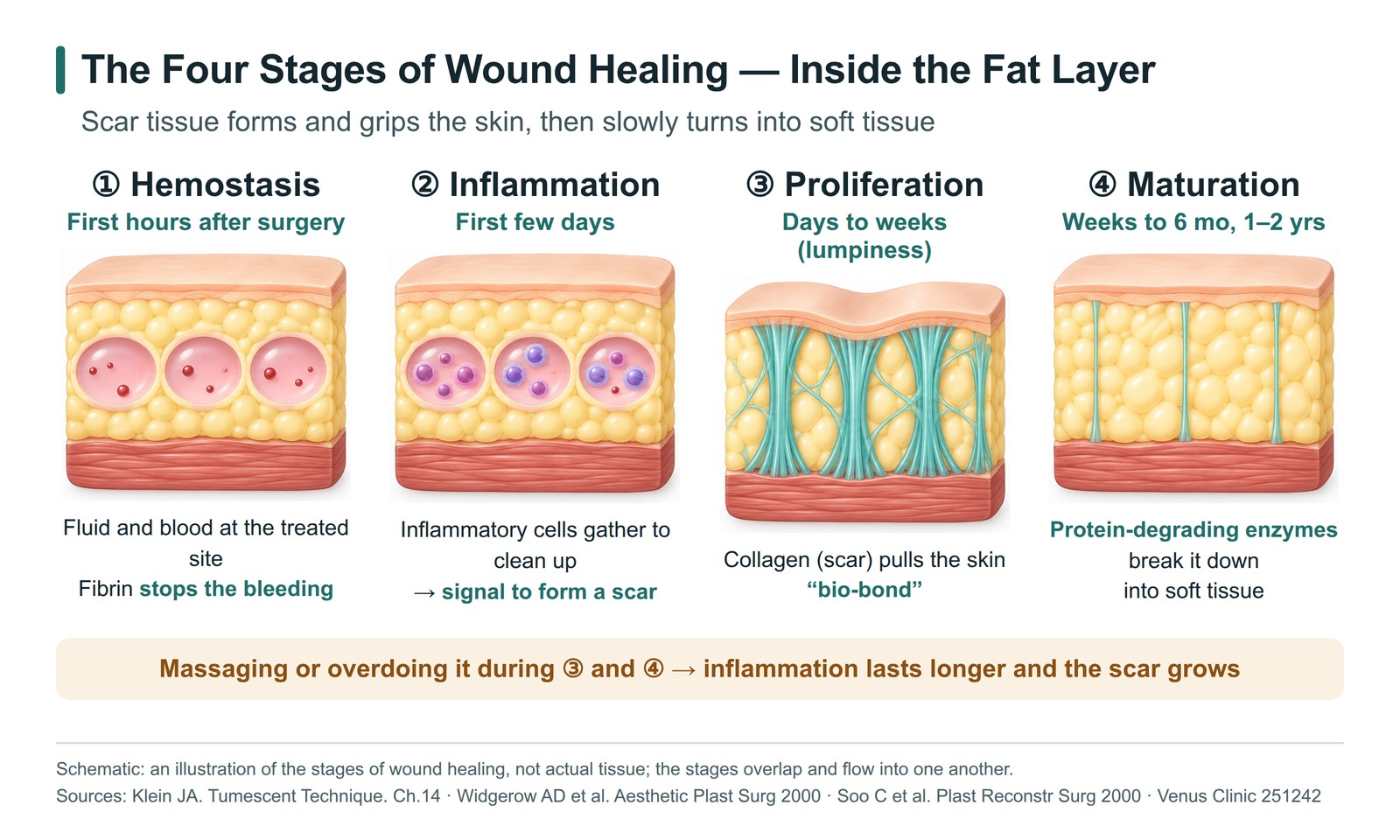
The body heals a wound in a set order: hemostasis, inflammation, proliferation and maturation (remodeling)[3][4]. The stages do not separate cleanly; they overlap and flow into one another[4]. The places where fat was removed go through the same process.
① Hemostasis (the first few hours after surgery) — When a blood vessel is injured, platelets gather within seconds to form a plug, and then a clotting protein (fibrin) forms to stop the bleeding[5]. The platelets also release growth factors such as PDGF and TGF-β, which call in the cells of the next stage, and the fibrin mesh becomes a "scaffold" on which the inflammatory cells and fibroblasts that arrive afterward can attach and work[4].
② Inflammation (the first few days) — Blood vessels widen and leak, producing the familiar signs of inflammation: redness, swelling, warmth and pain. Neutrophils arrive first and clear away dead tissue and bacteria, but they live only about a day, and from around 24 to 48 hours macrophages take over. Macrophages are the key cells that direct wound repair. At first they work as "cleaning-type" cells that clear debris; when the wound moves into the proliferation stage, they switch to "repair-type" cells that calm inflammation and call in new blood vessels and fibroblasts[4]. A clean surgical wound heals well even without neutrophils, but if contamination or infection persists, inflammation is prolonged, healing is delayed and the surrounding tissue is damaged[4]. Signals to form scar tissue also come out together with the macrophages. Neutrophils peak around day 2, macrophages around day 3 and lymphocytes around day 7[4]. Too little inflammation delays healing, and too much leads to excessive scarring[6].
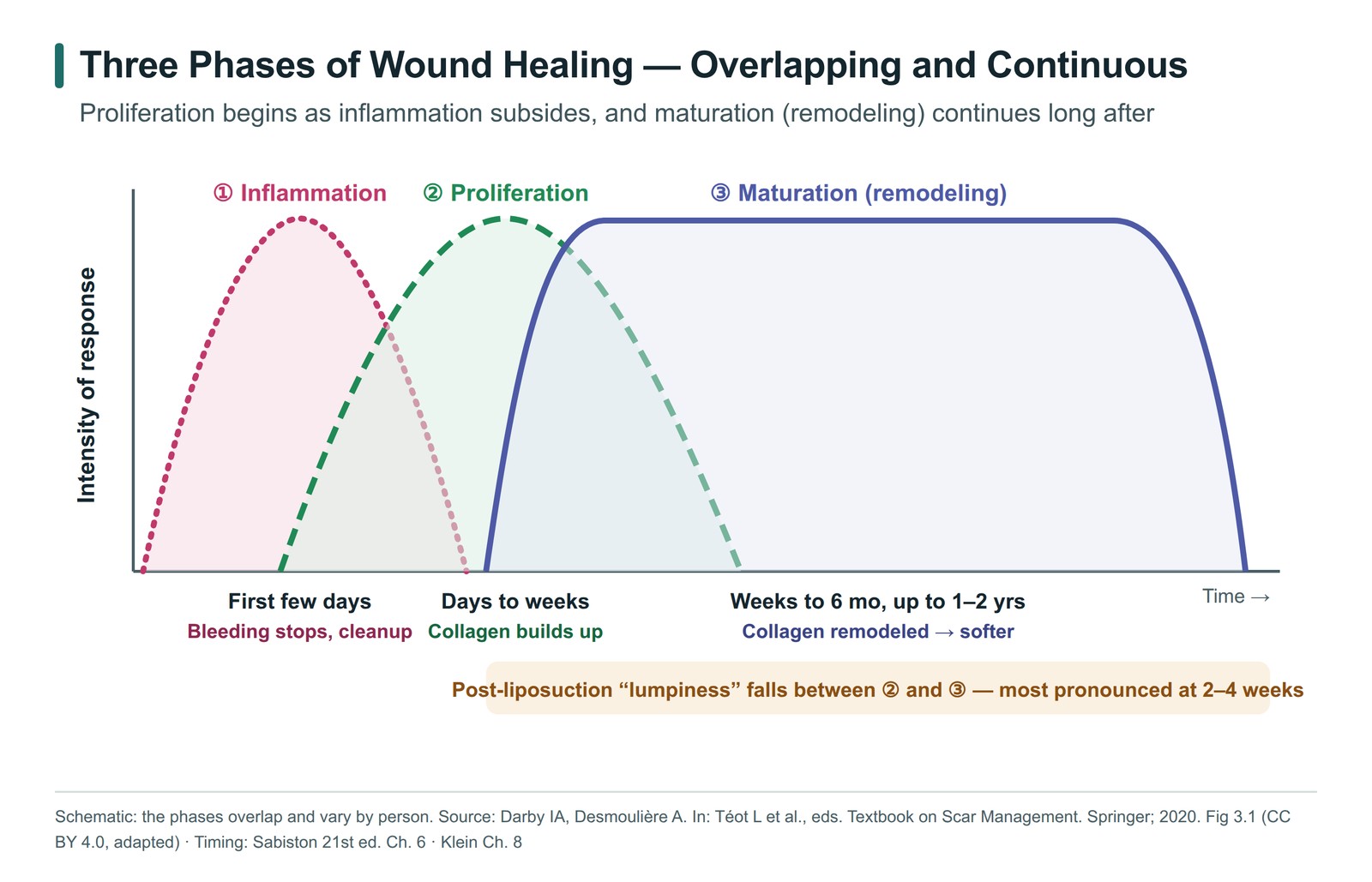
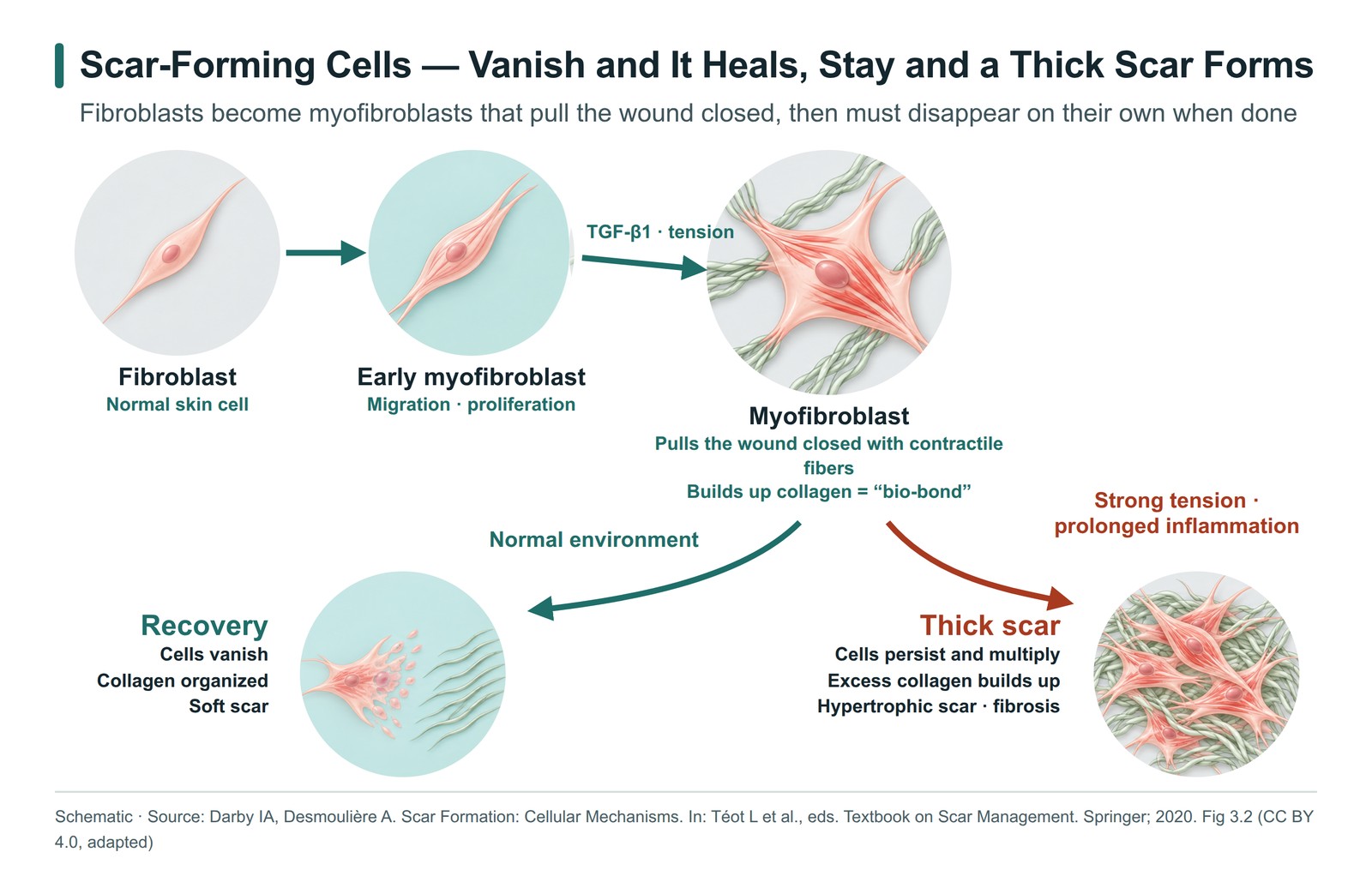
③ Proliferation (a few days to several weeks) — Signals from the oxygen-poor wound make new blood vessels grow (FGF mainly drives this during the first 3 days and VEGF during days 4 to 7), and fibroblasts that normally rest quietly wake up, divide and gather at the wound. There is usually a preparation period of 3 to 5 days before fibroblasts settle in and start making collagen. In this way, granulation tissue made of capillaries, fibroblasts and loosely woven collagen forms, and the fibroblasts make collagen to fill the empty space[4]. This is scar tissue, and it takes about 3 to 10 weeks for new collagen to be made[7]. During this time, some fibroblasts turn into myofibroblasts, which have a muscle-like contracting force; they pull the wound inward to close it and produce a great deal of matrix[8]. The appearance of myofibroblasts, and their persistence long after their work is done, are considered the biggest factors in scar formation[9]. The amount of collagen deposited after surgery is greatest at around 3 weeks[10]. This is exactly when the treated area becomes firm and lumpy.
④ Maturation (several weeks to 6 months, and up to 1 to 2 years) — The collagen that was laid down in a hurry at first is broken down and rearranged, so the scar becomes thinner and softer. For healing to go well, myofibroblasts that have finished their work must disappear on their own (apoptosis), and the excess matrix must be cleared. If myofibroblasts remain, the scar becomes excessively large[8]. Fibroblasts and the dense capillaries also decrease, so redness and swelling fade and the scar flattens[4][10]; over about 6 months, breakdown and synthesis take place together, and collagen is mostly converted to type 1 and its alignment becomes organized[10]. The change from type 3 collagen, which is abundant in immature scars, to type 1 collagen is a sign of maturation, and scars gain strength so slowly that even at 3 weeks after surgery they are only about 20% of their final strength[6]. The strength of a scar increases rapidly between weeks 1 and 6 and is then completed gradually over nearly a year[4]; this remodeling stage lasts from as little as 2 weeks to as long as 1 year[11]. A scar inside the fat layer matures fully by 6 months, then begins to soften, and in 1 to 2 years most become natural[2]. As a rule, any procedure to refine a scar is also done only after waiting at least 6 months for it to mature[12].
The Cells' Timetable at a Glance
Arranged in the order in which the cells do their work, wound healing looks like this[4][8].
| Stage | Main cells | What they do | What you notice after liposuction |
|---|---|---|---|
| Right after surgery | Platelets | Stop bleeding and release growth factors that call the next cells · fibrin "scaffold" | Drainage (3 to 4 days) · redness |
| Days 1 to 3 | Neutrophils → macrophages | Clear dead tissue and bacteria · macrophages direct repair | Swelling, warmth, pain · bruising |
| Day 3 to week 3 | Fibroblasts · endothelial cells · myofibroblasts | New blood vessels · building up collagen (scar) · pulling the skin so that it attaches (bio-bond) | Firm lumpiness · dulled sensation |
| Week 4 to 6 months (1 to 2 years) | Remaining fibroblasts · breakdown enzymes (MMP) | Collagen breakdown and rearrangement (type 3 → type 1) · myofibroblasts and new vessels recede | Lumpiness softens and the contour settles |
Care Matched to the Cells' Timetable
The first few days (hemostasis and inflammation) — The goal at this stage is to drain blood and fluid well and let inflammation work "only as much as needed." Even compression of the treated area helps drainage, and for one month after the drainage stops, a prescribed ointment is applied to the incisions to keep them clean[13]. This is because contamination or infection prolongs inflammation and delays healing[4].
Weeks 1 to 4 (proliferation and lumpiness) — This is when fibroblasts and myofibroblasts build up collagen and pull the skin to attach it. Wear the compression garment 24 hours a day to support even attachment of the skin[13], and do not massage the lumpy areas hard or put tension on them with strenuous exercise[8][14].
Months 1 to 6 (maturation) — This is a stage that takes time, as breakdown enzymes dissolve the scar and rebuild it. Wear the compression garment for at least 1 month, avoid radiofrequency massage before 8 weeks when the wound heals, and keep your weight stable[13]. Drugs that suppress immune cell function, such as steroids, can slow wound healing[4], so please be sure to tell us about any medication you are taking at your consultation.
The diagram below shows how the cells that form a scar change. When myofibroblasts finish their work and disappear on their own, the scar recovers softly; when they remain because of strong tension or long-lasting inflammation, a thick scar results.
The "Bio-Bond" by Which a Scar Holds the Skin
The scar tissue formed during the proliferation stage joins the remaining skin to the fascia beneath it like an adhesive. We call this, in simple terms, the "bio-bond." Because the bio-bond attaches the skin to the tissue below and pulls it, after liposuction the skin does not sag as it does when you lose weight by dieting, but retracts to fit the reduced volume[13][1]. This is why at Venus Clinic we explain this fibrosis as "a healing response that works in favor of size reduction"[2].
A study on large-volume liposuction also explains that a few days after surgery, an inflammatory reaction lasting about 6 to 8 weeks develops, and tissue that was soft right after surgery becomes firm and tender[15]. The more fat that was removed from an area, the more lumpiness there is and the longer it lasts[1].
A Scar Disappears Through a "Chemical" Process
A firm scar turning back into soft tissue and fading away is precisely the recovery process after liposuction. This work is done by protein-degrading enzymes in the body. The enzymes that break down collagen (matrix metalloproteinases, MMPs, including collagenase) increase more than 7-fold above normal in injured skin within 12 hours of the wound, and take charge of breaking down and rebuilding collagen[16]. Scar tissue changes as "building up" and "breaking down" stay in balance. MMPs do the breaking down, and tissue inhibitors (TIMPs) hold that breakdown back, and the balance between the two determines the amount of scar[9]. About 4 weeks after surgery, the rate of new collagen production slows until it roughly matches the rate at which collagenase (MMP-1) breaks it down, and from then on a maturation stage lasting months to years begins[4]. In contrast, thick scars (hypertrophic scars and keloids) are a state in which collagen production is increased and breakdown is reduced, and collagenase (MMP-1) is also reduced[4].
In other words, a scar loosening is an enzymatic, chemical process. Massaging the area hard during the height of induration does not make it loosen faster[1].
Strong Physical Stimulation During Induration Enlarges the Scar and Slows Recovery
On the contrary, applying physical stimulation to a healing scar can make the scar larger. Myofibroblasts are very sensitive to mechanical forces around them, and when abnormal tension is applied, they do not disappear when they should but remain and enlarge the scar[8]. The forces acting on a scar include pulling, rubbing, scratching and pressing, and cells sense these forces; when the balance of forces is disturbed, a thick scar forms. In animal experiments as well, keeping tension on an incision line reduced apoptosis and increased fibrosis[17]. If a scar is pulled in several directions or repeatedly, the inflammatory reaction is prolonged and fibroblasts make too much collagen, resulting in a thick (hypertrophic) scar[6]. Recent scar research reaches the same conclusion: mechanical stimulation and tension on a wound prolong inflammation, over-activate fibroblasts and interfere with the remodeling process by which collagen is organized[3]. Repeated stimulation of a wound prolongs inflammation in the dermis and raises the risk of a thick scar, and the stronger, more frequent and longer the stimulation, the faster and larger the scar grows[18]. In animal experiments as well, adding mechanical tension to a wound increased the expression of genes associated with thick scarring[19]. The principles of surgical wound healing likewise explain that prolonged inflammation makes hypertrophic scars more likely, that tension activates fibroblasts so that too much collagen accumulates, and that hypertrophic scars tend to subside again when stimuli such as tension are removed[4].
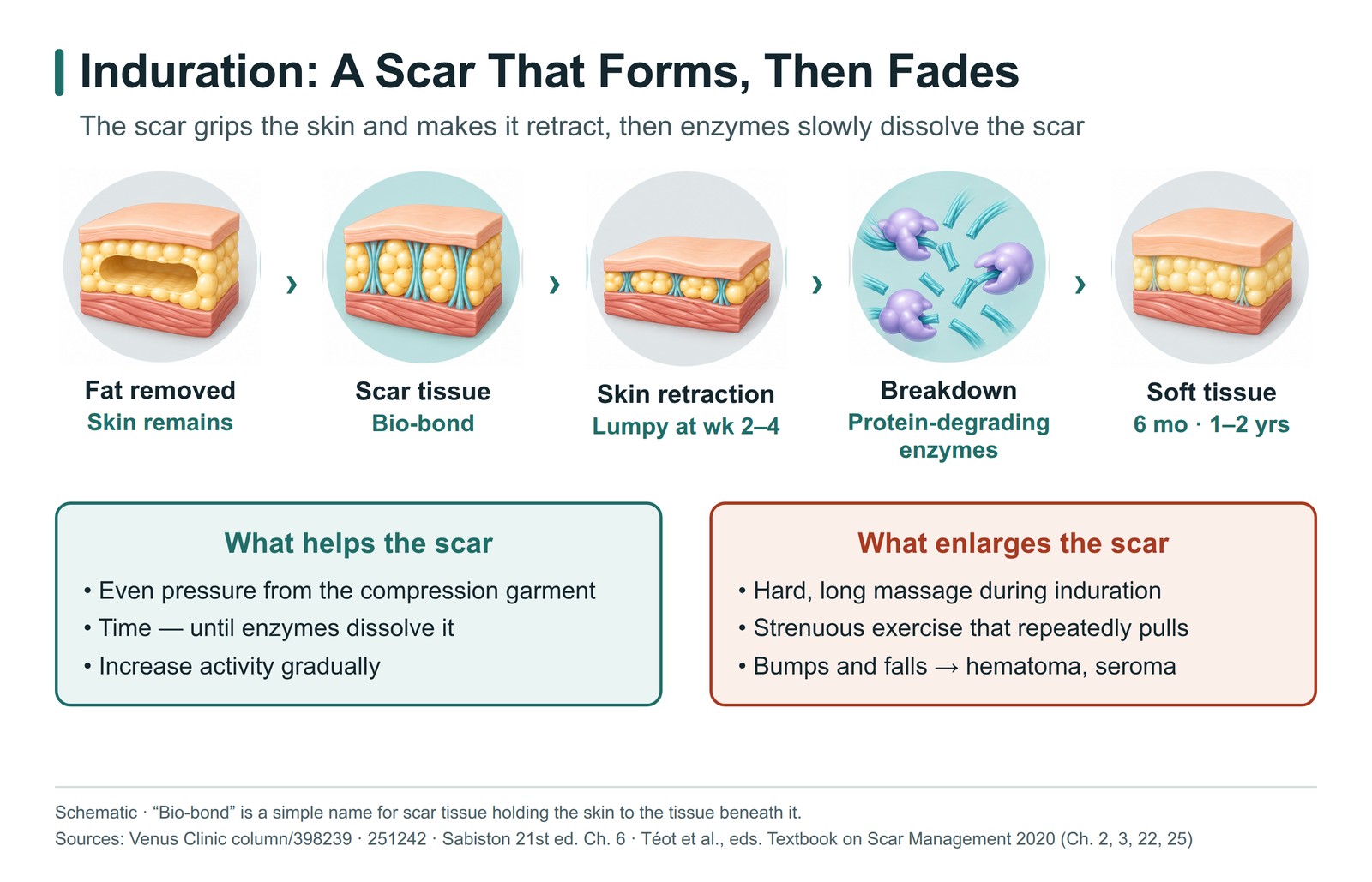
The same applies after liposuction. Massaging a lumpy area hard or exercising too strenuously can enlarge the scar and lengthen recovery, and a fall or a blow can tear blood vessels inside the lumpy tissue, causing a hematoma or a collection of fluid (seroma) that can leave a thicker scar[1][2]. For this reason, it is best not to have even radiofrequency massage before 8 weeks after surgery, while the wound is healing[13]. In the field of scar treatment as well, strong or overly long massage while inflammation remains can instead produce pathological scars, and massage is not done when inflammation is severe; massage is something to be done gently and adjusted to the condition after the scar has healed firmly enough[14]. A compression garment, on the other hand, is not a stimulus that rubs the scar but even support. The explanation that what is most needed to prevent tension on a scar is to support it is in the same vein[6], and even compression is also used as a treatment to reduce thick scars[4]. Compression reduces blood flow in scar tissue, which helps fibroblasts disappear on their own, reduces collagen production and also eases redness, itching and swelling. Among non-surgical scar treatments, it is the method with the most evidence for reducing thick scars[20][21]. In animal experiments, starting compression early increased collagen-degrading enzyme (MMP-1)[20]. Even with the same "physical force," rubbing and pulling stimuli enlarge a scar, while even and steady compression reduces it.
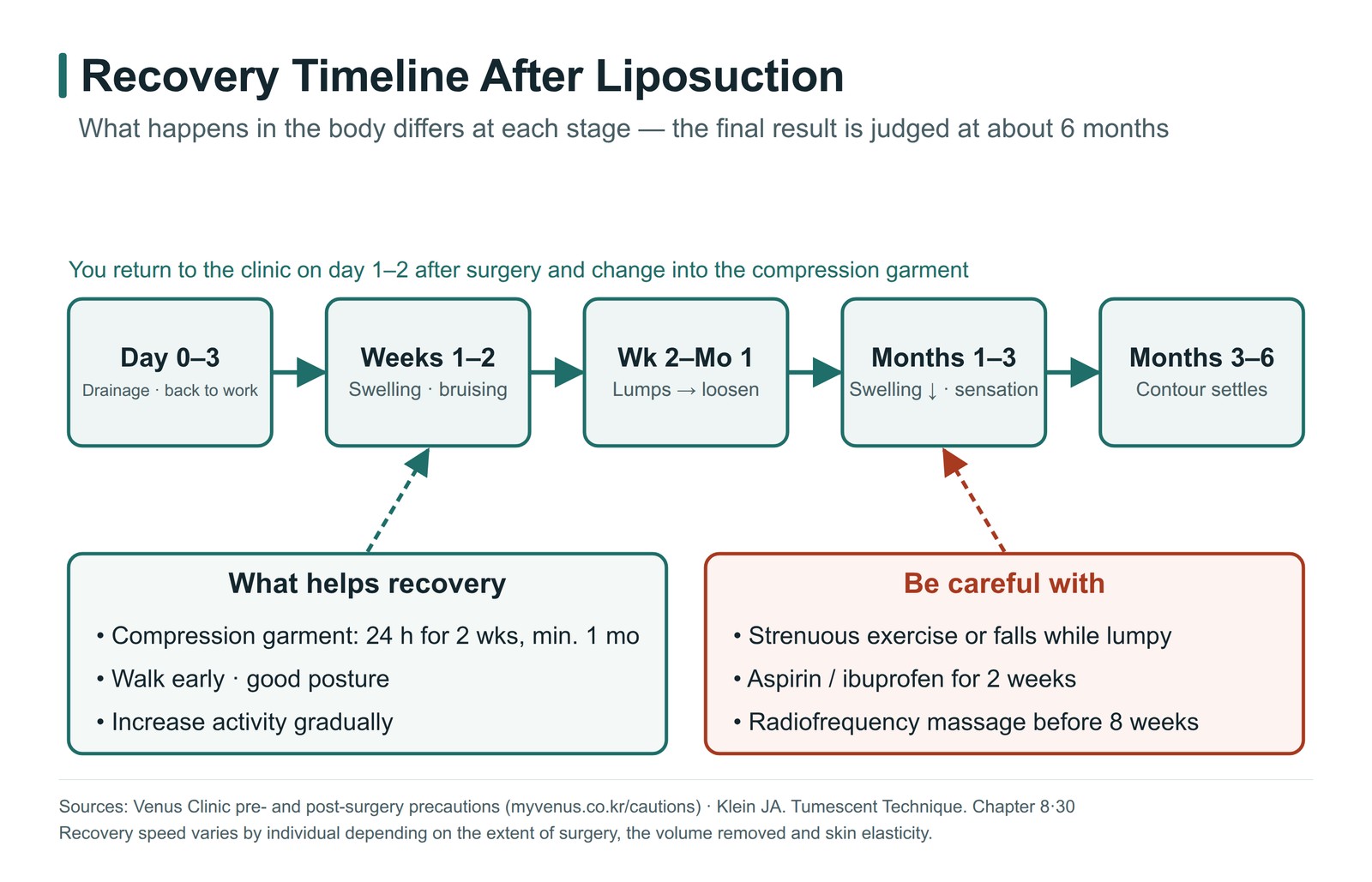
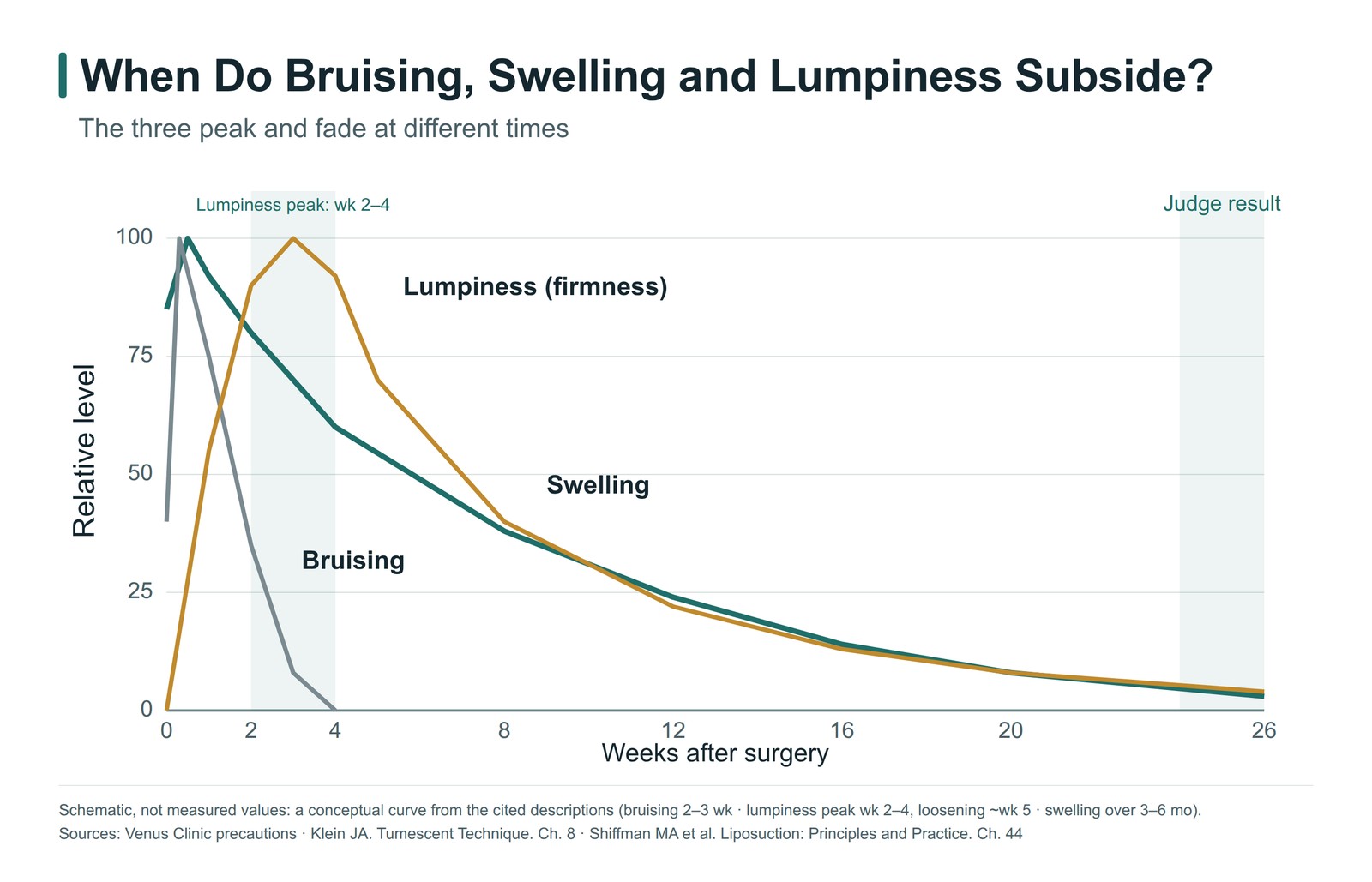
Bruising, swelling and lumpiness peak and fade at different times, so it is easier to understand them separately, as in the diagram below.
Immediately After Surgery to 1 Week — Drainage, Swelling and Bruising
When surgery ends, tumescent anesthetic fluid mixed with a little blood flows out through the incisions where the fat was removed. Even if it looks red, the blood mixed in is only about 1%, which is very little, and this is not an abnormal finding. This drainage usually continues for 3 to 4 days, and the treated area is firmly compressed with an elastic bandage to help drainage. You go home with your caregiver 1 to 2 hours after surgery, return to the clinic the next day for care, and then change into the compression garment[13].
Swelling and bruising are greatest at this stage. Bruising may be visible for about 2 to 3 weeks after surgery, and redness of the skin may appear for about 1 to 3 days; both are normal findings. Your weight may increase for a few days after surgery, but this is due to the fluid given during surgery, so there is no need to worry. Pain can usually be managed with the prescribed painkillers, and gradually decreases, and by about 3 weeks it mostly disappears[13].
Do Not Judge the Result by How You Look at About 1 Week
Most people feel that their silhouette has changed within a week after surgery. However, because swelling goes down slowly, how you look at this stage is not the result[13]. After large-volume liposuction, a lot of swelling still remains at 1 week, and as the bruising fades, the skin may take on a faint yellow tint.
2 Weeks to 1 Month — Firm Lumpiness Forms, Then Begins to Loosen
One to two weeks after surgery, induration is at its worst[1], and the treated area feels lumpy when touched. Patients usually first notice this lumpiness 1 to 2 weeks after surgery, and it is most pronounced between weeks 2 and 4[22]. It is felt especially easily in the armpit and the inner thigh[13].
At this stage, firmer and less firm areas separate, so the surface may look slightly uneven. Lumpiness is more severe and lasts longer after larger-volume procedures, but usually by about 5 weeks after surgery it loosens to some extent, and the skin becomes softer and gains elasticity[13][1].
Do Not Overdo It While the Area Is Lumpy
If you suddenly exercise hard or fall while lumpiness is progressing, blood vessels inside the lumpy fat tissue may tear, causing a hematoma (a collection of blood), or the skin and muscle may fail to attach, causing a seroma (a collection of yellow fluid). For this reason, activity should be increased gradually in line with how soft the skin becomes[1]. Do not take painkillers such as aspirin or ibuprofen for 2 weeks after surgery[13].
1 to 3 Months — Swelling Goes Down and Sensation Returns
Swelling starts to go down from 2 to 3 weeks after surgery and fades slowly over 3 to 6 months[13]. This is because the swelling that remains in the tissue after drainage ends is cleared slowly through the lymphatic vessels. Wide areas such as the abdomen stay swollen longer than other areas, so it is usual for lumpiness you can feel on touch to remain for 4 to 12 weeks, and slightly firm swelling for 3 to 4 months[23].
Changes in sensation, such as dull or tingling skin in the treated area, also return gradually during this time. They usually improve in 3 to 6 months[13], and temporary reduced sensation can last up to about 4 months[13].
3 to 6 Months — The Contour Settles, and the Result Is Judged at 6 Months
As swelling almost completely subsides and lumpiness turns back into soft tissue, the contour settles. The final result of liposuction is hard to judge until swelling has gone down, and this process can take up to 6 months[24]. For that reason, at Venus Clinic we guide patients that the point at which full recovery and the final result can be assessed is about 6 months, and even after 6 months the tissue continues to become softer and more natural over 1 to 2 years[13].
The Limits of Recovery — What You Should Know in Advance
The pace of recovery differs from person to person depending on the extent of surgery, the volume removed, skin elasticity, compression garment use and daily care. Cellulite or fine skin irregularities that existed before surgery do not all disappear, and fibrosis and adhesions mostly loosen over time but may rarely persist for a long time[13][2]. If there is anything that needs refining, it is best to judge at around 6 months, when recovery is complete. Also, if you gain a lot of weight after surgery, the remaining fat cells can enlarge and change the contour, so please manage your weight as well[13].
| Stage | What happens in the body | Daily life |
|---|---|---|
| Day of surgery to week 1 | Drainage (3 to 4 days) · swelling and bruising are greatest · redness for 1 to 3 days | Visit the clinic next day and put on the compression garment · return to work after 1 to 3 days |
| 2 weeks to 1 month | Lumpiness is most pronounced at weeks 2 to 4 · bruising mostly gone in 2 to 3 weeks · begins to loosen around week 5 | Compression garment 24 hours for 2 weeks · increase activity gradually · active exercise after 3 to 4 weeks |
| 1 to 3 months | Swelling goes down slowly · sensation begins to return | Compression garment for at least 1 month · radiofrequency massage after 8 weeks |
| 3 to 6 months | Contour settles · result assessed at about 6 months | Weight management |
Daily Life During Recovery — Work, Exercise, Compression Garment and Posture
When Can I Go Back to Work, Shower and Exercise?
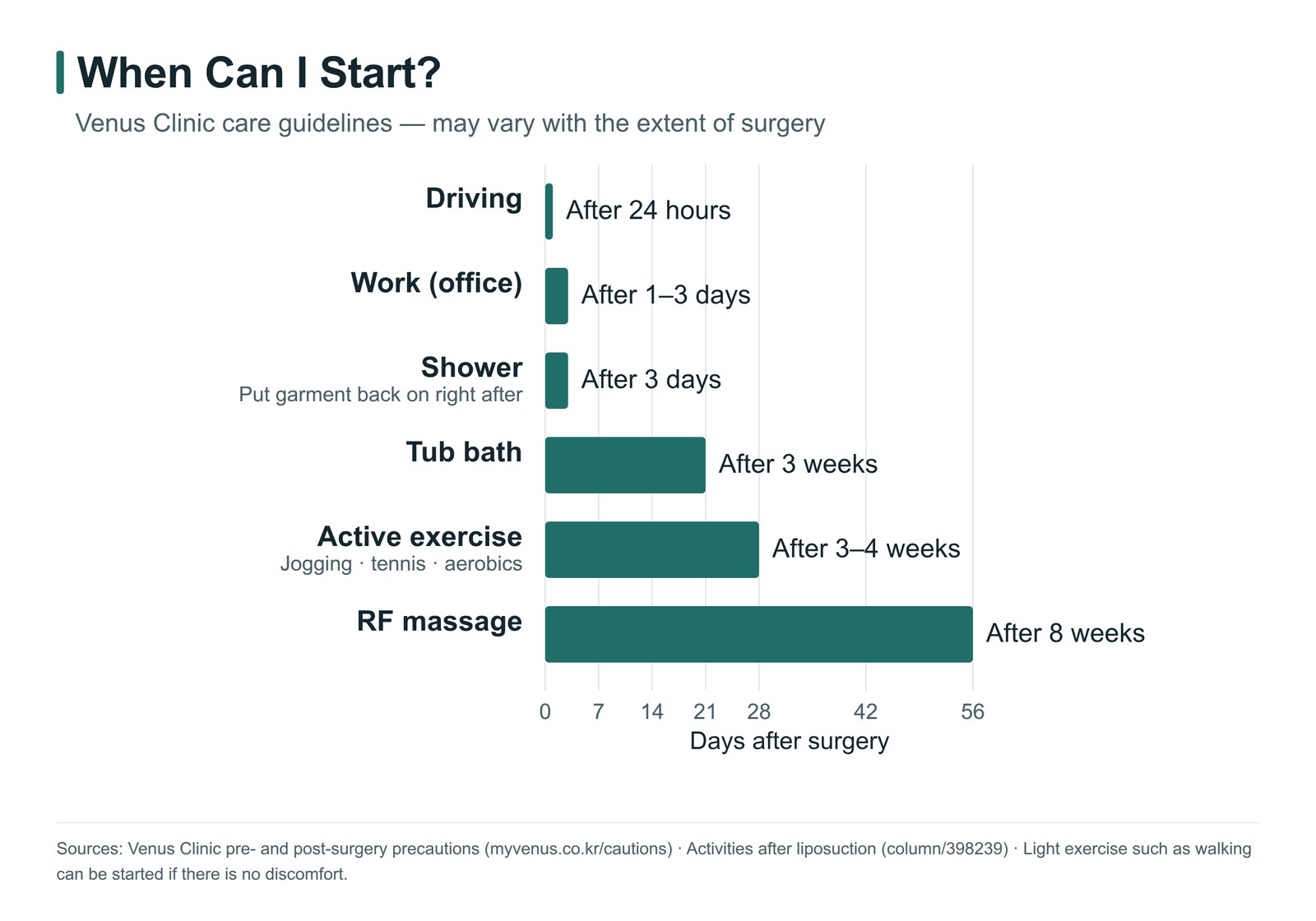
These are the care guidelines at Venus Clinic[13][1]. You may drive 24 hours after surgery, and you can usually return to work after 1 to 2 days. For office work, 1 to 3 days is usually enough. When there is drainage from the wounds, wash only by wiping with a sponge; you may shower from 3 days after surgery, and after showering you should put the compression garment back on as soon as possible. Do not take tub baths for 3 weeks.
Light exercise such as walking can be started if it causes no discomfort, and active exercise such as jogging, tennis and aerobics is possible only 3 to 4 weeks after surgery. It is better to increase gradually rather than start suddenly[13][1].
Compression Garment — So the Skin Retracts Evenly
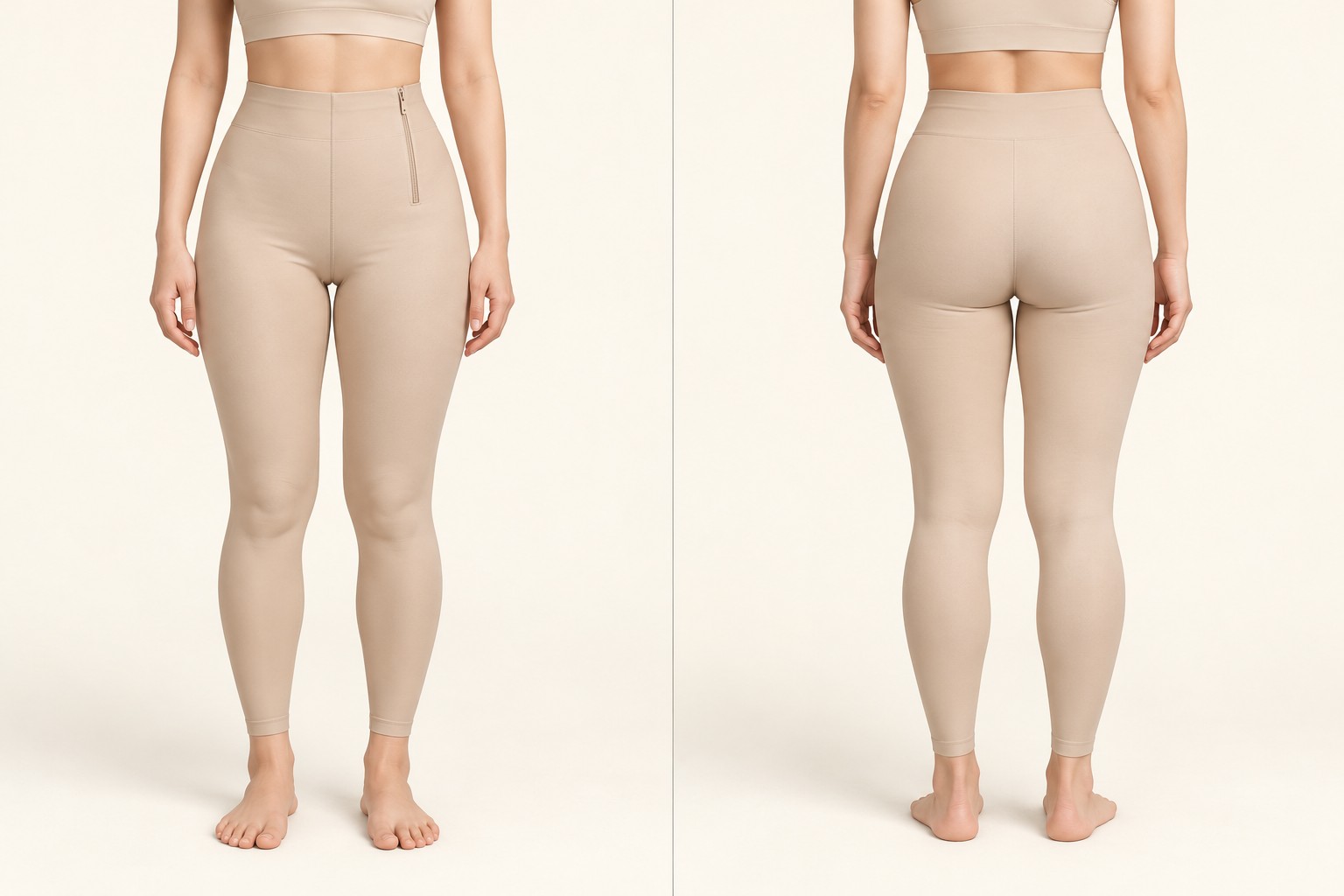
The compression garment helps the induration and skin retraction described above to proceed evenly. In most cases, wear the compression garment 24 hours a day for 2 weeks after surgery, and then only during the day once you are comfortable. However, the skin continues to attach to the tissue for 2 to 3 months, so we recommend wearing it for at least 1 month[13]. After thigh and buttock surgery, you wear a thigh garment that covers from the lower abdomen to the ankles, as shown below. The principles and types of compression garments are explained in detail in our column "The Compression Garment That Completes Your Liposuction Result."
Posture — Avoid Folding, and Start Walking Early
Even in a compression garment, if you sit slouched for a long time, the treated area can fold to one side and retract that way. Sit with your back straight, and walk a little from the day of surgery, which helps both with swelling and with preventing blood clots. For details, please see our column "Posture Care After Liposuction."
References
- Jung. On activities after liposuction surgery. Venus Clinic Doctor's Column. https://myvenus.co.kr/column/398239
- Jung. Complications and side effects of liposuction. Venus Clinic. https://en.myvenus.co.kr/should_know/38861
- Sheckley M, Lowney M, …, Gurtner GC. Role of mechanical forces and skin tension in scar pathophysiology. Plast Aesthet Res. 2026;13:19. doi:10.20517/2347-9264.2026.08
- Townsend CM Jr, Beauchamp RD, Evers BM, Mattox KL, eds. Sabiston Textbook of Surgery: The Biological Basis of Modern Surgical Practice. 21st ed. Elsevier; 2022. Chapter 6 (Wound Healing), pp. 119–132.
- Klein JA. Tumescent Technique: Tumescent Anesthesia & Microcannular Liposuction. Mosby; 2000. Chapter 14 (Perioperative Bleeding Disorders — Normal and Impaired Hemostasis).
- Widgerow AD, Chait LA, Stals R, Stals PJ. New innovations in scar management. Aesthetic Plast Surg. 2000;24:227–234.
- Serdev N, ed. Body Contouring and Sculpting. InTech; 2016. Chapter 3 (Laser-Assisted Liposuction in Body Contouring — Mechanism of action).
- Darby IA, Desmoulière A. Scar Formation: Cellular Mechanisms. In: Téot L, Mustoe TA, Middelkoop E, Gauglitz GG, eds. Textbook on Scar Management: State of the Art Management and Emerging Technologies. Cham: Springer; 2020. Chapter 3, pp. 20–26 (Fig. 3.1·3.2 · CC BY 4.0, adapted).
- Téot L, Mustoe TA, Middelkoop E, Gauglitz GG, eds. Textbook on Scar Management: State of the Art Management and Emerging Technologies. Cham: Springer; 2020. Chapter 1 (Fetal Wound Healing), pp. 7–8.
- Téot L, Mustoe TA, Middelkoop E, Gauglitz GG, eds. Textbook on Scar Management: State of the Art Management and Emerging Technologies. Cham: Springer; 2020. Chapter 9 (International Scar Classification in 2019), pp. 80–81.
- Townsend CM Jr, Beauchamp RD, Evers BM, Mattox KL, eds. Sabiston Textbook of Surgery: The Biological Basis of Modern Surgical Practice. 21st ed. Elsevier; 2022. Chapter 69 (Plastic Surgery), p. 1936.
- Serdev N, ed. Body Contouring and Sculpting. InTech; 2016. Chapter 10 (Fat Grafting in Body Contouring — Scar correction).
- Jung. Precautions before and after surgery. Venus Clinic. https://myvenus.co.kr/cautions
- Téot L, Mustoe TA, Middelkoop E, Gauglitz GG, eds. Textbook on Scar Management: State of the Art Management and Emerging Technologies. Cham: Springer; 2020. Chapter 25 (Treatment of Immature Scars: Manual Massages), p. 216.
- Shiffman MA, Di Giuseppe A, eds. Liposuction: Principles and Practice. Berlin: Springer; 2006. Chapter 66 (Megaliposuction: over 10 Liters).
- Soo C, et al. Differential expression of matrix metalloproteinases and their tissue-derived inhibitors in cutaneous wound repair. Plast Reconstr Surg. 2000;105:638.
- Téot L, Mustoe TA, Middelkoop E, Gauglitz GG, eds. Textbook on Scar Management: State of the Art Management and Emerging Technologies. Cham: Springer; 2020. Chapter 2 (Mechanobiology of Cutaneous Scarring), pp. 12–16.
- Ogawa R. Keloid and hypertrophic scars are the result of chronic inflammation in the reticular dermis. Int J Mol Sci. 2017;18(3):606.
- Chang E, Shi Y, Aarabi S, Bhatt K, Gurtner GC. Microarray profile for murine models of hypertrophic scars (P52). Plast Reconstr Surg. 2006;118(4 Suppl):133.
- Téot L, Mustoe TA, Middelkoop E, Gauglitz GG, eds. Textbook on Scar Management: State of the Art Management and Emerging Technologies. Cham: Springer; 2020. Chapter 22 (Treatment of Immature Scars: Evidence-Based Techniques and Treatments), p. 195.
- Téot L, Mustoe TA, Middelkoop E, Gauglitz GG, eds. Textbook on Scar Management: State of the Art Management and Emerging Technologies. Cham: Springer; 2020. Chapter 27 (Compression Therapy and Conservative Strategies in Scar Management After Burn Injury), p. 229.
- Klein JA. Tumescent Technique: Tumescent Anesthesia & Microcannular Liposuction. Mosby; 2000. Chapter 8 (Miscellaneous Complications — Temporary Lumpiness).
- Klein JA. Tumescent Technique: Tumescent Anesthesia & Microcannular Liposuction. Mosby; 2000. Chapter 31 (Abdomen — Postoperative Care).
- Shiffman MA, Di Giuseppe A, eds. Liposuction: Principles and Practice. Berlin: Springer; 2006. Chapter 44 (Reduced Negative Pressure Liposuction).
Before-and-After Photos
The recovery course of one patient who had thigh and buttock liposuction is shown side by side from the same back view. The post-surgery photos were taken at 9 days, 5 weeks and 12 weeks after surgery. Even the 12-week photo does not show the final result with all swelling gone; recovery continues for about 6 months.
Case 1
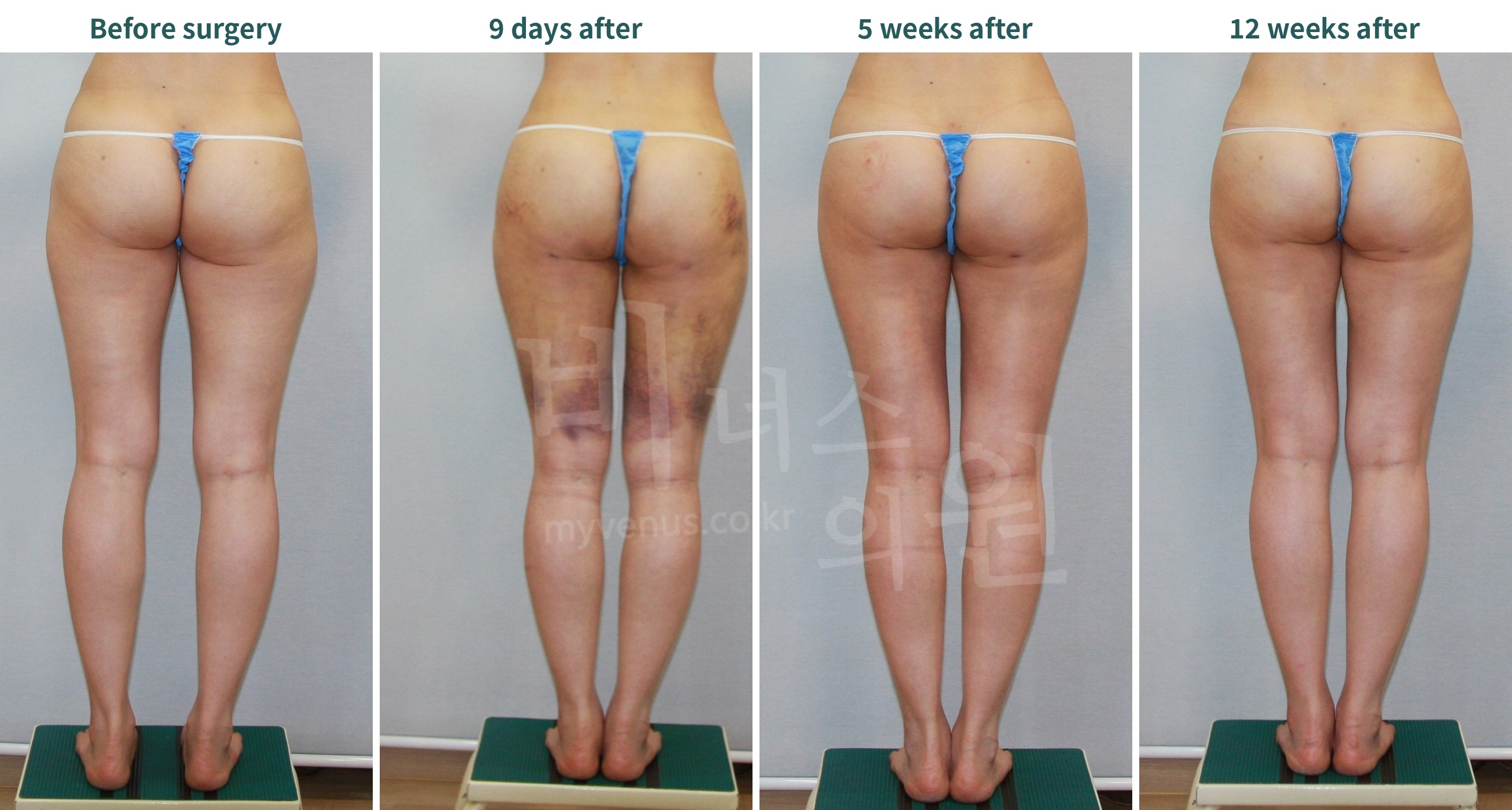
This is a case showing the recovery course after thigh and buttock liposuction in back-view photos of the same patient. At 9 days after surgery, wide bruising remains on the back of the thighs and below the buttocks, and with the swelling the thighs may even look thicker than before surgery. At 5 weeks the bruising has gone and the outer line of the thighs looks more refined inward than before surgery. At 12 weeks the swelling has gone down further and the border between the buttocks and thighs is more distinct. These photos are meant to show how the bruising and swelling right after surgery subside over several weeks, and the pace of recovery and results may differ from person to person.
| Information on the Posted Liposuction Before-and-After Photos | |||
|---|---|---|---|
| - Same person | Surgery performed at Venus Clinic; same person | - Date taken | Taken around 2015; comparison at 9 days, 5 weeks and 12 weeks after surgery |
| - Same conditions | Edited to the same posture and size as closely as possible | - Side effects | https://en.myvenus.co.kr/should_know/38861 |
In Closing
Recovery after liposuction involves two things at once: a quick recovery that lets you return to daily life in a day or two, and a slow recovery in which the contour settles over 6 months through induration. The swelling and bruising of the first week and the firm lumpiness around the one-month mark are all part of this process. At Venus Clinic, we continue to guide you on the compression garment and activity at each stage after surgery, and we follow your recovery together with you.
References: The Compression Garment That Completes Your Liposuction Result Posture Care After Liposuction Activities After Liposuction Surgery Medications to Avoid and Side Effects
Dr. Hakjun Kim, Director, Venus Clinic