The Composition and Use of Tumescent Solution
During consultations, we are often asked, "What is the fluid you put in during liposuction?" and "How is the anesthesia done? Isn't it risky?" The fluid injected into the fat layer before surgery is called tumescent solution. The safety of liposuction depends greatly on how this solution is prepared and how it is adjusted for each patient.
Today I will walk you through what goes into tumescent solution (its basic composition), how it is changed according to the treatment area and the patient's health, and the mortality data by type of anesthesia reported in liposuction textbooks, and then close with photos from an actual surgical case.
Tumescent Liposuction — The Gold Standard of Liposuction
"Tumescent" means "swollen and firm." In this method, a very dilute local anesthetic and a vasoconstrictor are infused generously into the fat layer until the area becomes firm, and then the fat is suctioned out. Klein's liposuction textbook, "Tumescent Technique," explains that because of its safety the tumescent technique has become the standard of care for liposuction around the world [1].
Three Things Tumescent Solution Does
When the epinephrine in tumescent solution narrows the blood vessels, three things happen together: the anesthesia lasts longer, lidocaine is absorbed into the blood slowly so that a larger amount can be used, and bleeding is greatly reduced [4]. Klein's textbook describes finding the epinephrine concentration by watching how pale the skin turns and checking the pulse, and concludes that 0.65–1.0 mg per liter keeps the vessels constricted for several hours while tachycardia remains rare. For comparison, the commercial lidocaine with epinephrine used in dental and skin procedures contains 10 mg per liter (a 1:100,000 dilution) — more than 10 times as concentrated as tumescent solution [4].
Why Can a Large Amount Be Used? — Pharmacokinetics
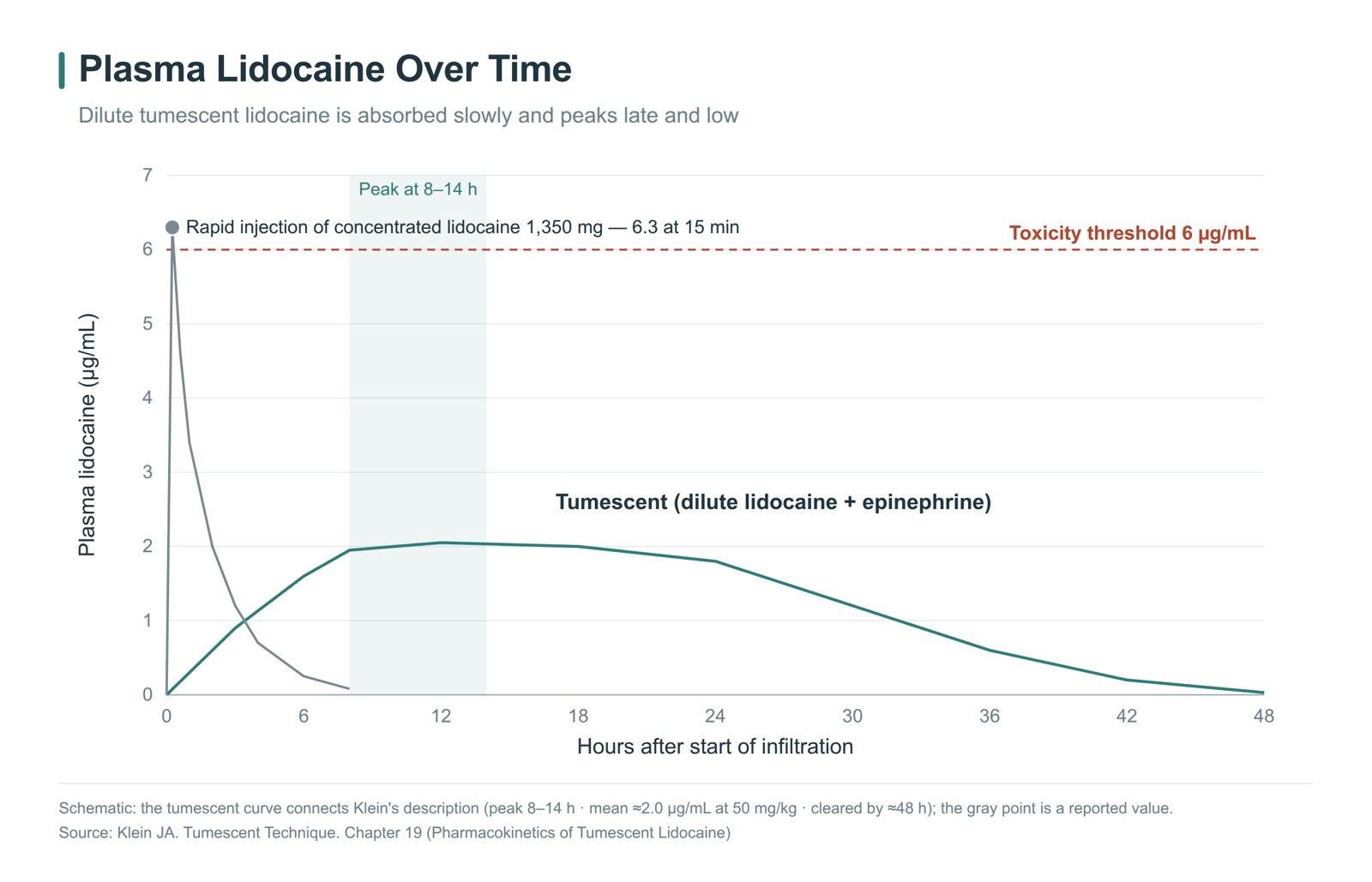
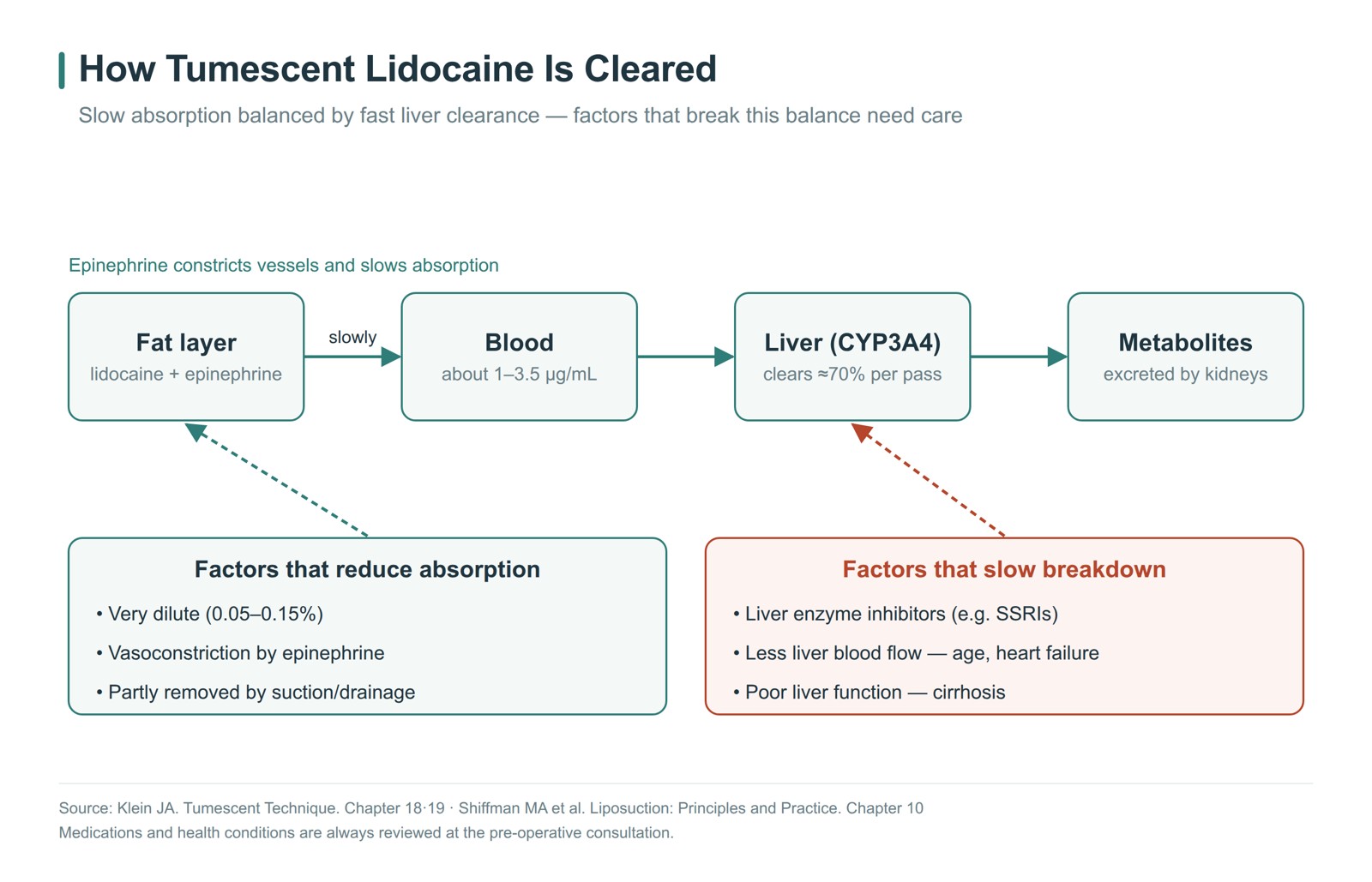
Lidocaine dissolves easily in fat, so it stays in the fat layer and passes into the blood very slowly, while the liver clears incoming lidocaine quickly. The key principle of tumescent lidocaine is that the rate of absorption and the rate of breakdown balance each other, so the blood level stays low and flat for a long time [6]. With the same lidocaine, a concentrated dose injected quickly can exceed the toxicity threshold within 15 minutes, whereas a dilute solution infused slowly produces a low peak 8–14 hours later [6].
Tumescent Doses Differ from Ordinary Local Anesthetic Doses
The textbook warns that the safe range for tumescent lidocaine diluted to 0.05–0.15% must always be kept separate from the upper limit for bottled 0.5–2% lidocaine (7 mg per kg of body weight) [2]. Even though both are "lidocaine," a different concentration and injection method mean they must be handled as if they were entirely different drugs.
Basic Composition of Tumescent Solution
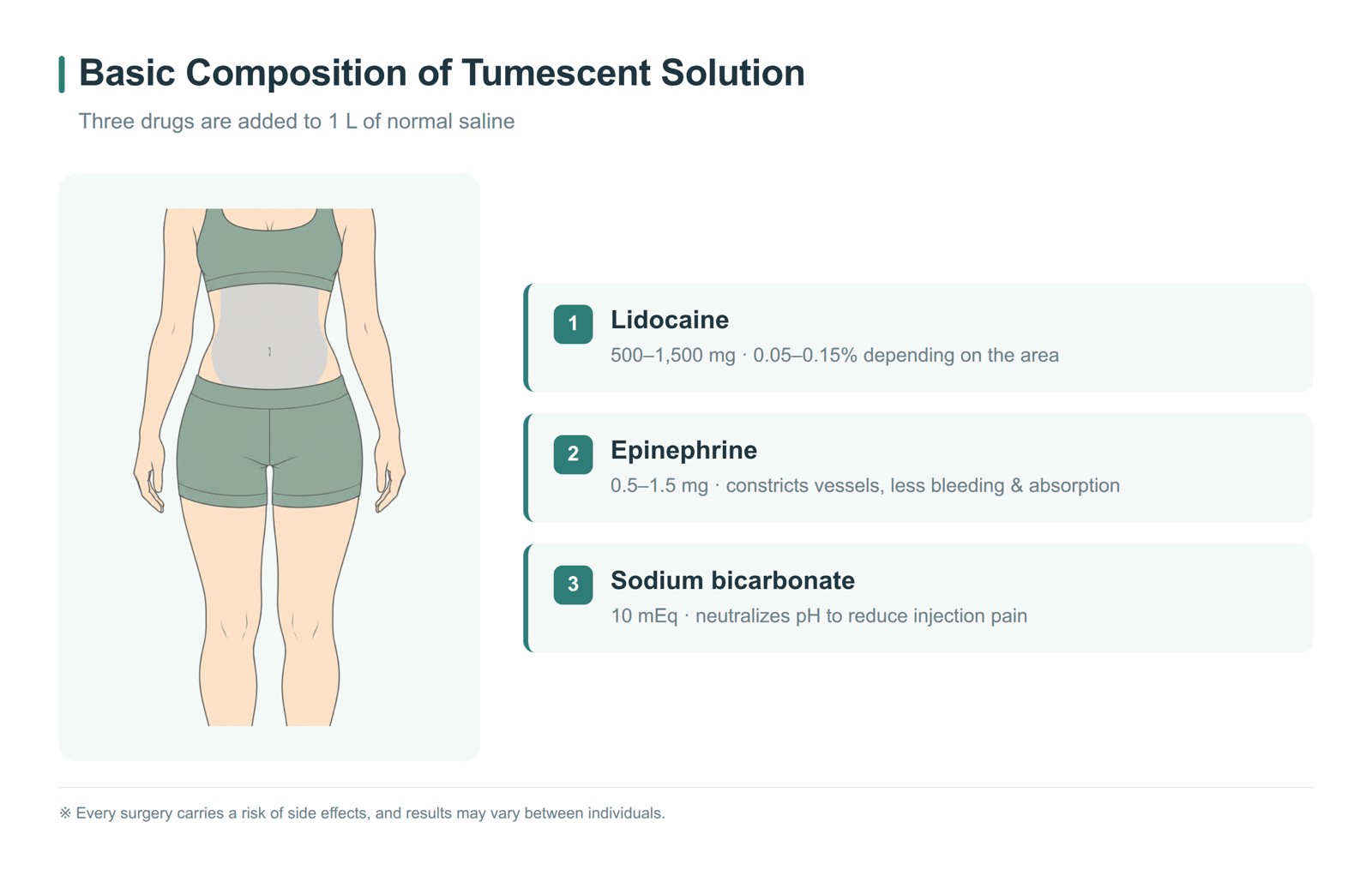
Tumescent solution is made by adding three drugs to a base of 1 L of normal saline. The standard compositions given in the two textbooks are shown below. Shiffman's textbook tabulates four lidocaine concentrations: 0.05, 0.075, 0.1 and 0.15% [2][7].
| Ingredient (per 1 L) | Klein textbook | Shiffman textbook |
|---|---|---|
| Lidocaine | 500–1,500 mg (0.05–0.15%) | 500 · 750 · 1,000 · 1,500 mg |
| Epinephrine | 0.65–1.0 mg (1:1,500,000 to 1:1,000,000 dilution) | 0.5–1 mg (1:2,000,000 to 1:1,000,000 dilution) |
| Sodium bicarbonate | 10 mEq | 10 mEq (10–15 mEq depending on the chapter) |
| Carrier fluid | 0.9% normal saline | Normal saline or lactated Ringer's solution |
How It Is Actually Mixed
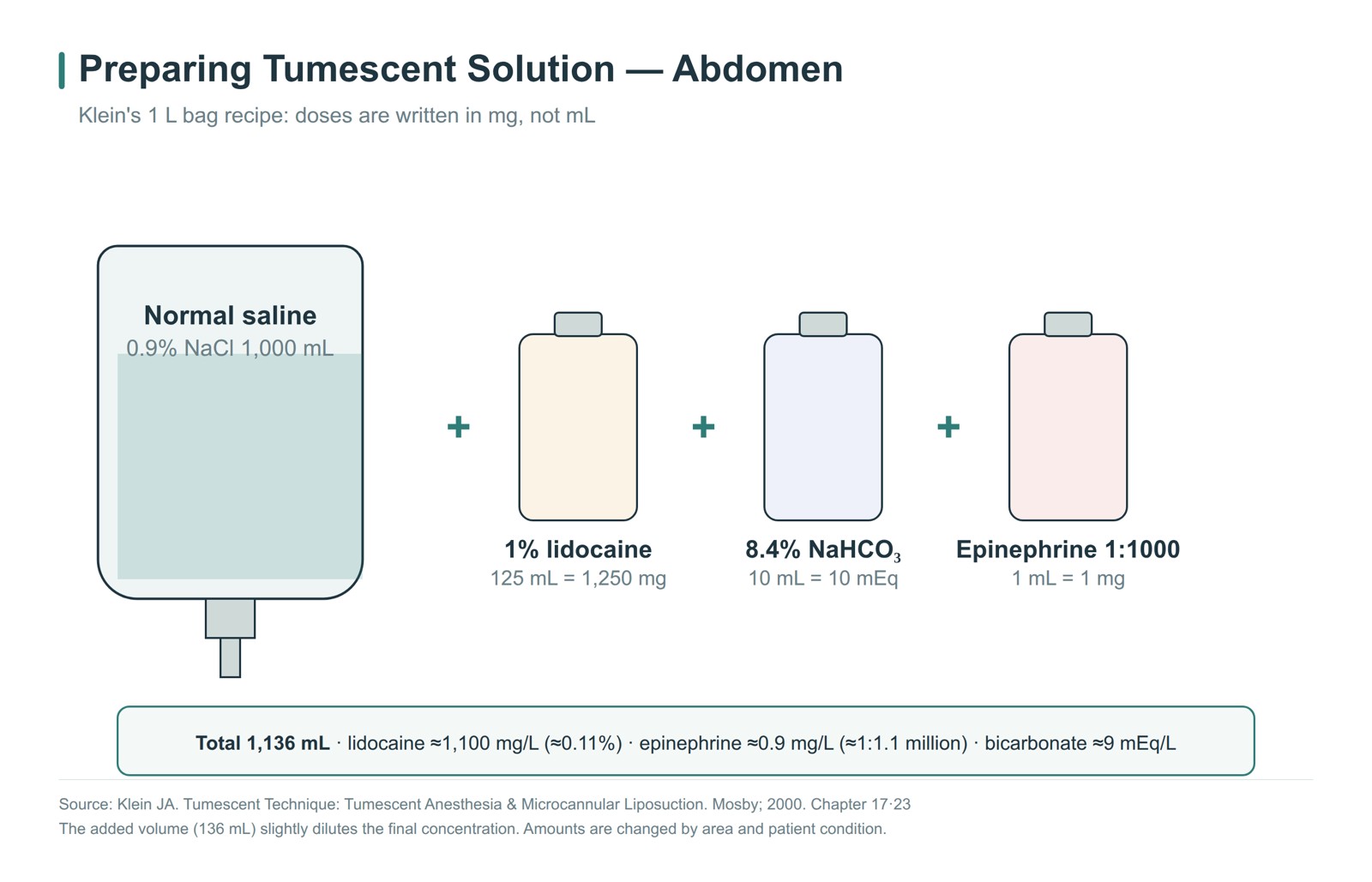
A common formula introduced in Shiffman's textbook is 1 L of normal saline with 50 mL of 1% lidocaine (500 mg), 1 mg of epinephrine and 10 mEq of sodium bicarbonate. With 500 mg of lidocaine in 1 L, the concentration is 500 ÷ 1,000 = 0.5 mg/mL, or 0.05% [7]. Klein's textbook example for the abdomen raises the lidocaine to 1,250 mg; written out with the actual volumes, it looks like this [4].
Why Sodium Bicarbonate Is Added, and How Much
Commercial lidocaine is made acidic to keep the drug stable. Plain lidocaine has a pH of about 6.5, and lidocaine with epinephrine about 4.5. Infused as is, it stings considerably; in the early days of the tumescent technique, this pain meant that a painkiller (meperidine) and a sedative (diazepam) had to be given separately by intramuscular injection. Adjusting the acidity with sodium bicarbonate eliminated most of the stinging, and because narcotic painkillers and injected sedatives were no longer needed, the risk of respiratory depression was reduced as well [4].
The amount added varies slightly between textbooks and papers. Klein's textbook and several chapters of Shiffman's textbook use 10 mEq per liter; Shiffman's textbook gives 10–15 mEq and also introduces a 12.5 mEq formula and Klein's base solution containing 19 mEq [7]. There is also a report that added 20 mL of 8.4% sodium bicarbonate (20 mEq) [18]. However, Klein's textbook recommends not exceeding 10 mEq, because too much alkali can cause lidocaine to precipitate [2].
Rules Followed When Preparing the Solution
① The prescription is written as "mg of lidocaine per liter," not "mL of 1% lidocaine." Several accidents have been reported in which 2% lidocaine was mixed in place of 1%, doubling the dose, including a case in which 90 mg/kg was given [3][5]. For this reason, it is said to be better not to keep 2% lidocaine where tumescent procedures are done [5]. ② The solution is mixed in the operating room on the day of surgery, because epinephrine loses effectiveness above pH 5 and lidocaine may precipitate in solution that has been stored for a long time [2]. ③ The used vials and ampules are kept until the end of surgery so that the total amount can be counted again [2]. ④ Because it takes about 15 minutes for epinephrine to constrict the vessels sufficiently, the solution is not infused too quickly [7]. In the cases in Klein's textbook, the solution was warmed to 37°C, the same as body temperature [5].
Variations by Area and Situation
Klein's textbook states that "there is no single officially defined formula; the concentrations of lidocaine and epinephrine are determined by the treatment area and the clinical situation" [2]. Even tumescent solution varies according to the area, the type of anesthesia and the instruments used.
By Area — Lidocaine and Epinephrine Concentrations
Areas that are fibrous or sensitive receive a higher lidocaine concentration for better anesthesia, while areas with soft fat receive a lower one [4]. The breasts have firm tissue and receive the highest concentration [19].
| Area | Lidocaine (per 1 L) | Epinephrine (per 1 L) |
|---|---|---|
| Buttocks, thighs, knees, arms, neck, face | 750–1,000 mg | About 0.65 mg |
| Around the navel, upper abdomen, deep layer of the lower abdomen (below Scarpa's fascia); in women, below the shoulder blades and behind the armpits; in men, the flanks | 1,000–1,250 mg | About 1.0 mg |
| Male breasts | 1,250–1,500 mg | 1.0–1.5 mg |
| Female breasts | 1,500 mg | 1.5 mg |
For most areas, 0.65 mg of epinephrine per liter is enough, and 1.0 mg or more is recommended for areas that bleed more, such as the upper abdomen, inner abdomen, back, flanks, breasts and under the chin [2][8]. On the other hand, one author in Shiffman's textbook notes that mixing several concentrations can confuse dose calculations and actually be dangerous, so he uses the same concentration everywhere and adjusts by increasing the volume in sensitive areas [7]. Whichever method is used, the key is calculating the total dose accurately.
By Type of Anesthesia and Instruments
| Situation | Composition (per 1 L) | Notes |
|---|---|---|
| With general anesthesia or deep sedation | Lactated Ringer's solution + epinephrine 1 mg + lidocaine 250 mg | Less lidocaine is used because general anesthesia provides the anesthesia [7] |
| Local anesthesia or light sedation | The formula above with lidocaine 350 mg + sodium bicarbonate 12.5 mEq | The same author adds lidocaine and sodium bicarbonate under local anesthesia [7] |
| Ultrasound-assisted liposuction (VASER) | Normal saline + lidocaine 500–1,000 mg + epinephrine 1 mg + sodium bicarbonate 10 mEq (+ triamcinolone 10 mg) | Sodium bicarbonate and lidocaine may be added the day before, but epinephrine is added just before infusion [7] |
Carrier Fluid — Normal Saline and Ringer's Solution
When 10 mEq of sodium bicarbonate is added to 1 L of normal saline, the sodium content is about 164 mEq, compared with 130 mEq in lactated Ringer's solution — a difference of 34 mEq. At ordinary volumes (5–7 L of tumescent solution or less) this difference is not clinically meaningful, and it takes 24–36 hours for that much fluid to be absorbed by the body [2]. Ringer's solution has no buffering effect to adjust acidity, so sodium bicarbonate must still be added to reduce stinging even when Ringer's solution is used [2]. Shiffman's textbook cites as an advantage that the low pH of Ringer's solution (6.3) keeps epinephrine stable longer [7].
What Is Not Added — Additives and Other Local Anesthetics
| Drug | Textbook position |
|---|---|
| Triamcinolone (steroid) | Klein once added 10 mg per liter but no longer recommends it. The real reason postoperative inflammation decreased was open drainage and compression, and steroids may raise the risk of infection [2][4]. The ultrasound-assisted liposuction chapter of Shiffman's textbook still includes it, so the textbooks differ on this point [7]. |
| Hyaluronidase | It does not improve anesthesia, speeds up lidocaine absorption, and increases injection pain and allergic reactions, so it is not recommended [4]. |
| Bupivacaine | It precipitates immediately when mixed with sodium bicarbonate, and full-thickness skin necrosis has been reported after such a mixture was injected. It is never mixed in [2]. |
| High-dose bupivacaine or ropivacaine | At the amounts needed for liposuction their toxicity is high, so they are contraindicated; mixing amide local anesthetics does not reduce toxicity but adds to it [7]. |
| Prilocaine | It can cause methemoglobinemia, and data on toxic thresholds are lacking. It can also affect a fetus, so it is not used if pregnancy is possible [17]. |
Adjustments for Health Conditions
Lidocaine is broken down mostly in the liver. About 70% is removed from the blood in a single pass through the liver, but if blood flow to the liver decreases or the metabolizing enzymes (CYP3A4 and CYP1A2) are inhibited, the blood level rises. If the rate of breakdown is halved, the peak plasma concentration doubles [3][5]. That is why, even with a solution of the same composition, the total amount that can be used differs from patient to patient.
Maximum Lidocaine Dose — Textbook Standards
In 1990 Klein published the first safety limit of 35 mg per kg of body weight. At the 11.9–34.1 mg/kg measured at that time, the peak plasma concentration was 0.8–2.7 µg/mL, and he showed for the first time that tumescent lidocaine peaks 12–14 hours later [3]. As experience accumulated, Klein now recommends the limits below. Gathering the doses and blood levels measured in various studies into one chart shows the basis for these limits.
| Source | Recommended upper limit |
|---|---|
| Klein textbook | 45 mg/kg for slim patients · 50 mg/kg for larger patients · 55 mg/kg or less in all cases [2][3] |
| Shiffman textbook | Regards 35 mg/kg as the most appropriate standard and 55 mg/kg as the edge of the safe range [7] |
| Commercial 0.5–2% lidocaine | 7 mg/kg — must not be confused with tumescent doses [2] |
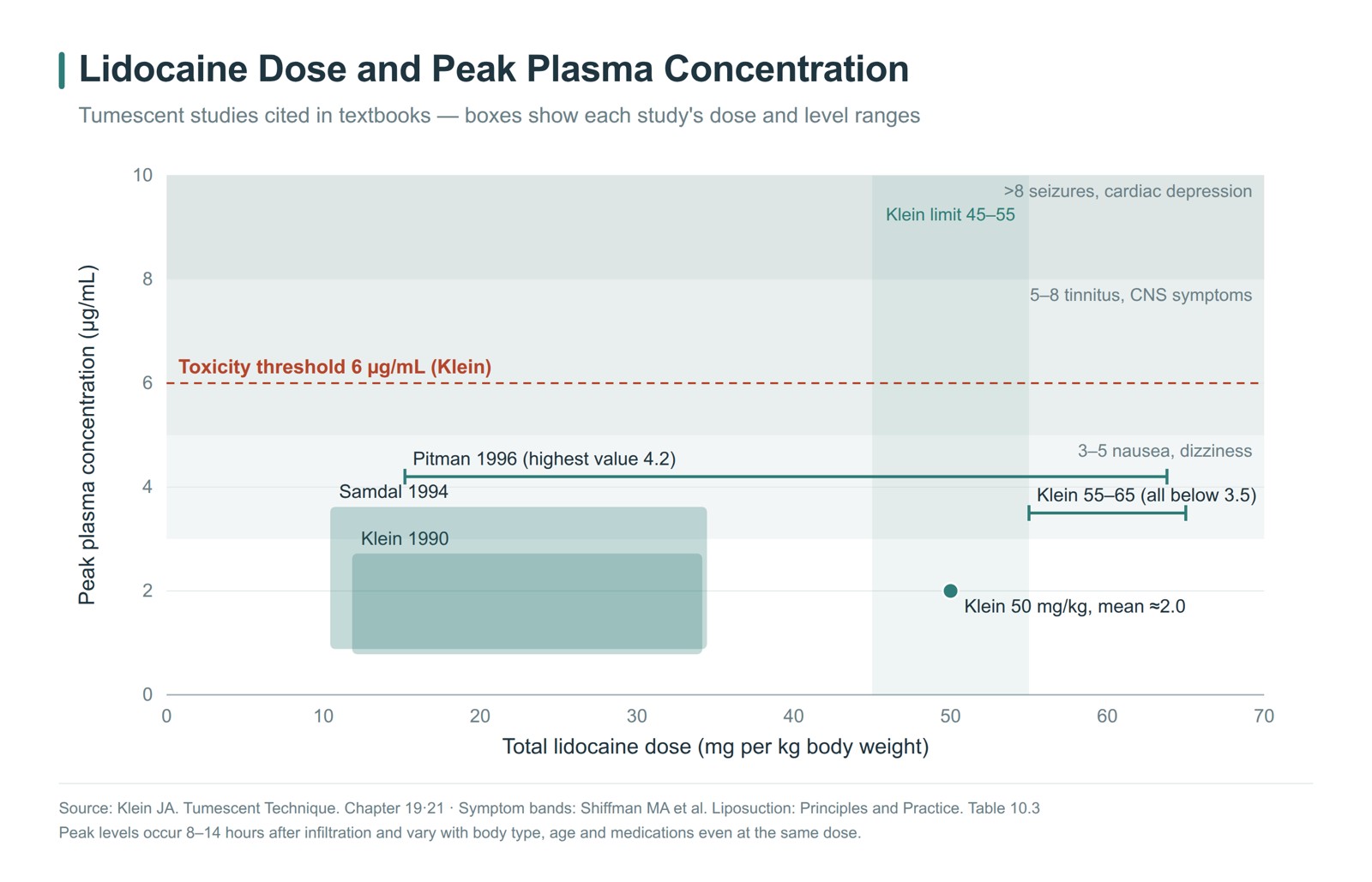
As the chart shows, in most of the studies cited in the textbooks the peak plasma concentration stayed well below the toxicity threshold (6 µg/mL). Pitman et al. (1996) used an average of 42.2 mg/kg in 32 patients who received 1 g of lidocaine per liter together with general anesthesia, and the highest level was 4.2 µg/mL in a patient who received 60.2 mg/kg [3]. However, as Klein observed — nausea in about 2% or fewer at 55 mg/kg and in more than 10% above 60 mg/kg — mild side effects increase as the dose approaches the upper limit [5].
| Blood level (µg/mL) | Possible symptoms |
|---|---|
| 3–5 | Nausea, vomiting, drowsiness, dizziness, tingling |
| 5–8 | Ringing in the ears, abnormal sensations, central nervous system symptoms, cardiovascular effects |
| 8 or higher | Seizures, coma, severe cardiac and respiratory depression |
The table above is summarized from Shiffman's textbook [7]. The threshold for toxicity is given slightly differently: 6 µg/mL in Klein's textbook and 5 µg/mL in Shiffman's textbook [5][7]. When the treatment area is so large that the dose would exceed 55 mg/kg, Klein's textbook recommends ① lowering the lidocaine concentration or ② dividing the surgery into stages at least 72 hours apart, and preferably a month or more apart [3].
Example Calculation — A Person Weighing 60 kg
Applying 45 mg/kg gives 60 × 45 = 2,700 mg. With a solution containing 1,000 mg per liter, the upper limit is 2,700 ÷ 1,000 = 2.7 L; with a solution containing 500 mg per liter, it is 5.4 L. For older patients or those taking drugs that slow lidocaine breakdown, the limit is set lower than this.
Age, Sex and Body Type
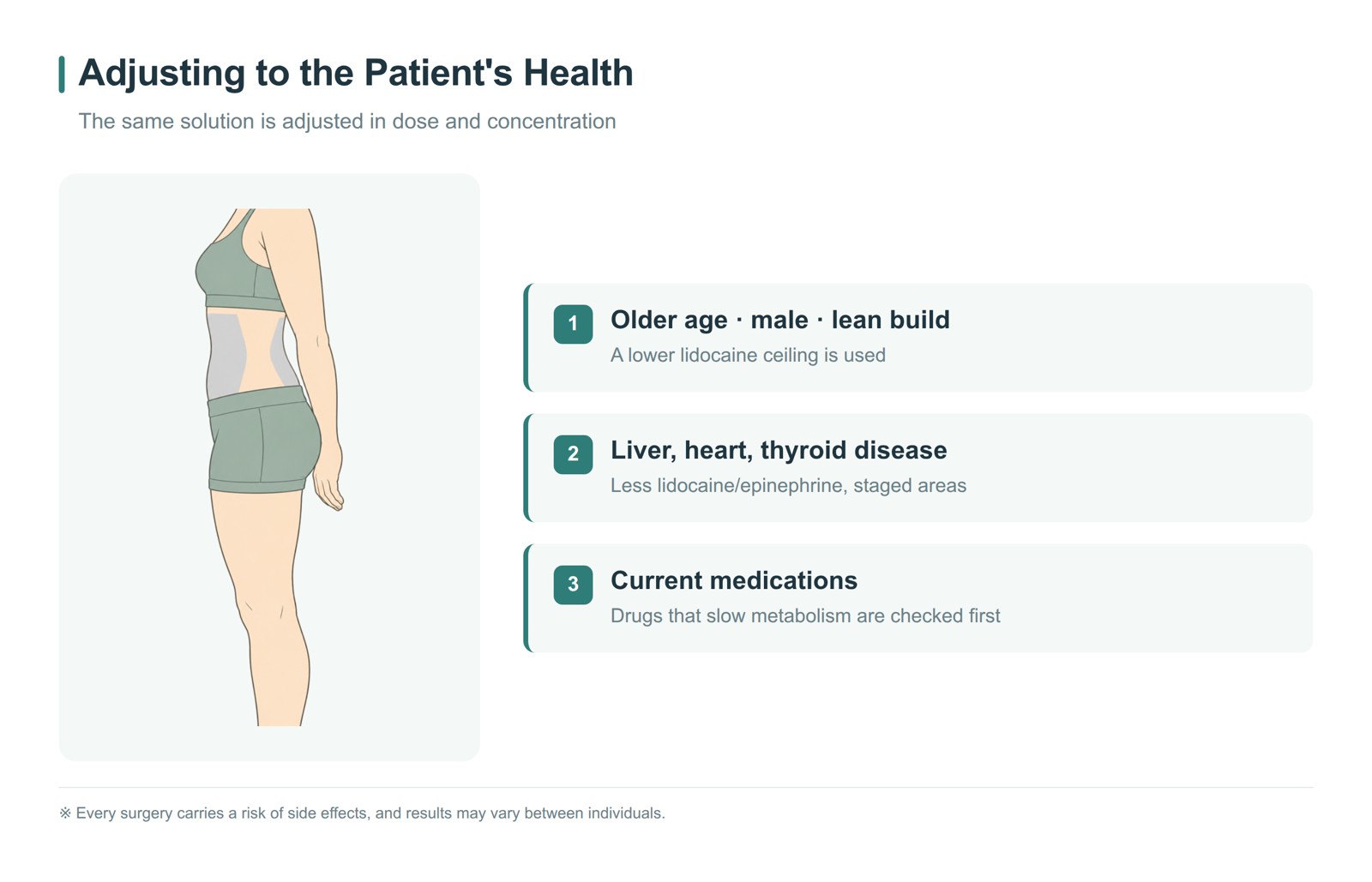
With age, cardiac output and blood flow to the liver decrease, so lidocaine is broken down more slowly. Klein's textbook recommends reducing the maximum dose by 10–25% for older patients, treating a small area first to see the response, and then proceeding with the standard dose 1–2 months later [2][6]. Men have 10–20% less body fat than women, leaving less space for the drug to distribute, so the dose is reduced by about 10% [6]. Slim patients weighing less than 70 kg may reach higher blood levels at the same mg/kg, so the lower limit (45 mg/kg) is applied [6]. For teenagers, the textbook advises caution: surgery should not be done simply at the parents' request, nor as a treatment for obesity [9].
Liver Disease
In patients with reduced liver function, such as cirrhosis, lidocaine is broken down slowly [5]. Shiffman's textbook recommends operating on patients with a history of liver disease only when their liver tests are normal, and even then keeping the dose below 35 mg/kg; it also recommends liver function and hepatitis tests before surgery for all patients [7]. Klein's textbook likewise recommends hepatitis C testing for all liposuction patients [9]. Lidocaine breakdown itself remains normal even when kidney function is reduced [5].
Heart, Thyroid and Endocrine Disease
For people with angina or atherosclerosis, tumescent liposuction is a relative contraindication because of the epinephrine, and a cardiology evaluation is needed first. For symptomatic mitral valve prolapse, a cardiology consultation before surgery is also helpful [9]. When the heart's pumping function is reduced, as in heart failure, blood flow to the liver decreases and lidocaine is broken down more slowly [5]. Hyperthyroidism can cause tachycardia together with epinephrine, so surgery is done after hormone levels are brought under control; some people also take excessive thyroid hormone to lose weight, so levels are checked [9]. In rare cases, a hidden endocrine disorder such as pheochromocytoma must be suspected [2]. Shiffman's textbook recommends that patients with heart or thyroid disease receive a lower epinephrine concentration and have the treatment area divided into several sessions [7].
Current Medications
Some drugs inhibit the liver enzymes that break down lidocaine. Klein's textbook recommends that patients taking such drugs have their maximum dose lowered from 50 mg/kg to below 35 mg/kg and, if possible, stop the drug 1–2 weeks before surgery [3]. It reports a case in which a patient taking an antidepressant (sertraline) and a sleeping pill (flurazepam) together received 59 mg/kg, and the blood level exceeded the threshold at 6.1 µg/mL 12 hours later [6].
| Type | Examples |
|---|---|
| Antidepressants | SSRIs (sertraline, fluoxetine, paroxetine, fluvoxamine) [5] |
| Sleeping pills and tranquilizers | Benzodiazepines [5] |
| Antibiotics and antifungals | Erythromycin, clarithromycin, ciprofloxacin, ketoconazole [5] |
| Heart medications | Amiodarone, diltiazem, propranolol (reduces liver blood flow) [5] |
| Acid reducers and others | Cimetidine, omeprazole, anticonvulsants, grapefruit juice [5] |
In addition, pseudoephedrine in cold medicines and supplements containing ephedra easily cause tachycardia together with epinephrine [2], and some people are sensitive to the sulfites in epinephrine products [9]. Non-selective beta-blockers (propranolol) can raise blood pressure together with epinephrine and require caution, but Shiffman's textbook notes that with tumescent infusion absorption is slow, so the usual dose is generally continued, and anesthesiologists are advised to avoid propranolol during general anesthesia [7][9]. That is why, at the preoperative consultation, we ask about every medication and dietary supplement you take.
Symptoms May Appear the Night after Surgery
The blood level of tumescent lidocaine peaks 8–12 hours after infusion, stays elevated for more than 24 hours, and disappears at about 48 hours [6]. Klein's textbook also notes that mild symptoms are usually first felt between 8 and 16 hours, around the time of waking from a nap [5]. If you experience symptoms such as nausea or dizziness on the night of surgery, please contact the clinic right away.
When IV Sedation or General Anesthesia Is Added
Some of the drugs used for intravenous sedation or general anesthesia are broken down by the same liver enzymes as lidocaine or reduce liver blood flow, which can slow lidocaine breakdown. Also, because the patient cannot express pain, the fat layer may not be filled sufficiently with solution [7]. There is a case of a patient who received lidocaine in early pregnancy and delivered a healthy baby, but if pregnancy is possible, this is always checked before surgery [17].
Limits — Adjustment Does Not Bring the Risk to Zero
The textbook itself says that lidocaine toxicity cannot be fully predicted because of individual differences and drug interactions [3]. Adjusting the composition and dose is a way to reduce risk, not to eliminate it. That is why, when the treatment area is large, we also consider dividing the surgery into stages rather than doing too much at once.
Mortality by Type of Anesthesia — Figures Reported in Textbooks
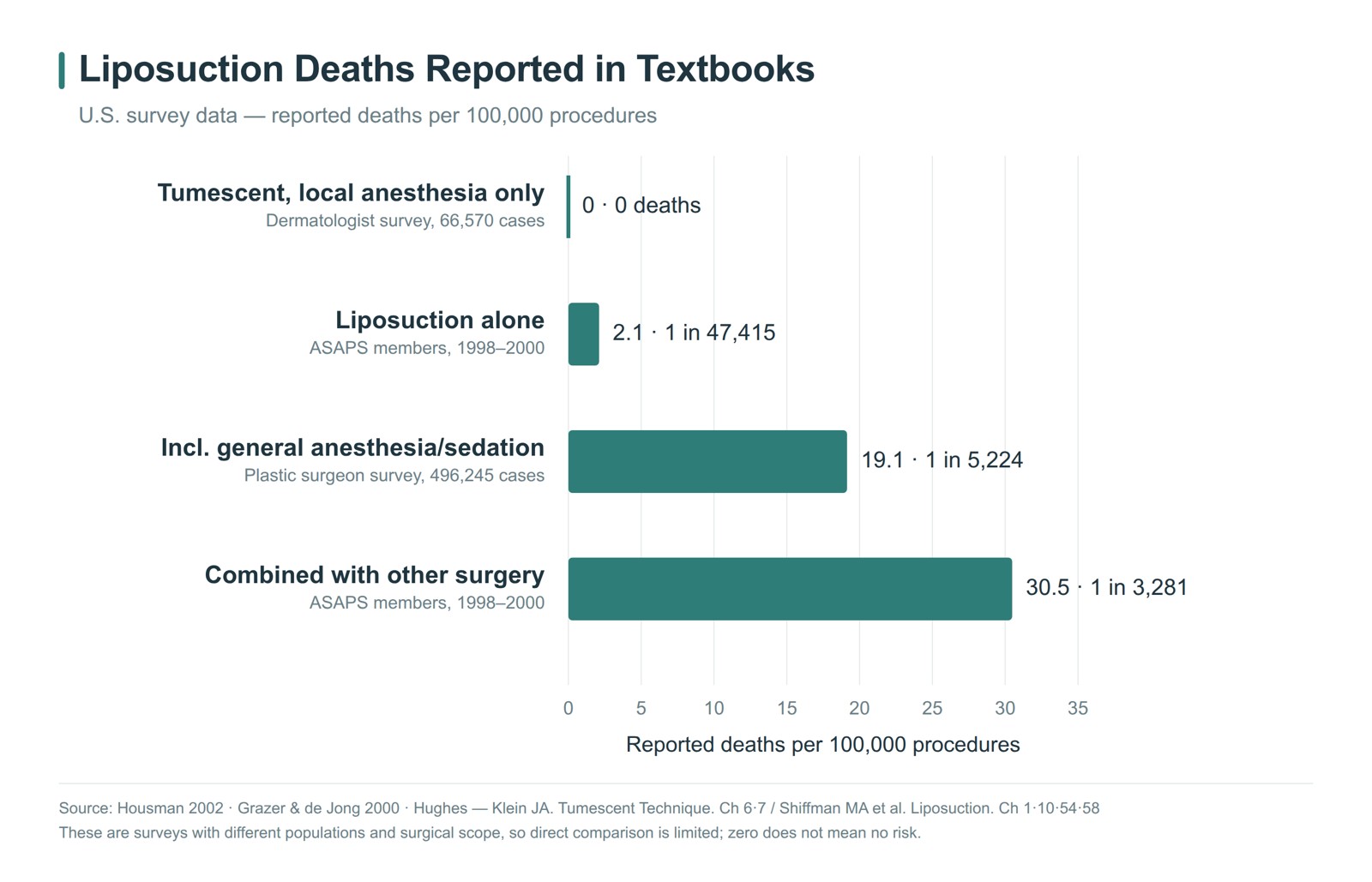
When discussing the safety of tumescent liposuction, the textbooks also present results of large surveys by type of anesthesia. The figures below come from American surveys and reports cited in the Klein and Shiffman textbooks.
| Survey | Size | Deaths |
|---|---|---|
| Liposuction under tumescent local anesthesia alone — survey of 505 dermatologists (1994–2000) | 66,570 cases | 0 [10] |
| Liposuction under tumescent local anesthesia — survey of dermatologists (1995) | 15,336 cases | 0 [7] |
| Liposuction including general anesthesia and sedation — survey of 1,200 plastic surgeons (1994–1998) | 496,245 cases | About 1 per 5,224 cases (19.1 per 100,000) [11] |
| Data from members of the American Society for Aesthetic Plastic Surgery (1998–2000) — liposuction alone | About 72,000 cases (total) | About 1 per 47,415 cases [12] |
| Same data — combined with other procedures such as abdominoplasty | (included above) | About 1 per 3,281 cases [12] |
What the Numbers Tell Us
Klein's textbook summarizes that "all reported liposuction deaths have been associated with general anesthesia, deep IV sedation or the use of bupivacaine, and there have been no reported deaths with tumescent liposuction under local anesthesia alone" [1][8]. It explains that simply undergoing prolonged general anesthesia carries a risk of death of about 1 in 10,000 to 20,000 even in healthy people [8]. The five liposuction deaths reported in New York City medical examiner records also all involved general anesthesia or sedation, with no evidence of lidocaine toxicity [13]. In the plastic surgeon survey, the most common confirmed cause of death was pulmonary embolism (blood clots), followed by organ perforation, fat embolism and excessive fluids, and there were no deaths from lidocaine toxicity [11].
Points to Keep in Mind When Reading These Numbers
These data come from surveys, not randomized comparative studies. Deaths tend to be underreported, and the general anesthesia group includes cases in which a large amount of fat was removed at once or other procedures such as abdominoplasty were performed at the same time, so it cannot be fully determined whether the difference is due to the type of anesthesia or the extent of surgery [8][12]. Shiffman's textbook also offers a balanced view: "It is not true that local tumescent anesthesia carries no risk of death; however, the risk is lower than with general anesthesia or deep sedation" [12].
Anesthesia at Venus Clinic
At Venus Clinic, we do not use general anesthesia; we use tumescent local anesthesia as the basis, together with IV sedation. Because the textbook warns that some drugs used for IV sedation can slow lidocaine breakdown [7], we apply the same adjustments for health conditions and medications described above when IV sedation is added.
Encouraging Skin Contraction without Cutting Away Skin
When there is loose skin on the abdomen or back, we are often asked, "Do I need to have skin cut away?" Klein's textbook says that large skin excisions tend to leave scars and disappointing results and are a last resort in body contouring surgery; liposuction should be done first, and excision considered only if that result is not enough [14]. After liposuction, the skin contracts again through the elasticity of the dermis and the contraction of the fibrous tissue in the fat layer [14].
Superficial Liposuction Helps the Skin Contract
If only the deep layer is suctioned, the volume decreases, but a thick layer of fat remains under the skin and loose skin does not contract well. Shiffman's textbook explains that refining the shallow fat close to the skin allows delicate contouring and helps the skin contract better [15]. At Venus Clinic, we also use superficial liposuction to encourage skin contraction. The lower abdomen in particular is an area where the skin tends to contract well without separate skin excision when fat is removed thoroughly, whereas the upper abdomen tends to contract relatively less [16].
References
- Klein JA. Tumescent Technique: Tumescent Anesthesia & Microcannular Liposuction. Mosby; 2000. Chapter 2 (Two Standards of Care for Liposuction) · Chapter 3 (Ethical Considerations).
- Klein JA. Tumescent Technique: Tumescent Anesthesia & Microcannular Liposuction. Mosby; 2000. Chapter 23 (Tumescent Formulations).
- Klein JA. Tumescent Technique: Tumescent Anesthesia & Microcannular Liposuction. Mosby; 2000. Chapter 21 (Maximum Recommended Dosage of Tumescent Lidocaine).
- Klein JA. Tumescent Technique: Tumescent Anesthesia & Microcannular Liposuction. Mosby; 2000. Chapter 1 (History of Tumescent Liposuction) · Chapter 17 (Pharmacology of Lidocaine).
- Klein JA. Tumescent Technique: Tumescent Anesthesia & Microcannular Liposuction. Mosby; 2000. Chapter 18 (Cytochrome P450 3A4 and Lidocaine Metabolism) · Chapter 20 (Lidocaine Toxicity and Drug Interactions).
- Klein JA. Tumescent Technique: Tumescent Anesthesia & Microcannular Liposuction. Mosby; 2000. Chapter 16 (Pharmacology of Tumescent Technique) · Chapter 19 (Pharmacokinetics of Tumescent Lidocaine).
- Shiffman MA, Di Giuseppe A, eds. Liposuction: Principles and Practice. Springer; 2006. Chapter 10 (Liposuction with Local Tumescent Anesthesia and Microcannula Technique) · Chapter 11 · 12 · 13 · 18 · 33 · 50.
- Klein JA. Tumescent Technique: Tumescent Anesthesia & Microcannular Liposuction. Mosby; 2000. Chapter 6 (Clinical Biostatistics of Safety) · Chapter 7 (Risks of Systemic Anesthesia) · Chapter 8 (Miscellaneous Complications).
- Klein JA. Tumescent Technique: Tumescent Anesthesia & Microcannular Liposuction. Mosby; 2000. Chapter 24 (Ancillary Pharmacology) · Chapter 28 (Surgical Technique: Microcannular Tumescent Liposuction).
- Housman TS, et al. Survey of 505 dermatologic surgeons on serious adverse events in liposuction (2002) — cited in Shiffman MA, Di Giuseppe A, eds. Liposuction: Principles and Practice. Springer; 2006. Chapter 1·10.
- Grazer FM, de Jong RH. Fatal outcomes from liposuction: census survey of cosmetic surgeons. Plast Reconstr Surg. 2000;105:436–448 (cited in Shiffman MA et al., same book, Chapter 10·54).
- Shiffman MA, Di Giuseppe A, eds. Liposuction: Principles and Practice. Springer; 2006. Chapter 54 · Chapter 58 (Medical Liability Claims for Liposuction).
- Rao RB, Ely SF, Hoffman RS. Deaths related to liposuction. N Engl J Med. 1999;340:1471–1475 (cited in Klein JA, same book, Chapter 24).
- Klein JA. Tumescent Technique: Tumescent Anesthesia & Microcannular Liposuction. Mosby; 2000. Chapter 8 (Skin Excisions) · Chapter 28 (Figure 28-8).
- Shiffman MA, Di Giuseppe A, eds. Liposuction: Principles and Practice. Springer; 2006. Chapter 29.
- Venus Clinic Doctor's Column, "Liposuction for Uneven Contours" (in Korean). myvenus.co.kr/column/7780.
- Klein JA. Tumescent Technique: Tumescent Anesthesia & Microcannular Liposuction. Mosby; 2000. Chapter 22 (Bupivacaine, Prilocaine, and Ropivacaine).
- Ultrasound Diagnosis and Treatment of Breast Lumps after Breast Augmentation with Autologous Fat Grafting. Plast Reconstr Surg Glob Open. 2017. doi:10.1097/GOX.0000000000001603.
- Klein JA. Tumescent Technique: Tumescent Anesthesia & Microcannular Liposuction. Mosby; 2000. Chapter 37 (Male Breasts) · Chapter 38 (Female Breasts).
Before-and-After Photos
These photos are of a patient who had sagging fat on the abdomen and on the flanks, waist and back. All of the after photos were taken 1 week after surgery. At this stage, bruising, swelling and antiseptic stains are still present, so they show the beginning of the change, not the final result.
Sagging Fat Tissue on the Abdomen and Back
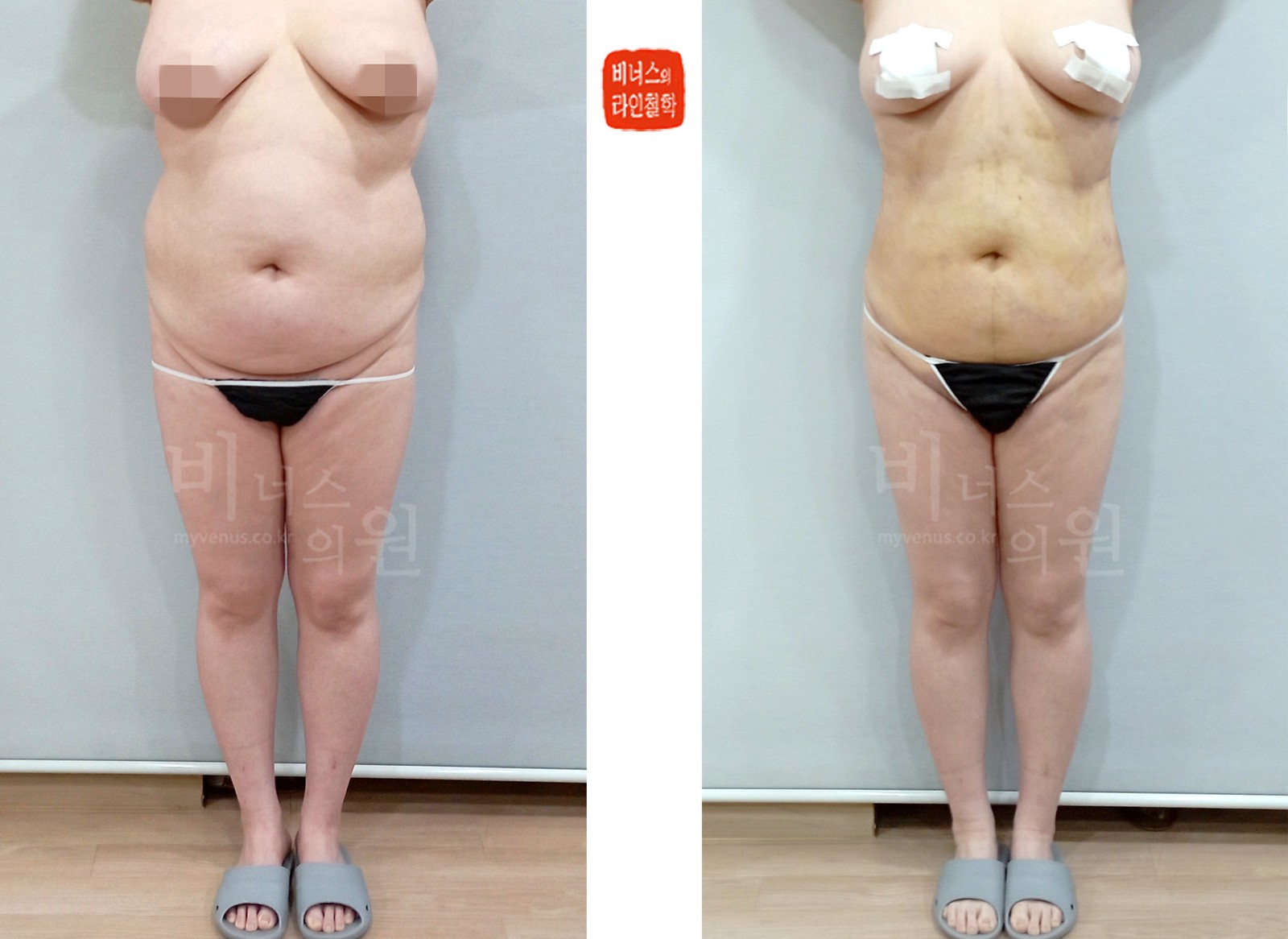
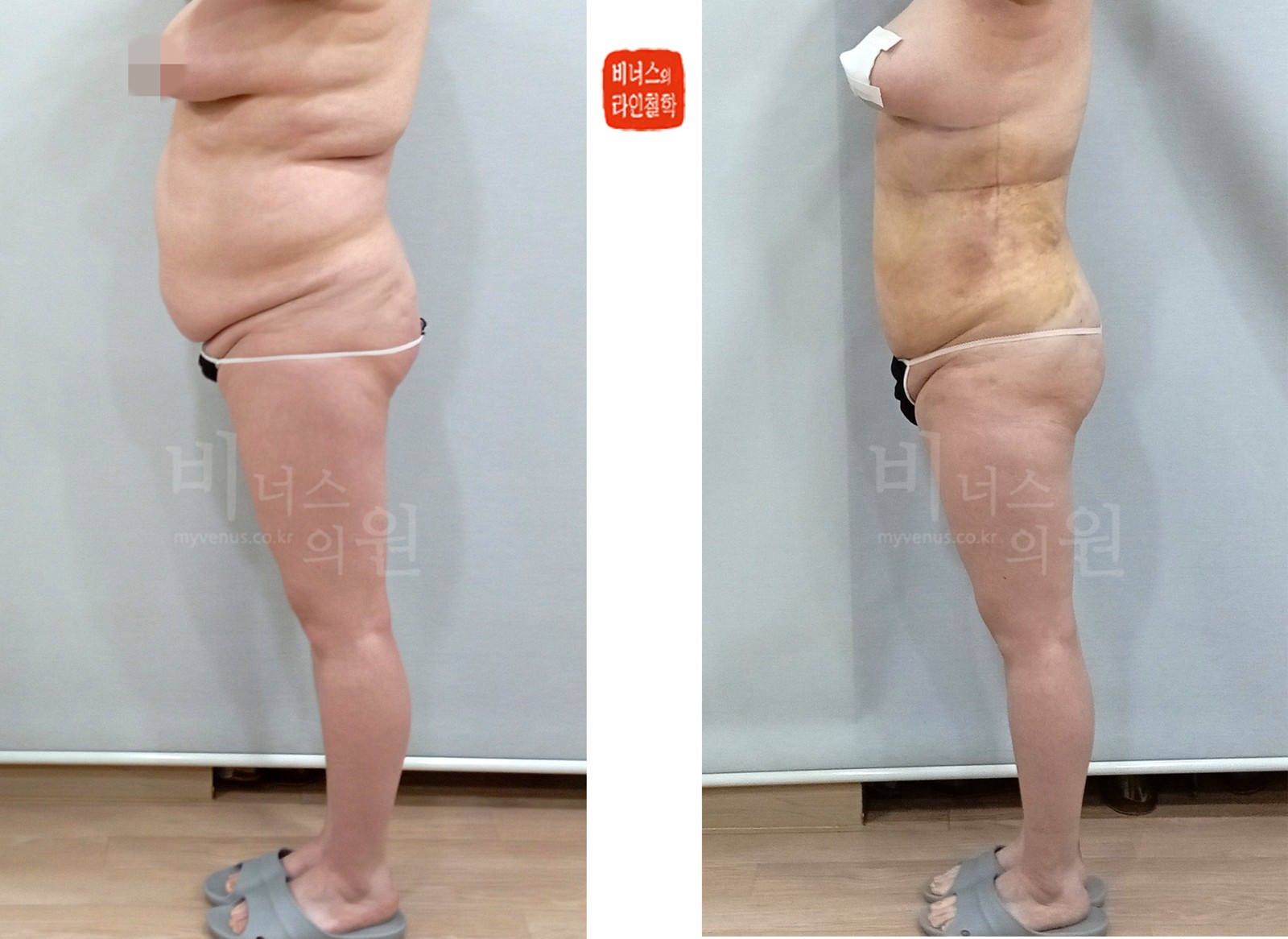
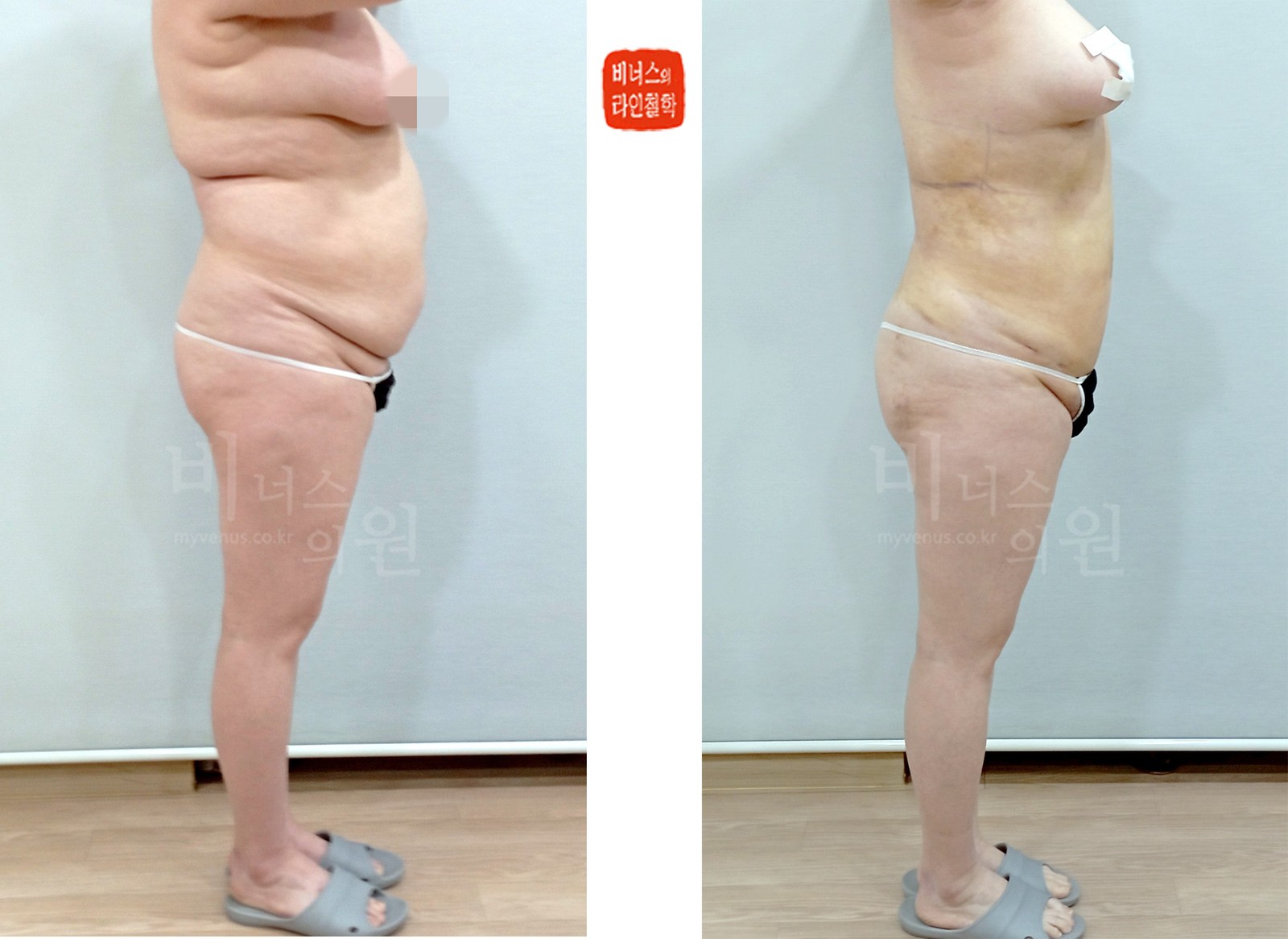
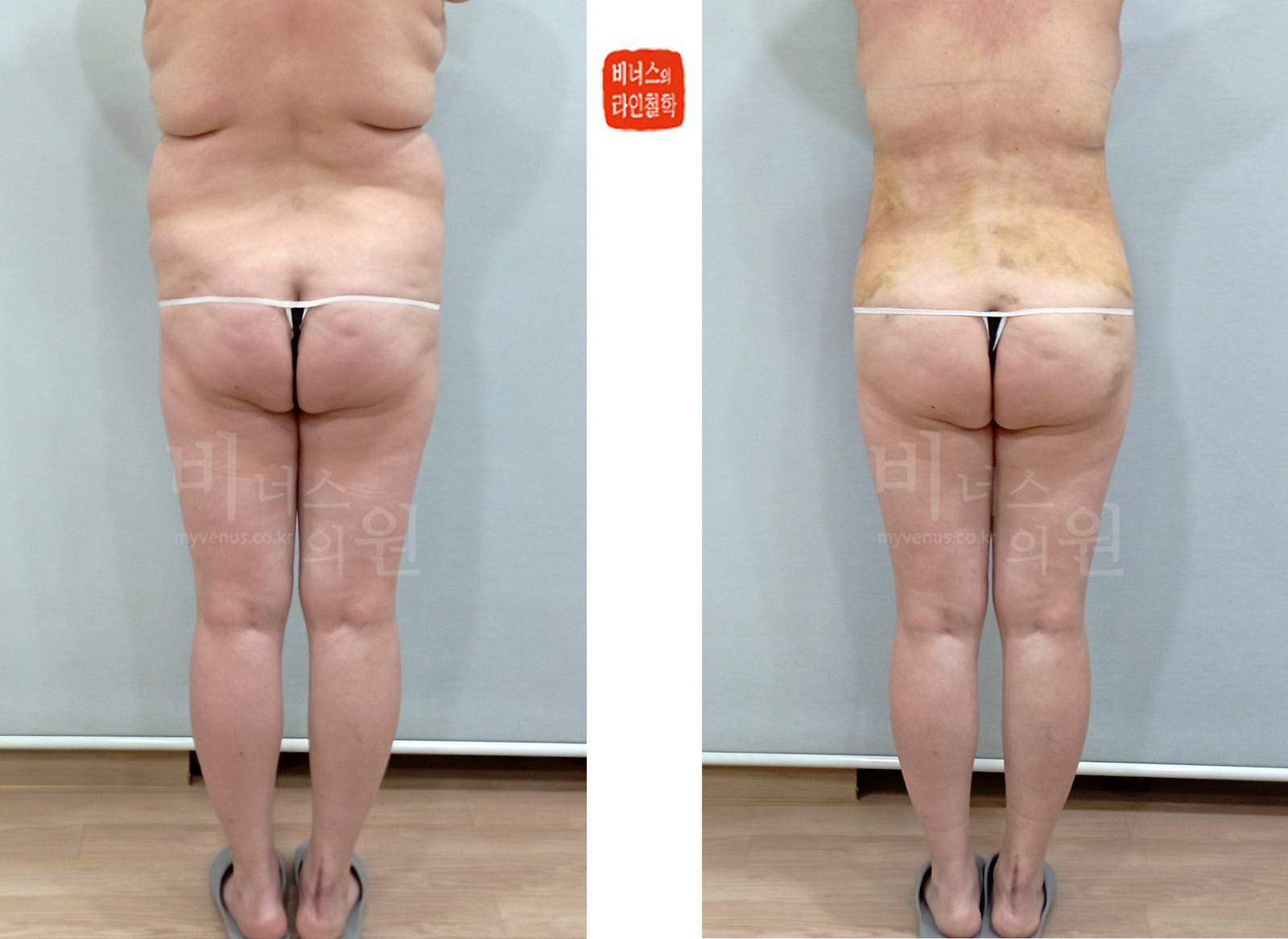
This was a case of sagging fat tissue on the abdomen and back. Before surgery, the fat of the lower abdomen hung forward in a fold, and the back and waist also had several overlapping folds of fat. No skin excision was performed; the fat layer was evenly refined with tumescent liposuction. In the photos taken 1 week after surgery, the areas that had been folded are beginning to smooth out at the front, sides and back, and the skin is starting to settle back onto the reduced fat. Skin contraction continues over several months, so the area becomes more refined over time. This patient also had buttock fat grafting in the same operation.
| Information on the Posted Liposuction Before-and-After Photos | |||
|---|---|---|---|
| - Same person | Surgery performed at Venus Clinic; same person | - Date taken | Taken around 12/2023; comparison at 1 week after surgery |
| - Same conditions | Edited to the same posture and size as closely as possible | - Side effects | https://en.myvenus.co.kr/should_know/38861 |
In Closing
The reason tumescent liposuction became the standard for liposuction is safety. Klein's textbook explains that this safety comes from three things: avoiding the risks of general anesthesia, greatly reducing bleeding, and reducing the amount of intravenous fluid [1]. Added to this is the principle that very dilute lidocaine is slowly absorbed from the fat layer and quickly cleared by the liver [6]. In the large surveys cited in the textbooks, there were also no reported deaths with tumescent liposuction under local anesthesia alone [10].
However, this safety does not come automatically from a single fixed solution. It is maintained when the composition and total dose are calculated according to the area and the patient's age, health and medications, and when large treatment areas are divided into stages. At Venus Clinic, we operate with tumescent local anesthesia as the basis, without general anesthesia.
References: What Is Tumescent Liposuction?
Dr. Hakjun Kim, Director, Venus Clinic