There Are No Fashions in Medicine
The world is changing fast. Progress in the internet field in particular seems incredibly rapid.
These days we talk about the Web 2.0 era, in which information is becoming open and personalized. I once read on someone's blog that in the coming era, the openness of information will bring the truth of this world to light. If all the information in the world is made public, I truly hope a world will come in which truth becomes justice.
I feel that openness and personalization are happening not only in information and communications but also in medicine. I believe there are no fashions in medicine — only issues that come to the fore at different times. Evidence-based medicine is science, and science does not change from moment to moment.
As a doctor who performs liposuction, I am sometimes asked why I still do liposuction by hand, the old-fashioned way, when water-jet liposuction is the trend these days. If you search the academic literature on water-jet liposuction, there is only one paper, with about 60 cases that were not properly compared, reporting less bruising and pain after surgery. For laser liposuction as well, most papers say not that the laser produces better results, but only that it can be used appropriately depending on the situation.
If a new machine comes out, does that make it a good method?
If a good machine comes out that can improve liposuction results, there should be papers that prove it, and until then I think that method is just a new attempt. Doctors who are newly learning liposuction may buy an expensive machine believing it will make liposuction easier, only to find that the machine actually makes liposuction harder.
Of course, researching, developing, and testing new methods is not a bad thing — in fact, I think it is desirable……
Although the right instruments and techniques should be chosen according to the treatment area and the patient's situation, many doctors popularize various liposuction devices for the sake of trends or marketing. Even so, the method that modern medicine has so far shown to be safe and effective, and the one used for most patients, is the tumescent method, in which liposuction is performed with microcannulas using the power of a suction machine. The fact that papers reporting 5,000 or 3,000 cases are almost all about manual liposuction done by hand supports this.
In fact, if tumescent liposuction is done properly, the risk of bleeding is very low. Also, if enough fat can be removed with thin cannulas, the risk of unevenness is low as well. The results of liposuction are not improved by aftercare, and I do not think they depend on aftercare using expensive machines either.
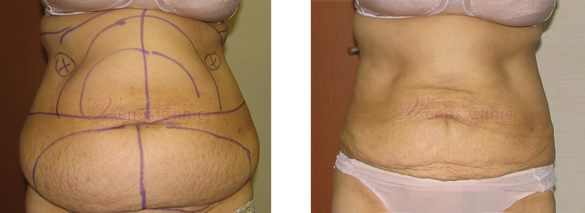
There are even renowned doctors overseas who insist on manual liposuction using only the negative pressure of a syringe, without the help of a suction machine.
Personally, I believe the results of liposuction depend on the doctor's skill, stamina, and mindset — on how patiently and smoothly they remove enough fat through thin cannulas.
I apologize in case this article reflects poorly on the many doctors who quietly and steadily test new machines, do research, and perform liposuction well.
[Dr. Jung, Director, Venus Clinic]