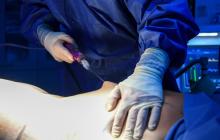
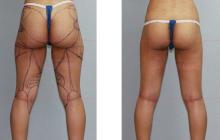
Obesity contributes to nearly every adult-onset disease, and because it affects not only outward appearance but can also create psychological distress, it is a major concern for people today. With so much misinformation about weight control circulating in the media, the wisdom to know the facts and sort them out is essential. In short, I believe there is no royal road to weight control. What matters most is one's own will and effort. The best approach is a balanced, nutritionally sound diet together with regular exercise that does not overstrain the body. Liposuction can be thought of as a method that, within this process, sculpts the body into a more attractive shape and, by reducing body fat, makes dieting and exercise easier.

Various Liposuction Devices and Methods - Liposuction machines in common use
Liposuction can be divided into several types according to the characteristics of the instruments used. These instruments incorporate state-of-the-art modern technology and can help remove large volumes of fat effectively while minimizing damage to blood vessels and nerves. However, each instrument has both advantages and disadvantages, and for many devices the effectiveness has yet to be proven academically. I therefore believe a multi-modality approach is needed, in which several instruments are used together, taking only the aspects that are advantageous in each situation.
Nevertheless, all modern liposuction should be performed using the tumescent technique, which is called the gold standard and is academically standardized. Tumescent liposuction follows common elements: tumescent solution is infiltrated, and the surgeon, using the suction power of the aspirator, moves the suction cannula back and forth by hand to remove the fat. Only when these elements are followed can a procedure truly be called liposuction. What is certain, therefore, is that what determines the outcome of liposuction is not the machine but the surgeon's knowledge and skill, the dedicated effort to do one's best, and the physical stamina that supports that effort. Just as the best results come from a person in whom wisdom, virtue, and physical strength (智, 德, 體) form a trinity.
Ultrasound-Assisted Liposuction (ultrasound assisted liposuction)
1) Internal Ultrasound: In this method, ultrasound at about 16,000 Hz is generated at the tip of the suction cannula, selectively breaking down only fat, which is vulnerable to ultrasound, without damaging nerves or blood vessels, and the fat is then aspirated. Its advantages are less bleeding and less damage to surrounding tissue, allowing a larger volume of fat to be removed safely.
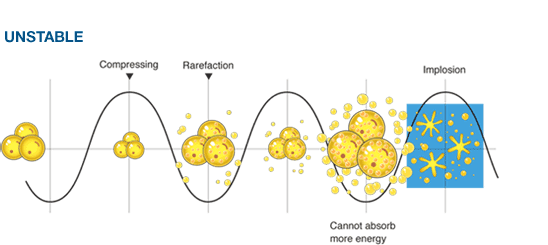
In addition, the action of the ultrasound produces a tightening effect on the skin surface, helping the skin become smooth after surgery. However, if the ultrasound intensity is set too high, the heat generated can cause burns, and because it takes a long time to liquefy the fat, experience is required to properly adjust the intensity and duration of ultrasound according to the treatment area and the degree of obesity.
More recently, an internal ultrasound probe called VASER has been developed. Because the energy generated by an ultrasound probe within the subcutaneous fat layer decreases as the probe diameter becomes smaller, the probe was refined to the minimum diameter that can still liquefy fat tissue while generating less energy. This third-generation ultrasound-assisted liposuction, which minimizes the complications of the ultrasound method (UAL), is now widely used.
The reason the VASER method (VAL) was needed is as follows: the ultrasound method (UAL) had been pushed out of the liposuction market because it caused serious complications such as burns and skin necrosis, yet it was deliberately improved and brought back into use because, despite its severe complications, it has an outstanding effect on skin retraction and can be useful in treatments such as face contouring and breast mastopexy. It thus evolved into VASER, an improved form that reduces the complications of the ultrasound method.
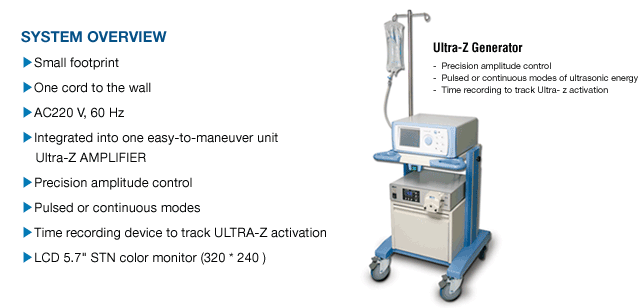
The differences between the ultrasound method (UAL) and the VASER method (VAL) are, first, that VASER produces fat cell fragmentation and emulsion effectively while generating less energy. Second, it does not aspirate fat at the same time as emulsification. It proceeds in two stages: the fat is first emulsified and then aspirated using the power of the suction unit. As a result, the complications that previously occurred have been reduced, because the cannula diameter became smaller, the ultrasound is delivered in pulses (pulsed delivery), and the grooved cannula directs energy laterally, so the energy is dispersed and in fact becomes more efficient. At Venus Clinic, we also perform liposuction using this VASER technology.
2) External Ultrasound: The external ultrasound method applies ultrasound from outside the skin to liquefy the fat layer beneath. This procedure was introduced into clinical practice on the premise that it is safer than the internal ultrasound method (Internal UAL), but whether it improves surgical outcomes is still under debate.
In this procedure, after tumescent solution is infiltrated, ultrasound energy is applied through the skin to the fat layer of the target area with an ultrasound device for about 10 minutes, and liposuction is then performed. Some claim that the suction cannula passes through fat tissue more easily, that it promotes diffusion of the tumescent solution into the tissue, that there is less intraoperative bleeding, and that postoperative pain is reduced, but these effects have not yet been academically verified and remain controversial.
As a complication, burns can also occur, although less severe and less frequent.
Power-Assisted Liposuction (power assisted liposuction)
This method uses compressed air (Lipomatic) or electrical power (MicroAire) to make the suction cannula vibrate back and forth several hundred times per second, rapidly breaking down fat cells and making aspiration easier.
The first power-assisted devices were driven by compressed gas and delivered considerable torque, but they were very noisy and expensive, and maintaining the compressed gas supply was inconvenient. Later, several electrically powered devices came onto the market.
Companies such as Byron Surgical developed disposable power-assisted handpieces, which have the disadvantages of being noisy and costly because they are single-use. A 2001 comparative study of power-assisted devices from five companies by a U.S. testing institute (Accelerated Reliability Test Centers, Winterpark, Florida) showed that they are more efficient than manual liposuction but that there are differences between devices. These differences can probably be attributed to differences in the stroke length of the cannula's back-and-forth movement. The inherent radial movement of the vibrating cannula can also be a variable. Such movement can increase tissue damage and lead to problems such as seroma.
Power-assisted liposuction clearly requires less physical effort from the surgeon when removing fat. Patients also find the sensation of the vibration more comfortable than manual liposuction. In one study, 53% of patients reported that the sensation was more comfortable than with the manual method. Criteria for choosing among the various power-assisted devices include the company's reputation and warranty, preference for electric or pneumatic operation, whether the device vibrates, and noise level.
However, there are also published reports that the use of power-assisted liposuction devices does not speed up liposuction or reduce the effort enough to make surgery easier for the surgeon, and that it does not improve postoperative results. Academically, therefore, the effectiveness of power-assisted liposuction devices can be considered still under debate.
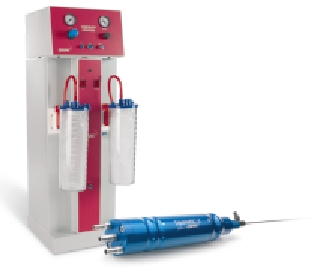
Lipomatic
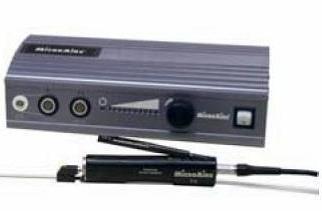
MicroAire
◆ Advantages of Power-Assisted Liposuction Devices
- Fat is collected more quickly.
- Large volumes of fat can be removed.
- Less physical effort is required from the surgeon.
- Because vibration allows the cannula to move easily through tissue, it is useful in highly fibrous areas (hip rolls, upper abdomen, gynecomastia).
- Patients find the sensation of the vibrating cannula somewhat more comfortable.
◆Disadvantages of Power-Assisted Liposuction Devices
- The equipment is expensive.
- The handpiece is heavy.
- It is noisy.
- When two or more liposuction procedures are performed in a day, the motorized handpiece must be sterilized between cases.
- Friction from the vibration can enlarge the incision site or cause pigmentation.
Laser-Assisted Liposuction (laser assisted liposuction)
A laser is light of a single wavelength. Lasers are currently used in many fields, and they are also used in the field of liposuction. However, liposuction cannot be performed with a laser alone; the technique is called laser-assisted liposuction, or LAL (laser assisted liposuction), and the laser is used as an adjunct in performing liposuction.
Laser-assisted liposuction as currently practiced is broadly divided into two types: the external laser irradiation method, in which the laser is applied from outside the body before liposuction, and the internal laser irradiation method, in which an optical fiber is placed inside the cannula, the cannula is inserted into the fat tissue, the laser is applied within the fat tissue, and liposuction is then performed.
1) External laser irradiation method (low-level laser): Erchonia
In the external laser irradiation method (Low -level laser assisted liposuction), anesthetic fluid is infiltrated into the fat layer, a low-level laser is applied externally for a set period of time, and liposuction is then performed.
When a laser is absorbed by tissue, an excitation response occurs, and the tissue temperature usually rises. A low-level laser, however, refers to a dose rate that produces no immediate change in tissue temperature and no change in macroscopic tissue structure.
It is currently FDA-approved for the treatment of pain and is generally described as effective for wound healing, edema, and pain of various causes. In liposuction, however, it is being used under the hypothesis that it acts specifically on fat cells and induces their destruction.
However, the effectiveness of the external laser irradiation method has not yet been academically proven and remains under debate.
2) Internal laser irradiation method: Smartlipo
Internal laser lipolysis (laser assisted laserlipolysis) is a method in which liposuction is performed after internal laser irradiation; it is called laser-assisted liposuction, or LAL (laser assisted liposuction).
The picture below shows an Nd-YAG laser with a wavelength of 1064 nm, which penetrates tissue most deeply among lasers and is mainly used to treat pigmented lesions located in the dermis.
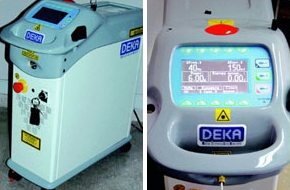
Applied to the field of liposuction, it is inserted into the subcutaneous fat layer through a very thin 1 mm probe. When the laser is applied, it penetrates no more than 1.4 mm into the surrounding soft tissue, causing no tissue damage beyond that, and the fat in the irradiated area generates heat so that only fat cells are selectively destroyed without nerve damage. It was thus introduced into liposculpture procedures.
However, since satisfactory results cannot be obtained with the laser alone, it is said that it should be used as an adjunct for small-volume liposuction in limited areas or in areas where liposuction is difficult.
In any case, the effectiveness of laser liposuction has not yet been proven, it cannot replace conventional liposuction, and its complications are also still unknown.
Water-Jet-Assisted Liposuction (waterjet assisted liposuction)
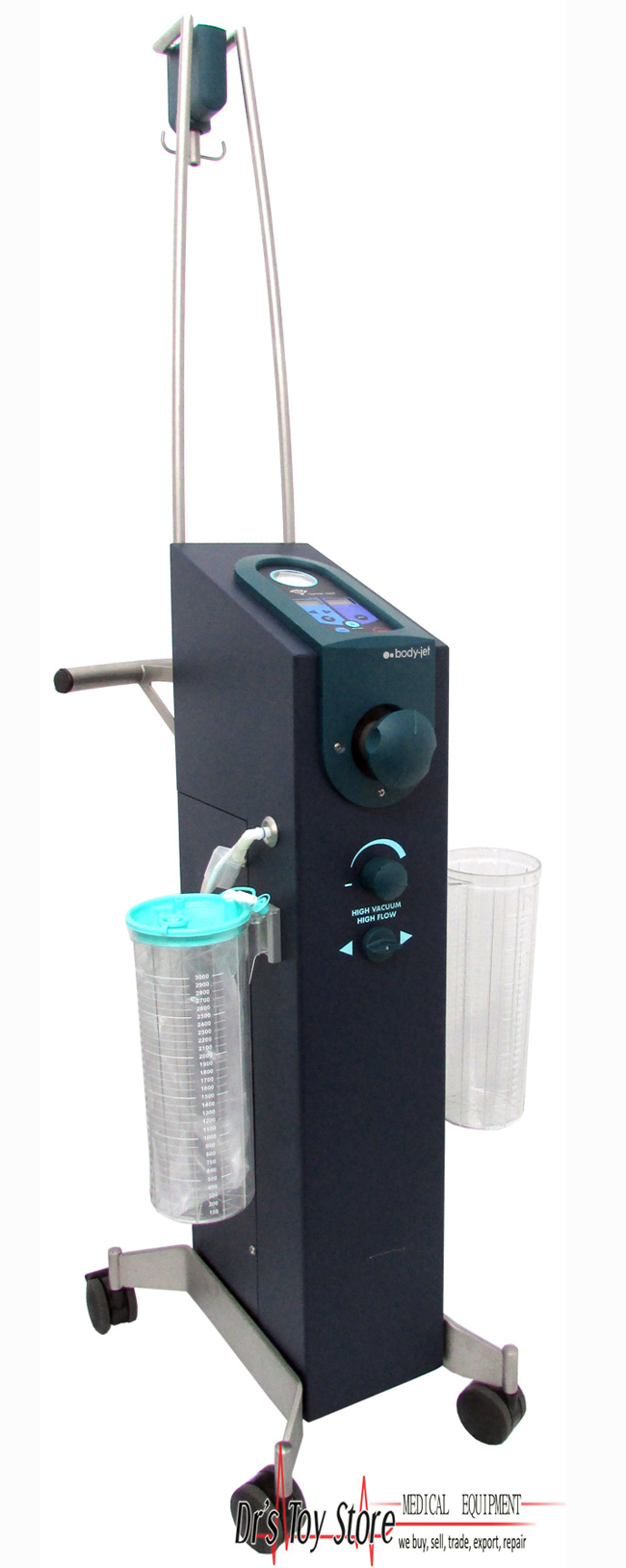
The suction cannula has openings that spray water and openings that aspirate; high-pressure water is sprayed to separate the fat tissue while the fat is aspirated at the same time.
In this procedure, tumescent solution is first infiltrated into the fat layer. A solution is then prepared by mixing 3 L of normal saline with 1 ml of epinephrine, a vasoconstrictor, and a water-jet cannula about 3.5 - 5 mm in diameter is inserted into the fat layer. The solution is sprayed within the tissue while the detached fat cells and fluid are aspirated immediately.
Because the fat is separated within the fat layer by the force of water, there is less tissue damage, which may make it effective. It is also claimed that there is less infection, very little bruising, recovery of skin sensation within 3 days to 6 weeks, less asymmetry, and a smooth transition to untreated areas, but these effects have not yet been academically proven.
Its disadvantages are that the suction cannula is thick, it is difficult to remove a sufficient amount of fat, and it is not suitable for liposuction of fine detail areas.
Many liposuction machines are being developed and tested. Yet for many of them, effectiveness has not been academically proven and safety has not been established. They are made and then quietly disappear.... One thing is certain, however: what determines the outcome of liposuction is not the machine but the surgeon's skill and mindset. A surgeon with extensive experience and skill can achieve satisfactory results with any machine, and the best results come only from devoting full care and meticulous attention through to the very end.
Of course, using a better machine may make liposuction easier and yield better results, but the money invested in that machine may be passed on to the cost of liposuction and raise the price of surgery. If a machine clearly improves results, it should of course be used, and making that judgment is the responsibility of conscientious surgeons.
Medicine is a science, and it has no fads that change from one moment to the next.