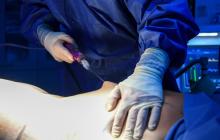
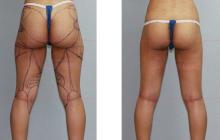
With so many different liposuction methods being described, I imagine that many people who actually want liposuction find it hard to get a sense of which option to choose. In fact, there is a large gap between how a surgeon who performs liposuction understands these methods and the perspective of those seeking information, so it is understandably difficult to grasp them properly.
The sequence of liposuction is as follows: first, tumescent solution is infiltrated to swell and firm the fat layer, creating conditions in which there is no pain and no bleeding; then the fat is removed using a suction device.
Accordingly, liposuction can be classified by:
- the volume of tumescent solution infiltrated,
- the method of suction, and
- the amount of fat removed.
These are the three ways of categorizing it.
Classification by Volume of Tumescent Solution
- Dry technique : No infiltrate(1977)
- Wet technique : 200-300cc / area with or without epinephrine(1983)
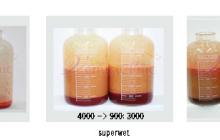
- Superwet technique : 1ml infiltrate / 1ml aspirate (1987)
- Tumescent technique: Infiltrate to skin turgor 2-3ml infiltrate / 1ml aspirate(1987)
The dry technique performs suction without infiltrating any fluid during surgery. It was used in the early days when liposuction was first developed (1977) and is rarely used today.
The wet technique came into use around 1983 because the dry technique caused complications of bleeding and postoperative hematoma. It generally uses epinephrine as a hemostatic agent, infiltrating a small volume of fluid, about 200-300cc per area, before suctioning.
The superwet technique infiltrates a fluid containing a mixture of local anesthetic and hemostatic agents in a volume roughly equal to the aspirate volume.
The tumescent technique infiltrates 2-3 times as much fluid as the aspirate volume.
The methods mainly used in modern liposuction are the superwet and tumescent techniques. Distinguishing between them is in fact rather ambiguous, is determined only in hindsight, and in practice has little meaning; it seems that the superwet and tumescent techniques are used in combination depending on the surface area of the treated region and the amount of fat to be removed.
What matters, however, is the skill to infiltrate the tumescent solution evenly, without wasting it, using a small volume, and to operate without bleeding and without pain.
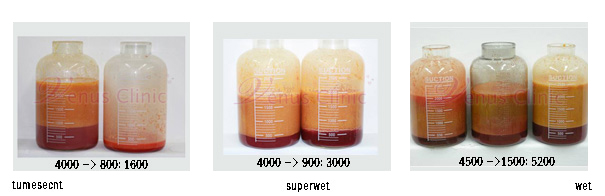
According to textbooks, the blood loss for each technique, as a percentage of the fat aspirated, is:
- Dry technique 30 - 45%
- Wet technique 15 - 20%
- Superwet technique 4-8%
- Tumescent technique 1%
of the aspirated volume.
For example, when liposuction is performed with the tumescent technique, removing 2000cc of fat results in only about 20cc of blood loss, so liposuction can be regarded as a procedure with virtually no bleeding.
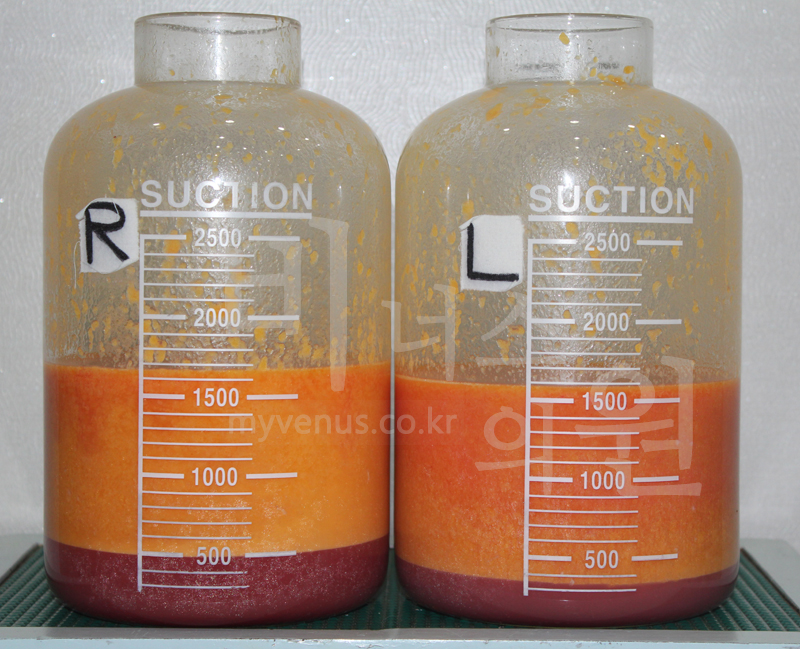
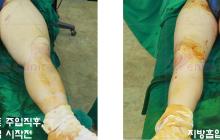
The photo above shows a patient who underwent liposuction with the tumescent technique at our Venus Clinic. About 3500cc of pure fat was removed, which corresponds to an estimated blood loss of about 35cc.
Since about 10cc of blood is typically drawn for a routine blood test, with a surgeon who can properly perform tumescent liposuction, there is essentially no bleeding after liposuction surgery.
Classification by Suction Method
- Suction-assisted liposuction (SAL)
- Ultrasound-assisted liposuction (UAL)
- Internal ultrasound method -> evolved into VASER liposuction, the third-generation internal ultrasound method.
- External ultrasound method
- Power (vibration)-assisted liposuction (PAL)
- Laser-assisted liposuction (LAL)
- Internal laser method (SmartLipo liposuction)
- External laser method (Erchonia liposuction)
- Water-jet liposuction (PWAL)
First, there is suction-assisted liposuction, SAL (suction assisted liposuction). Almost all modern liposuction procedures remove fat using the force of a suction machine. However, the liposuction masters Dr. Fischer of Italy and Dr. Toledo of Brazil sometimes perform liposuction using the negative pressure of a syringe. Also, during fat grafting, fat is aspirated with the low negative pressure of a syringe to prevent destruction of the fat cells. Liposuction is also divided into micro (microcannula) and macro (macrocannula) methods according to the diameter of the suction cannula. As I will explain later, cannulas of 12G or less, that is, an outer diameter of 2.7mm or less, are classified as microcannulas.
Second, there is ultrasound-assisted liposuction, UAL (ultrasound assisted liposuction). Developed around 1992, it works on the principle that, after fluid is infiltrated into the fat layer, high-frequency vibrating ultrasound energy passes easily through liquefied fat cells and creates cavitation between tissues. Its excellent ability to liquefy fat tissue was developed to make liposuction easier, particularly in areas with a lot of fibrous tissue.
There are two approaches: internal and external application of ultrasound. In the internal approach, ultrasound is emitted from the tip of the suction cannula to liquefy fat cells; in the external approach, ultrasound is applied externally after fluid infiltration. However, because of postoperative seroma, skin necrosis, and external burns, and because it emits ultrasound within the fat tissue while suctioning at the same time, much as a water jet sprays water while suctioning simultaneously, the ultrasound cannula becomes thick and requires a large incision; for these reasons the internal approach is now rarely used. The external approach has likewise been reported not to improve liposuction outcomes in terms of effectiveness and may even cause skin burns, so it is also rarely used.
Recently, however, a third-generation internal ultrasound method called VASER has been developed. It delivers ultrasound energy within the tissue in pulsed form through a small-diameter probe, and uses grooves at the tip of the probe to disperse and release the ultrasound energy, thereby increasing safety while still taking full advantage of ultrasound's powerful fat-liquefying capacity. In this internal ultrasound liposuction method, the fat is first liquefied and then removed later by SAL liposuction. Because the process is separated, with ultrasound only emitted to soften the fat tissue and the suction performed afterward with a suction cannula, the diameter of the internal ultrasound probe could be reduced dramatically. Small probes under 2mm have now been developed and are available, making micro-liposuction surgery possible through small incisions. It is used mainly for areas with a lot of fibrous tissue, revision surgery, and areas where skin contraction is needed.
HPL (hypotonic pharmacologic lipo-dissolution), currently known as fat-dissolving injections at obesity clinics, is a method that applies this principle.
Third, there is power (vibration)-assisted liposuction, PAL (power assisted liposuction), which is also the most widely used method today. Developed in the late 1990s, it uses electrical power (MicroAire) or compressed air (Lipomatic) to move the cannula back and forth by several millimeters. It is said to reduce surgeon fatigue, speed wound recovery, shorten operating time, and allow larger volumes to be aspirated, but objective studies are still lacking.
More recently, there is laser-assisted liposuction, LAL (laser assisted liposuction), which, like the ultrasound method, has internal and external approaches. The external approach, known as low-level laser, uses the Erchonia diode laser, which is mainly used to help with pain and wound healing; after the anesthetic fluid is infiltrated, the laser is applied externally for several minutes before liposuction is performed. The internal approach uses the SmartLipo Nd-YAG laser with a wavelength of 1064nm; a laser optical fiber is inserted inside the cannula and the laser is applied within the fat tissue to weaken the fat cells and fibrous tissue before the actual liposuction is performed. Its effectiveness is still much debated; the laser alone cannot perform liposuction and is used as an adjunct to conventional liposuction.
Recently, there is also water-jet liposuction, PWAL (power water assisted liposuction), which sprays high-pressure water from the suction tip, reportedly making liposuction easier and reducing tissue damage, but here too there is a lack of objective data on improved surgical outcomes.
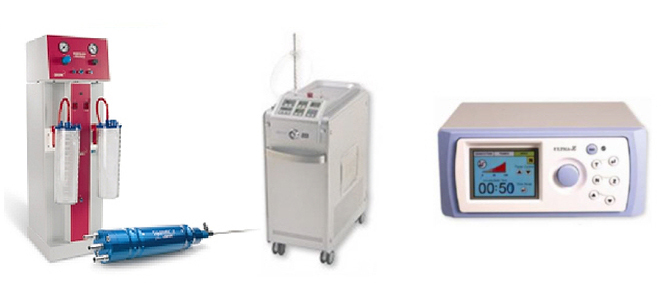
From left: the Lipomatic power-assisted liposuction device, the SmartLipo internal laser device, and, on the far right, the Ultra-Z third-generation internal ultrasound device.
As you can see, a variety of machines are used depending on the method of suction, and there is debate about how useful these machines really are. However, you should understand that a liposuction machine fundamentally serves to soften the fat tissue and make liposuction easier, and that whichever machine is used, a good liposuction result is achieved only when the surgeon's skill and effort remove the fat tissue evenly and completely, without bleeding.
In fact, advances in equipment are gradually making surgery easier, but detailed, meticulous surgery still cannot match the hands of a surgeon using fine suction cannulas (microcannulas).
The reason modern liposuction has advanced to the point of producing safe, smooth lines without lumpiness is the tumescent technique and micro-liposuction using microcannulas, which the academic community calls the Gold Standard, recognizes as the standard of liposuction technique, and accepts as the most effective technique.
Therefore, although marketing confuses consumers with surgical methods that rely on a variety of equipment, when choosing a hospital for surgery you should choose not the equipment but the experience, technique, and sincere dedication of the surgeon who uses that equipment.
This is because surgical results vary greatly depending on how meticulously, persistently, and attentively the surgeon operates.
In conclusion, liposuction is a surgery in which the fat is removed by the surgeon's own strength, and it is a surgery that requires stamina over a long period of time. In particular, in cases of severe obesity, removing more than 5000 cc of pure fat is too much for one surgeon to do alone.
Also, the longer the anesthesia time, the higher the risk and side effects from anesthesia. It is generally best for surgery to be completed within 1 hour to 1 hour 30 minutes. When surgery is faster, recovery is quick and safe enough that patients can be discharged after only 1-2 hours of rest.
Although it is physically demanding, surgeons are striving to ensure safety through fast surgery while achieving complete fat removal together with fine, smooth lines.
Classification by Amount of Fat Removed
- Small-volume liposuction (small vol. liposuction) : 100 ml or less
- Medium-volume liposuction (medium vol .) : 100 - 1500 ml
- Large-volume liposuction (large vol.) : 1500 - 4000 ml
- Extremely large-volume liposuction (extremely large vol.) : 4000-7000 ml
- Megaliposuction (megaliposuction) : 7000 ml or more
These are the categories. This follows the classification by Dr. Klein, the founder of tumescent liposuction. The American Society of Plastic Surgeons defines large-volume liposuction as a total aspirate exceeding 5,000 ml.
So how much is it advisable to remove in a single session?
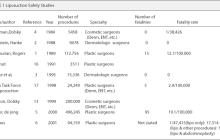
Comparing mortality rates by aspirate volume,
- the mortality rate of the true tumescent technique is 1 : 500,000, whereas
- Superwet 1 : 5,000
- extreme superwet 1 : 1,000
- Megaliposuction 1 : 100
have been reported. According to the guidelines of the American Society of Plastic Surgeons and the American Society for Dermatologic Surgery, it is recommended not to remove more than 4.500 - 5.000 ml of pure fat or 5,000 ml of total aspirate in a single operation. Therefore, it can be said that it is safe not to aspirate more than 5,000 ml. If you wish to have a larger volume removed, it is advisable to have an additional procedure after an interval of about 3-4 weeks.