The site-specific precautions in this post are based, with minor modifications, on the book Safe Liposuction and Fat Transfer, published in 2003 by Rhodea S. Narins and 32 co-authors. I believe this article will be of interest not only to those interested in liposuction, but also to physicians who actually perform liposuction.
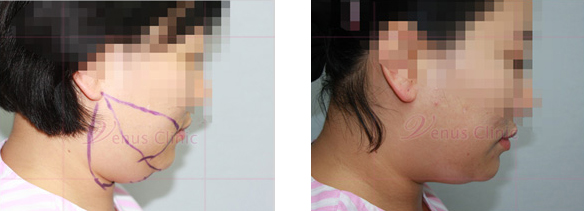
1 Face and Neck (Chin, Cheek, Jowl) Liposuction
A. Considerations
- A round neck with more fat on the lateral face than in the center is difficult to treat.
- The central area contracts better than the lateral areas, so skin retraction is good there.
- Men with a prominent bone in the middle of the neck are unlikely to achieve good results.
- Neck fat in women contracts well, so retraction occurs readily.
- The skin of obese men does not retract well.
- After age 45, skin elasticity may be poor and the skin may not retract well.
- Perform a snap test (pinch the skin, stretch it, and release) to assess skin elasticity.
- Satisfaction is lower than for other areas.
B. Solutions
- More aggressive suction is needed in men.
- Wearing a compression garment for a longer period is advisable.
- Keep skin excision and platysmaplasty in mind.
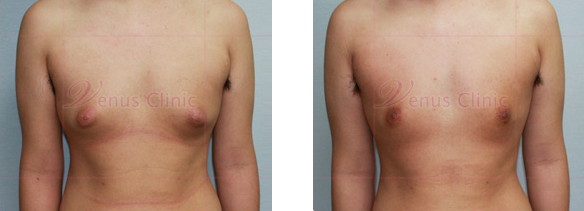
2 Male Chest Liposuction
A. Considerations
- Young men have fibrous breasts with a large amount of glandular tissue.
- In young men, postoperative fibrosis lasts a long time.
- Young men usually have good results.
- Older men show good results even without complete skin retraction.
- Older men have less glandular tissue.
B. Solutions
- The male chest requires bold, thorough suction.
- An aggressive cannula should be used.
- In young men, removal of glandular tissue is especially necessary.
- To obtain good results, the fat of the lateral breast area below the arm must be removed completely.
- Young men rarely need revision, but older men can usually expect about 10 - 20% improvement.
3 Male Abdomen Liposuction
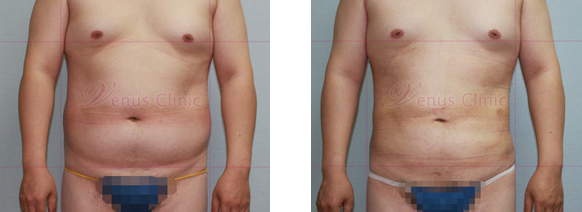
A. Considerations
- Thick, fibrous skin is common, especially in the upper abdomen.
- Skin contraction is good.
- Complete anesthesia with tumescent fluid alone may be difficult, but complete anesthesia is possible by using 5 - 10 cc of 1% lidocaine around the navel and 0.1% elsewhere.
- Excessive liposuction can cause a seroma, but this can be prevented by applying French tape.
- The periumbilical area may require touch-up surgery; occasionally, a few seconds of ultrasonic suction around the navel can be helpful.
- Men bleed more than women.
- Older men have a lot of visceral fat in the upper abdomen, so liposuction may be ineffective.
- Skin retraction is limited in the upper abdomen and suprapubic area of older men.
4 Male Flank (Love Handles) Liposuction
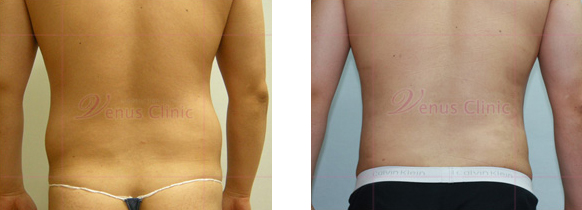
A. Considerations
- This area always gives good results in young men.
- The skin is usually thick and often fibrous.
- Older men also show good results, but some degree of skin laxity usually remains.
B. Solutions
- In some patients, the fat of the lower back may collapse after the flank fat is suctioned, so liposuction of the lower back should also be considered.
- A large volume can be suctioned, but it is best to leave a thin layer of subcutaneous fat.
5 Female Breast Liposuction, Breast Reduction
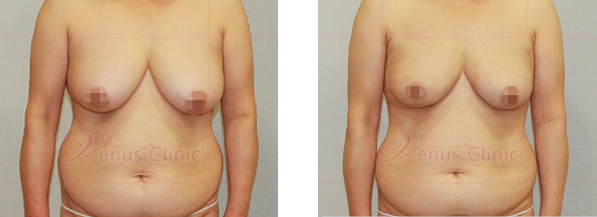
A. Considerations
- Sagging, ptotic breasts with lax skin show less skin contraction.
- The procedure is more effective in the dense breasts of unmarried or middle-aged women, which have a higher fat content, than in women of childbearing age after delivery, who have relatively more glandular tissue.
- Because glandular and fatty tissue are intermixed, there is a higher likelihood of bleeding or hematoma, and bruising is extensive.
- The skin is thin, so irregularities develop easily.
B. Solutions
- Suction may need to extend to the accessory breast on the lateral side and to the upper axillary breast area.
- Patients should be told before surgery that the degree of size reduction may vary depending on the amount of glandular tissue and the fat composition.
- The procedure must be fine and precise using microcannulas, and trimodal compression should be used after surgery to guard against bleeding or hematoma.
6 Female Upper Abdomen Liposuction
A. Considerations
- Skin contraction is not as good as in the lower abdomen.
- When the patient bends forward to look at the upper abdomen, the skin folds and irregularities become visible, so dissatisfaction is common.
- It is more fibrous than the lower abdomen.
- Skin retraction is poorest just above the navel, and the skin may sag and drape.
B. Solutions
- When there is a lot of fat, suction should extend up to just below the breasts.
- When suctioning the lower abdomen, it is best to treat the upper abdomen as well, even if it does not seem necessary.
- This is an area where touch-up surgery can improve the results.
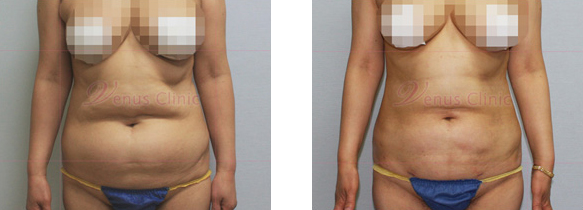
7 Female Lower Abdomen Liposuction
A. Considerations
- This area shows excellent contraction even in patients with a sagging lower abdomen.
- Suction around cesarean section scars or other abdominal surgical scars must also be thorough.
- Some patients may have abdominal muscle protrusion, so it is best to point this out before surgery during the consultation.
- Check for a barrel-shaped, rounded abdomen (hourglass abdomen).
- The suprapubic area is easy to neglect and may require treatment later.
- A seroma may develop after surgery.
- Fat may remain around the navel after surgery.
B. Solutions
- Taping after surgery is recommended to avoid a seroma.
- Because a seroma may form, do not sweep the cannula in a windshield-wiper fashion.
- The periumbilical area must be suctioned thoroughly.
- For adequate anesthesia, 10 cc of 1% lidocaine can be used around the navel.
- Drainage is very important.
- Suction around cesarean section scars (Pfannenstiel incisions) must be thorough. Fibrous scars adherent to the underlying tissue are released with a Toledo underminer cannula.
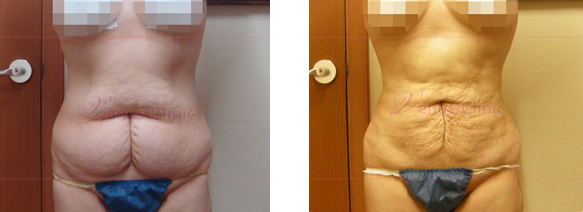
8 Female Flank and Waist Liposuction
A. Considerations
- This area always gives good results in everyone.
- It is an area that pleases patients.
- Blending with adjacent areas is needed to achieve good results.
B. Solutions
- For good results, the hips should usually be treated at the same time, and the back as well if necessary.
- This area is part of the barrel-shaped, rounded abdomen (hourglass abdomen).
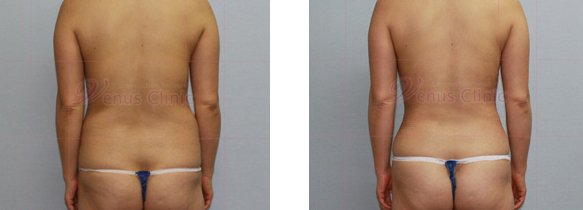
9 Female Hip (Love Handles, Loins, Paralumbar Area) Liposuction
A. Considerations
- This area always gives good results.
- Usually, there are times when not that much fat can be removed from this area. Occasionally it is easy to over-suction in patients with thin skin.
- It is a good area for beginners.
- For good results and blending, other areas need to be treated at the same time.
B. Solutions
- In patients with thin skin, do not remove too much fat near the skin.
- Removing the deep fat is important.
- For good results, the flank and back need to be treated at the same time.
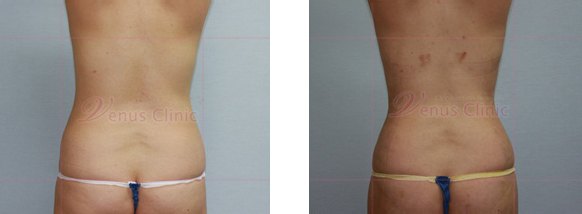
10 Back (Subscapular Back) and Lumbosacral Back (Lower Back) Liposuction
A. Considerations
- The skin is thick and fibrous, so fat removal is usually difficult in this area.
- The more fat removed, the better the skin contraction.
- Patients should be told in advance that bulging above and below the bra line may remain after surgery, and that rolls may also persist.
B. Solutions
- Use an aggressive cannula to remove as much fat as possible.
- In certain patients, attention must be paid to blending with the upper back.
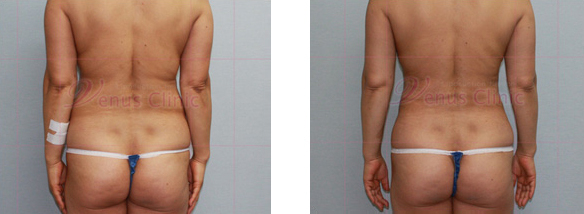
11 Anterior and Posterior Axillae (Bra Fat)
A. Considerations
- Even after surgery, excess skin will remain when the arms are held against the body.
- Patients who are asymmetric before surgery often remain asymmetric afterward.
B. Solutions
- Thorough suction with a small, aggressive cannula leads to good results.
- If there is fat below the axilla, it is best to remove it at the same time.
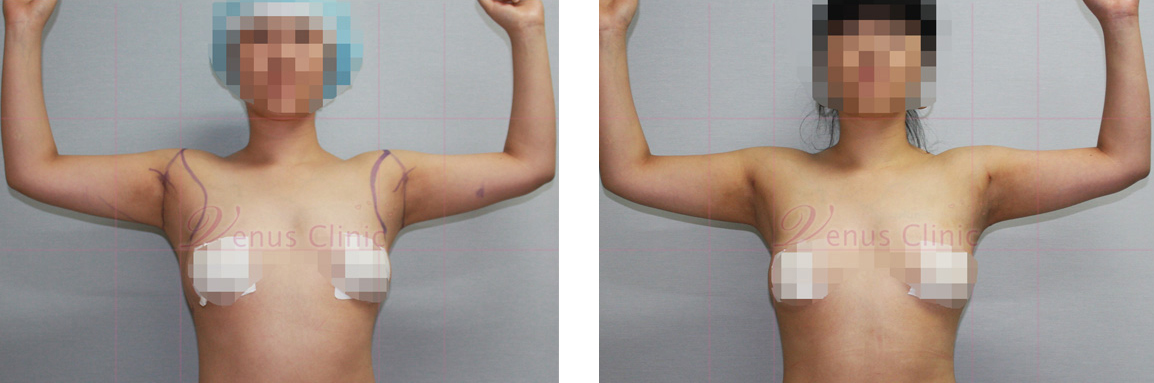
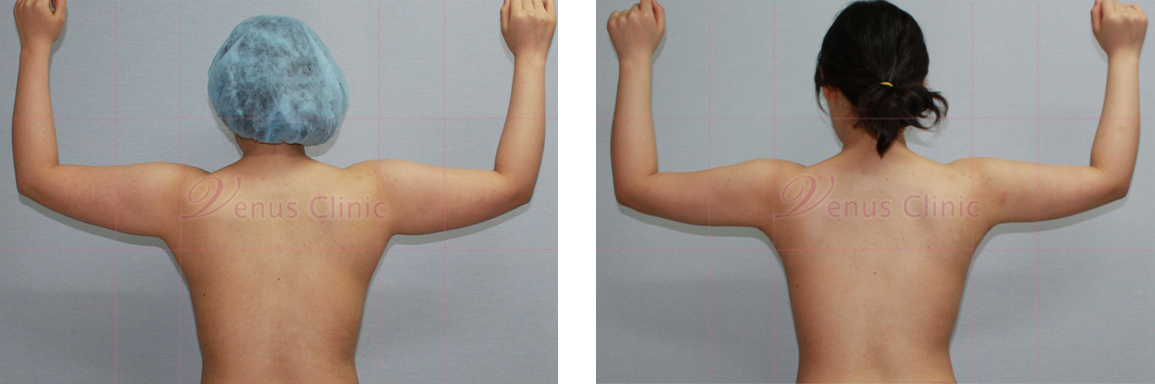
12 Upper Arm Liposuction
A. Considerations
- Contraction is usually good.
- Irregularities can occur in patients with thin skin
- Patients with thin, finely wrinkled skin contract well, but the wrinkles may become deeper.
- Circumferential suction is not commonly performed, but if there is fat over the biceps it should be suctioned. The skin over the biceps is thin, so caution is needed.
- Unless the area above the inner elbow, the fibrous skin behind the elbow, the axilla, and the area near the armpit are suctioned thoroughly during surgery, lumps of fat may remain afterward.
B. Solutions
- Thorough liposuction that leaves some subcutaneous fat yields the best results.
- The thinner the skin, the more subcutaneous fat should be left.
- The inner elbow, back of the elbow, axilla, and armpit area must be suctioned carefully to avoid touch-up procedures.
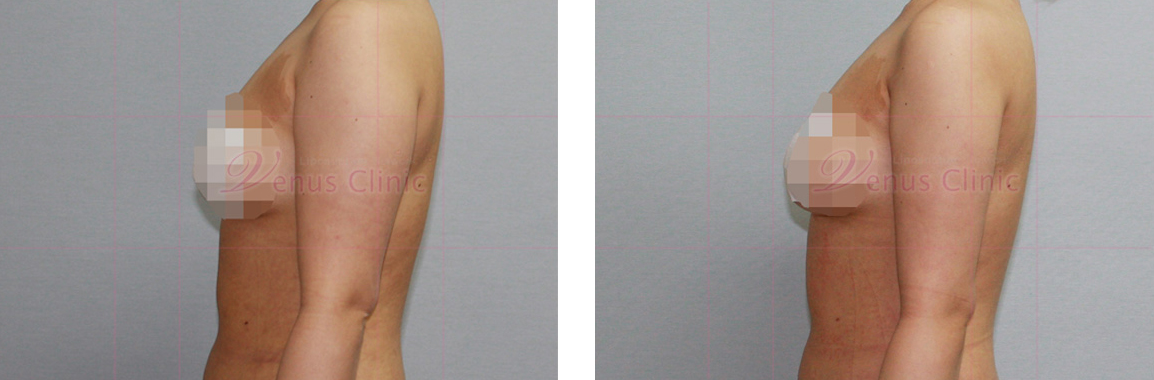
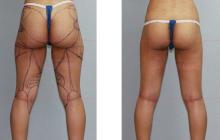
13 Lateral Thigh Liposuction
A. Considerations
- The inferolateral buttock fat is usually important in lateral thigh bulges (saddlebags).
- The hips and buttocks are involved in the violin deformity.
- Drainage is a problem in this area.
- The lateral thigh may require some touch-up surgery in patients with very large deposits or poor skin tone.
- Suctioning too much fat over the hip joint can cause a marked depression in that area.
B. Solutions
- In patients prone to depression over the hip joint, this can be prevented by proper positioning.
- Drainage incisions should always be at the lowest point.
- For a saddlebag deformity, suction the inferolateral buttock and the lateral thigh together; for a violin deformity, treat the hips and buttocks together, especially the inferolateral buttock.
- Patients with very large amounts of fat in the lateral thigh may require an additional procedure before surgery.
- It is also helpful to stand the patient up near the end of the procedure to assess the result.
- For good results, always leave a thin layer of subdermal fat.
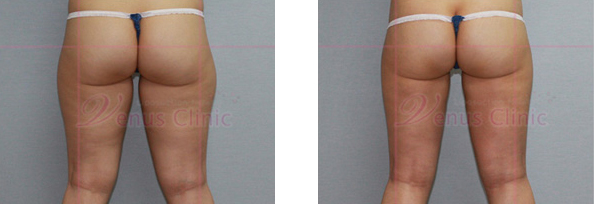
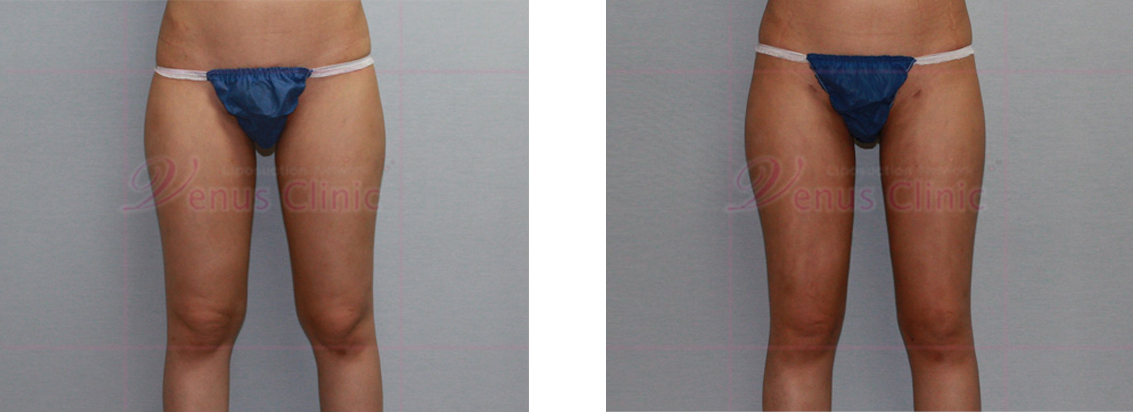
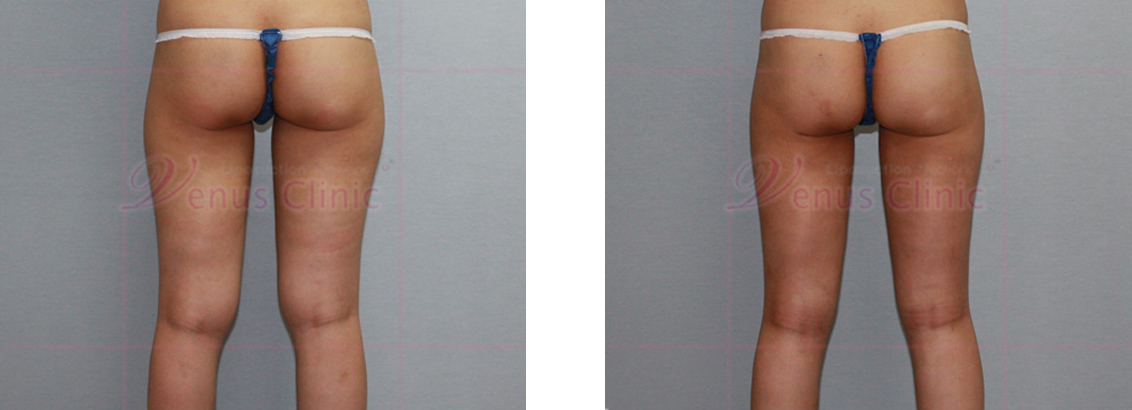
14 Circumferential Thigh Liposuction
A. Considerations
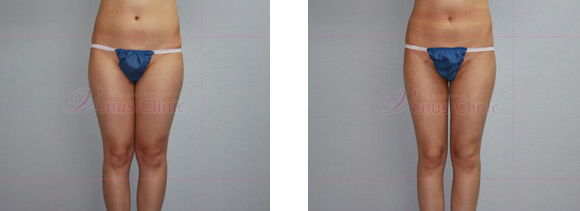
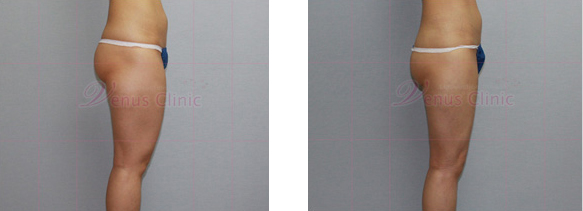
- In some patients, skin retraction may be poor in the lower two-thirds of the thigh.
- Circumferential liposuction has a long recovery period
- Performing circumferential liposuction at the same time as the calves and ankles can cause very severe swelling, so they must not be done together.
- This is an area where permanent linear erythema (erythema ab igne) can occur due to destruction of the superficial vascular network.
B. Solutions
- When performing circumferential liposuction, maintain good drainage.
- Aim for a harmonious lower body by balancing the size of the lateral thighs, buttocks, and hips.
- Treating the inner thigh together with the knee creates a beautiful inner line.
- Do not perform liposuction of the calves and ankles at the same time as circumferential thigh liposuction.
- To avoid permanent linear erythema (erythema ab igne), it is best not to suction the superficial fat.
15 Medial Thigh Liposuction
A. Considerations
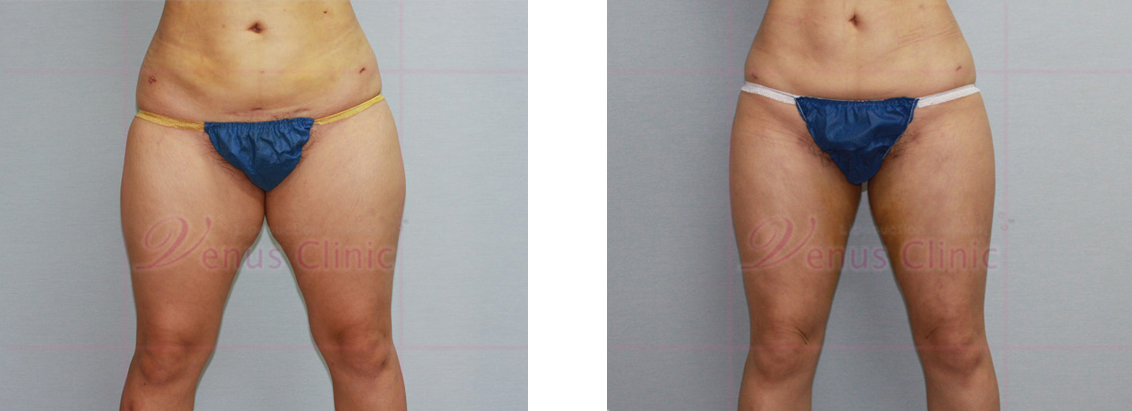
- Skin tone is often poor in this area. If skin laxity and irregularities are likely to result, it is better not to operate at all.
- Beginners often leave fat in the anterior part of the inner thigh and the upper part of the posterior thigh, requiring touch-up surgery.
- Patients with thin skin are left with more skin laxity and irregularities after surgery.
- If the compression garment is not pulled up to the groin line, a permanent bulge may remain.
B. Solutions
- In patients with poor skin elasticity, there is a high likelihood of skin laxity and irregularities after surgery.
- Removal of fat from the anterior inner thigh and the upper posterior thigh must be done well.
- In patients with thin skin, sufficient subdermal fat must be left.
- For good results, blending between the inner knee and the inner thigh must be good.
16 Upper Posterior Thigh Liposuction
A. Considerations
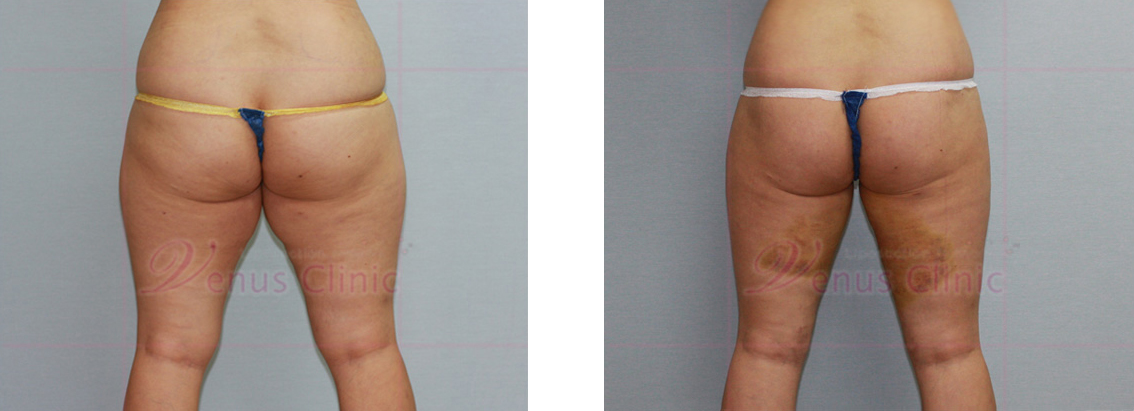
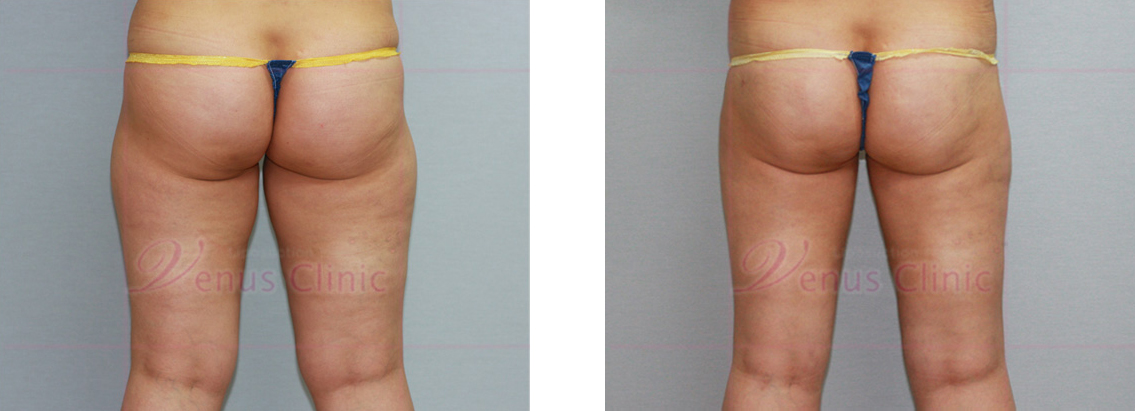
- Excessive suction can create buttock ptosis and double or triple folds that are difficult to treat.
- Excessive suction in this area can produce a deep depression when the leg is extended forward.
- In patients with poor skin elasticity, excessive suction may make the area look worse after surgery.
B. Solutions
- The deep layer must not be suctioned in this area.
- Use a non-aggressive cannula and suction only the superficial layer.
- Do not suction this area in patients with poor skin elasticity.
- Even in patients with good skin elasticity, suctioning only the upper part of the superficial fat may not give a satisfactory result.
17 Knee Liposuction
A. Considerations
- Fat accumulation on the inner knee is common and usually gives good results
- It is also advisable to suction the fat at the inferomedial edge of the patella.
- The fat above the patella responds poorly to liposuction and tends to become depressed with an overhanging upper edge. The skin also does not retract well.
- In 5 - 10% of patients, the fat lateral to the patella protrudes.
B. Solutions
- Fat above the medial patella responds well to liposuction.
- Always remove the fat in the inferomedial area of the patella. Fat in the upper inner calf may also be removed to improve the leg contour.
- The fat above the patella tends to become depressed with an overhang after surgery, and blending into the thigh above this area is difficult, so it should be treated lightly or not suctioned at all.
- If there is fat lateral to the patella, it is always best to remove it.
- Small fibrous fat deposits over the patella can be suctioned while held fixed with one hand, although the improvement in shape is not significantly different.
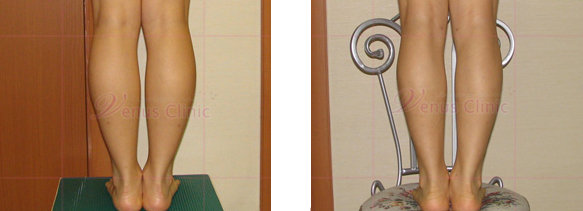
18 Calf and Ankle Liposuction
A. Considerations
- This is a difficult area because it is firm and round, so the patient must be rotated 360 degrees during surgery, and the ankle in particular requires good positioning to access the fat.
- For good results, the deep fat must be removed thoroughly while leaving some subdermal fat.
- Swelling is severe and can last from days to weeks.
- This area is resistant to diet and exercise, so it almost always gives good results.
B. Solutions
- Because positioning is difficult and the area is round, multiple small incisions must be made.
- For good results, leave some subdermal fat, especially in patients with thin skin.
- Using a small, non-aggressive cannula is recommended.
- To speed recovery, leg elevation is needed for at least the first 3 - 4 days. Swelling can last 2 - 8 weeks, and wearing compression stockings during the first 2 weeks, when swelling is severe, is advisable.
- Do not perform thigh liposuction at the same time as calf and ankle liposuction, as this places too much strain on the lymphatic system.