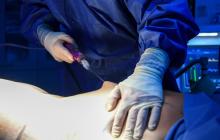
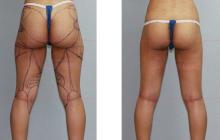
What Is a Microcannula?

In the 1970s, when liposuction was first introduced, surgeons used thick suction tubes (cannulas) measuring about 6-10 mm. With the development of the tumescent technique, however, injecting tumescent solution into the fat tissue causes it to swell, making it possible to perform liposuction adequately even with a small-diameter cannula. A cannula with an inner diameter of 2.2 mm or less (12G) is called a microcannula.
- 12G OD 2.75mm, ID 2.15mm
- 14G OD 2.1mm, ID 1.6mm
- 16G OD 1.6mm, ID 1.2mm
- 18G OD 1.27mm, ID 0.84mm
- 20G OD 0.9mm, ID 0.58mm
In general, 12-14G is used for the abdomen, 14-16G for the arms and legs, and 16-18G for the face, neck, and breasts.
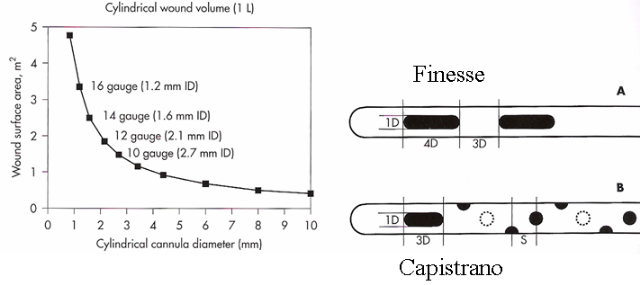
The Klein cannula is the type most commonly used; there are also the Finesse cannula and the Capistrano cannula. The former is used mainly to minimize damage to the dermis when suctioning fat near the skin, while the latter is designed to maximize the amount of fat removed per stroke.
Advantages of the microcannula include:
- Less pain
- More accurate suction (Better accuracy)
- More even results (Greater Finesse)
- Allows superficial liposuction (Superficial Liposuction)
- More thorough fat removal (More complete removal)
- Passes through tissue more easily (Easier penetration)
- Requires less physical force (Less muscle strength)
- Less joint strain for the surgeon (Less elbow trauma)
- Smaller openings (Adit & Microincisions)
- Openings are so small that no sutures are needed (No suture)
- Faster wound healing (Accelerated healing)
- Fewer side effects, making it more time-efficient (Greater time efficiency)
Disadvantages include:
- Excessive fat removal is possible (Excessive efficiency)
- The thin cannula is fragile (Fragility)
- Its short length requires more openings (More incision)
- The small bore clogs frequently (Inspissated fat in apertures)
In other words, fine liposuction using a microcannula allows more precise, more even, and more thorough fat removal without lumpiness.
Liposuction is a procedure that demands physical stamina over a long period of time. In cases of severe obesity in particular, removing more than 5000 cc of pure fat is too much for a single surgeon working alone. Furthermore, the longer the anesthesia time, the higher the risk of anesthesia-related side effects and complications. It is generally best for the operation to be completed within 1 hour to 1 hour 30 minutes. When the surgery is faster, recovery is quick and safe enough that the patient can be discharged after resting for only 1-2 hours.
It is true that advances in equipment are gradually making surgery easier, but detailed, delicate surgery still cannot match the hands of a surgeon who uses a fine suction cannula (microcannula). Although marketing confuses consumers with surgical methods that rely on a variety of devices, when choosing a hospital for surgery you should choose the experience, technique, and sincere dedication of the doctor who uses the equipment rather than the equipment itself.
This is because the results of surgery vary greatly depending on how meticulously, persistently, and attentively the doctor operates.
How Much Fat Should Be Removed?
Liposuction cannot control body weight. Liposuction is a body-contouring procedure.
In the late 1980s, Dr. Pierre Fournier of France, who advanced modern liposuction techniques, used the term liposculpting. We might call it fat sculpting. He also said that what determines the success of liposuction is not the fat that is removed, but the fat that remains.
In other words, the success of liposuction depends not on how much fat is removed, but on how well the fat tissue is preserved.
The subcutaneous fat layer
- Apical layer
- mantle layer
- deep fat layer
can be divided into these layers.
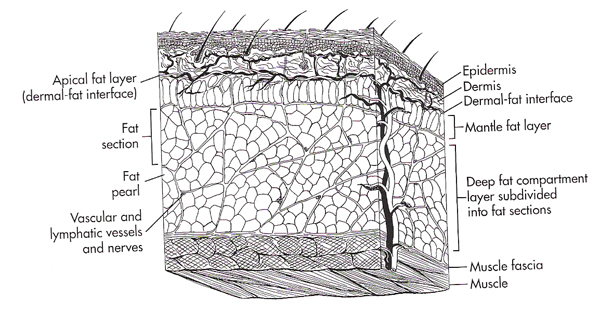
The apical layer is rich in blood vessels and nerves, and damaging it can cause permanent injury to the skin, so it is an area where liposuction must be avoided.
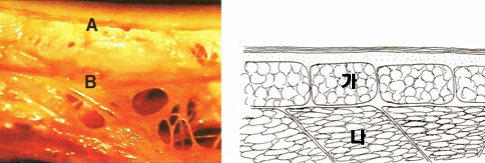
The superficial portion marked A is called the areolar layer (mantle layer); it is a relatively firm fat layer with vertical septa arranged horizontally. The deeper fat layer marked B is called the lamellar layer (deep layer); it is relatively loose, and its septa run diagonally.
In the abdomen, membrane A is called Camper's fascia and membrane B is called Scarpa's fascia, and the membrane that separates the fat layer of area A from the fat layer of area B is generally called the superficial fascial system (SFS).
The fat layer of area A (areolar layer) is relatively firm; even with weight gain it does not increase more than twofold, and it serves as structural fat that supports the skin on the fascial layer. The fat layer of area B (lamellar layer) provides little support for the skin and can expand more than tenfold with weight gain, so it functions mainly as the body's energy storage.
Not every part of the body has a thick lamellar layer, but in areas where it is thick, this layer must be suctioned during liposuction to prepare for possible future weight gain. In women, these areas are the abdomen, flanks, thighs, inner thighs, inner knees, and the back of the upper arms.
In most cases, however, it is safest for the goal of liposuction to be removal of the deep fat layer only.
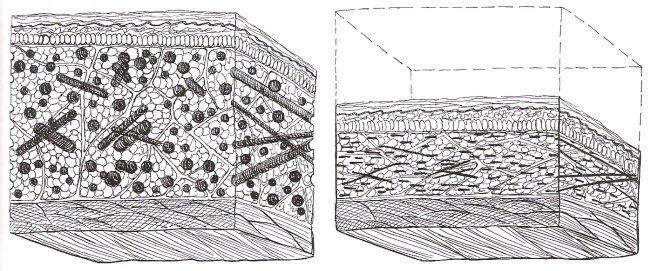
Liposuction is similar to embroidery. Think of it as using a small tube to make tunnels in the subcutaneous fat layer and flatten it. The tunnels must cross one another (crisscross pattern) so that the fat is removed evenly.
Because liposuction cannot shave off the fat layer the way sandpaper does, excessive suction inevitably causes the muscle fascia and skin to adhere, resulting in a lumpy surface.
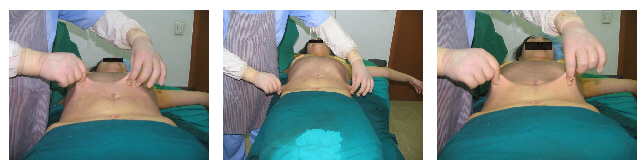
Therefore, during liposuction, what matters is not the volume of fat removed but leaving a consistent thickness (about 1 cm) when the skin is pinched (pinch test), although this varies from person to person, depending on skin tone, the amount of fat to be removed, and age.