Syringe Liposuction
During outpatient consultations, we often hear patients say, "I do not want to lose weight overall, but I want to contour one or two specific areas that bother me, such as the back of the arms, the lower abdomen, or the saddlebags." Even after reducing body weight through diet or exercise, localized subcutaneous fat in certain areas tends to persist, leading many people to feel concerned about clothing fit and body silhouette.
Today, we will organize the principles, procedure, limitations, and the 12 main treatment areas of syringe liposuction, which is performed for localized body contouring by area rather than large-volume liposuction or general weight loss.

Principles of Syringe Liposuction
Syringe liposuction is a method in which fine cannulas are connected to syringes instead of a motorized suction machine, and subcutaneous fat is harvested and removed using negative pressure generated by pulling the syringe plunger [1][2]. Also commonly called syringe-assisted liposuction, this technique has long been widely used for small-volume body contouring and fat harvesting [2][3].
Buffering Effect of Normal Saline and Gentle Negative Pressure
While mechanical liposuction draws fat using high vacuum pressure, syringe liposuction pre-fills the syringes with a small amount of normal saline so that aspiration takes place within a fluid medium [2][3]. This normal saline acts as a buffer that reduces physical impact between fat tissue and negative pressure [2][3].
In addition, negative pressure inside the syringe is created when the plunger is pulled back and naturally decreases as fat fills the barrel [3]. Because the negative pressure is not excessively high, it helps reduce physical irritation and bleeding in surrounding tissues, and the surgeon can directly monitor the aspirated volume using the syringe markings during the procedure [2][3].
The photos below show how collected fat appears differently depending on the aspiration method, even within liposuction. Mechanical liposuction (SAL) collects fat into large canisters using vacuum pressure from an electric suction unit, whereas syringe liposuction harvests fat into individual syringes.
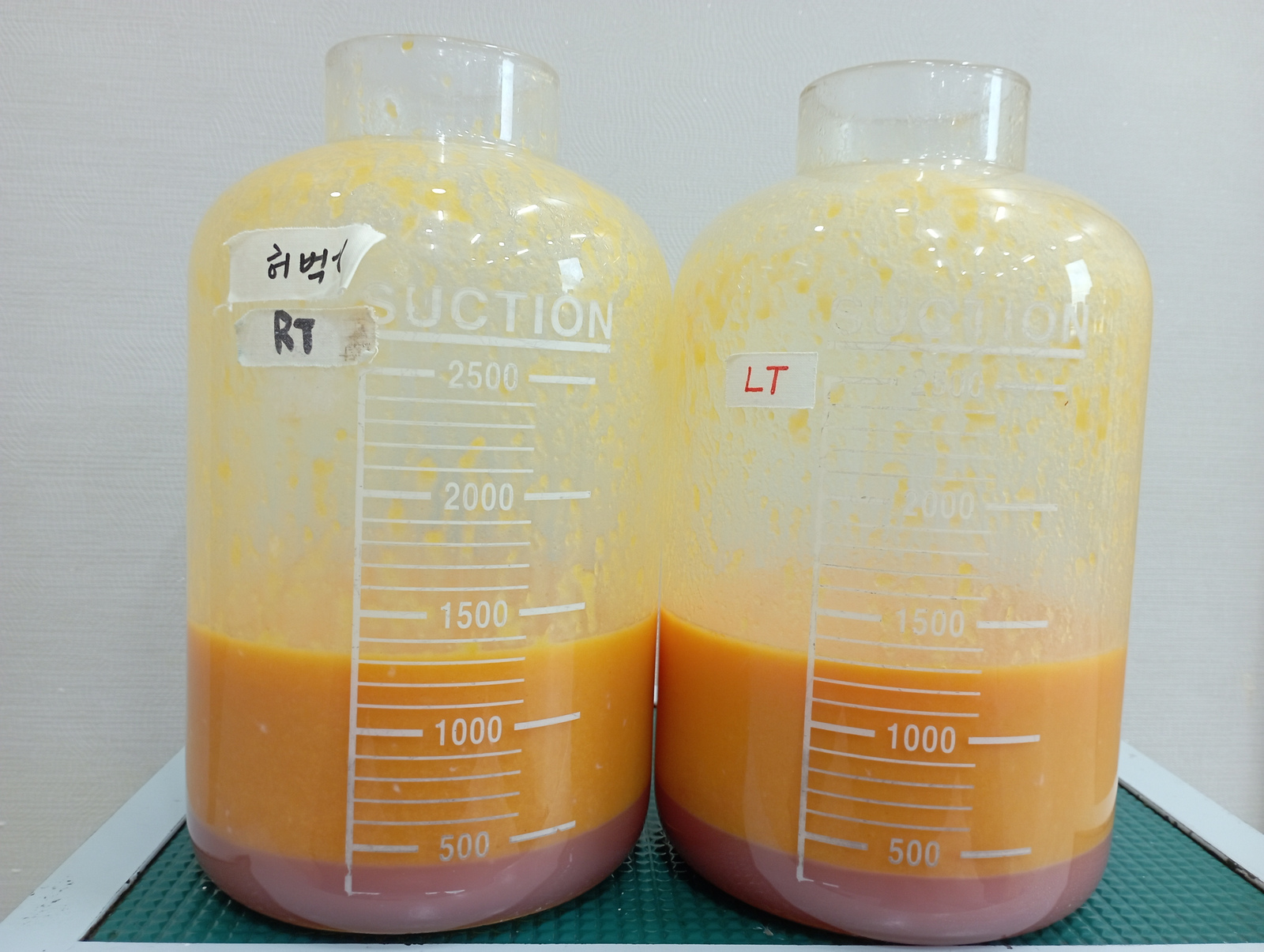
Mechanical Liposuction (SAL)
Fat is collected into suction canisters using vacuum negative pressure from a motorized aspirator (Venus Clinic surgical photo · Taken in 2023).
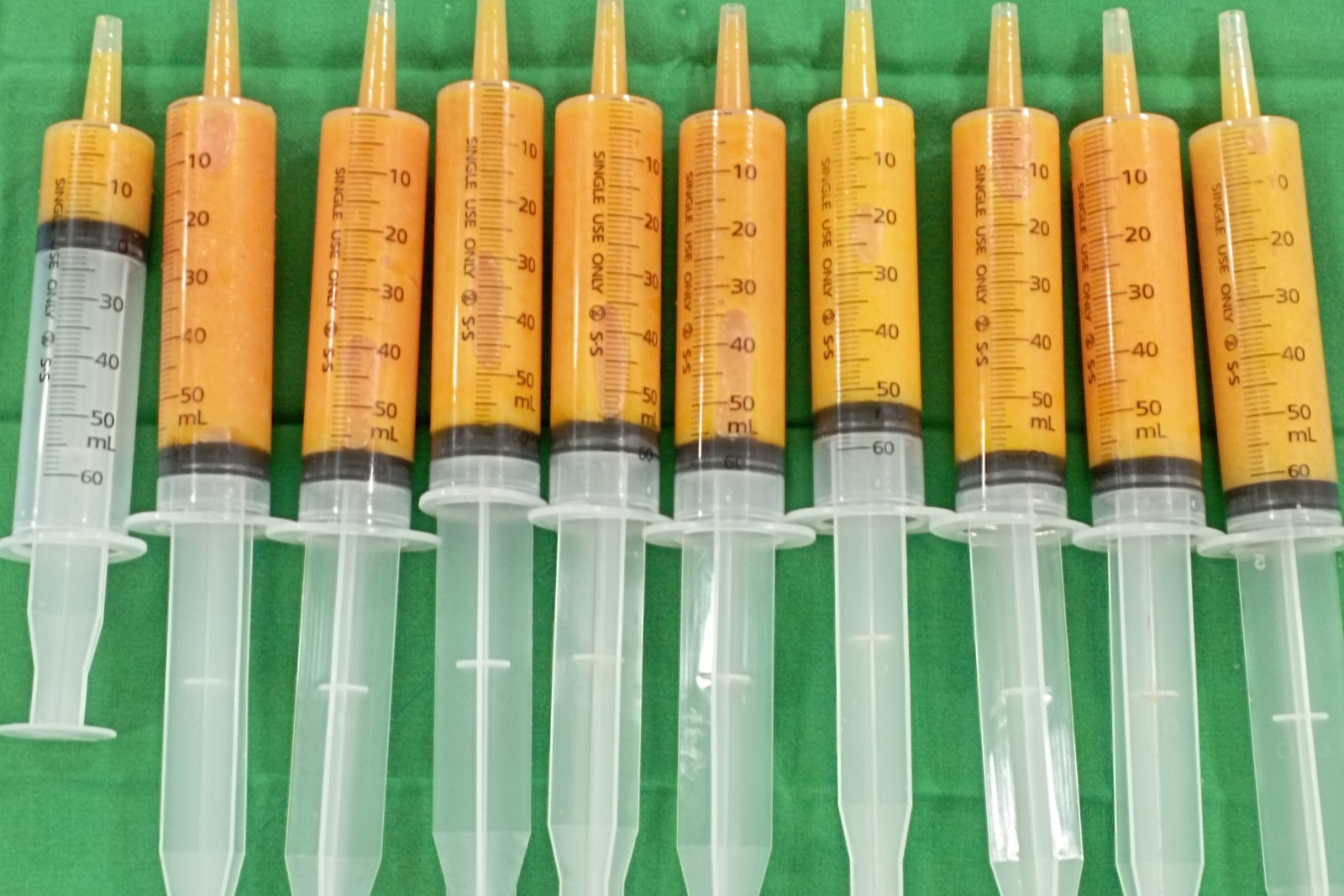
Syringe Liposuction
Fat is harvested into individual syringes using gentle negative pressure created by pulling the syringe plunger (Venus Clinic surgical photo · Taken in 2022).
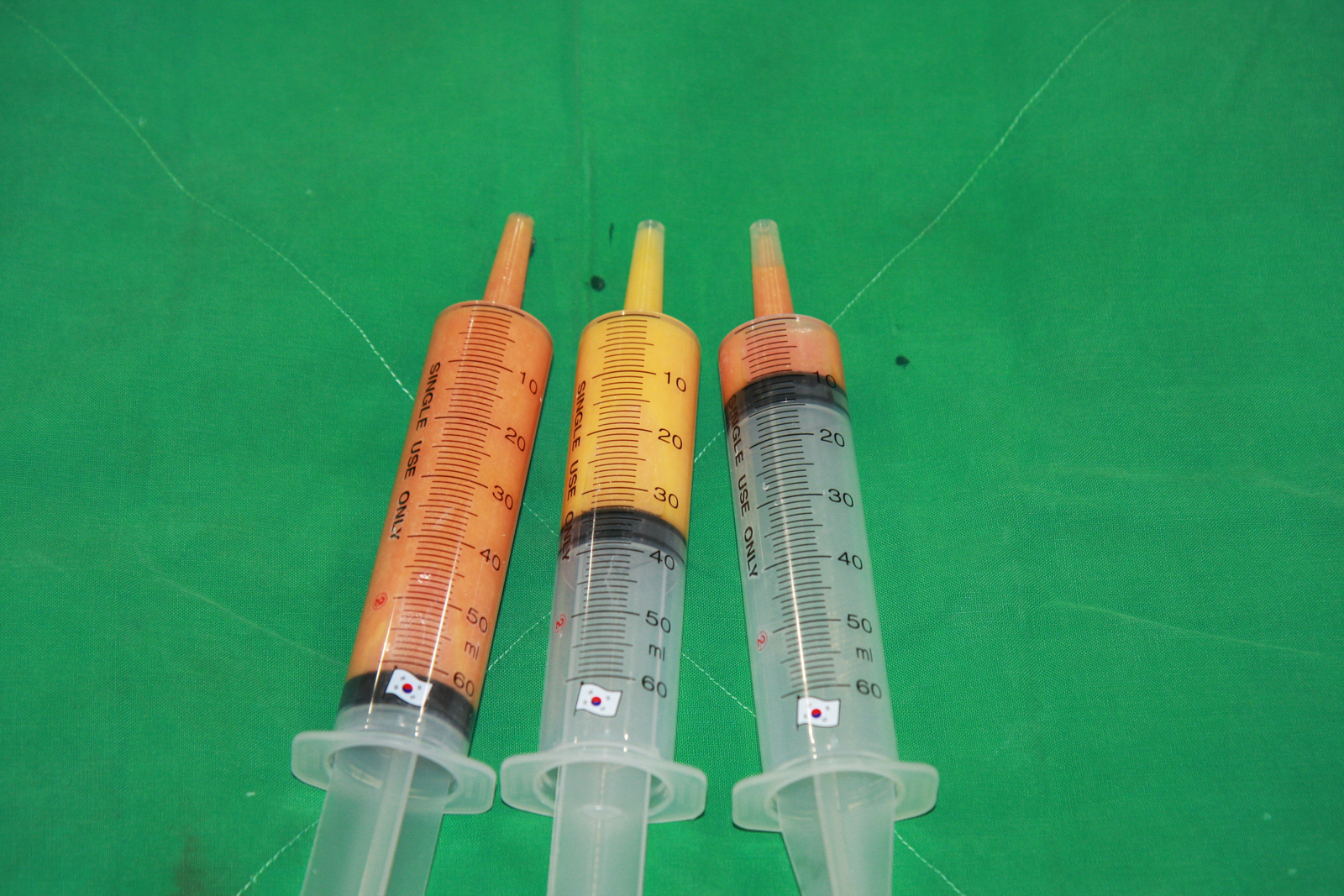
This photo was taken during a syringe liposuction procedure at Venus Clinic in 2014, showing a close-up of 60 mL syringes filled with harvested fat. The procedure is performed while checking the harvested volume directly on the syringe graduations.
Role of Tumescent Local Anesthesia
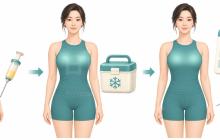
Syringe liposuction is performed after sufficiently infiltrating the subcutaneous fat layer with tumescent solution containing diluted lidocaine and epinephrine [4][5]. Thanks to the diluted solution and vasoconstrictive effect, lidocaine is absorbed slowly, reducing systemic burden while minimizing intraoperative bleeding, allowing surgery under local anesthesia alone without general anesthesia [4][5]. Even after surgery, the local anesthetic remains in the fat layer and provides analgesic effects for more than 10 hours, helping ease immediate postoperative pain [4][6].

| Category | Syringe Liposuction (Localized Contouring) | Standard Large-Volume Liposuction |
|---|---|---|
| Primary Purpose | Localized body contouring for specific areas | Broad-area or circumferential body contouring |
| Negative Pressure Method | Manual negative pressure via syringe plunger (fluid-buffered) [2] | Vacuum negative pressure from motorized aspirator |
| Anesthesia and Discharge | Tumescent local anesthesia · Same-day discharge [4][6] | Tumescent anesthesia with or without sedation depending on scope |
| Suitable Areas | Localized areas such as arms, axillary puffs, lower abdomen, and inner knees [1] | Broad areas such as full abdomen or full thighs |
Surgical Method and Process
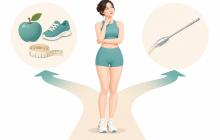
Syringe liposuction has a different purpose from dieting for weight loss. Dieting reduces the size of fat cells throughout the entire body, whereas liposuction is a body-contouring surgery that directly reduces the subcutaneous fat layer in targeted areas to refine the silhouette.
Area-Specific Design and Detailed Aspiration
Before surgery, fat distribution that protrudes under gravity is assessed in the standing position and marked on the skin. After evenly infiltrating tumescent local anesthetic solution, fat is removed using syringes and fine cannulas through minimal, small incisions tailored to each area and extent. During this process, fat that needs to be removed is thoroughly cleared while smoothing the contour to avoid unevenness.
Same-Day Surgery, Same-Day Discharge, and 1-Week Follow-Up
Because this is localized liposuction performed under tumescent local anesthesia to reduce physical strain, hospitalization is not required, and same-day surgery with same-day discharge is possible [4][6]. During recovery, swelling, bruising, and temporary firmness (induration) as the skin contracts may occur, gradually softening over time [7]. At Venus Clinic, we check recovery progress at a 1-week postoperative follow-up visit, and if there are no unusual findings, the basic treatment course concludes with this visit.

Cost and Reservation Information
The cost of syringe liposuction is KRW 190,000 per 50 mL syringe. If you make a reservation in advance through the Naver Cafe Venus Clinic Liposuction Story (cafe.naver.com/venusliposuction) before visiting, we can guide you through consultation and surgical scheduling.

Limitations and Precautions to Understand
Before deciding on syringe liposuction, it is important to clearly understand the following limitations. First, the syringe technique and tumescent local anesthesia are suited for small-volume, localized areas; applying them to large-volume liposuction of broad areas such as the full abdomen or full thighs is difficult due to prolonged operating time and lidocaine dosage limits [1][8]. In addition, when thin superficial fat work is required or in revision areas where scar tissue resistance from prior surgery is high, the syringe method alone may have limitations [1].
Second, because liposuction only reduces subcutaneous fat between the skin and muscle, it cannot alter muscle size or underlying bone and skeletal structure. Postoperative contours follow your natural muscle and skeletal framework. Third, even though the number of fat cells is reduced, remaining fat cells can enlarge if body weight increases after surgery, changing the shape; steady weight management is therefore needed. Furthermore, as with any surgery, potential side effects include bleeding, infection, bruising, swelling, skin contour irregularity, and temporary sensory decrease, and outcomes vary depending on individual body type, fat volume, and skin elasticity [7].
Advantages of Syringe Liposuction
Lower Systemic Burden with Tumescent Local Anesthesia
Because it can be performed solely under tumescent local anesthesia without general anesthesia, systemic anesthesia burden is low [4][5]. Local anesthetic effects also remain for a period after surgery to ease immediate pain, and same-day discharge allows a relatively smooth return to daily routines [4][6].
Selective, Detailed Contouring of Desired Areas
Only small localized fat deposits that do not respond well to exercise or diet can be targeted. Because the surgeon checks aspirated volumes for both sides and each area directly via syringe markings, this method is advantageous for fine-tuned control in small-volume areas [2].
Streamlined Schedule with 1-Week Follow-Up
Compared with broad, large-volume surgery, the treated surface area is small, resulting in relatively lower recovery burden. Basic treatment concludes after checking the incision sites and recovery at the 1-week follow-up visit, making scheduling easier for office workers or students who cannot take long vacations.
Simple Postoperative Care and Relatively Quick Recovery
Because the aspirated area is small and tumescent local anesthesia is used, swelling and bruising tend to subside in a shorter period compared with large-volume liposuction covering wide areas at once [4][6]. Postoperative care is also straightforward, involving wearing a compression garment properly and gradually increasing light activity, and hospitalization or prolonged rest is rarely needed [7]. However, recovery speed varies depending on the surgical site, extent, and individual constitution.
Lower Cost Burden
Because general anesthesia and hospitalization are not required and only desired areas are treated, syringe liposuction carries a lower cost burden than large-volume liposuction treating multiple broad areas at once. The cost is KRW 190,000 per 50 mL syringe.
References
- Duncan DI (ed). Enhanced Liposuction: New Perspectives and Techniques. IntechOpen; 2022. Chapter 2 (4.2 Syringe assisted liposuction).
- Fournier PF. Reduction Syringe Liposculpturing. In: Shiffman MA, Di Giuseppe A (eds). Liposuction: Principles and Practice. Springer; 2006. Chapter 30, pp. 207–216.
- Venus Clinic. Breast Fat Grafting and Syringe Liposuction. https://myvenus.co.kr/column/578377
- Klein JA. Tumescent Technique: Tumescent Anesthesia & Microcannular Liposuction. Mosby; 2000. Chapters 19, 22, 24 (pp. 141–156, 179, 205).
- Shiffman MA, Di Giuseppe A (eds). Liposuction: Principles and Practice. Springer; 2006. Chapters 10, 12 (pp. 70, 78).
- Venus Clinic. What Is Tumescent Liposuction?. https://myvenus.co.kr/should_know/251418
- Venus Clinic. Complications, Side Effects, and Postoperative Activity in Liposuction. https://en.myvenus.co.kr/should_know/38861
- Shiffman MA, Di Giuseppe A (eds). Liposuction: Principles and Practice. Springer; 2006. Chapter 60 (Editor's Commentary, p. 406).
Syringe Liposuction Treatment Areas
There are 12 main areas commonly treated with syringe liposuction: 2 upper-body areas, 5 torso areas, and 5 lower-body areas. The illustrations below are virtual diagrams created to clearly show the location of each area rather than actual patient photos, and the actual surgical scope is decided after evaluating fat thickness and body shape during consultation.
Upper Body — Posterior Upper Arms · Axillary Puffs
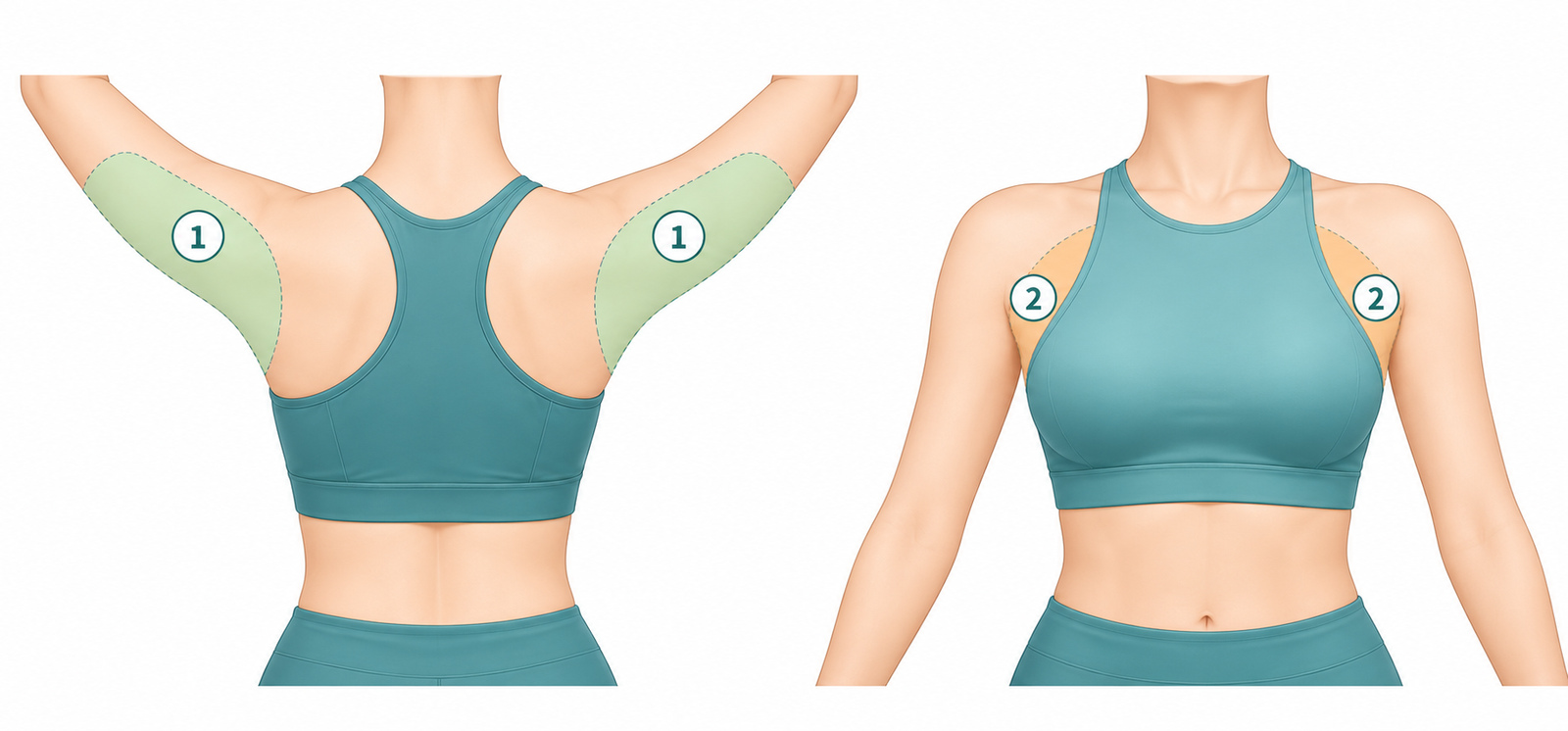
※ Virtual diagram for illustrating surgical areas.
| Area | Characteristics and Description |
|---|---|
| ① Posterior Upper Arms | This refers to sagging along the back and underside of the upper arm when the arms are lowered, or fullness above the elbow. Because it does not easily decrease through exercise alone, it is a frequently requested upper-body area and is contoured smoothly from the armpit to the elbow. However, when the biceps and triceps muscles are well developed, the degree of circumference reduction has limits. |
| ② Axillary Puffs | This is localized fat bulging from the front of the armpit toward the outer chest. Although the fat volume is not large, it is easily noticeable when wearing sleeveless or fitted tops, so refining even a small amount creates a cleaner frontal upper-body line. |
Torso — Upper Abdomen · Lower Abdomen · Flanks · Lower Back · Bra Line
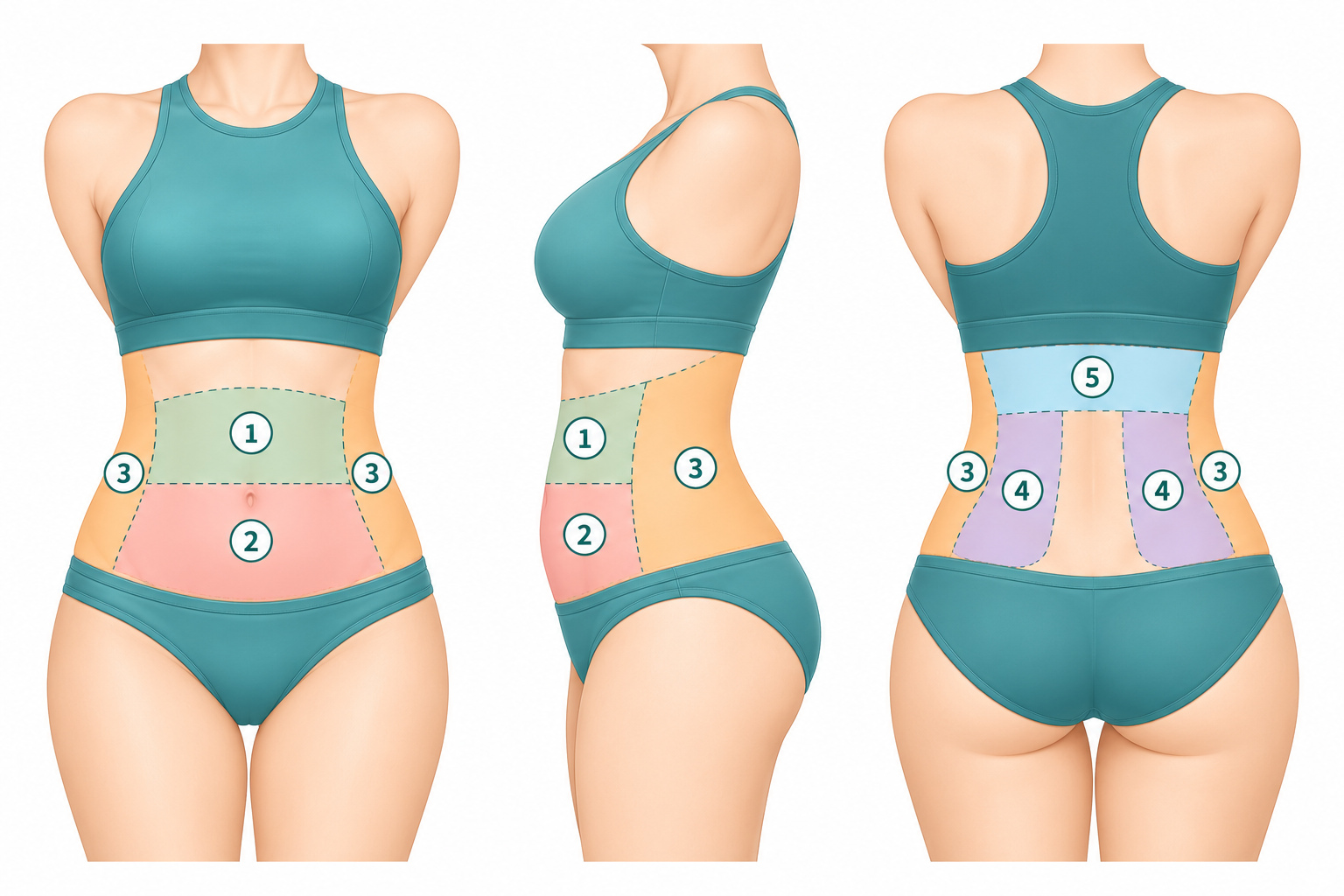
※ Virtual diagram for illustrating surgical areas.
| Area | Characteristics and Description |
|---|---|
| ① Upper Abdomen | The abdominal area above the navel contains more fibrous tissue than the lower abdomen and is influenced by rib cage shape and horizontal creases formed when bending forward. Fat layer thickness is assessed to contour it naturally with the surrounding abdominal line. |
| ② Lower Abdomen | The lower belly below the navel tends to protrude as deep fat thickens. Skin contraction after surgery tends to occur relatively well here, making it a popular choice for localized body contouring. |
| ③ Flanks | The sides of the waist (love handles) are localized fat accumulation areas where fat builds up with age and blurs the waistline curve. This area is suitable for refining the lateral silhouette when diet and exercise do not reduce it well. |
| ④ Lower Back | This area extends from behind the flanks toward the lower lumbar back. Removing fat accumulated in the deep fat layer helps refine a blunted rear waistline. |
| ⑤ Bra Line | Located along the upper back and sides below the shoulder blades and over the upper ribs, this area bulges above and below bra straps in thin clothing. Because it contains relatively dense fibrous tissue, careful contouring is required. |
Lower Body — Lower-Outer Buttock · Saddlebags · Inner Thighs · Anterior Thighs · Inner Knees
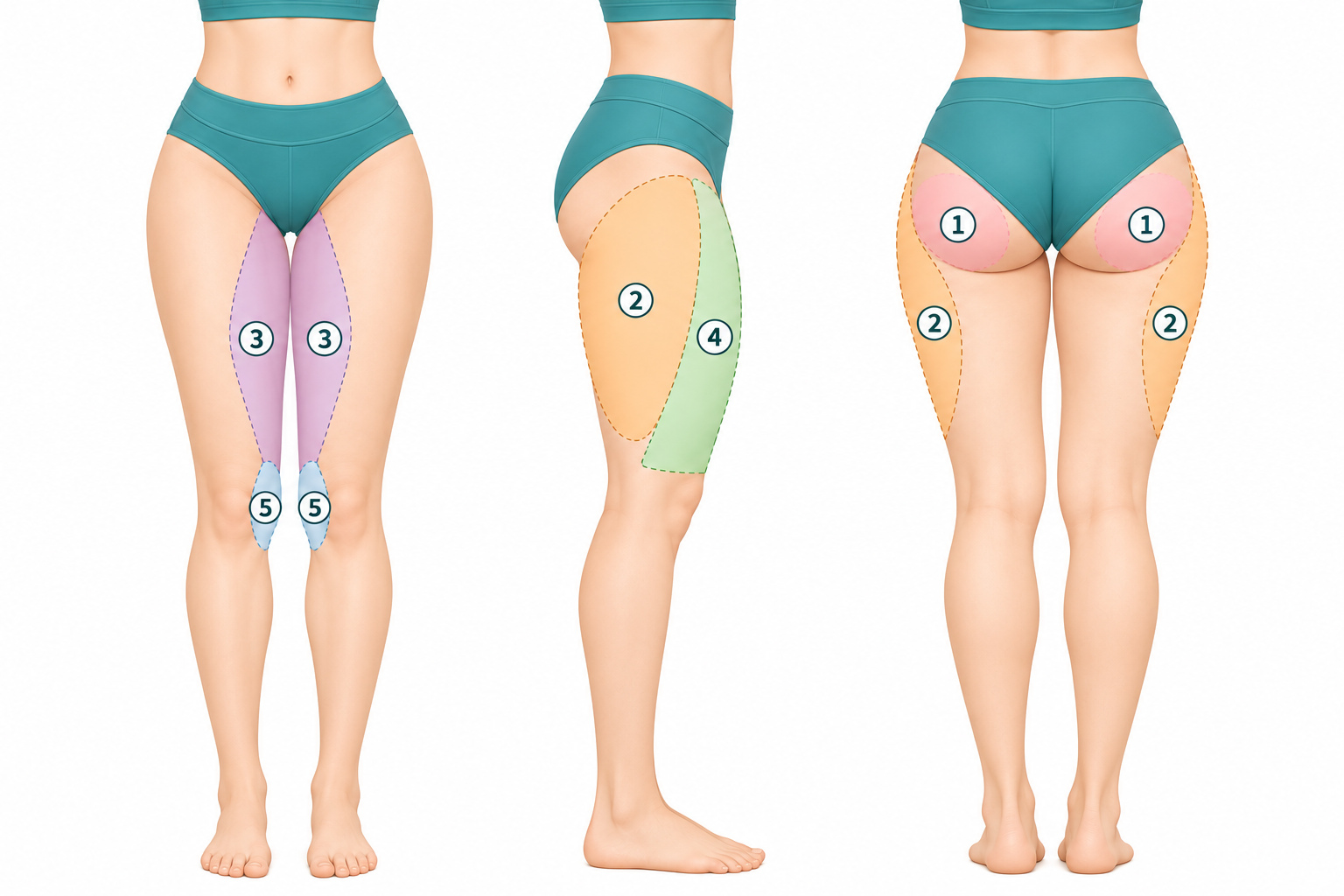
※ Virtual diagram for illustrating surgical areas.
| Area | Characteristics and Description |
|---|---|
| ① Lower-Outer Buttock | When dividing the buttock into four quadrants (upper/lower and inner/outer), this is the lower outer portion. Rather than including the entire lower buttock crease area (extending to the lower-inner portion) in syringe liposuction, only the lower-outer buttock is contoured. Reducing the lower-outer buttock lightens buttock weight to improve sagging and can also help reduce lateral saddlebag protrusion and overall buttock bulk. |
| ② Saddlebags | This is the bulging area on the outer thighs (lateral thighs). Often resistant to dieting due to female hormonal influences, it is contoured locally when lateral thigh protrusion affects trouser fit. |
| ③ Inner Thighs | Along the inside of both thighs, skin friction while walking or sweating in summer can cause discomfort. Because fibrous tissue is sparse and fat is soft here, even contouring with fine cannulas is important to avoid over-resection or contour irregularity. |
| ④ Anterior Thighs | The front surface of the thighs is contoured when even subcutaneous fat accumulation makes the thighs appear thick. When thigh muscles are well developed, the degree of change may vary depending on fat layer thickness. |
| ⑤ Inner Knees | Localized fat bulging on the inside of the knees. Contouring this area helps create a smoother medial line connecting the inner thighs down to the calves. |
| Surgical Area Guide and Side Effects Information | |
|---|---|
| - Notice Type | Virtual anatomical diagrams for explaining surgical areas, not actual patient before-and-after photos |
| - Side effects | https://en.myvenus.co.kr/should_know/38861 |
In Closing
Syringe liposuction is not a weight-loss surgery, but localized liposuction that refines body contours in specific areas resistant to diet while reducing physical strain through tumescent local anesthesia. Same-day surgery and discharge are possible, basic treatment concludes with a 1-week follow-up visit, and the cost is KRW 190,000 per 50 mL syringe. If you have an area of interest, please reserve in advance through the Naver Cafe Venus Clinic Liposuction Story and visit us comfortably for a consultation.