[Case Review] Improving Sagging After Childbirth with Breast Reduction Liposuction
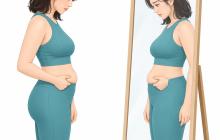
In consultations, I often hear patients say, “Ever since I gave birth and finished breastfeeding, my breasts have stayed large and sagged downward, and even with a bra they don’t hold their shape.” Many of them then carefully ask, “I’ve heard that reducing the breasts with liposuction doesn’t shrink them very much. Is it still worthwhile for breasts that sag?”
Today, while looking at front, left oblique, and right side photos of one actual case, I would like to explain that breast reduction liposuction is a surgery well worth considering for improving sagging (breast ptosis), even when the reduction in size is not very large. I will also explain how the skin contracts after liposuction, why the change in size can feel small compared with the amount of fat removed, and how the size keeps decreasing until about three months after surgery.

Sagging Breasts Can Also Be Treated with Liposuction
Many people think liposuction is not suitable if the breasts sag. At Venus Clinic, however, we consider sagging breasts to be candidates for liposuction as well. We do not think it is right to divide breast reduction into “breasts with a lot of fat” and “sagging breasts” and to turn away sagging breasts as unsuitable for liposuction.
Addressing Size and Sagging Together
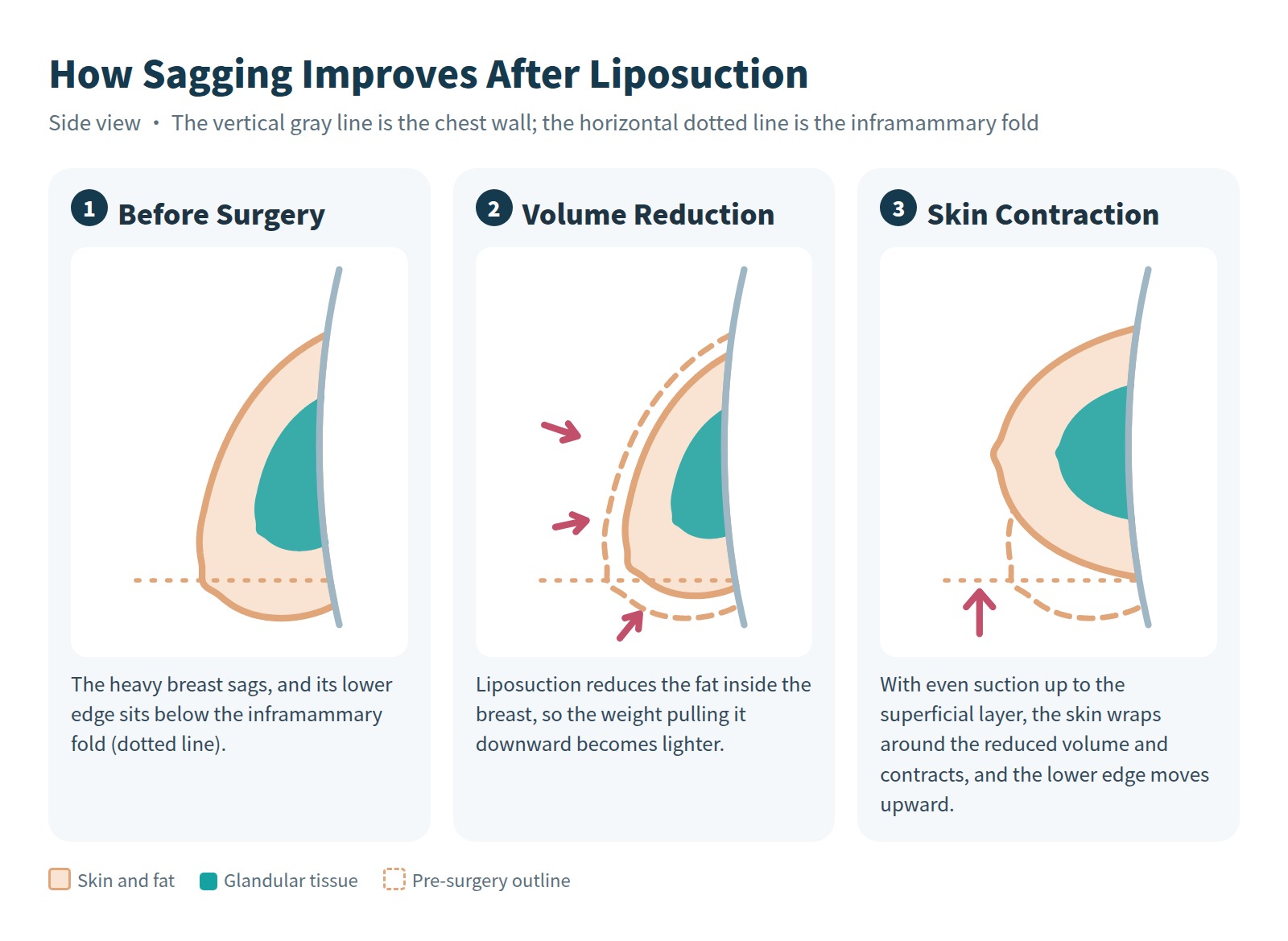
When liposuction reduces the volume of the breast, the weight pulling it downward becomes lighter. And when fat is suctioned evenly up to the superficial layer close to the skin, skin contraction is encouraged as the size decreases, which helps improve sagging at the same time. At Venus Clinic, we call this superficial liposuction, and we plan breast reduction liposuction for sagging breasts with this approach. That is why we explain that a result such as “the size didn’t shrink as much as I expected, but my breasts look lifted” is also an important change this surgery brings.
How the Skin Contracts After Liposuction
The way skin shrinks after liposuction is also described in textbooks. A textbook on tumescent liposuction explains that skin contraction after liposuction occurs through the normal elastic recoil of the dermis and the contraction of fibrous tissue within the subcutaneous fat [1]. In other words, the force of stretched skin trying to return to its place like a rubber band works together with the force of the fibrous tissue beneath the skin drawing in.
Why We Suction Evenly Up to the Superficial Layer
A textbook chapter on superficial liposculpture for aged and relaxed skin explains that working in the superficial fat layer releases a large part of the fibrous connections between the skin and the subcutaneous fat, allowing the skin to move freely and settle into place, and that the skin becomes not a passive shell but an active structure that grows firmer and smoother through contraction [2].
For this reason, at Venus Clinic we suction evenly not only in the deep layer but also in the layer close to the skin, using cannulas that reach that level. We remove the fat that needs to go as thoroughly as possible, and we smooth the line so that it is not bumpy or uneven. When the skin wraps around the area where the volume has decreased and contracts again, the lower edge of the breast moves upward, which helps improve sagging.
Changes in Sagging After Breast Liposuction Shown in Textbooks
Liposuction textbooks also include cases in which sagging decreased after breast liposuction. One textbook presents the case of a 42-year-old woman whose degree of sagging decreased by 3.7 cm, about 50%, four months after breast liposuction [3]. In another textbook, the chapter on ultrasound-assisted liposuction for breast reduction shows a case in which, one year after surgery, the distance from the hollow between the collarbones (the suprasternal notch) to the nipple decreased from 21 cm to 18 cm, meaning the nipple moved upward [4]. The surgical methods and time frames differ from ours, but these materials show that liposuction that reduces breast volume can also help improve sagging.
Why the Change in Size Can Feel Small Compared with the Amount Removed
Some patients who have had breast reduction liposuction ask, “I was told a lot of fat came out, so why doesn’t the size seem to have shrunk as much as I thought?” There are two reasons for this.
Volume and Length — The Cube Root Relationship
The amount of fat removed is a “volume,” while the size you see in the mirror or in photos is a “length,” such as diameter or circumference. When volume decreases while the overall shape stays similar, length decreases only by the cube root of the volume ratio. For example, if volume decreases by 30% and 70% remains, the length becomes about 0.888 times, the cube root of 0.7 — a decrease of only about 11%. Even if volume is cut in half, the length becomes about 0.794 times, the cube root of 0.5, decreasing by only about 21% [5].
| Volume decrease | Remaining volume | Length ratio (cube root) | Length (diameter) decrease |
|---|---|---|---|
| 20% decrease | 80% | Cube root of 0.8 ≒ 0.928 | About 7% |
| 30% decrease | 70% | Cube root of 0.7 ≒ 0.888 | About 11% |
| 45% decrease | 55% | Cube root of 0.55 ≒ 0.819 | About 18% |
| 50% decrease | 50% | Cube root of 0.5 ≒ 0.794 | About 21% |
We covered the same topic in the Venus Clinic doctor column “How Much Size Reduction Can You Expect After Liposuction?” In the case of a patient who had 2,400 ml of fat suctioned from the thighs and buttocks, the thigh diameter went from 18 cm to 16 cm and the circumference decreased by about 6.3 cm — which, calculated as volume, was a decrease of about 20%. In an example that treated the breast as a sphere, a 45% decrease in volume reduced the diameter from 11 cm to 9 cm, only about 2 cm. Even when it looks like a slight decrease in photos, a considerable amount has been reduced in terms of volume [5].
The Size Keeps Decreasing Until About Three Months After Surgery
After liposuction, swelling makes it hard to notice the reduced size for several weeks [5]. As the swelling subsides, the size decreases a little more until about three months after surgery. The after photos of the case below were taken one week after surgery, when swelling still remained, yet you can see that the size has decreased and that the lower edge of the breast and the position of the nipple have moved upward. We expect the actual size reduction after the swelling subsides to be greater than in the photos. And even for patients whose size reduction is not large, the improvement in sagging itself is an important value of this surgery.
Advantages and Limitations of Breast Reduction Liposuction

The Nipple Is Not Moved
Breast reduction liposuction removes fat from inside the breast, so the nipple is not cut out and relocated. For this reason, you do not need to worry about reduced nipple sensation, and for the same reason, those who plan to breastfeed in the future can choose it without worrying about breastfeeding function. Because the surgery is performed by inserting a cannula through small incisions a few millimeters in size, another advantage is that no long incision lines are left around the breast.
Shaping the Breast and Its Surroundings into One Line
Breasts that have grown larger after childbirth often have increased volume not only in the breast itself but also in the accessory breast toward the armpit and in the side of the chest next to the breast. Liposuction can remove fat from the breast together with the accessory breast, armpit, and side of the chest, so the transition to the surrounding areas is natural, and a neater line can be expected not only from the front but also from the side.

How Much Sagging Improves Differs from Person to Person
Suctioning evenly up to the superficial layer can encourage skin contraction, but not all sagging improves to the same degree. If skin elasticity was already greatly reduced before surgery or the sagging is severe, some sagging may remain or fine wrinkles may remain on the skin. Also, what liposuction can reduce is the fat inside the breast, so breasts with a high proportion of glandular tissue may show less size reduction.
Factors That Affect the Results
Results vary depending on skin elasticity, the degree of sagging, the ratio of fat to glandular tissue in the breast, and weight changes after surgery. If weight increases again after surgery, the remaining fat cells can enlarge and change the size and shape of the breasts, and later pregnancy and breastfeeding also affect the breasts. It is more accurate to understand this not as a surgery that completely restores sagging breasts to their original state, but as a surgery that helps improve sagging.
References
- Klein JA. Tumescent Technique: Tumescent Anesthesia & Microcannular Liposuction. Mosby; 2000. Chapter 28.
- Gasparotti M. Three-Dimensional Superficial Liposculpture for Aged and Relaxed Skin. In: Shiffman MA, Di Giuseppe A, eds. Liposuction: Principles and Practice. Berlin: Springer; 2006. Chapter 29.
- Serdev N, ed. Advanced Techniques in Liposuction and Fat Transfer. InTech; 2011. Chapter 1, Fig. 27.
- Shiffman MA, Di Giuseppe A, eds. Liposuction: Principles and Practice. Berlin: Springer; 2006. Chapter 62 (Ultrasound-Assisted Liposuction for Breast Reduction), Fig. 62.8.
- Dr. Jung. How Much Size Reduction Can You Expect After Liposuction? Venus Clinic Doctor Column. https://myvenus.co.kr/column/44211
- Klein JA. Tumescent Technique: Tumescent Anesthesia & Microcannular Liposuction. Mosby; 2000. Chapter 26 (Tumescent Infiltration Technique), Fig. 26-1.
Before-and-After Photos
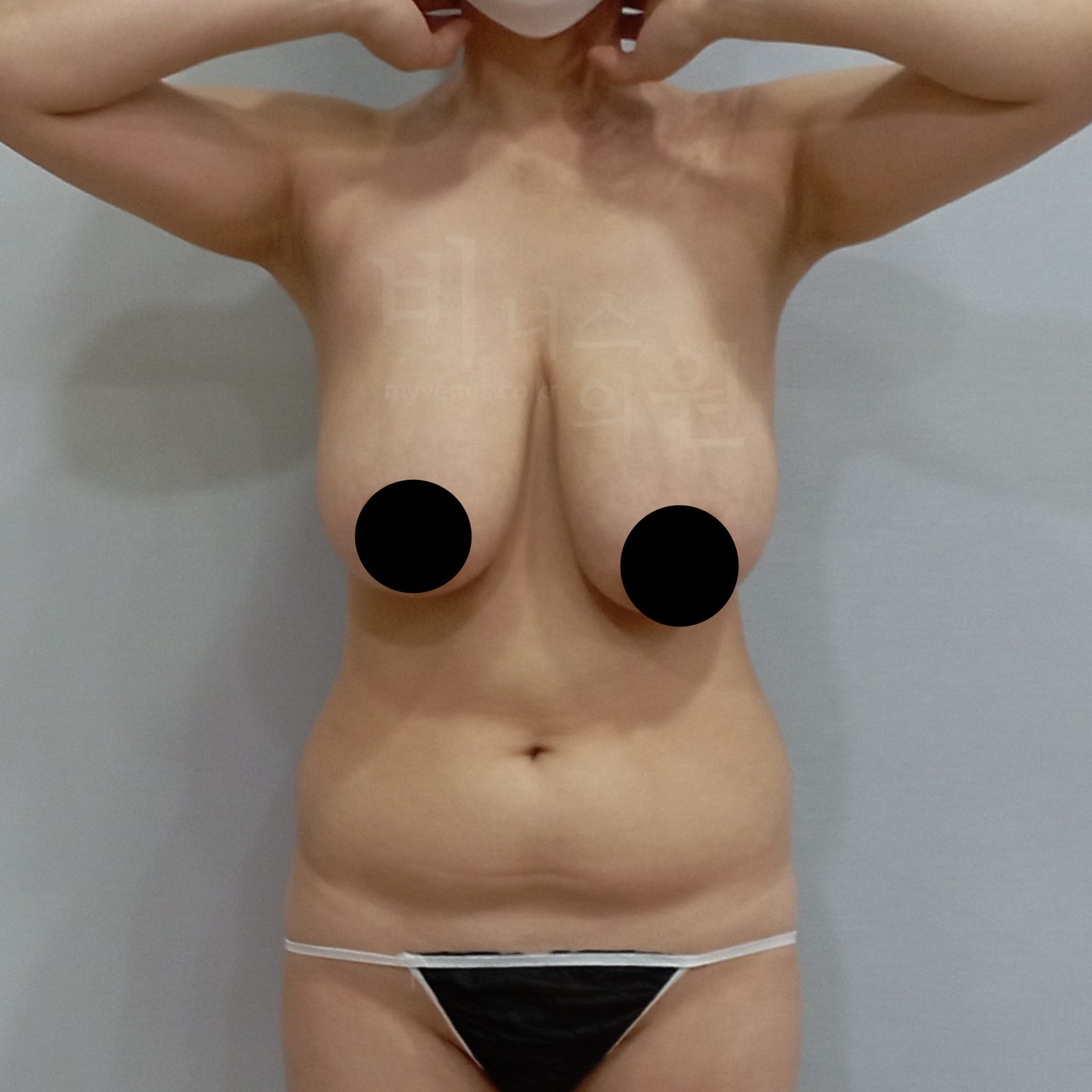
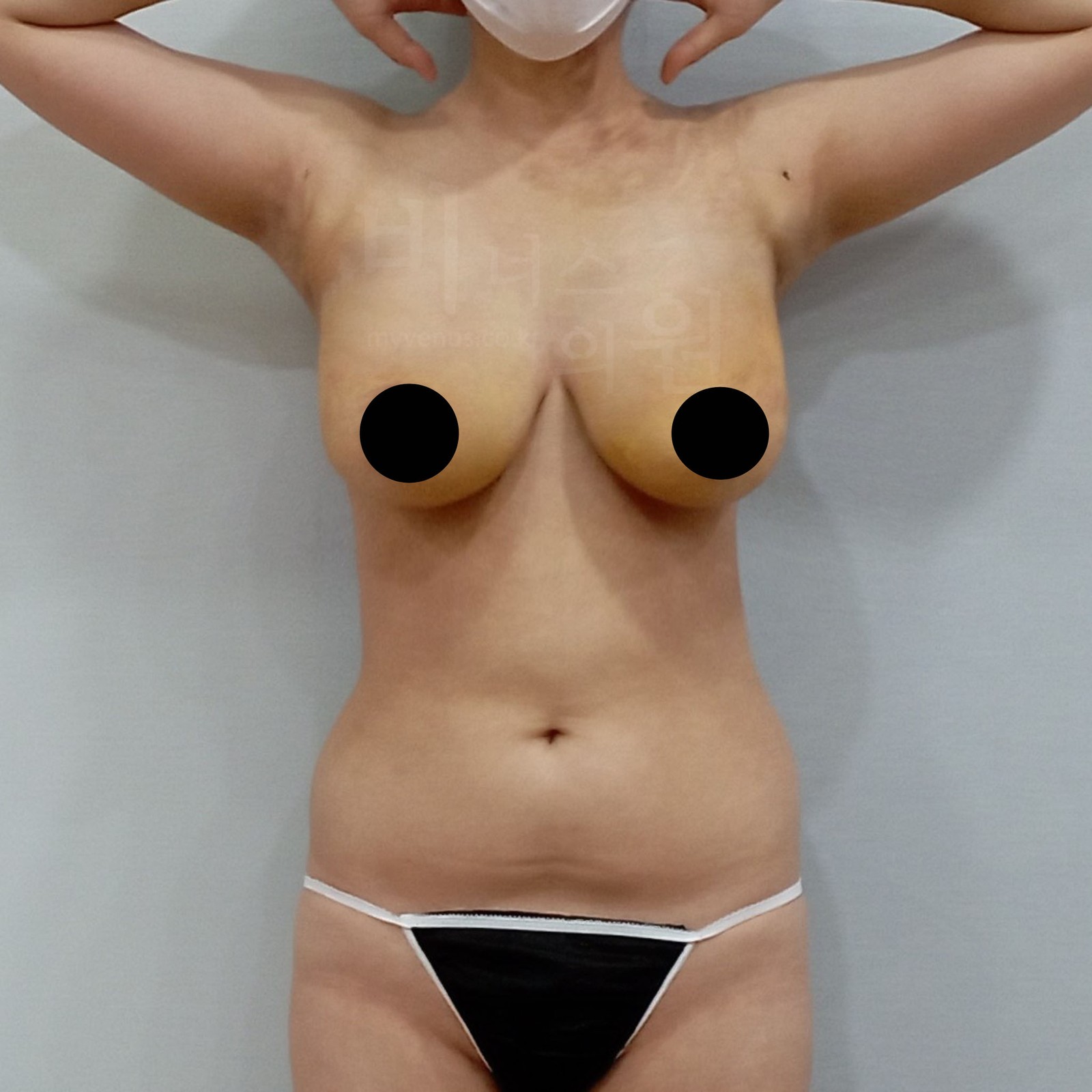
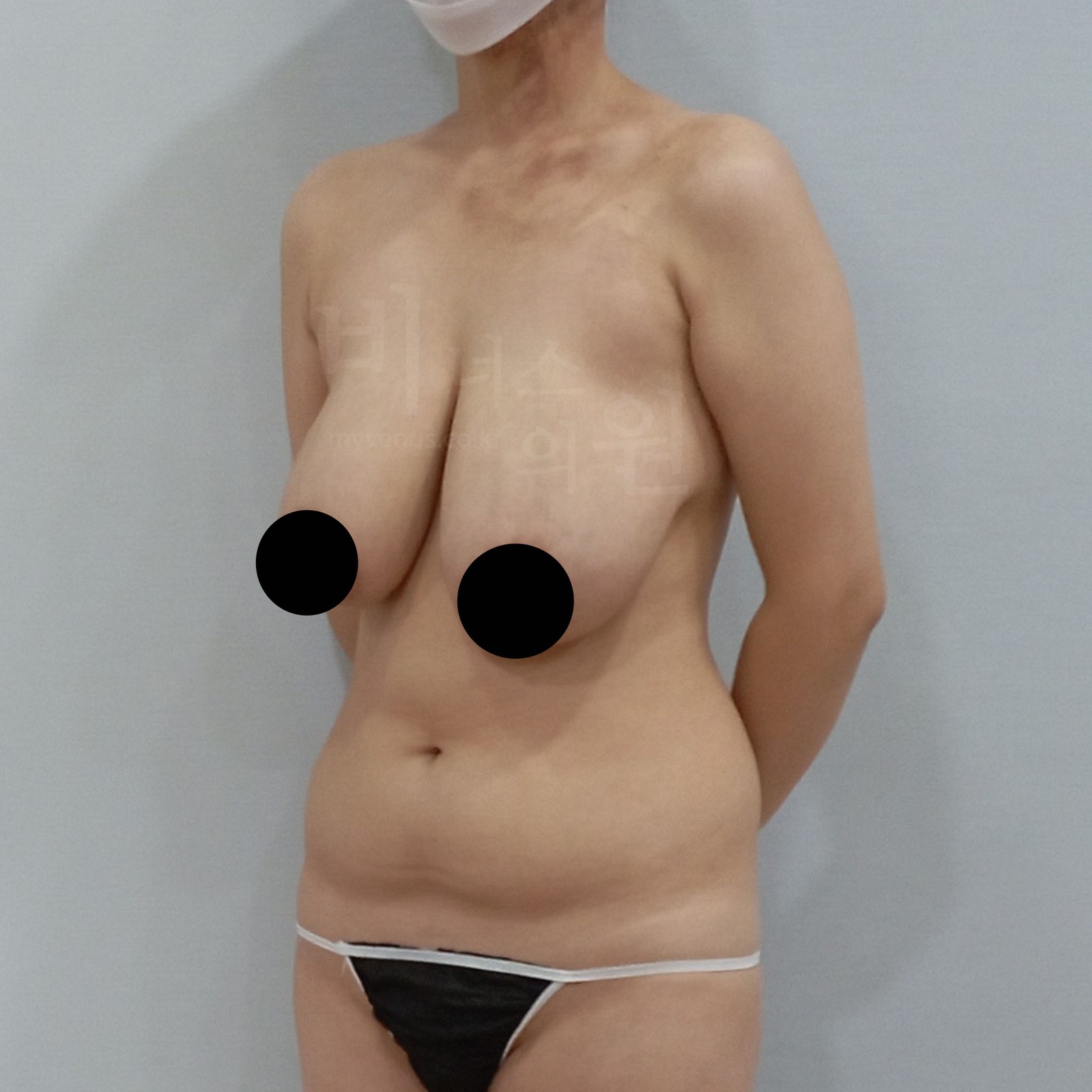
The patient below had breast reduction liposuction at Venus Clinic for breasts that had grown larger and sagged after childbirth. We show front, left oblique, and right side photos of the same person in order. All after photos were taken one week after surgery. Swelling still remains at this stage, so this is not the final result; as the swelling subsides, the size decreases a little more until about three months after surgery.
Case 1
Before Surgery — Front
The breasts sag significantly, and the nipples sit below the inframammary fold.
One Week After Surgery — Front
The volume has decreased somewhat, and the lower edge of the breasts and the nipple position have moved upward.
Before Surgery — Left Oblique
Viewed at an angle, the downward stretching of the breast is even more visible.
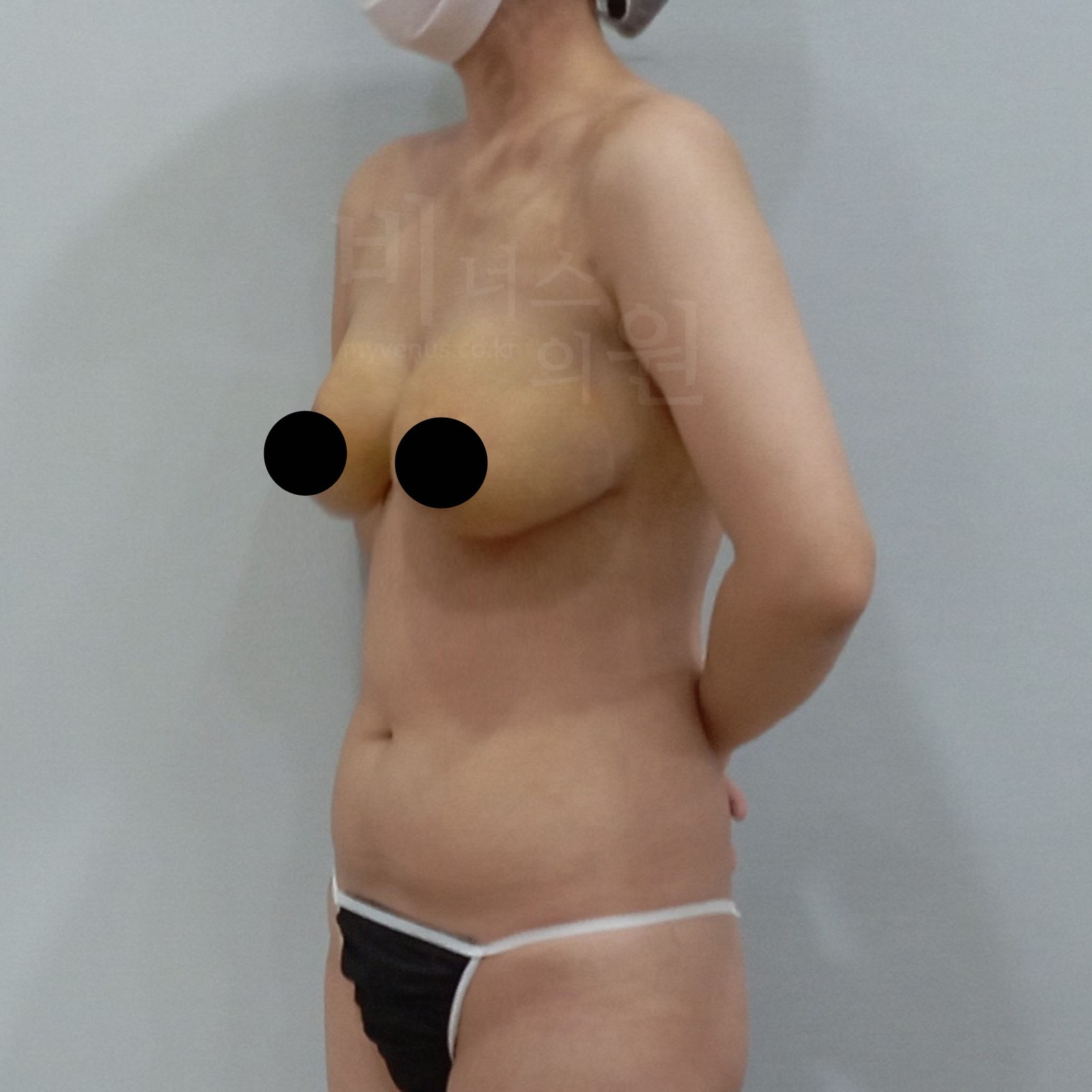
One Week After Surgery — Left Oblique
The lower edge of the breast has moved upward, and the sagging has improved.
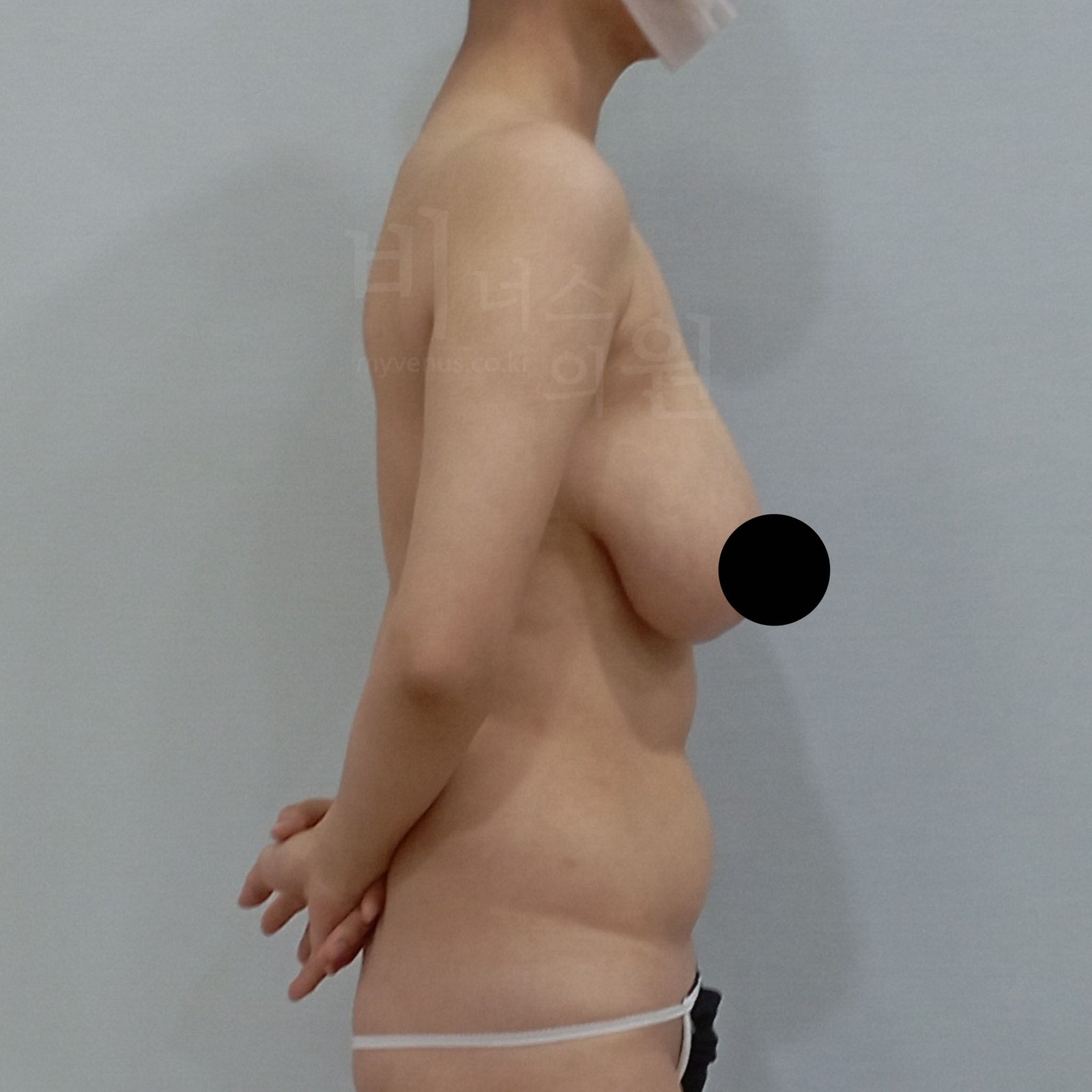
Before Surgery — Right Side
From the side, the weight of the breast is concentrated in its lower part.
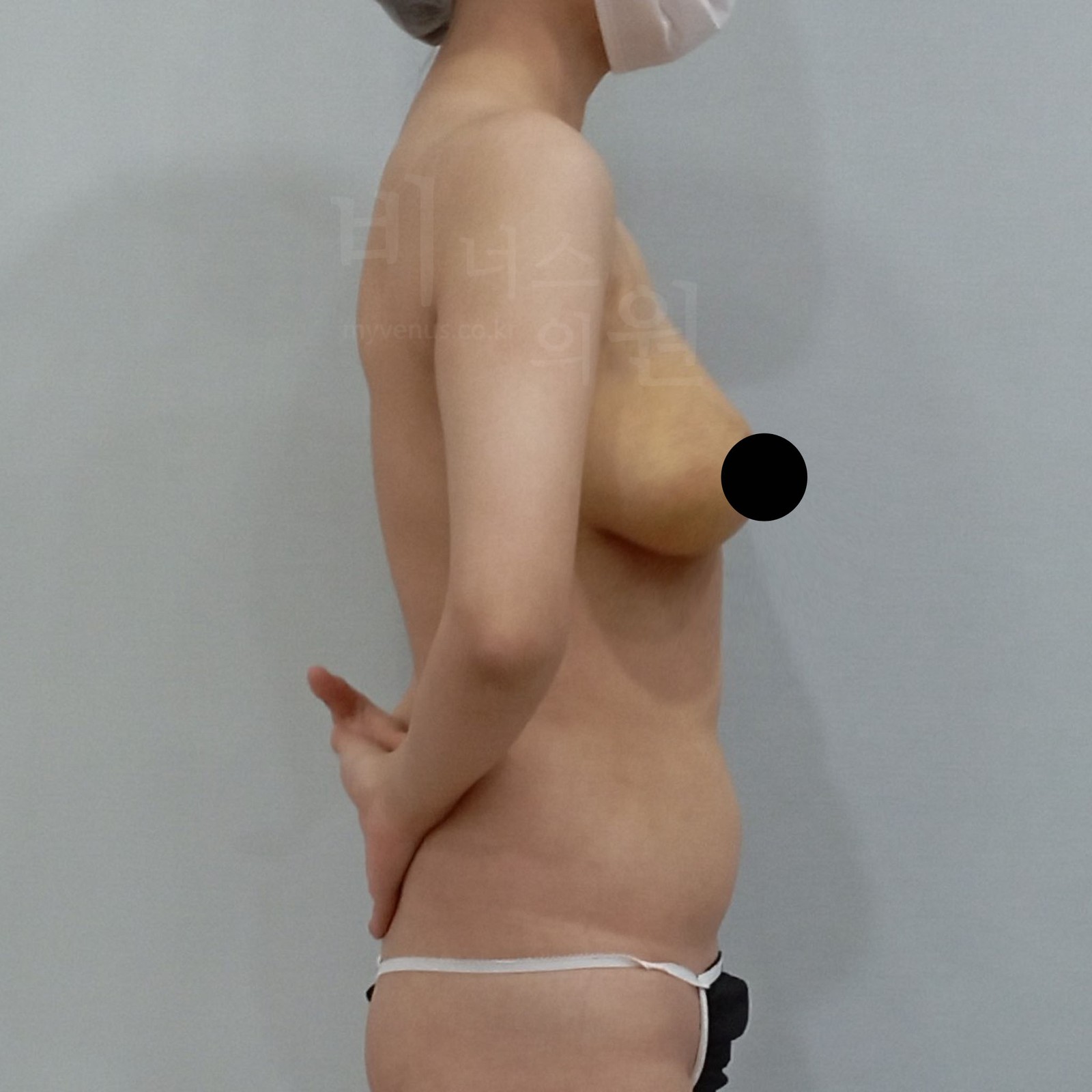
One Week After Surgery — Right Side
The lower edge of the breast and the nipple position have moved upward.
This is the fat removed on the day of surgery. In the left (Lt) and right (Rt) containers, the red layer at the bottom is tumescent solution and the yellow layer on top is fat; together, both sides amount to about 2,700 cc of pure fat.
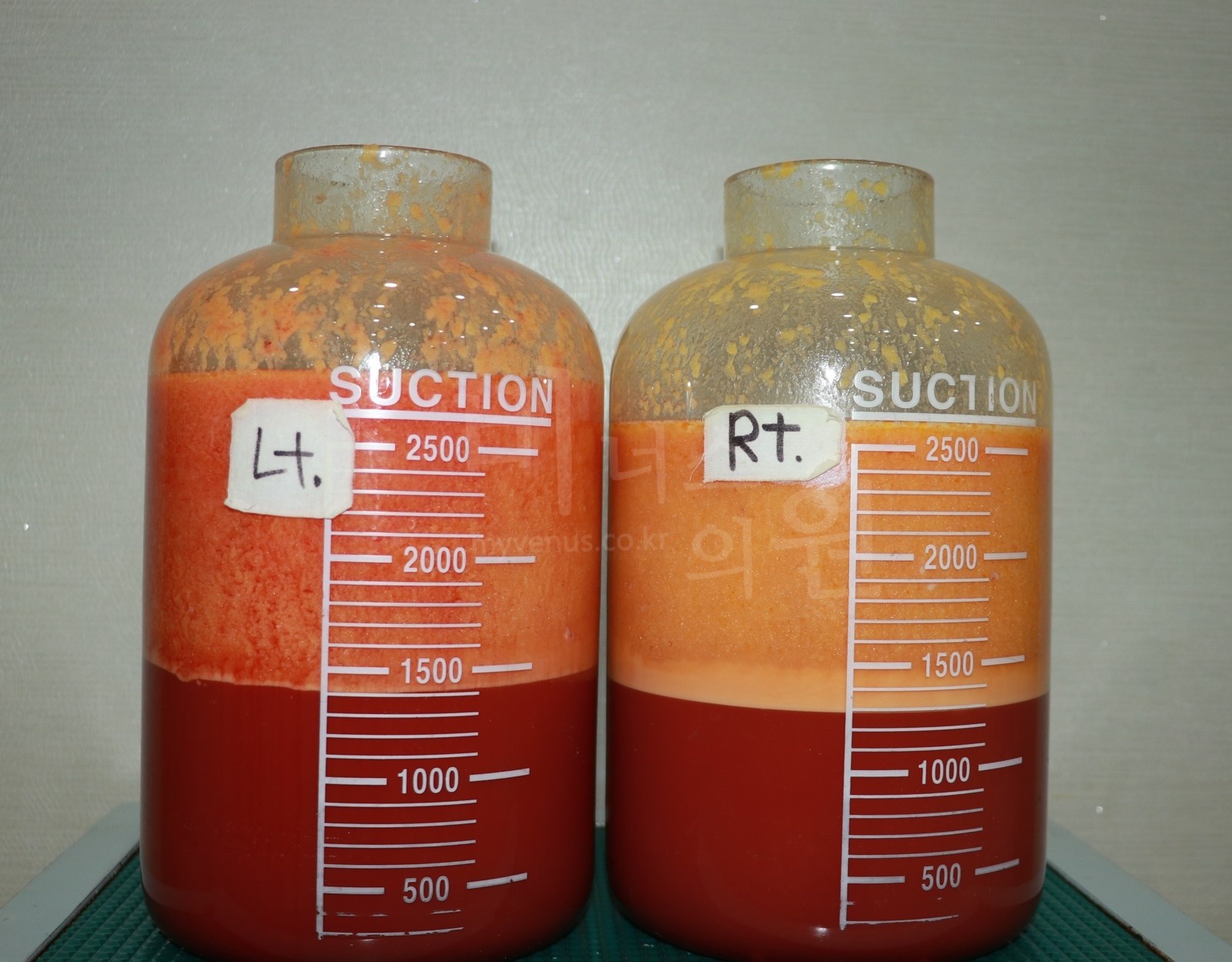
If you look closely at the containers, the fluid layer at the bottom is larger than the fat layer on top. I believe this is because this patient’s skin was very loose, so more tumescent solution was infused. Before liposuction, tumescent solution is infused to swell the fat layer firmly before suctioning, and when the skin is very loose, more solution is needed to swell the fat layer to the same degree. It is the same principle as needing to put more into a loose pouch to fill it tightly. That is why, in sagging breasts with very loose skin, the proportion of solution in the suctioned amount comes out relatively high.
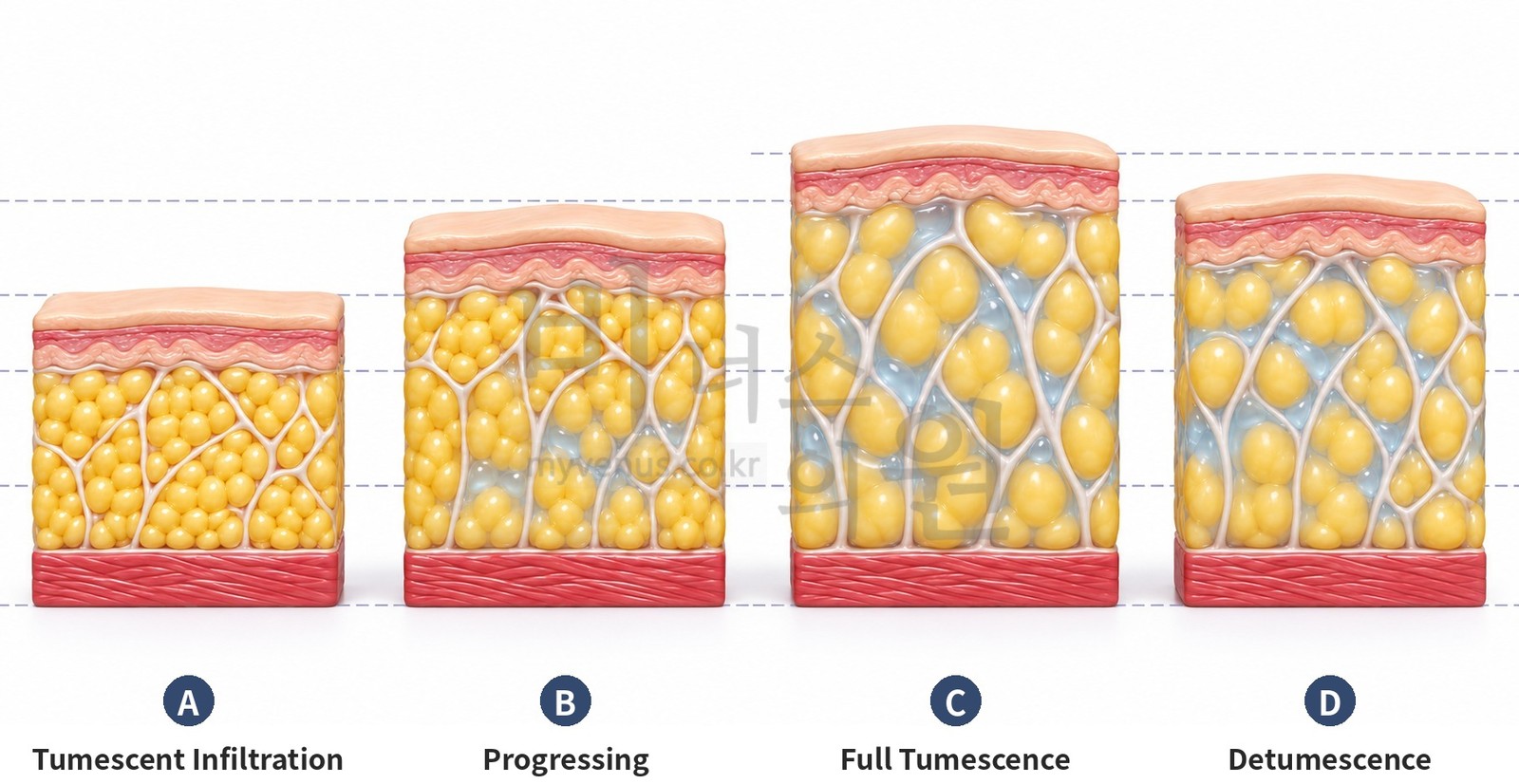
When tumescent solution (blue) is infused, the fat layer swells. A Tumescent Infiltration → B Progressing → C Full Tumescence → D Detumescence.
The four stages in the illustration above follow the same order as the figure in the tumescent liposuction textbook (Tumescence and detumescence) [6].
A. Tumescent Infiltration — This is the stage where infusion of the solution begins. The textbook explains that the first infiltration should start in the deepest part of the fat layer, just above the muscle fascia. If infiltration starts too superficially, the boundary between the fat and the fascia becomes hard to feel by hand, making it more difficult to fill the deeper layers [6].
B. Progressing — Wherever the needle passes, the solution first collects in small pockets, then spreads through the tissue between the fat cells and gradually becomes evenly distributed. Because the nerves in the deeper layer are anesthetized first, the more superficial layer above can be filled with less discomfort, and as more nerves and blood vessels are reached by the solution, the anesthetic and vasoconstrictive effects become stronger [6].
C. Full Tumescence — The entire fat layer of the target area is filled with solution and is firmly swollen. If a little more solution is placed in the most superficial fat, the skin may take on an orange-peel appearance. According to the textbook, subcutaneous fat can hold an additional volume of fluid of about twice its own volume, so the fat usually becomes fully swollen only after infusing about twice the volume of the targeted fat [6]. Once swollen like this, the deeper fat layer is lifted away from the tissue beneath it, and any missed fat is easier to find, which helps in refining a smooth line [6].
The textbook also notes that once the skin and subcutaneous tissue have been stretched by obesity, they remain stretched and loose even after weight loss, so a greater volume of solution is required to reach this stage [6]. The same principle applies to breasts stretched after childbirth, and I believe this is why the proportion of fluid was high in this patient.
D. Detumescence — As the infused solution spreads out into the surrounding fat tissue, the swollen fat layer partially settles. The textbook explains that allowing time for this settling (20 to 30 minutes) before suction maximizes vasoconstriction and anesthesia, and also makes the tissue easier to grip, so liposuction becomes easier [6].
This is a case of breasts that were large and sagging after childbirth. Liposuction was performed on the breasts together with the accessory breasts, armpits, and side of the chest. Before surgery, the breasts sagged significantly and the nipples sat below the inframammary fold. After the fat was removed as shown above, the photos taken one week after surgery already show a decrease in size from the front, left oblique, and right side, and the lower edge of the breasts and the nipple position moved upward, improving the sagging as well. Swelling still remains at this stage and the size continues to decrease until about three months after surgery, so we expect the actual size reduction to be greater than in the photos. This is a case in which both size reduction and improvement in sagging can be seen.
| Information on the Posted Liposuction Before-and-After Photos | |||
|---|---|---|---|
| - Same person | Surgery performed at Venus Clinic; same person | - Date taken | Taken around 2018; comparison at 1 week after surgery |
| - Same conditions | Edited to the same posture and size as closely as possible | - Side effects | https://en.myvenus.co.kr/should_know/38861 |
In Closing
With breast reduction liposuction, the change in size can look small compared with the volume removed. However, the improvement in sagging — as the breasts become lighter and the skin, suctioned evenly up to the superficial layer, contracts again — is as important a change as size reduction for those troubled by breasts that sag after childbirth. At Venus Clinic, we believe breast reduction liposuction is a surgery well worth considering for improving sagging even when the size reduction is not large, and we perform surgery that shapes the breasts and the surrounding areas into one line.
References: Breast Reduction Liposuction Size Reduction After Liposuction Sagging Breast Reduction After Childbirth
Dr. Hakjun Kim, Director, Venus Clinic