Why Liposuction Surgery Time Should Be Kept Short

A durable, fast car like a Ferrari, one that covers the same distance more quickly, is called a well-engineered, good car. Haha.
Not long ago, during a consultation, a patient told our consultation manager that she had heard surgery at Venus Clinic is fast, while at other clinics even thigh liposuction alone takes about 3 to 5 hours because they operate meticulously and carefully. She then asked whether that meant Venus Clinic operates carelessly....
Saying that we perform liposuction quickly might sound like we finish sloppily or rush through surgery, so it could be taken as a lack of care. But when I say we operate quickly, I mean that the surgery is faster under the condition that we still remove enough fat and achieve a smooth result.
In fact, a surgeon's speed naturally increases with experience, and unevenness improves as well. I, too, am working hard on research and on developing surgical methods and instruments in order to achieve smooth results at a faster pace.
The reasons liposuction should be performed quickly are as follows:
1. It reduces the risk of surgical complications.
In liposuction, when blood loss exceeds 500 ml or the operation lasts longer than 2 hours, morbidity and mortality rates increase.
2. It helps prevent the risk of venous thrombosis.
Venous thrombosis accounts for the largest share of liposuction deaths, about 50%. When tissue is injured, the body works toward clotting and its coagulation function is activated. The problem is that coagulation is also activated inside the veins, forming blood clots, and these clots can block blood vessels in the lungs, heart, or brain, leading to fatal outcomes. This is the complication called venous thrombosis.
Known causes of venous thrombosis include excessive tissue damage, prolonged surgery, blood dilution from excessive IV fluids given because of bleeding, general anesthesia (which paralyzes the muscles of the blood vessels), and hypothermia. So shortening surgery time can lower the risk of venous thrombosis.
3. Faster surgery minimizes bleeding during liposuction.
Tumescent liposuction allows fat to be removed with very little bleeding, and it is already recognized in the medical community as the safe standard method (gold standard). In tumescent liposuction, blood loss has been reported at only about 1–4% of the volume of pure fat removed, so it is known as a safe technique with minimal bleeding. Recently, however, it has been pointed out that bleeding within the fat tissue after surgery cannot be overlooked either, and studies have reported that, besides the amount of fat removed, surgery time and the patient's body weight are factors that predict this bleeding.
In other words, the heavier the patient, the better they tolerate bleeding, and the shorter the surgery, the less blood is lost. Because bleeding matters more in large-volume liposuction than in small-volume liposuction, this means that the larger the volume, the more important it is to increase surgical speed.
From this perspective, faster surgery has the advantage of less swelling and quicker recovery.
4. It helps prevent complications of sedation anesthesia.
Sedation is safer than general anesthesia, but it carries more risk than surgery under local anesthesia alone. In particular, one paper reports that when surgery lasts longer than 3 hours, complications rise about fourfold, from 1:155 to 1:35.
For these reasons, performing liposuction quickly is important for surgical safety, for reducing complications, and for recovery after surgery (bruising and swelling). At Venus Clinic, abdominal or arm liposuction is completed within 1 hour 30 minutes, and Premium Maximer liposuction, which includes the thighs, buttocks, and knees, is completed within 2 hours at the latest — of course, while still finishing carefully down to the last detail for a good result.
To increase surgical speed while treating a wide area, removing a large volume of fat tissue, and still achieving a smooth result, the right environment, instruments, surgical methods, and the surgeon's physical stamina are all needed. When surgery is expected to take more than 2 hours, we either reduce the treatment area or apply a method we have developed in which two doctors operate at the same time.
When many areas are treated at once for a balanced, harmonious figure — as in the large-volume liposuction of 5000 cc or more that Venus Clinic performs, thoracoabdominal liposuction that includes the abdomen, the area above the ribs, the bra-line fat, and the back, or the lower-body package that includes circumferential thighs, hips, buttocks, and knees — faster surgery should be considered all the more to prevent the complications that can accompany it.
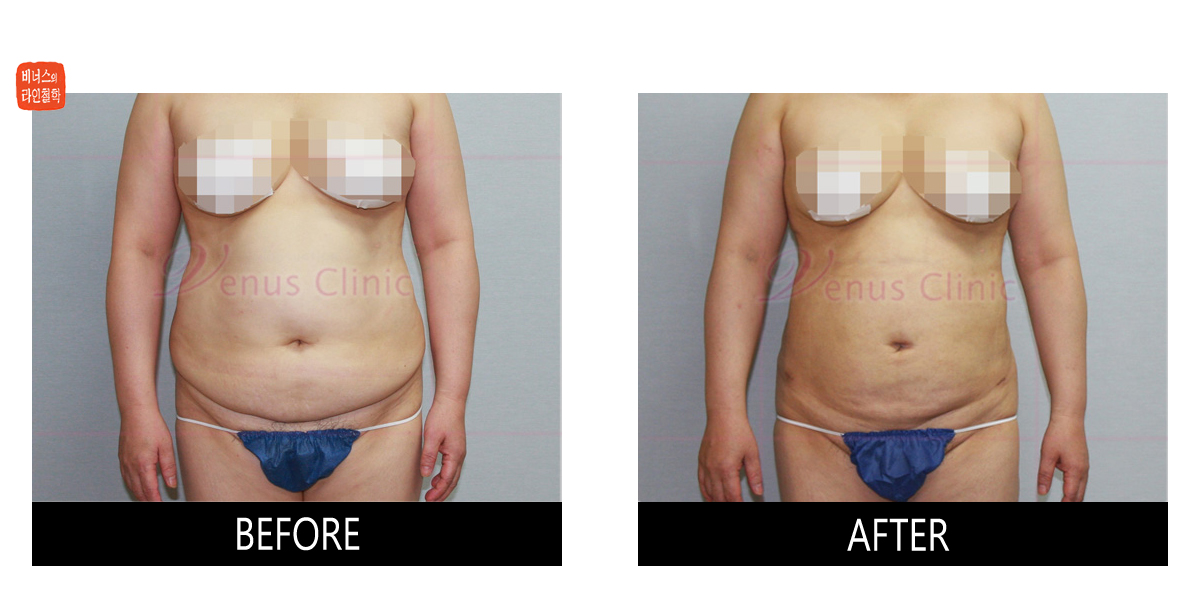
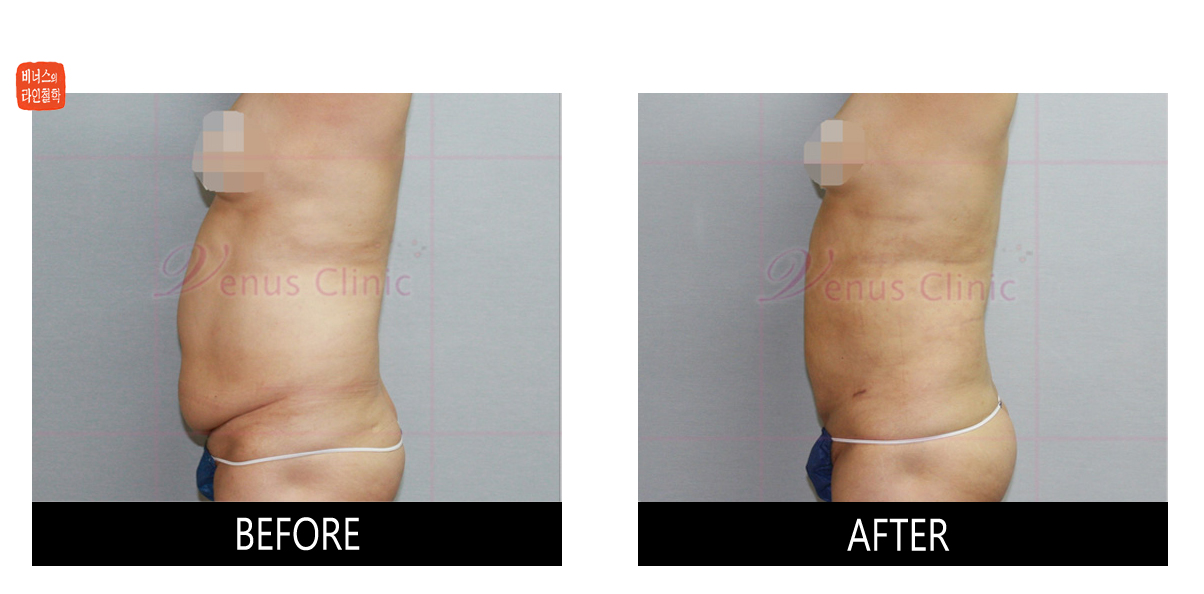
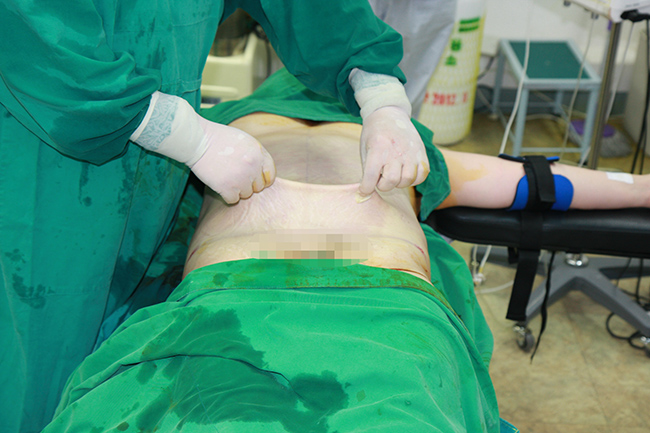
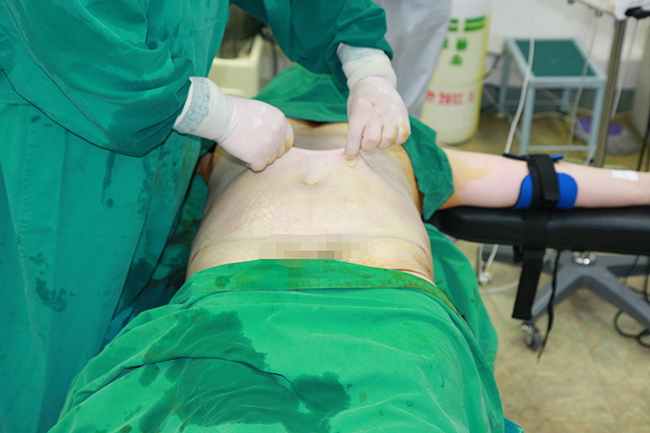
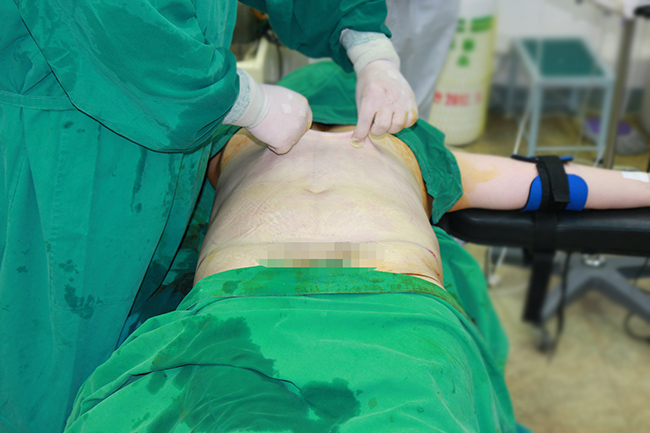
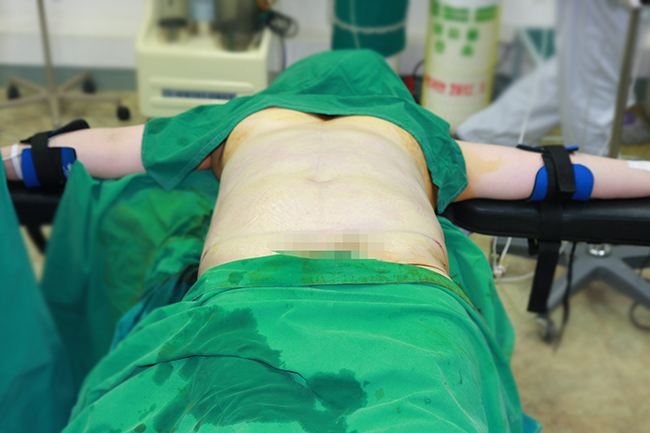
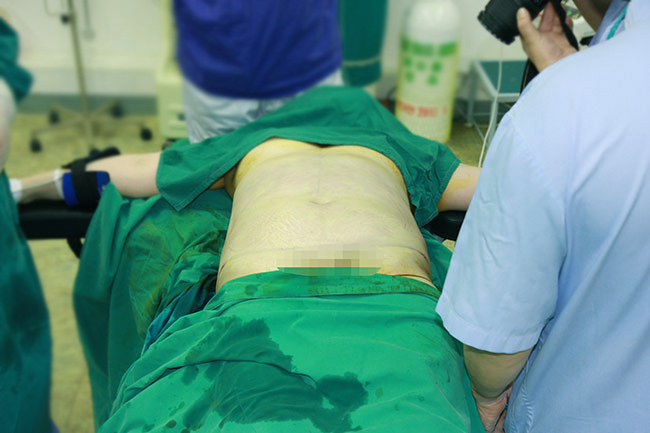
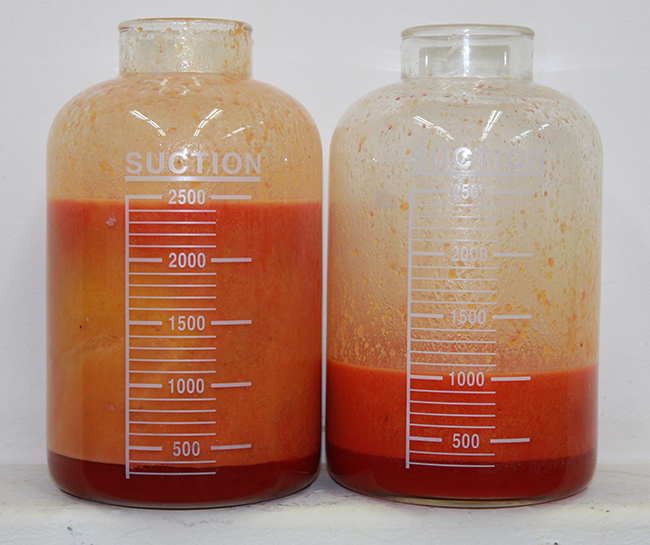
The photos below were taken when we hosted a doctor from overseas for a demonstration at Venus Clinic. These are before-and-after liposuction photos in which 2800 ml of pure fat was removed and the operation took 1 hour 10 minutes. The photo taken right after surgery shows pale, white skin, indicating there was very little bleeding, and the pinch test shows that the fat was removed thoroughly.
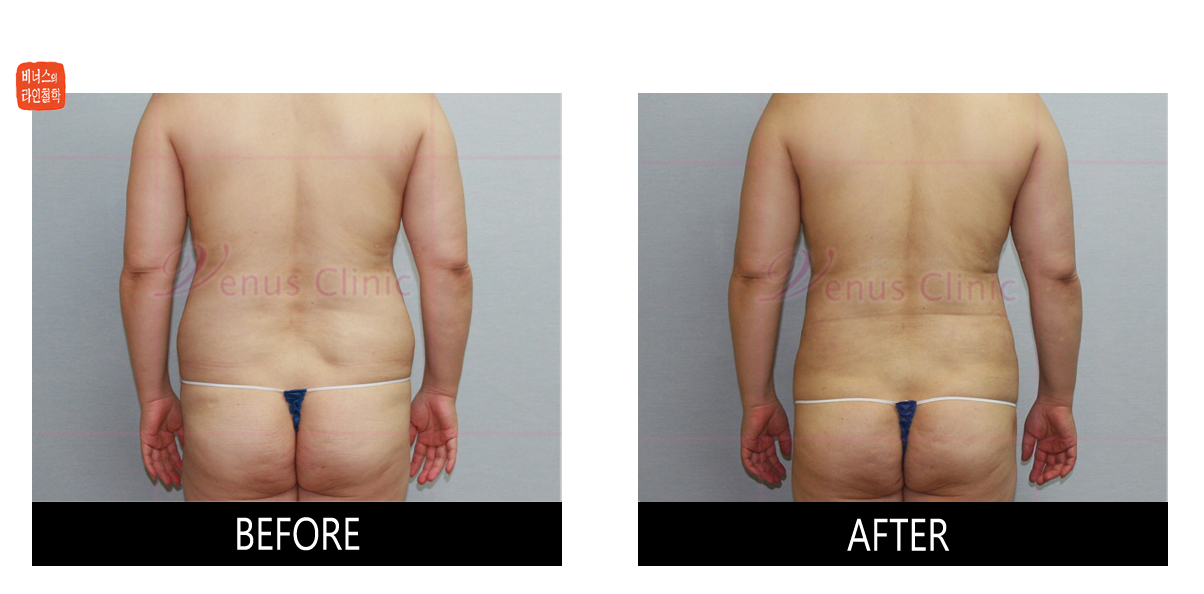
This is true of all surgery, but especially in cosmetic surgery, safety — never putting the patient's life at risk — must come first. Then the surgery should produce a better aesthetic result than before, and finally it should be comfortable and easy for the patient. I believe that is what makes a good surgery, and doctors strive to perform surgery like that.
The photos below show the pinch test performed after surgery to check whether fat was removed evenly and thoroughly.
Further reading:
A liposuction surgeon has to sweat a lot.
[ Dr. Jung, Director, Venus Clinic }