Bruising and Blood Loss Before and After Liposuction [Venus Clinic Study]
During liposuction consultations, we often hear questions like, "Don't you bleed a lot during surgery?" or "I heard you get terrible dark bruises and suffer for quite a while." Since the surgery removes fat from the body, it is natural to worry that a lot of blood will come out with it and that recovery will take a long time.
Today I will explain why bleeding and bruising are relatively low in tumescent liposuction, and show you, with the actual numbers, a study presented at a medical conference by Dr. Won-Ho Jeong, Representative Director of Venus Clinic: the results of measuring actual blood loss with blood tests taken before surgery and one week after surgery. I will also explain, with the supporting evidence, what we do during and after surgery to reduce bruising and bleeding.

Why Does Tumescent Liposuction Cause Less Bleeding?
The word "tumescent" means "swollen and firm." Before liposuction, we infuse tumescent fluid into the fat layer, about two to three times the volume to be removed, so that the fat layer is fully swollen. This fluid contains a local anesthetic together with a medication that constricts blood vessels, so the infused area becomes swollen and firm and the skin turns pale. Because the fat is suctioned while the fat layer is numbed and the blood vessels are constricted, pain and bleeding can be greatly reduced. [6]
The illustration below shows, step by step, how the fat layer changes as tumescent fluid is infused. The far left shows the skin and fat layer before infusion. As in the second image, the fluid fills the fat layer starting from the deep side, and as in the third image, once enough fluid has been infused, the spaces between the fat lobules open up with fluid and the fat layer becomes at its most swollen and firm. This is the "tumescent" state. The last image shows the fluid having spread slightly into the surrounding tissue so the swelling has eased a little, which is the right time to begin liposuction. You can see that the skin layer and the muscle fascia below stay the same, and only the thickness of the fat layer changes.
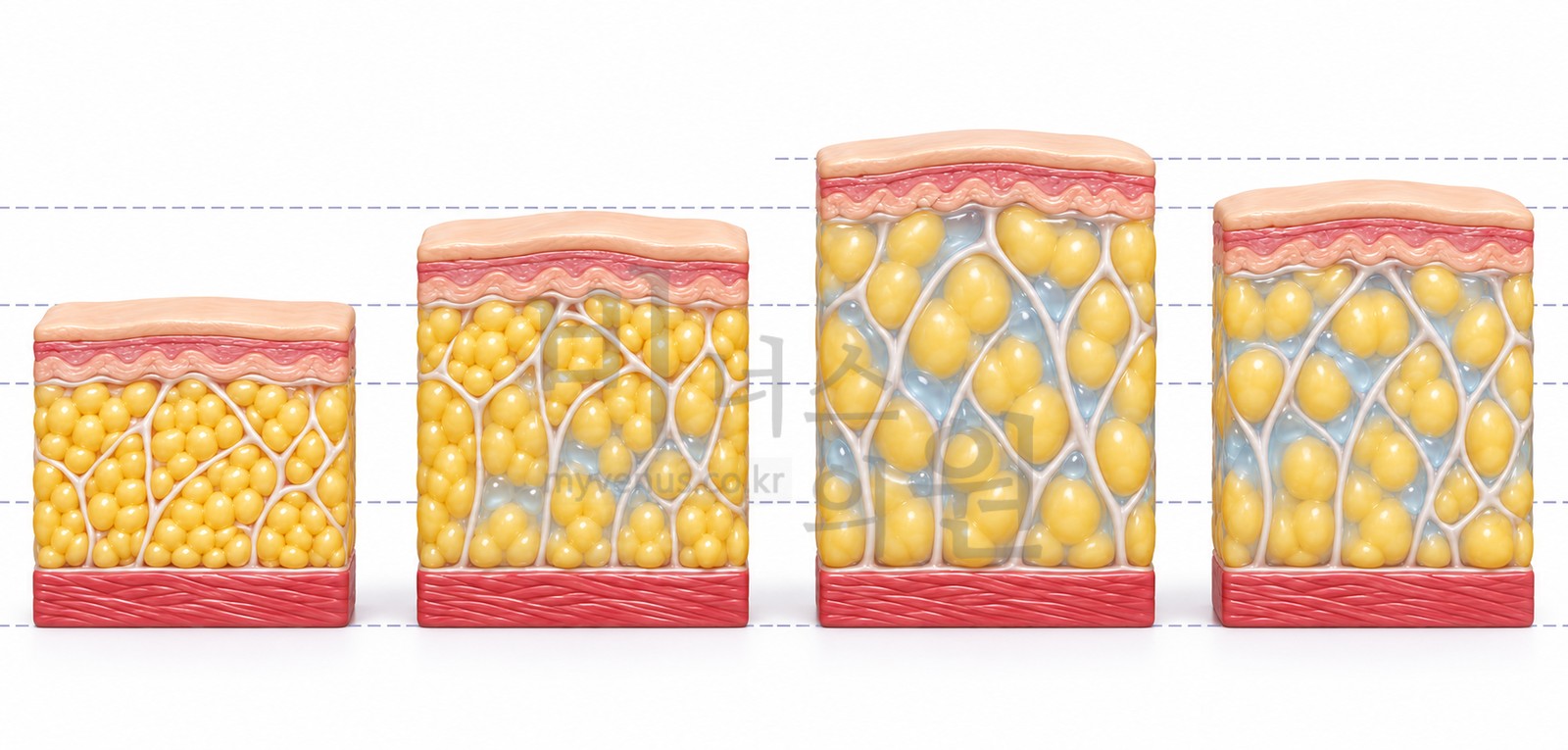
Since Klein introduced the tumescent technique in 1987, bleeding in liposuction has decreased greatly, and tumescent liposuction has now become the standard method of liposuction. [1][2]

The Suctioned Fat Is Yellow
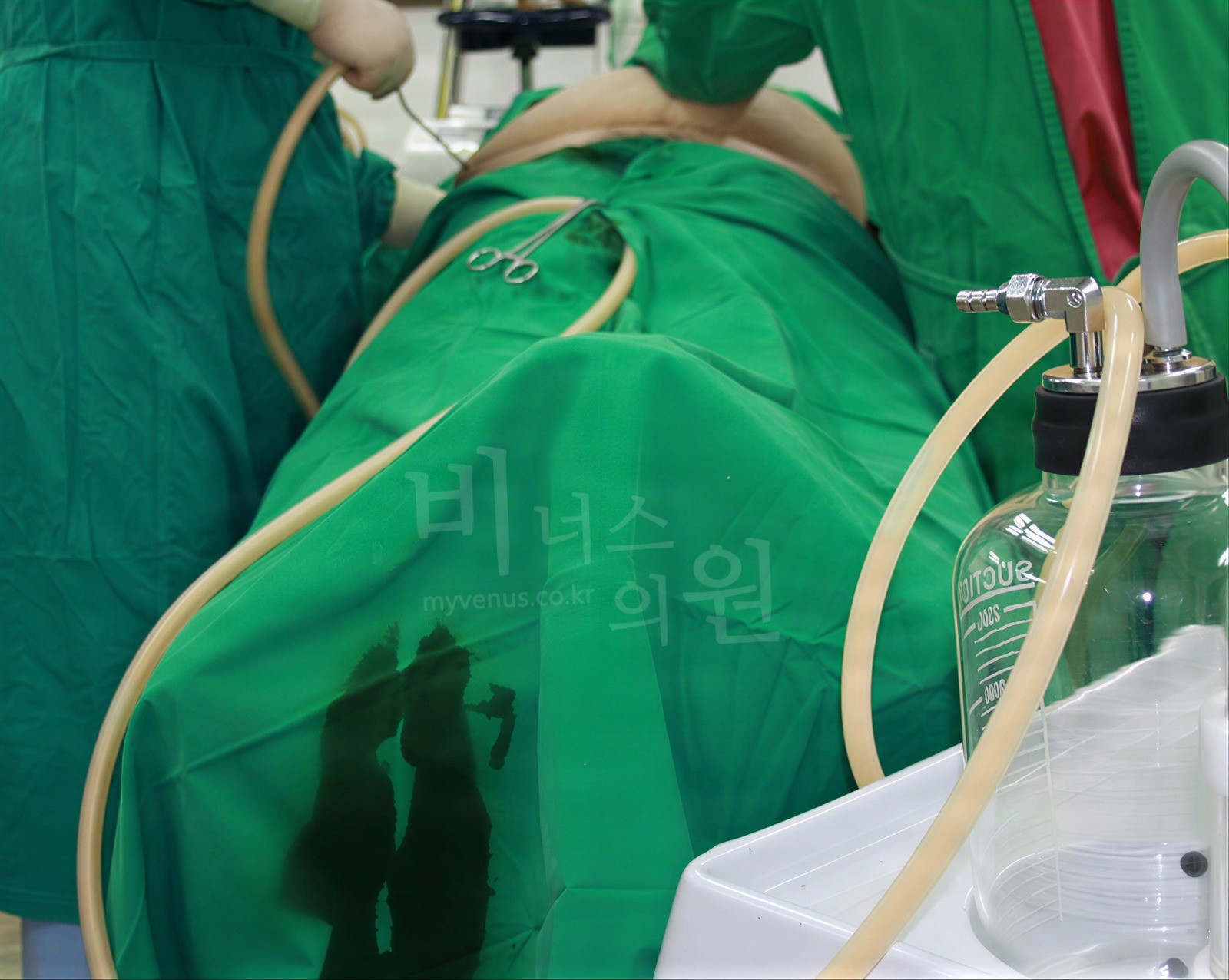
The photo below shows fat leaving the body through the suction tube during surgery and flowing along the tube into the suction bottle. What passes through the tube is mostly yellow fat and tumescent fluid.
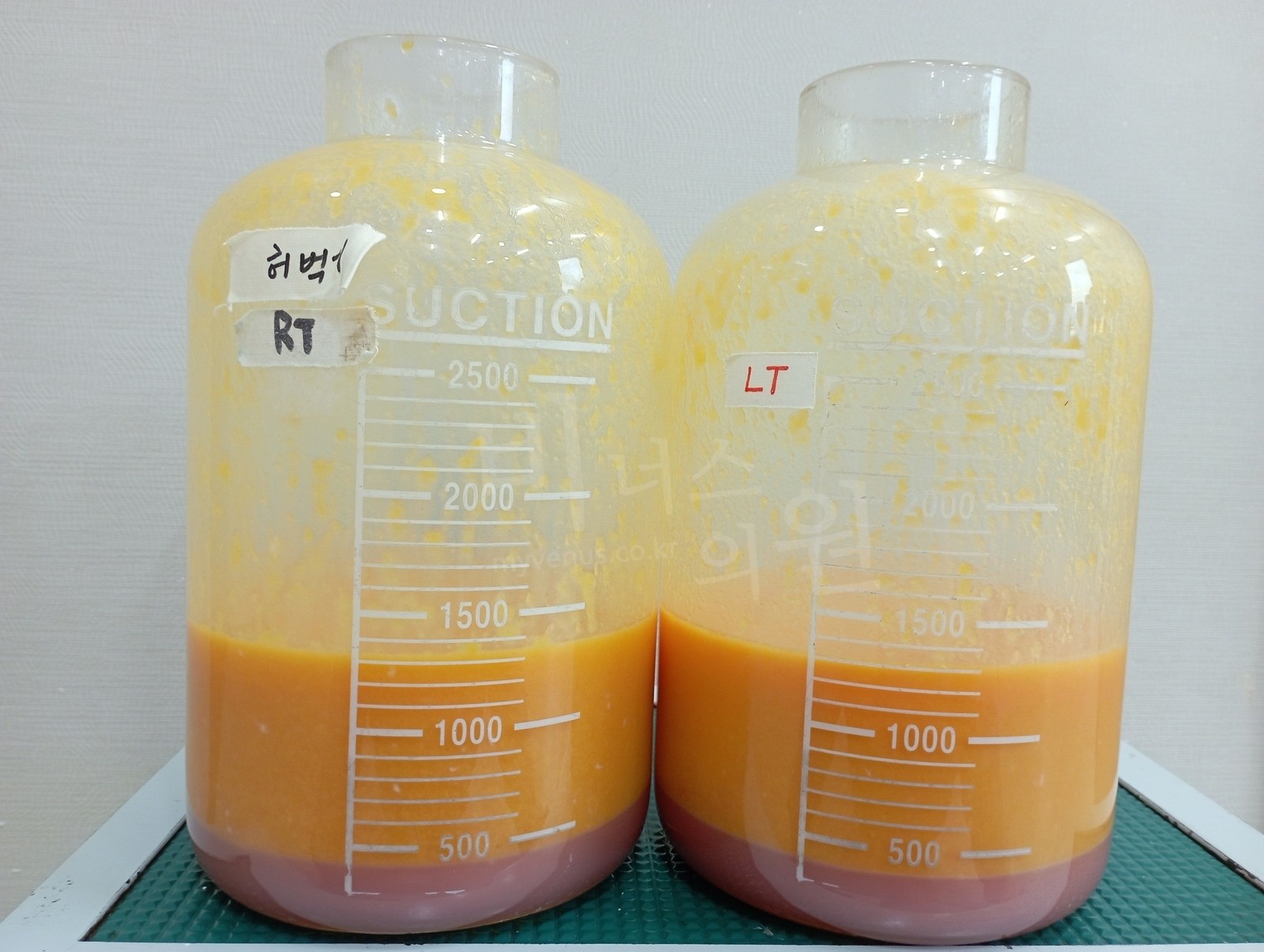
The next photo shows bottles containing fat suctioned from both thighs. Over time, the aspirate in the bottle separates into two layers. The yellow upper layer is pure fat, and the red lower layer is tumescent fluid suctioned along with the fat. The lower layer looks red because the fluid contains a small amount of blood; the whole red layer is not blood. Klein's textbook also describes fat removed by tumescent liposuction as "yellow, without blood mixed in," and the lower layer as "anesthetic fluid slightly mixed with blood." [2]
Blood Tests Are Needed to See Bleeding Inside the Body
In tumescent liposuction, the blood that comes out in the aspirate has been reported to be about 1–4% of the volume of pure fat removed. [6] However, bleeding does not leave the body only through the aspirate. Even after surgery, small amounts of bleeding can occur within the tissue where fat was removed, and there are reports estimating that actual blood loss is about twice the amount that can be measured in the aspirate. [1][5] So you cannot say bleeding is low just by looking at the color of the aspirate; blood test values before and after surgery must be compared to estimate total blood loss in the body.
Venus Clinic Study: Blood Tests One Week After Surgery
For this reason, we performed blood tests before and after liposuction to examine how much blood was actually lost. This study, in which Dr. Won-Ho Jeong, Representative Director of Venus Clinic, took part, was presented at Cosmetex 2011 in March 2011. [1]

How Was the Study Done?
The study included 49 cases of tumescent liposuction performed in 2010. To exclude small-volume procedures, only cases in which 1,000 mL or more of pure fat was suctioned were included. Venous blood was drawn before and after surgery, and hemoglobin (Hb) and hematocrit (Hct, the proportion of red blood cells in the blood) were compared.
| Item | Details |
|---|---|
| Subjects | 49 cases of tumescent liposuction (2010) |
| Suction volume | Only cases with 1,000 mL or more of pure fat (mean 1,564 mL) |
| Blood sampling | Once before surgery + once after surgery, on day 8.2 on average (days 6–10) |
| Values measured | Hemoglobin (Hb) · hematocrit (Hct) · estimated blood loss relative to allowable blood loss (EBL/ABL) |
The post-operative blood test was done about one week later rather than the day after surgery in order to obtain values reflecting not only the blood that came out in the aspirate during surgery but also any bleeding that occurred within the tissue after surgery.
Hemoglobin and Hematocrit Decreased by About 9%
The averages for the 49 cases are summarized below. Both hemoglobin and hematocrit decreased by about 9% compared with before surgery.
| Item | Before surgery | After surgery (mean day 8.2) | Decrease |
|---|---|---|---|
| Hemoglobin (Hb) | 13.2 g/dL | 12.0 g/dL | About 9% (1.2 g/dL, 9.1%) |
| Hematocrit (Hct) | 41.3% | 37.5% | About 9% (3.8 percentage points, 9.2%) |
Here is the calculation. Hemoglobin fell from 13.2 to 12.0, a decrease of 1.2 g/dL, so 1.2 ÷ 13.2 = about 0.091, or a 9.1% decrease. Hematocrit fell from 41.3% to 37.5%, a decrease of 3.8 percentage points, so 3.8 ÷ 41.3 = about 0.092, or a 9.2% decrease. In other words, even one week after suctioning more than 1.5 L of pure fat on average, blood values remained at over 90% of their pre-operative levels.
About One-Third of the Allowable Blood Loss: In the Study, Blood Loss Was Within the Safe Range
In the study, the point at which hematocrit drops to 30% was set as "the limit beyond which further bleeding could be dangerous." The amount of blood that can be lost before reaching that point was called the allowable blood loss (ABL), and the actual blood loss calculated from blood tests was called the estimated blood loss (EBL). A ratio (EBL/ABL) of 1 means the limit has been reached, and a ratio below 1 means there is still a margin. The mean EBL/ABL for the 49 cases was 0.36 ± 0.27, meaning actual blood loss was about one-third of the allowable blood loss. The study concluded that blood loss was within the safe range. [1]
Comparison With Other Studies
There are several studies on how much hematocrit falls after liposuction, and reports have been summarized showing a drop of about 0.7–1.7 in hematocrit per liter of aspirate. [3] In our study, the aspirate (fat plus fluid) averaged 2,680 mL and hematocrit fell by 3.8 percentage points, so 3.8 ÷ 2.68 = about 1.4 per liter of aspirate, which is within the reported range.
Klein's textbook also explains that when a large amount of tumescent fluid is infused, the blood can become diluted and hematocrit can fall. [2] Therefore, not all of the post-operative drop in hematocrit may be due to bleeding. Because the study counted the entire decrease as bleeding when calculating blood loss, actual bleeding may have been even lower.
This Is Not a Surgery With "No" Bleeding
The figure of about 9% means bleeding is low, not that there is no bleeding. In the same study, 1 of the 49 cases had an EBL/ABL above 1. This patient already had anemia before surgery (hemoglobin 9.8 g/dL), so the amount of blood loss she could tolerate was small to begin with; a transfusion was not needed. Based on this, the study recommended a pre-operative hematocrit of 38% or higher. [1] That is why it is important to check for anemia with a blood test before liposuction. In addition, when the suction volume is much larger than in this study (5,000 mL or more of aspirate), there is a report that hemoglobin fell by 3.8 g/dL and hematocrit by 12% after one week [4], so the wider the surgical area and the larger the suction volume, the more important bleeding management becomes.
How Venus Clinic Works to Reduce Bruising and Bleeding
The tumescent technique itself reduces bleeding, but bruising and bleeding also depend on how the surgery is performed and how post-operative care is managed. At Venus Clinic, we use the following methods together.
Tumescent Anesthesia and Efficient Surgery
The vessel-constricting effect of tumescent fluid weakens over time. In the study above, it was observed that about 1.5–2 hours after infusion, the pale skin became blotchy and red and more blood was mixed into the aspirate, so surgery was performed to finish suctioning before then. The mean operating time in the study was about 103 minutes. [1] There are reports that shorter operating times are associated with less bleeding, and longer surgery increases the risk of complications such as blood clots [1][6], so we place importance on completing the planned surgical area without rushing but also without delay.
Micro Handmade Liposuction
Liposuction at Venus Clinic is micro handmade liposuction: after the fat layer is swollen with tumescent fluid, the doctor carefully moves a thin suction tube called a microcannula by hand feel to suction the fat tissue. [6] A thinner cannula makes a narrower path with each pass, which can reduce damage to the surrounding tissue, and Klein's textbook also explains that moving the cannula along straight paths through the incision helps reduce friction and damage to the surrounding tissue. [2] However, in very large-volume surgery a thin cannula clogs easily, so we choose cannulas suited to each area and the amount of fat, for example by also using somewhat thicker cannulas.
Open Drainage: We Do Not Suture the Incisions
Using a thin cannula also makes the incisions where the cannula enters very small. We leave these small incisions open without stitching them so that the tumescent fluid remaining in the body after surgery can drain out naturally. This is called open drainage. According to Klein's textbook, in tumescent liposuction using microcannulas the incisions are so small that recovery is better when they are not sutured; open drainage helps speed recovery by shortening the period of bruising, swelling, and tenderness; and with open drainage and appropriate compression, seromas (collections of lymphatic fluid) and hematomas are uncommon. [2]
For this reason, reddish fluid may seep from the incisions right after surgery. Like the lower layer in the bottle you saw earlier, this is tumescent fluid mixed with a little blood draining out, and it is a normal part of recovery. The textbook explains that this drainage usually stops within 1–3 days. [2]

Bimodal Compression: Firm at First, Then Light
After surgery, the treated area is compressed with a compression garment. At Venus Clinic, we use bimodal compression as described in Klein's textbook, that is, compression divided into two stages. [2]
① Firm compression: Relatively firm compression is applied from right after surgery while drainage continues, and for up to 24 hours after drainage stops.
② Light compression: After that, compression is switched to a lighter level.
Why Compression Helps Reduce Bruising
When the subcutaneous tissue is compressed evenly and gently after liposuction, the tissue spaces in the dermis of the skin narrow. Klein's textbook explains that compressing the dermis in this way keeps red blood cells from seeping up toward the skin surface, which reduces bruising. On the other hand, continuing firm compression for too long can press on the subcutaneous lymphatic vessels and interfere with the absorption of lymphatic fluid, so compression is switched to a lighter level after a certain period. Klein states that he developed this method by comparing post-operative swelling, bruising, tenderness, comfort, and other factors. [2]
Benefits of Less Bruising and Bleeding
Bruising and bleeding are not just a cosmetic nuisance. Surgery with less bruising and bleeding affects recovery as a whole.
It Helps Shorten Recovery
Bruising, swelling, and pain after liposuction are natural parts of the body's healing process, but the more severe they are, the longer it takes to return to daily life. Klein's textbook records that in the past, when care relied on firm compression alone, bruising was widespread, swelling and tenderness lasted a long time, and return to daily life was greatly delayed. Conversely, when less blood and fluid collect in the tissue, it helps reduce bruising, swelling, and pain and speed recovery. [2]
It Helps Reduce Complications
There are reports that serious complications such as blood clots increase with greater intraoperative bleeding and longer operating times. [1] In addition, hematomas, in which blood collects under the skin, are rare, but when they occur they can interfere with blood supply to the skin. [6] This is why reducing bleeding and applying proper post-operative compression help reduce such complications.
The Degree of Bruising and Swelling Varies From Person to Person
Even with surgery that causes little bleeding, it does not mean there will be no bruising or swelling at all. Swelling and bruising usually last about 1–3 weeks, and numbness or heightened sensitivity of the skin may continue for several months. [6] Even with the same surgical method, the degree of bruising varies depending on your constitution, medications you are taking, the area and extent of surgery, and how well you wear the compression garment after surgery. Following the compression and care instructions we give you after surgery helps reduce bruising and swelling.
Before-and-After Photos
Below are photos of one patient who had liposuction of the entire arms and the front and back of the armpits at Venus Clinic, shown from the front, back, and side. All post-operative photos were taken one week after surgery, which is almost the same timing as the post-operative blood tests in the study described above (mean day 8.2).
The most notable point in these photos is that even though they were taken only one week after surgery, there is almost no visible dark bruising or signs of bleeding anywhere on the arms or armpits. In a sense, the study finding that hemoglobin decreased by only about 9% on blood tests can also be seen on the visible skin. However, the degree of bruising varies by individual.
Swelling still remains at this stage, so these are not the final results, and the contours will change somewhat more as the swelling subsides.
Front View
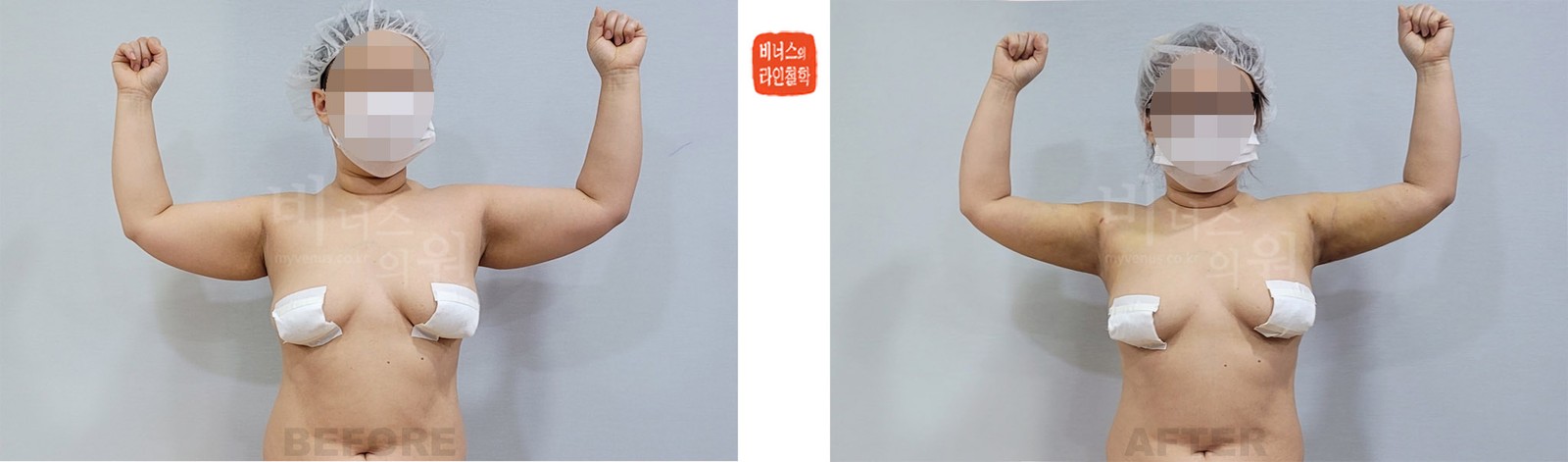
Liposuction of the entire arms and the front and back of the armpits. In this front view with both arms raised, sagging volume under the upper arms was prominent before surgery, and at one week after surgery the volume of the upper arms and the front of the armpits appears reduced. Even at one week after surgery, almost no dark bruising or signs of bleeding are visible on the inner upper arms or the front of the armpits.
| Information on the Posted Liposuction Before-and-After Photos | |||
|---|---|---|---|
| - Same person | Surgery performed at Venus Clinic; same person | - Date taken | Taken around 2025; comparison at 1 week after surgery |
| - Same conditions | Edited to the same posture and size as closely as possible | - Side effects | https://en.myvenus.co.kr/should_know/38861 |
Back View
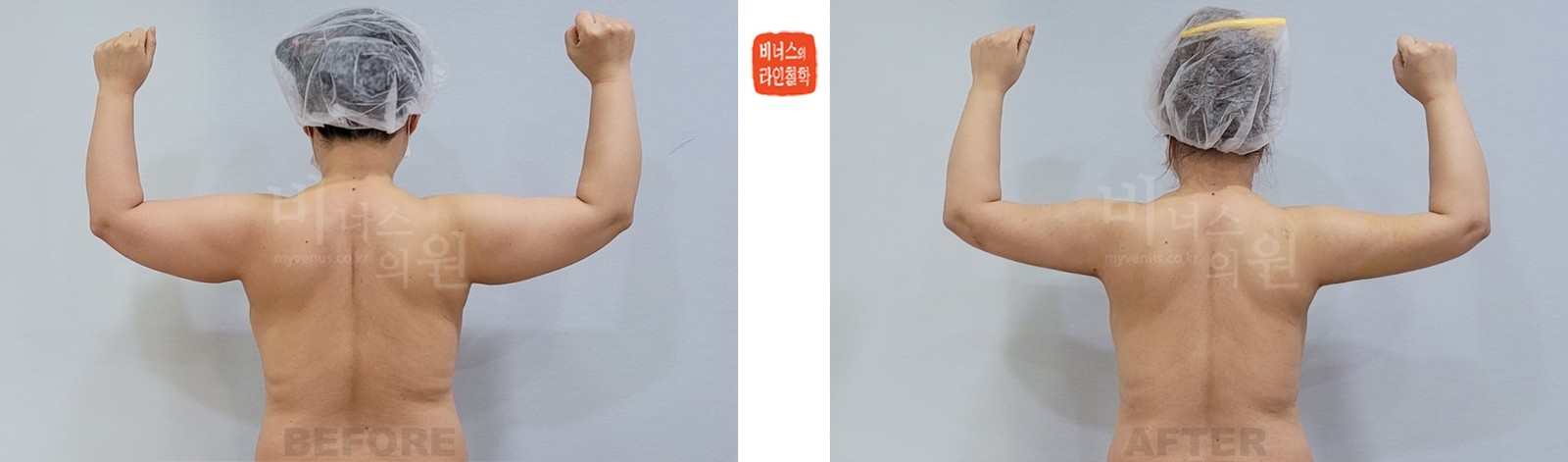
Liposuction of the entire arms and the front and back of the armpits. In this back view of the same patient, at one week after surgery the volume of the back of the upper arms and the back of the armpits is reduced, and the line from the arms to the back looks more refined. Almost no bruising or signs of bleeding are visible on the treated back of the upper arms and back of the armpits either.
| Information on the Posted Liposuction Before-and-After Photos | |||
|---|---|---|---|
| - Same person | Surgery performed at Venus Clinic; same person | - Date taken | Taken around 2025; comparison at 1 week after surgery |
| - Same conditions | Edited to the same posture and size as closely as possible | - Side effects | https://en.myvenus.co.kr/should_know/38861 |
Side View
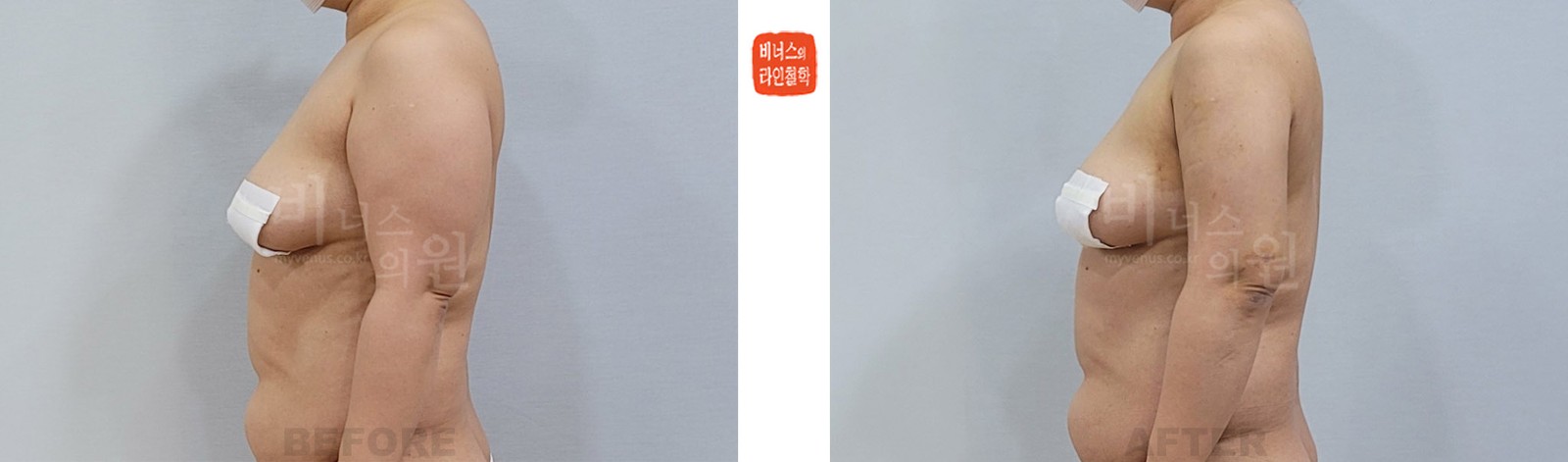
Liposuction of the entire arms and the front and back of the armpits. In this side view of the same patient, the thickness of the upper arm seen from the side appears reduced at one week after surgery. Even from the side, almost no bruising or signs of bleeding are visible on the skin.
| Information on the Posted Liposuction Before-and-After Photos | |||
|---|---|---|---|
| - Same person | Surgery performed at Venus Clinic; same person | - Date taken | Taken around 2025; comparison at 1 week after surgery |
| - Same conditions | Edited to the same posture and size as closely as possible | - Side effects | https://en.myvenus.co.kr/should_know/38861 |
In Closing
Tumescent liposuction is a method in which the fat layer is swollen with fluid and numbed before the fat is removed, and it is associated with relatively little bruising and bleeding. In our study as well, in 49 cases in which 1,000 mL or more of pure fat was suctioned, hemoglobin and hematocrit one week after surgery were about 9% lower than before surgery, and blood loss was about one-third of the allowable blood loss, within the safe range. In the actual photos taken one week after surgery, almost no dark bruising or signs of bleeding were visible. At Venus Clinic, we add micro handmade liposuction, which reduces tissue damage, together with post-operative open drainage and bimodal compression, and we work to reduce bruising and bleeding and support recovery.
References
[1] Kim P, Jeong WH, Kim HS, Ahn JT. Analysis of perioperative blood loss following tumescent liposuction when lipoaspiration was performed without any delay after the tumescent infiltration. Presented at Cosmetex 2011 (March 2011, Dr Won-Ho Jeong · Slim Korea).
[2] Klein JA. Tumescent Technique. Ch14 Perioperative Bleeding Disorders · Ch23 Tumescent Formulations · Ch28 Surgical Technique: Microcannular Tumescent Liposuction · Ch30 Postliposuction Care: Open Drainage and Bimodal Compression.
[3] Choudry UH, Hyza P, Lane J, Petty P. The importance of preoperative hemoglobin evaluation in large volume liposuction: lessons learned from our 15-year experience. Ann Plast Surg. 2008;61(3):230-4.
[4] Cárdenas-Camarena L, Tobar-Losada A, Lacouture AM. Large-volume circumferential liposuction with tumescent technique: a sure and viable procedure. Plast Reconstr Surg. 1999;104:1887-1899. (cited in [1])
[5] Courtiss EH, Choucair RJ, Donelan MB. Large-volume suction lipectomy: an analysis of 108 patients. Plast Reconstr Surg. 1992;89:1068. (cited in [1])
[6] Venus Clinic materials: Doctor's Column 20198 (operating time and bleeding) · "Tumescent Liposuction" (7068) · "Advantages of Liposuction at Venus Clinic" (7486) · "Complications of Liposuction" (7076) · "Complications and Side Effects of Liposuction" (251242)
References: What Is Tumescent Liposuction? Microcannula Micro-Liposuction Complications and Side Effects of Liposuction
Dr. Hakjun Kim, Director, Venus Clinic