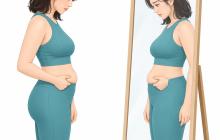
Y-Zone Liposuction for Disharmonious Obesity — Mons Pubis, Pelvis, and Inner Thighs
In the consultation room, I often hear things like, "I had abdominal liposuction years ago, and after gaining a little weight my belly stayed the same, but the area just below it started to bulge," or "When I wear underwear or a swimsuit, the front stands out and it bothers me." Because this is an area that is hard to bring up, many people worry about it alone for a long time before they come in.
In this article, I will use the concept of disharmonious obesity to explain why the so-called Y-zone — the pubic mound (mons pubis), the front of the pelvis, and the inner thighs that connect to them — can come to stand out after abdominal liposuction, and then describe how we plan liposuction of this area at Venus Clinic.
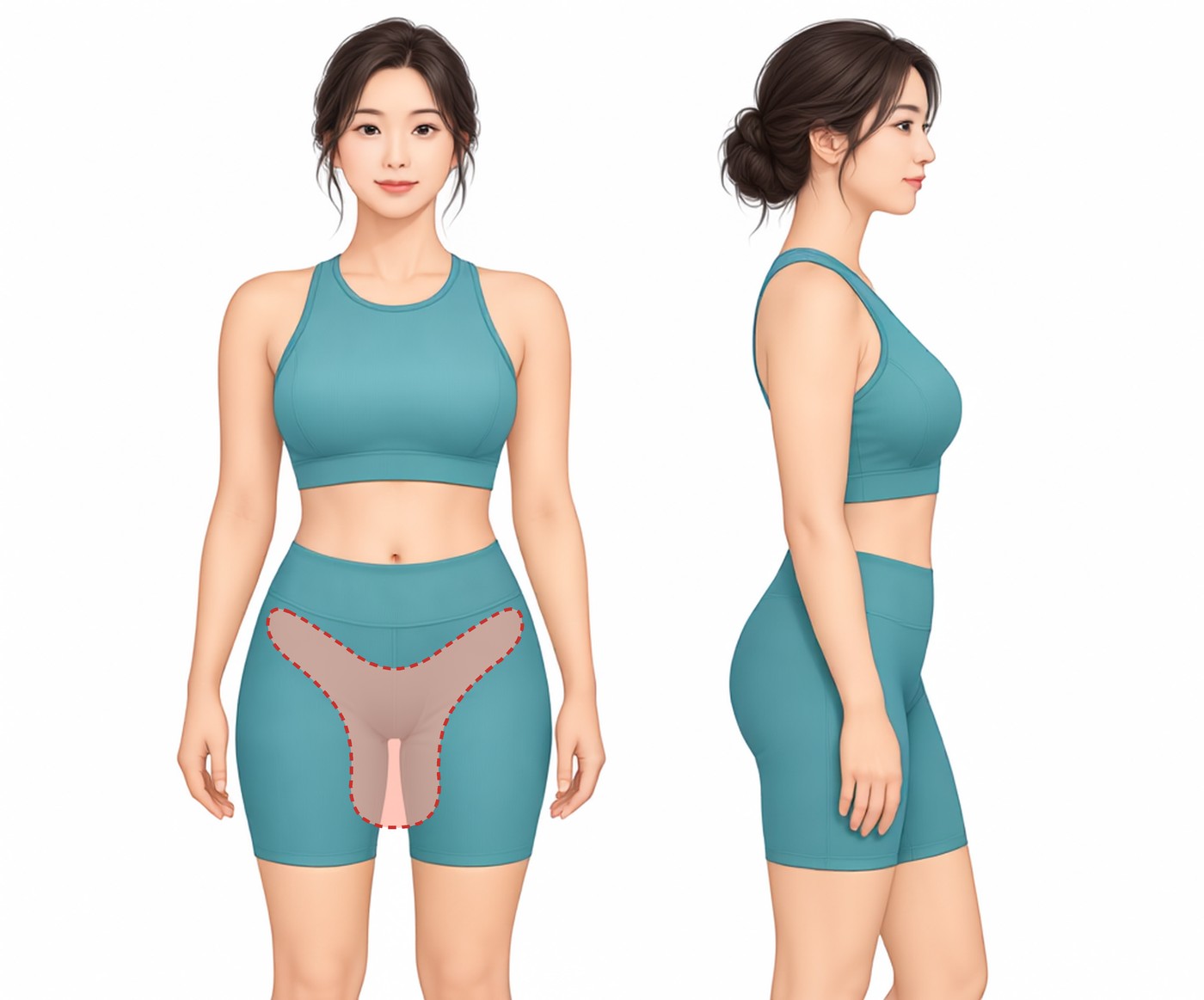
Where Is the Y-Zone?
The Y-zone is the area that runs from the mons pubis below the lower abdomen, through the groin, to the upper inner thighs on both sides. These three areas are not separate places; they form one continuous contour, so we also look at them together when planning surgery.
The Pubic Area — Mons Pubis
The pubic area discussed here does not mean the external genitalia themselves. It means the mons pubis, the layer of fat that covers the front of the pubic bone. Because it connects directly to the lower abdomen, if this area remains thick after the lower abdomen has become flat, the difference in height between the two areas becomes noticeable.
The Front of the Pelvis and the Groin
This is the crease where the lower abdomen meets the thighs. Here we need to check not only the amount of fat but also the direction in which the skin folds and any contour differences left by previous abdominal surgery or liposuction.
The Upper Inner Thighs
This is the area that continues from the groin to the inside of both thighs. When fat gathers here, the volume of the inner thighs is emphasized when the legs are brought together, and the contour shows at the edge of underwear or a swimsuit.
Why Does the Y-Zone Stand Out After Abdominal Liposuction? — Disharmonious Obesity
The early complications of liposuction are well described in textbooks and many papers, but the changes that appear over the long term are relatively less well known. One of them is disharmonious obesity. The liposuction textbook edited by Shiffman and Di Giuseppe, Liposuction: Principles and Practice, devotes all of Chapter 51 to this topic. Its authors, Fulton and Kerendian, explain that when some of the fat cells of the body are removed, the other remaining fat cells may take over the burden of fat storage, and as a result unattractive areas may bulge[1]. The term refers to a state in which the overall balance and proportion of the body shape have been lost as weight is gained after liposuction.
Weight Is Gained Where Fat Cells Remain
Liposuction is not a surgery that shrinks fat cells; it is a surgery that reduces the number of fat cells. So when weight is gained after surgery, less fat accumulates in the treated area, and relatively more accumulates in the surrounding areas where the fat cells remain as they were. The textbook summarizes this phenomenon as a selective fat hypertrophy that occurs as the number of fat cells in the liposuctioned areas decreases and fat accumulation increases in the remaining fat areas[1].
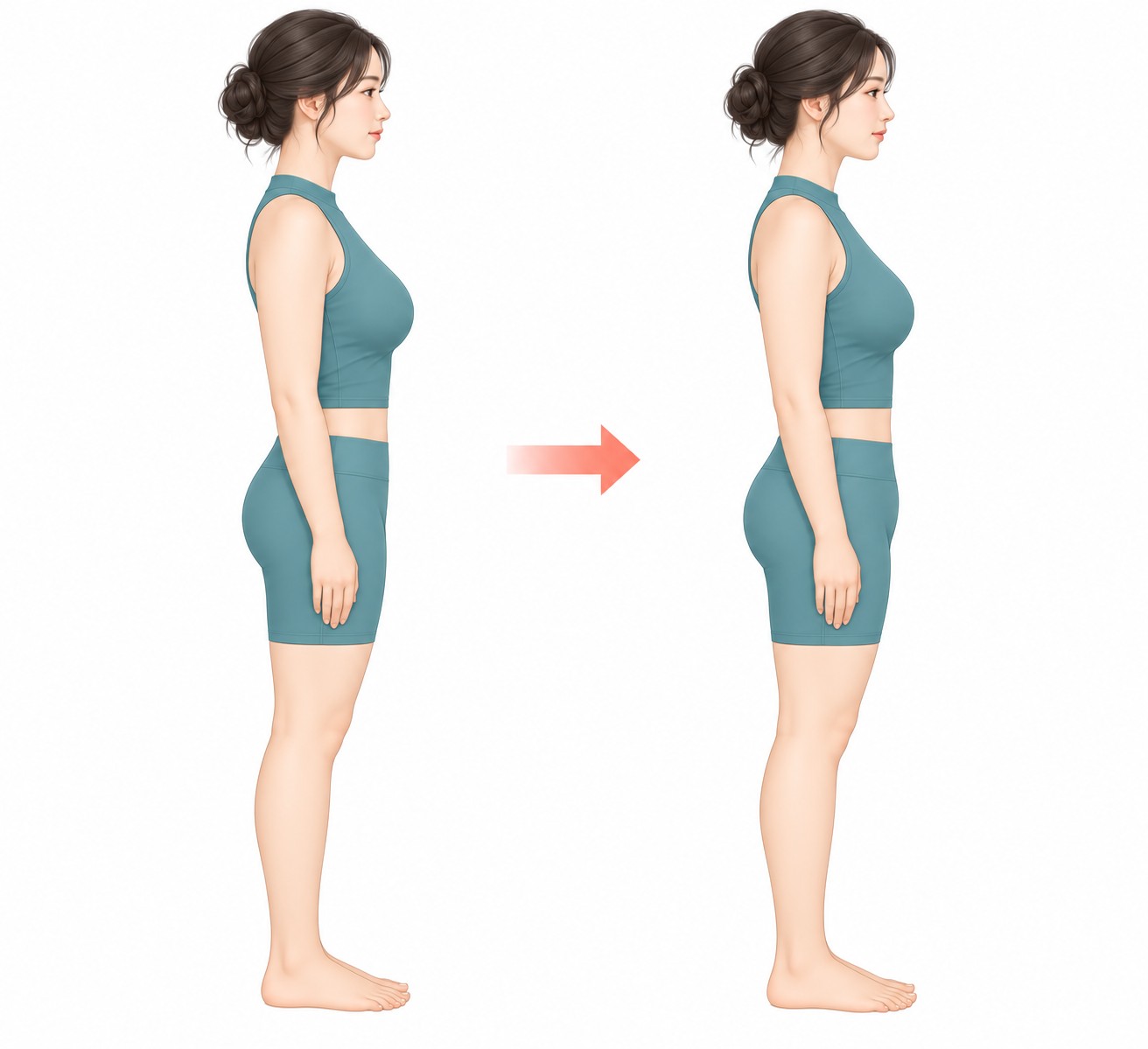
When someone who has had abdominal liposuction later gains weight, the belly stays relatively flat, but fat is added to the pubic area (mons pubis) and the pelvic area, where the fat cells remain. Because the area just below a flat belly becomes rounded, it can look protruding in underwear, almost like a male contour, and the overall balance of the body shape becomes awkward. In my view, this is the most common reason people seek Y-zone liposuction.
Survey Results Reported in the Textbook
Fulton and Kerendian re-examined the records and photographs of 125 people who had undergone liposuction over the preceding 5 years and found that in 15 of them (12%), fat had increased markedly in areas that had not been treated or had been treated less. There were 31 such areas in total, an average of two per person. The breasts, upper back, and flanks were the most common, but the authors write that no area was an exception[1].
| Area where fat increased after liposuction | Number of areas | Area where fat increased after liposuction | Number of areas |
|---|---|---|---|
| Breasts | 6 | Lower flanks | 5 |
| Upper back | 4 | Upper arms | 3 |
| Upper abdomen | 3 | Mesenteric (visceral) fat | 3 |
| Under the chin | 2 | Between the thighs | 2 |
| Knees | 2 | Ankles | 1 |
The mons pubis is not counted separately in this table. Within the range I was able to search, I could not find a study that looked at the mons pubis alone. However, the mons pubis lies right at the lower border of abdominal liposuction and is easily left out of the surgical area, and I believe it is an area to which the textbook explanation — that any untreated fat area can increase — applies directly.
Why Does More Fat Accumulate in the Remaining Areas?
The explanations proposed so far fall into three broad groups.
First, the body responds to defend its fat stores. In animal experiments, when part of the fat was removed, it was made up not by regrowth of the removed tissue but by enlargement of the remaining fat depots[2]. A randomized controlled study in humans showed a similar result. Hernandez and colleagues divided 32 non-obese women into a liposuction group (14) and a control group (18) and followed them for 1 year. The difference in body fat percentage that had appeared 6 weeks after surgery was no longer statistically significant after 1 year; the treated thighs remained reduced, but fat had re-accumulated in the abdominal area[3].
Second, the influence of hormones. The explanation is that when fat with hormone receptors, such as the outer flank, is removed, the amount of female hormone in the blood stays the same, so the receptors of the remaining fat cells, such as those in the breasts, are affected relatively more[1]. In fact, Yun and colleagues reported that about one third of 73 people who had liposuction experienced breast enlargement[4], and van der Lei and colleagues reported that the breasts enlarged in 40% of women who had liposuction of the abdomen and flanks, compared with 11% of women who had abdominoplasty[5].
Third, lifestyle. In a randomized study by Benatti and colleagues of 36 women who had abdominal liposuction, the group that did not exercise showed an increase of about 10% in visceral fat after 6 months, whereas this increase did not appear in the group that exercised for 4 months starting 2 months after surgery[6]. The textbook also states that this possibility should be explained before surgery and that the need for weight control and exercise should be emphasized[1].
Points to Keep in Mind When Reading These Studies
The studies above involved from several dozen to a little over a hundred participants and mainly looked at changes in breast, abdominal, and visceral fat. They do not mean that everyone who has liposuction develops disharmonious obesity; please understand it as a change that tends to appear when weight is gained after surgery. Results differ from person to person.
Disharmonious Obesity Also Appears in Other Areas
Disharmonious obesity is not a phenomenon limited to the Y-zone. The area that stands out differs depending on which area was treated.
| Area treated first | Area that becomes relatively prominent when weight is gained |
|---|---|
| Abdomen | Pubic area (mons pubis) and front of the pelvis — the Y-zone |
| Abdomen | Breasts |
| Thighs | Buttocks |
| Breasts (reduction by liposuction) | Abdomen |
References
- Fulton JE Jr, Kerendian F. Disharmonious Obesity Following Liposuction. In: Shiffman MA, Di Giuseppe A, eds. Liposuction: Principles and Practice. Berlin: Springer; 2006. Chapter 51, p.342–346.
- Larson KA, Anderson DB. The effects of lipectomy on remaining adipose tissue depots in the Sprague Dawley rat. Growth. 1978;42(4):469–477.
- Hernandez TL, Kittelson JM, Law CK, et al. Fat redistribution following suction lipectomy: defense of body fat and patterns of restoration. Obesity (Silver Spring). 2011;19(7):1388–1395.
- Yun PL, Bruck M, Felsenfeld L, Katz BE. Breast enlargement observed after power liposuction: a retrospective review. Dermatol Surg. 2003;29(2):165–167.
- van der Lei B, Halbesma GJ, van Nieuwenhoven CA, van Wingerden JJ. Spontaneous breast enlargement following liposuction of the abdominal wall: does a link exist? Plast Reconstr Surg. 2007;119(5):1584–1589.
- Benatti F, Solis M, Artioli G, et al. Liposuction induces a compensatory increase of visceral fat which is effectively counteracted by physical activity: a randomized trial. J Clin Endocrinol Metab. 2012;97(7):2388–2395.
How We Plan Y-Zone Liposuction
Liposuction is not a weight-loss surgery; it is a body contouring surgery that brings the body into balance. The same is true of the Y-zone: the goal is not how much this one area is reduced, but that the line running from the lower abdomen through the mons pubis and the groin to the inner thighs connects naturally.
We View the Abdomen and the Mons Pubis as One Contour
We check the thickness of the fat layer in the previously treated lower abdomen, the fat layer remaining in the mons pubis, and the curve of the groin together, from several directions. For those whose abdominal contour has been left uneven, we sometimes plan revision surgery of the abdomen together with Y-zone surgery. The surgery is performed under tumescent local anesthesia, passing thin microcannulas in several directions and gradually refining the thickness so that the borders do not change abruptly.

Leaving Fat Well Matters More Than Removing a Lot
The mons pubis is a layer of fat lying directly over the pubic bone. If it is suctioned too thin, the bone may be felt beneath the skin, or depressions and surface irregularities of the skin may develop. The inner thigh is also an area where the fat is soft and easily suctioned, and it is known as a place where depressions from over-suctioning readily occur. The textbook likewise recommends suctioning this area conservatively.
Keeping the Remaining Fat Layer Even
At Venus Clinic, our principle is not to remove as much fat as possible, but to match the thickness of the fat layer we leave evenly with the surrounding areas. The result follows the fat layer that is left and the original shape of the bones and muscles, and it differs from person to person.
Some Cases Cannot Be Solved by Liposuction
Liposuction can be considered when the main cause of the protrusion is subcutaneous fat and skin elasticity is adequate. If excess skin or sagging of the mons pubis itself is the main cause, it is difficult to create the contour you want with liposuction alone. In addition, the surgery brings the area to a height "similar" to its surroundings; it is not a surgery that creates a state with no curves at all. I also tell patients in advance that if weight is gained again after surgery, the remaining fat cells enlarge and the balance may change again.
Weight Management Must Go Hand in Hand After Surgery

Disharmonious Obesity Starts With Weight Gain
Disharmonious obesity does not arise because the surgery went wrong; it is a change that appears as weight is gained after surgery. To maintain the surgical result over time, therefore, a good surgical result needs to be accompanied by regular exercise, appropriate dietary control, and healthy lifestyle habits. In the study introduced above as well, the compensatory increase in fat did not appear in those who exercised after surgery[6]. The same applies after Y-zone surgery.
Early Recovery
The mons pubis and the abdomen are areas where bruising and swelling are relatively pronounced in the early period after surgery. The speed of recovery and the final contour differ from person to person depending on skin elasticity, the extent of surgery, and the course of recovery.
Before-and-After Photos
Below are photos of three people who had Y-zone liposuction at Venus Clinic. All of the after photos were taken 1 week after surgery. Because swelling and bruising are still present at this stage, please view them not as the final result but as the appearance in early recovery.
Case 1
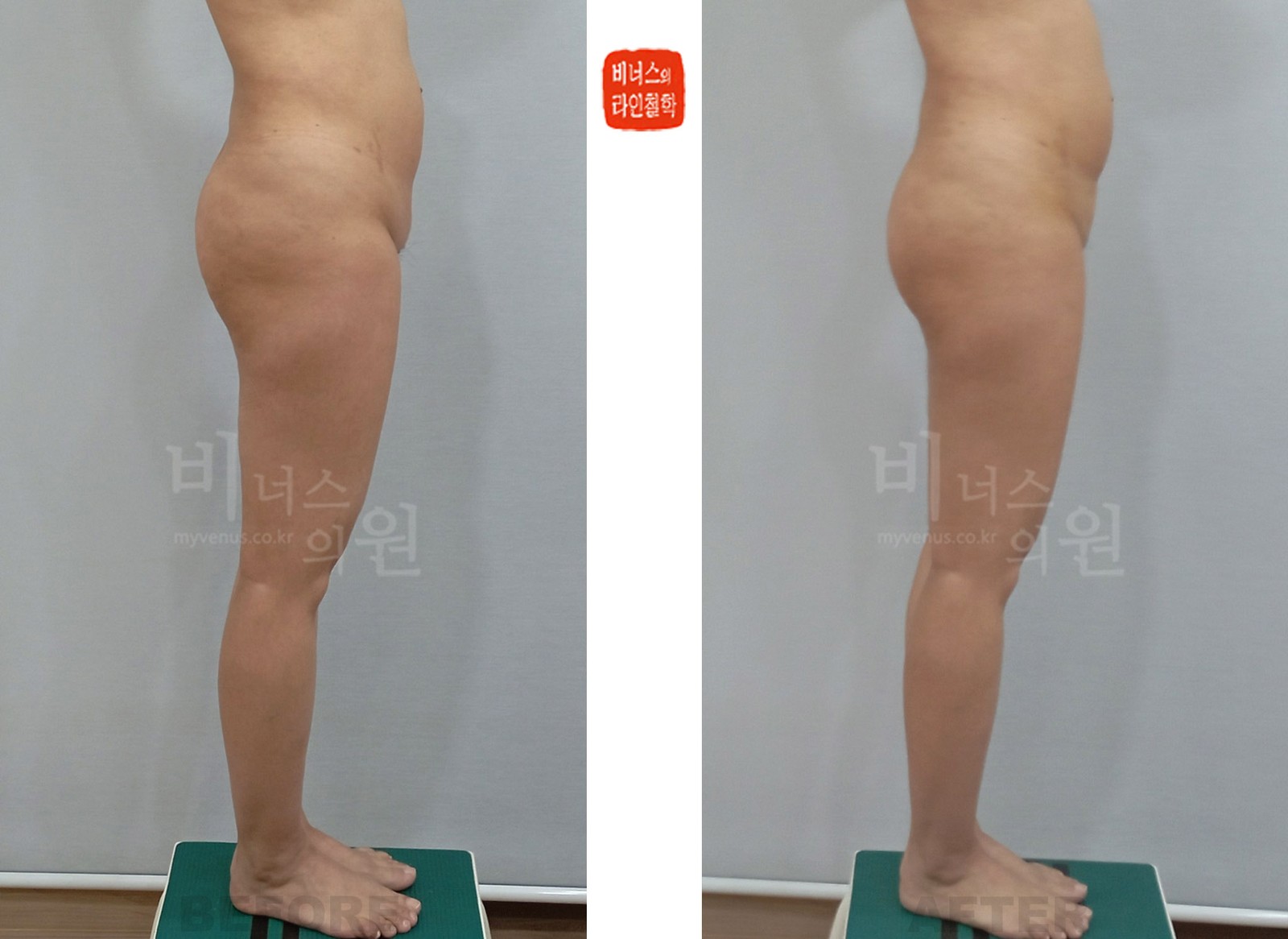
A case in which disharmonious obesity developed in the pubic and pelvic areas after abdominal liposuction. After previous abdominal liposuction, the pubic and pelvic areas became relatively prominent, and this patient had surgery on these areas. The side-view photos are for checking the front connecting line that runs from the lower abdomen through the mons pubis to the upper thighs.
| Information on the Posted Liposuction Before-and-After Photos | |||
|---|---|---|---|
| - Same person | Surgery performed at Venus Clinic; same person | - Date taken | Taken around 2024; comparison at 1 week after surgery |
| - Same conditions | Edited to the same posture and size as closely as possible | - Side effects | https://en.myvenus.co.kr/should_know/38861 |
Case 2
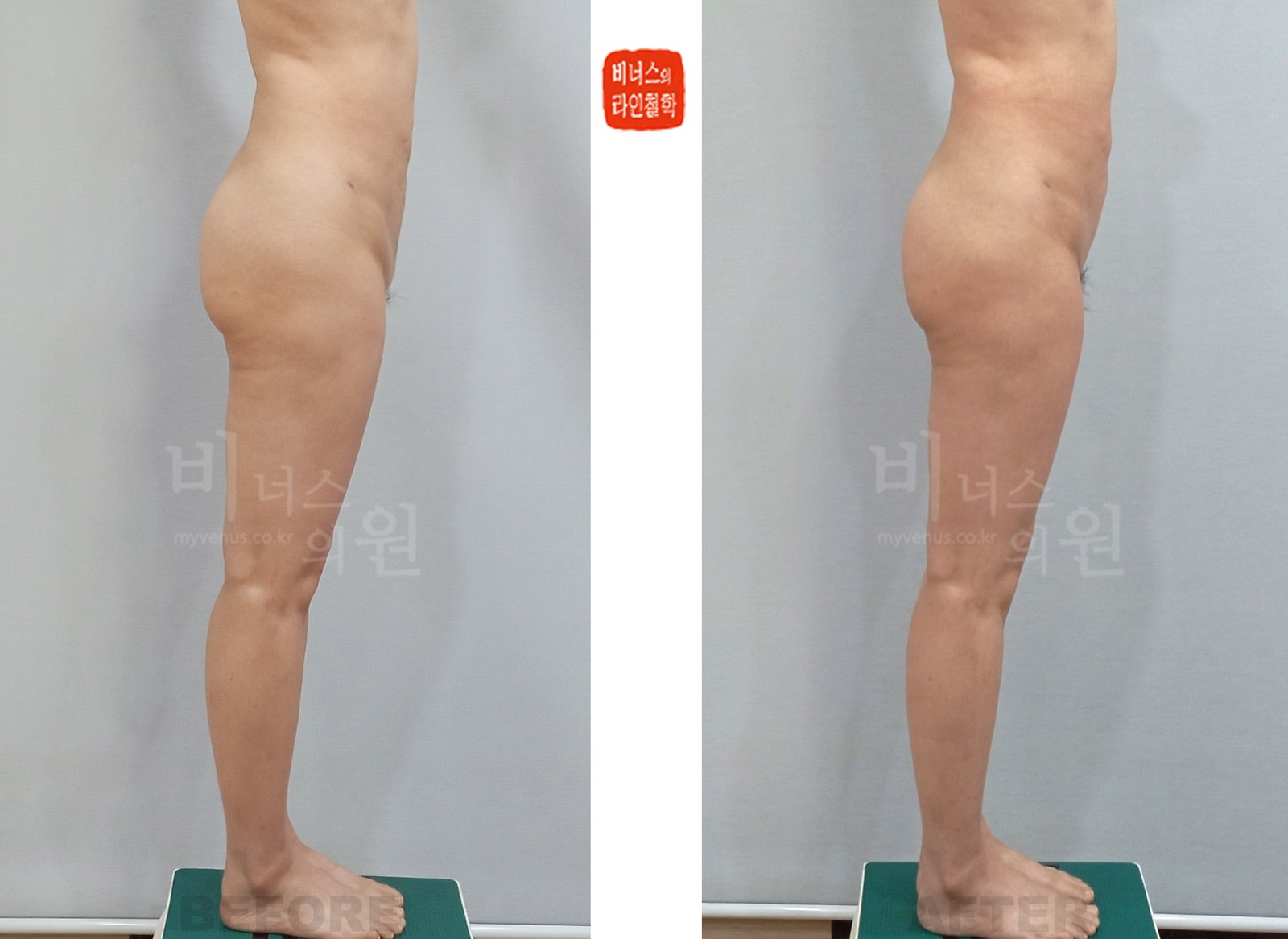
A case in which disharmonious obesity developed in the pubic and pelvic areas after abdominal liposuction. As in Case 1, after previous abdominal liposuction the pubic and pelvic areas became relatively prominent, and this patient had surgery on these areas.
| Information on the Posted Liposuction Before-and-After Photos | |||
|---|---|---|---|
| - Same person | Surgery performed at Venus Clinic; same person | - Date taken | Taken around 2024; comparison at 1 week after surgery |
| - Same conditions | Edited to the same posture and size as closely as possible | - Side effects | https://en.myvenus.co.kr/should_know/38861 |
Case 3
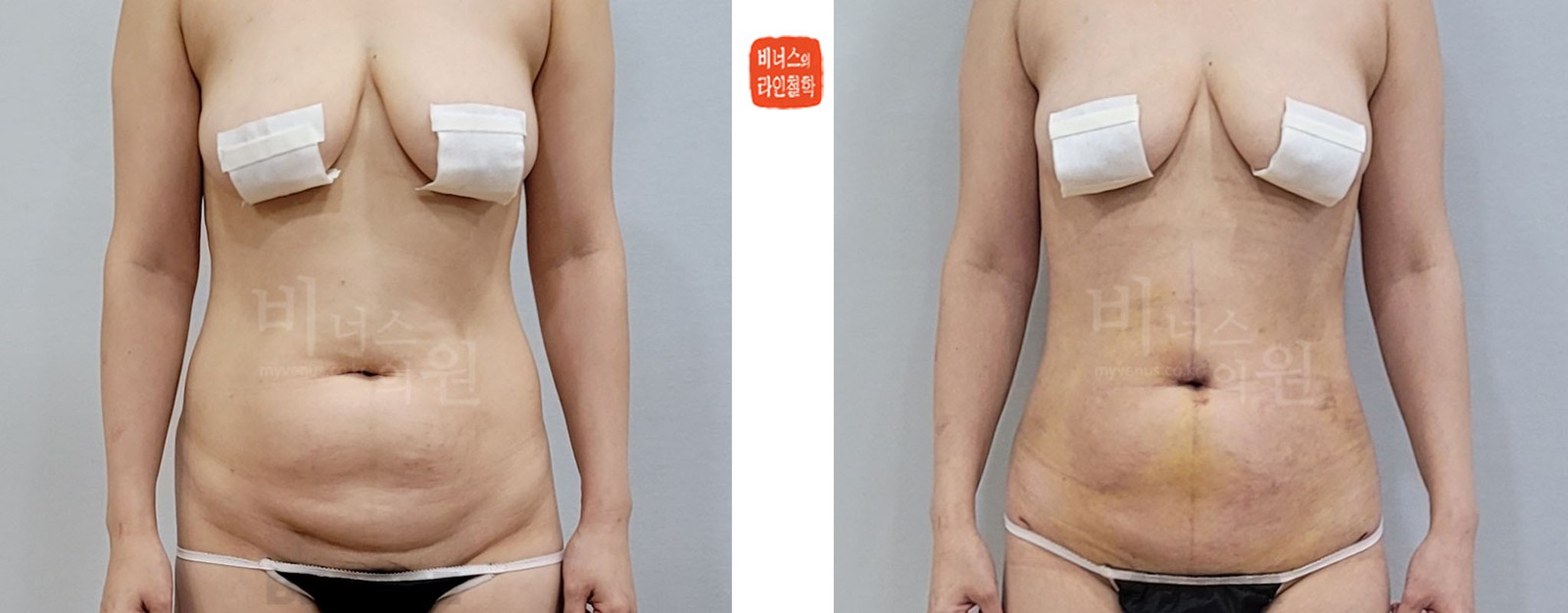
A case in which abdominal revision surgery and surgery of the pubic and pelvic areas were performed together. The abdomen was also a revision, and the pubic and pelvic areas were treated at the same time as the abdominal revision. The bruising visible in the after photo is what appears in early recovery.
| Information on the Posted Liposuction Before-and-After Photos | |||
|---|---|---|---|
| - Same person | Surgery performed at Venus Clinic; same person | - Date taken | Taken around 2026; comparison at 1 week after surgery |
| - Same conditions | Edited to the same posture and size as closely as possible | - Side effects | https://en.myvenus.co.kr/should_know/38861 |
In Closing
It is not uncommon for the pubic and pelvic areas to stand out after abdominal liposuction, and this can be explained by disharmonious obesity, in which fat is added where fat cells remain as weight is gained. The most important thing in Y-zone liposuction is not to reduce this area a great deal, but to connect the line running from the lower abdomen to the inner thighs evenly. At Venus Clinic, we operate on the principle of leaving the fat layer even so that it is in balance with the surrounding areas.
References: Special Liposuction - Mons Pubis, Pubic and Pelvic Areas Complications and Side Effects of Liposuction
Dr. Hakjun Kim, Director, Venus Clinic