Liposuction Surgery and Sedation Anesthesia
Before talking about sedation anesthesia today, there is something worth thinking about. Sedation makes patients comfortable, but it can also lead to accidents if one is not careful...
In any case, liposuction is generally a safe procedure.

Looking at recently published papers on liposuction-related deaths, the American plastic surgeon Grazer and colleagues reported in 2000 a mortality rate of 1 in 5,000 for liposuction performed under systemic anesthesia — general anesthesia, spinal anesthesia, or sedation — while Housman and colleagues reported in 2002 that there were no deaths at all when liposuction was performed under local anesthesia.
In short, liposuction performed with the tumescent technique can be considered one of the safest approaches. Comparing the relative risk of liposuction surgery, hysterectomy has been reported to carry a mortality rate of 1 in 1,000 (Sloan, 1986) and mastectomy 1 in 333 (Sloan, 1986); so even compared with procedures for relatively common conditions treated by surgery, liposuction is a safe procedure.

Then why use sedation or general anesthesia instead of operating under local anesthesia alone? Because, as long as safety allows, the patient's comfort is also an important value.
When liposuction is performed under general anesthesia for the patient's comfort, there are probably two main reasons. The first is doctors who are used to general anesthesia and are confident in its safety, and who are not yet familiar with the tumescent technique. The second is presumably the intention to treat more areas, since there is a limit to how much area can be treated in a day with tumescent local anesthesia.
Using general anesthesia for liposuction deserves serious consideration. Dr. Klein, who developed tumescent liposuction, argues that doctors habitually believe anesthesia is safe, but that in practice it is very difficult to identify and separate the part of surgery-related deaths attributable to anesthesia itself, so the risks caused by anesthesia tend to be overlooked in reports; he maintains that it makes no sense to use general anesthesia for a procedure that can be done under local anesthesia alone. There are in fact reports that deaths related purely to general anesthesia occur in 1 in 1,000 cases.
The second case is using general anesthesia in order to treat a large area. Liposuction requires a relatively long operating time, and venous thrombosis has been identified as the leading cause of death associated with liposuction.
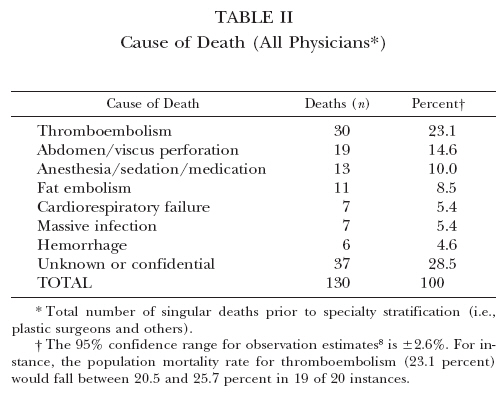
Venous thrombosis develops because, when excessive tissue damage occurs, the body tries to stop bleeding by promoting clotting, which ultimately increases the likelihood of clots forming inside the blood vessels as well.
Once a clot forms in a vein, it can travel with the bloodstream to the heart and block small vessels such as the pulmonary arteries, the vessels of the heart muscle, or the vessels of the brain, which can lead to unexpected death. These conditions are called pulmonary embolism, myocardial embolism, and cerebral embolism.
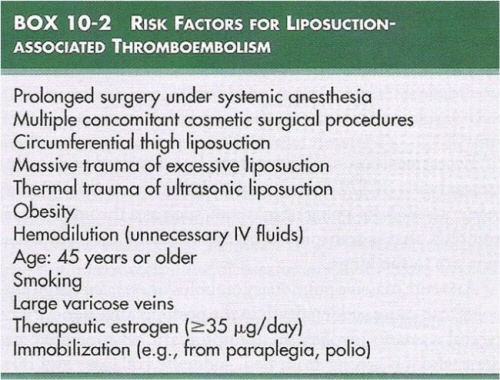
Hypothermia caused by general anesthesia, hemodilution from the fluids given during general anesthesia, and slower blood flow due to paralysis of the calf muscles are known factors that cause venous congestion and thereby trigger venous thrombosis.
Moreover, when general anesthesia allows a larger area to be treated, the operation takes longer and tissue damage increases, so the risk of venous thrombosis becomes even greater. It is no exaggeration to say that the risk of using general anesthesia lies in the very fact that it permits more surgery to be done.
In addition, because general anesthesia uses little or no local anesthetic, pain must be controlled after surgery. The painkillers used for this can inhibit clotting, increasing post-operative bleeding, bruising, and swelling, which can ultimately delay recovery.
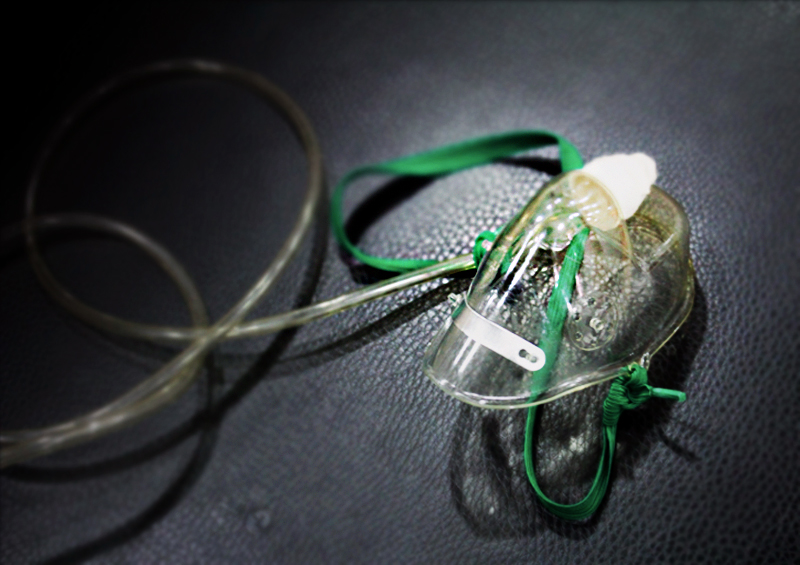
So what about sedation anesthesia? In the United States, more than 200 million sedation procedures are performed each year for diagnostic or surgical purposes, and in Korea, too, sedation is used for many diagnostic procedures such as endoscopy. In fact, when we recommend surgery in our outpatient clinic, nine out of ten patients seem to want sedation.
"Sleep anesthesia," the common Korean term, is not a medical term; the medical term is sedation anesthesia.
Sedation means a lowered level of consciousness, and depending on the level it can be divided into minimal, moderate, and deep sedation, and general anesthesia.
At a moderate level of consciousness, the patient responds to voice or touch; at a deep level, the patient responds to painful stimuli; and at the level of general anesthesia, the patient does not respond even to painful stimuli. Most liposuction surgery is performed under a moderate or deep level of sedation.
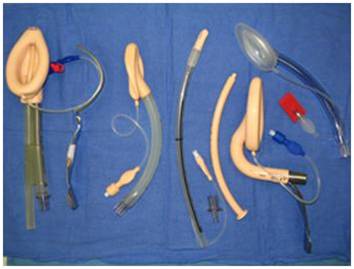
The level of consciousness matters because at moderate or deep levels the airway is usually well maintained and the patient can breathe well on their own. At the level of general anesthesia, however, an anesthesiologist is required, and situations arise in which the patient cannot maintain the airway unaided, so lung ventilation must be supported with endotracheal intubation or a laryngeal mask airway.
In practice, the level of consciousness fluctuates during sedation, so care must be taken not to slip into the level of general anesthesia, and the hospital must be prepared to maintain the airway in case of emergency.
Sedation is safer than general anesthesia not only because consciousness is less deeply depressed and the airway is better maintained, but also, importantly, because the calf muscle pump action and the thermoregulatory reflexes are preserved. As a result, blood flow does not slow down and the risk of hypothermia is low, and so far no case of venous thrombosis caused by sedation has been reported.
Then shouldn't an anesthesiologist be present during sedation? In reality, this is a difficult issue. In practice, consciousness rarely drops to the level of general anesthesia, and patient management is not so difficult that the presence of an anesthesiologist adds much value. If an anesthesiologist had to be present not only for every clinic-level liposuction but also for diagnostic procedures, and that cost were passed on to the procedure fee, it would become impossible to offer patients sedation at all.
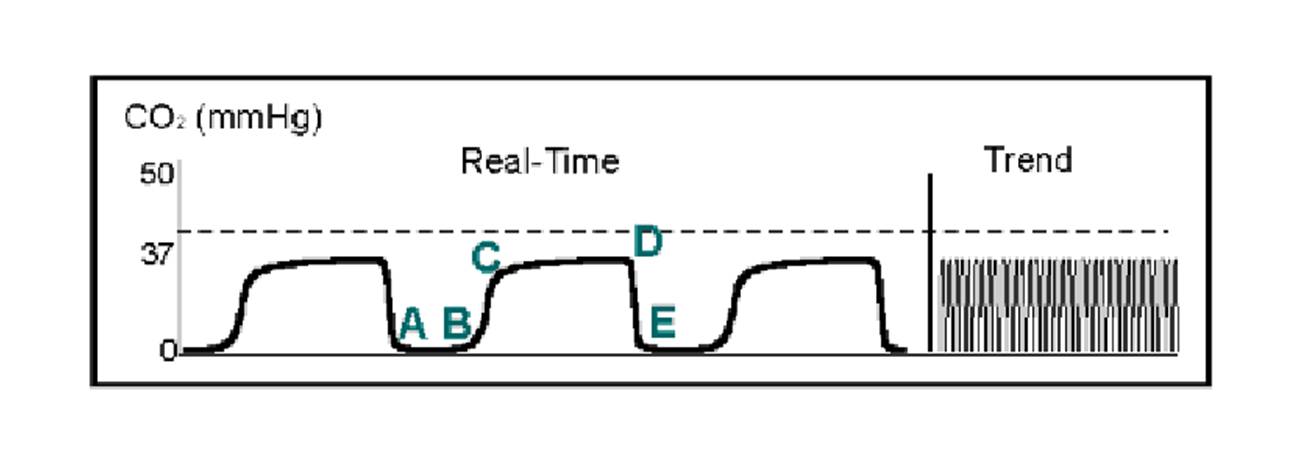
For this reason, in the United States it is recommended that the operating surgeon hold Advanced Cardiac Life Support (ACLS) certification and that the dedicated nurse monitoring the patient hold Basic Cardiac Life Support (BCLS) certification; it is also recommended that hospitals specify and keep on hand the equipment and drugs needed to monitor patients during sedation.
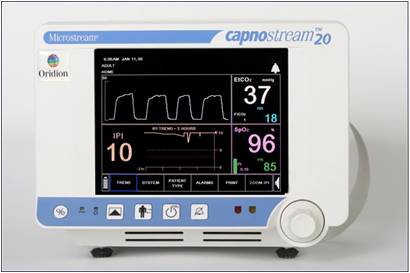
Finally, when sedation is used for liposuction, there is a paper reporting that morbidity increases when the operation lasts more than 2 hours, and that when it exceeds 3 hours morbidity rises to about five times that of operations lasting under 1 hour. Keeping the operating time as short as possible is therefore also important for patient safety.
At Venus Clinic, most surgeries are performed with tumescent liposuction combined with sedation, and in more than 17 years of performing liposuction we have not encountered problems caused by sedation. Of course, the safety of liposuction surgery is important, but so are the patient's comfort and acceptance, so we believe it is right to leave the choice of sedation to our patients.
[Dr. Jung, Director, Venus Clinic]