In liposuction, what matters is not the fat that is removed but the fat that is left behind.
In Western countries and Latin America, liposuction already accounts for the largest share of all cosmetic surgery procedures, and in Korea, too, interest has recently been shifting gradually from facial surgery toward body contouring. The reasons include the development of tumescent liposuction, which greatly improved the safety of the procedure; the development of a variety of liposuction techniques, which improved body-contouring results; and, on top of that, the growing obesity and localized fat accumulation that come almost inevitably to modern people, who are exposed to a lack of exercise and excessive calorie intake.
In practice, however, many people seem to have vague and unrealistic expectations of liposuction. Today I would like to talk about what anyone considering liposuction really needs to know.
Fat tissue is a very important tissue. It protects the body as a cushion against external forces and gives it a soft feel; cosmetically, it creates beautiful curves in the body's contour. It also serves as insulation that prevents loss of body heat, acts as a storehouse for surplus energy, and secretes various hormonal substances, such as female hormones, that help regulate the body's metabolism.
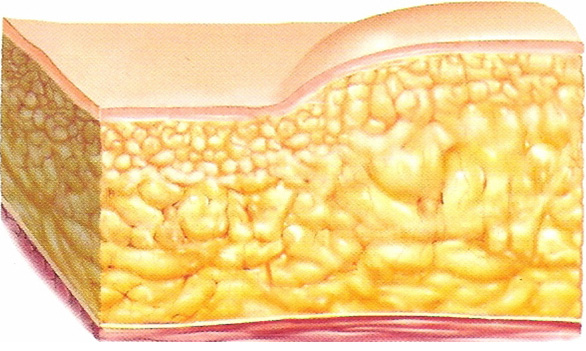
Recently, however, this fat tissue has been accumulating so excessively that it actually harms health, and so modern people seem to regard fat tissue as a nuisance that ought to disappear.
The fat in our bodies consists broadly of visceral fat (about 21%), intramuscular fat (about 12%), and subcutaneous fat (about 67%). Subcutaneous fat is further divided into superficial and deep fat layers, and liposuction is a procedure that removes subcutaneous fat. You should understand that it is a limited procedure that cannot change your own muscles or bone structure, and that the degree of change varies greatly depending on how much fat is removed.
If you have an unusually large amount of fat only in the abdomen, you should check whether you may have visceral obesity. Men in particular tend to have relatively little subcutaneous fat and a lot of visceral fat, so their abdominal bulging is often due to visceral obesity; as a result, abdominal liposuction is in fact relatively less effective in men than in women.
During liposuction consultations at Venus Clinic, patients often ask us to remove their fat completely. But you must remember that fat tissue is, as described above, a precious tissue that the human body truly needs.
The most common reason a revision is needed after liposuction is that too much of the fat layer was removed: the fat layer disappears, the skin adheres directly to the muscle fascia, and eventually wrinkles or an uneven, lumpy surface develop. Of course, the surgeon was doing his or her best to remove the fat tissue and surely intended to achieve an even better result, but the outcome turned out worse because of the uneven fat layer.
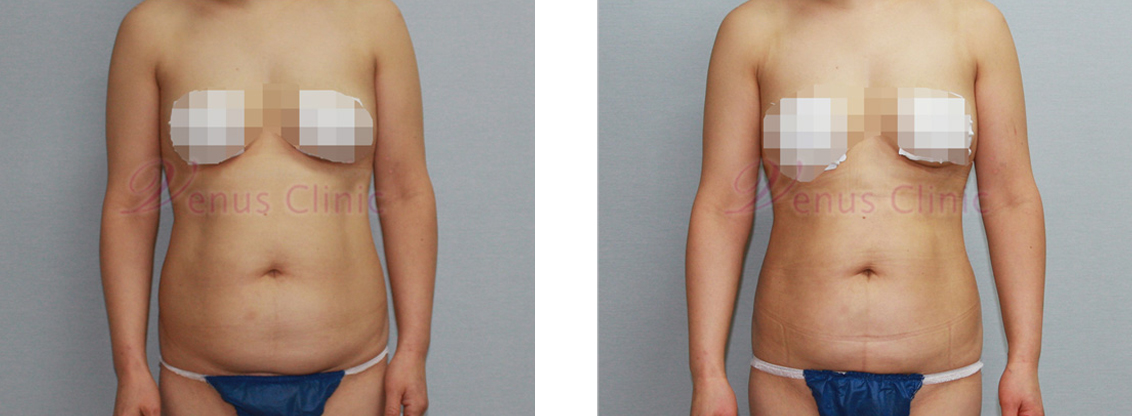
The photos below are before-and-after photos of abdominal liposuction performed at Venus Clinic on a middle-aged woman. The effect of liposuction is visible, yet a certain amount of fat tissue remains, giving a soft and natural appearance. Had we been a little greedier and removed more, the skin could have become uneven.
Complications such as bruising, swelling, and pain differ depending on the surgeon and the technique, and most of them resolve over time; however, excessive fat removal accounts for the largest share of liposuction complications.
Liposuction does not cut out fat tissue with a scalpel. Instead, it removes fat here and there through a thin cannula, so the thinner the remaining fat layer becomes, the more surface irregularities inevitably appear; excessive liposuction therefore inevitably leads to unevenness. In addition, once the cushioning fat layer is gone, the soft feel is lost, and the body may take on a muscular look, like that of a bodybuilder.
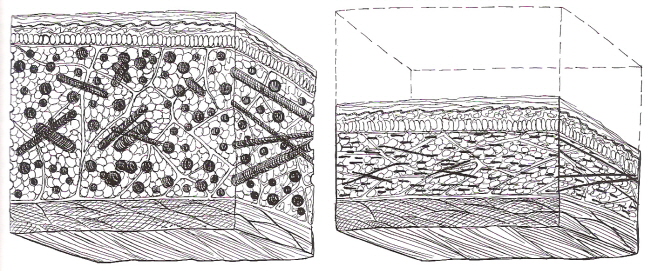
Moreover, the skin may become mottled, as if it had been exposed to cold. As the yellow color of the fat is removed, the dark red of the muscle may show through, and as loose skin contracts after surgery, the concentration of melanin per unit area increases, which can make the skin look darker.
In severe cases, the subdermal blood vessels that supply the skin can be damaged, leading to a serious complication in which the skin may undergo necrosis.
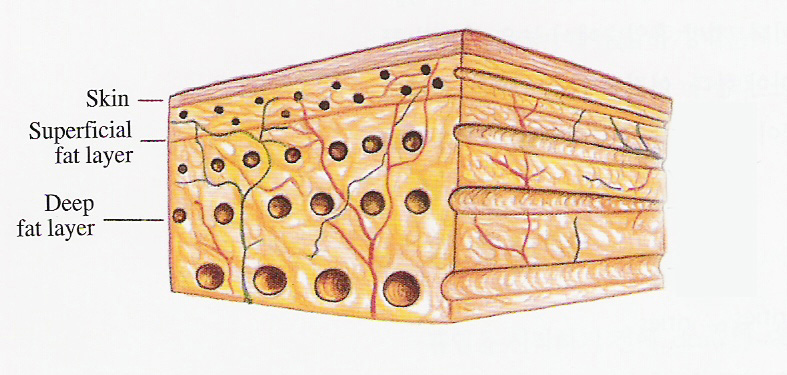
If too little fat is removed, the effect of liposuction will be small; if too much is removed, the incidence of these complications increases. Leaving an appropriate amount of fat is therefore the wisest surgical approach.
Dr. Giorgio Fischer of Italy, who developed modern liposuction,
"A certain amount of subcutaneous fat should always be left. You should always feel unhappy at the end of your operation thinking that you could have taken away more. The important thing is what you leave not what you remove.
(A certain amount of subcutaneous fat should always be left. At the end of the operation, you should always feel some regret, thinking you could have removed more. What matters is not what you remove but what you leave.)"
teaches this to doctors who perform liposuction.
When considering liposuction, removing too much fat must be avoided, and you should not have excessive expectations by mistaking bone or muscle for fat tissue.
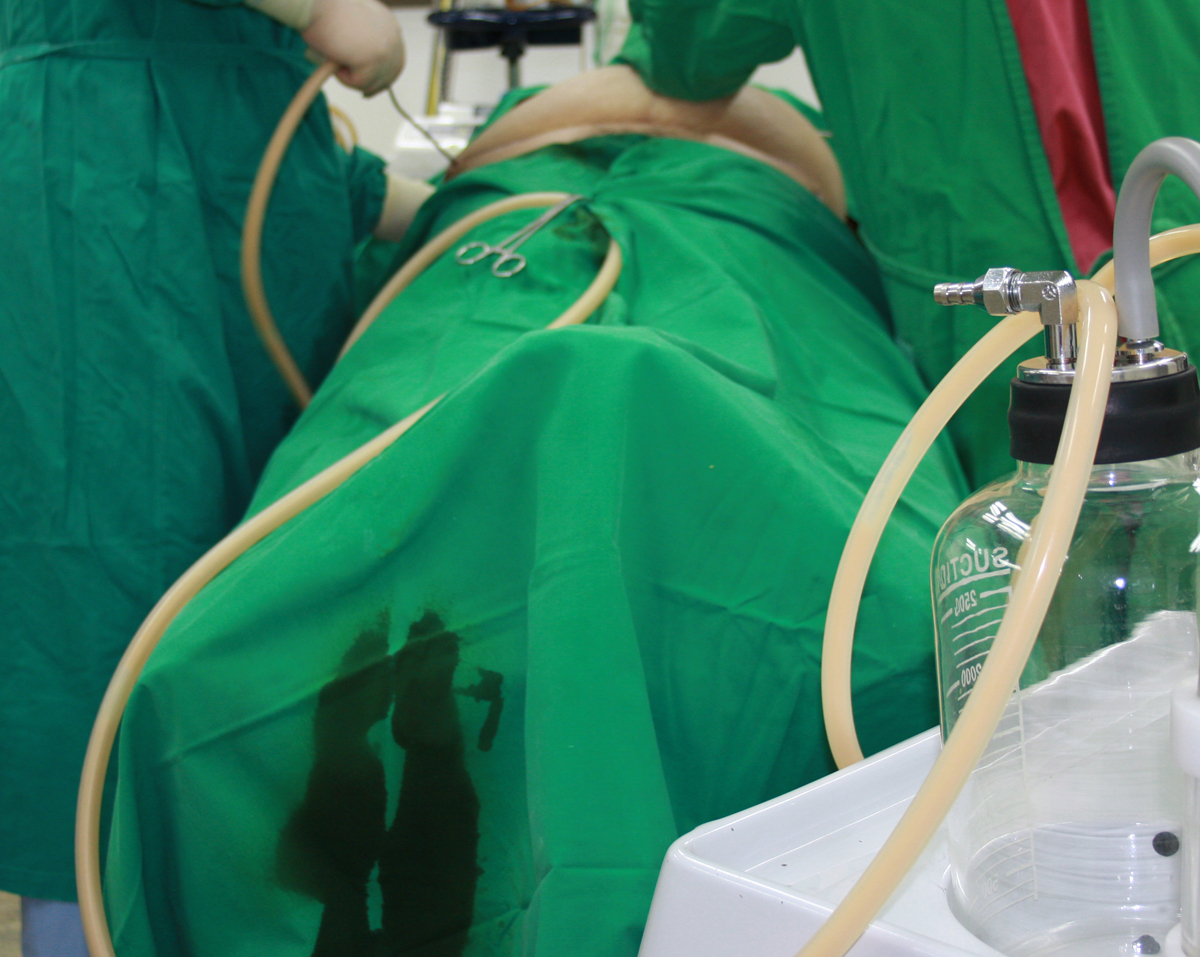
Meanwhile, weight loss through diet or exercise reduces the size of fat cells, which is how body weight goes down; liposuction, by contrast, is surgery that removes the fat cells themselves. Therefore, as long as you do not gain weight after liposuction, fat is less likely to build up again in the treated areas.
Fat tissue contains fat cells (adipocytes), which are surrounded by a supporting matrix made up of collagen fibers, elastin fibers, and glycoproteins, which are extracellular matrix (ECM) proteins, along with substances such as hyaluronic acid. To the naked eye, the fat looks like eggs packed inside fibrous pouches and septa, appearing as fat pearls or fat globules.
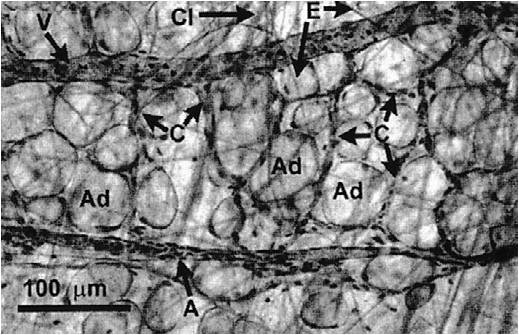
In addition, preadipocytes, which resemble fibroblasts in shape, differentiate into fat cells when energy intake increases, and during malnutrition fat cells can dedifferentiate back into preadipocytes.
Because fat tissue is of mesodermal origin, preadipocytes were once thought to be able to differentiate only into fat, muscle, cartilage, or bone tissue. Recently, however, it has been shown that they can also differentiate into nerve cells, which are ectodermal tissue, and they have come to be recognized as pluripotential stem cells capable of differentiating into many cell types. In other words, fat tissue contains cells (stem cells) that can differentiate into virtually any tissue of the body.
Thus, although new fat cells are generally not formed after adolescence, fat cells may be created from these stem cells when there is excessive weight gain or during pregnancy.
This is why weight control after liposuction is important. If you fail to manage your weight properly after surgery and your degree of obesity increases, your fat cells grow larger; and if the energy surplus becomes so great that the fat cells reach their limit in size, the stem cells within the fat tissue may differentiate into new fat cells, and you may gain weight.
However, because areas treated with liposuction have relatively fewer fat cells than untreated areas, a smaller amount of fat accumulates there. As a result, after abdominal liposuction the breasts may become relatively larger. This may partly be because the smaller waist makes the breasts look bigger, but it is also because, when weight increases, breast tissue, which contains relatively more fat, enlarges more. This phenomenon is called disharmonious obesity.
Another example of disharmonious obesity: if someone who had partial liposuction gains weight, the treated area may instead look sunken, making the body shape look awkward.
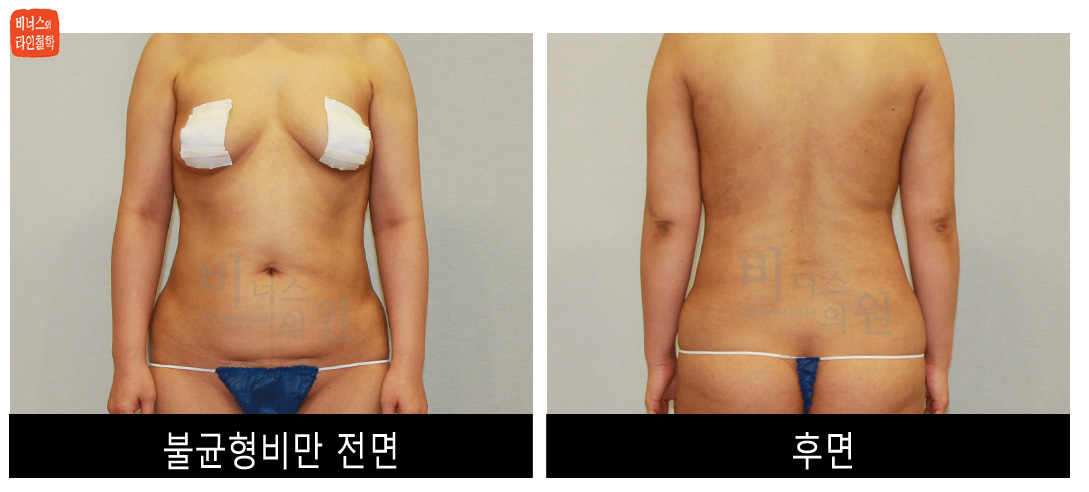
; Disharmonious obesity: after partial liposuction of the flanks only, the flanks instead appear sunken
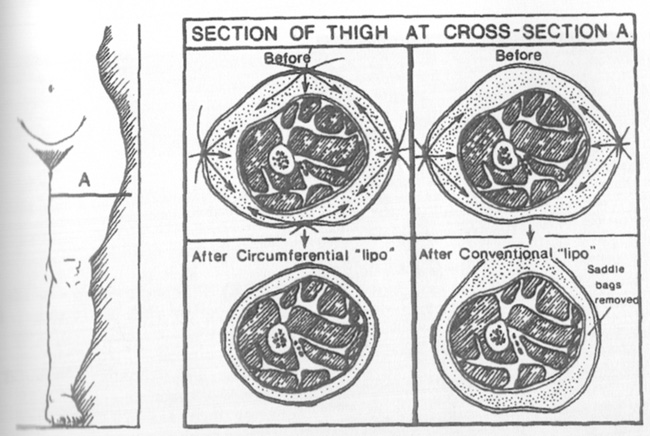
In the illustration below, when liposuction was performed only on the inner and outer thighs, the front and back of the thighs became relatively thicker after surgery. If weight is gained later in this state, the front-to-back diameter of the thighs may increase much more, resulting in disharmonious obesity of the thighs. Conversely, if the thighs are treated but the buttocks are left alone, the thighs become smaller and slimmer, yet the buttocks look relatively larger and may even appear to sag, sometimes making the legs look shorter.
However, when the surgery is performed evenly over the whole area, the body changes evenly as weight increases, so an imbalance in body shape is unlikely to develop.
Therefore, you should understand that in partial liposuction, fat must be removed in such a way that the difference in thickness from the untreated areas does not become too great.
Also, fat cells exist not only in the subcutaneous tissue but also within muscles and in the internal organs, so especially after large-volume liposuction, muscles may become bulkier and visceral obesity may develop, which can worsen health.
Dr. Rod J. Rohrich of the United States
"There are four key elements for long-term successful improvement in body contour, and the patient is responsible for the first three: exercise, a proper diet, and other positive lifestyle changes; and successful body contouring.
(There are four key elements for a beautiful body contour that succeeds in the long term, and the patient is responsible for the first three: exercise, a proper diet, and a change toward a positive lifestyle; and successful body-contouring surgery.
"The key to long-term success in liposuction: a guide for plastic surgeons and patients.Rohrich RJ, Broughton G 2nd, Horton B, Lipschitz A, Kenkel JM, Brown SA.Plast Reconstr Surg. 2004 Dec;114(7):1945-52; discussion 1953.
has said so.
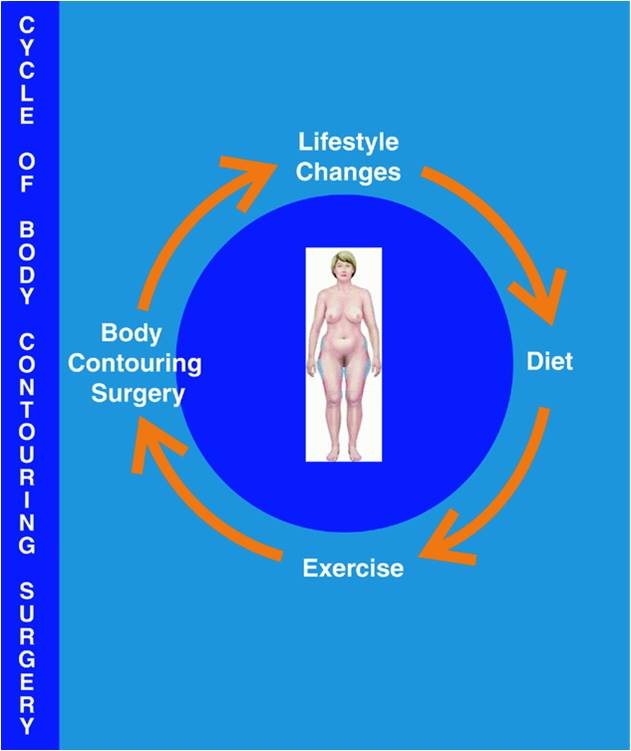
Therefore, a thorough consultation should take place before liposuction, and weight management after surgery can be considered essential.
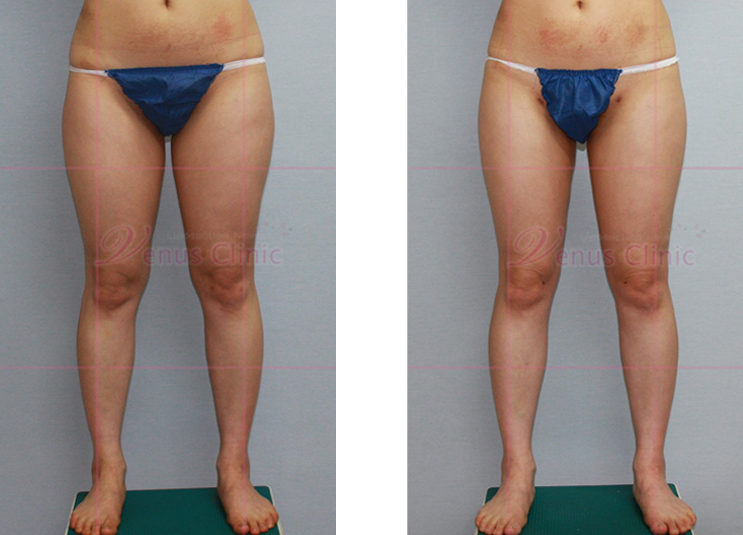
In conclusion, if you are considering liposuction, you should look for, and choose, a successful liposuction procedure that removes an appropriate amount of fat to create a body with natural lines rather than an artificial look. At the same time, you should understand that the beautiful body contour must be maintained through appropriate exercise and diet and a positive lifestyle.
[Dr. Jung, Director, Venus Clinic]