On Reading a News Report of a Death After Liposuction
This is truly unfortunate. As a doctor who performs liposuction, I find it very regrettable that such an accident happened, even though liposuction is a relatively safe procedure compared with other surgeries.
Doctor Who Caused Patient's Death During Liposuction Sentenced to Prison
An anesthesiologist who caused a patient's death while performing liposuction without expertise in plastic surgery has been sentenced to prison. On the 11th, Judge Seok Hyun-su of the Seoul Western District Court, Criminal Single Division 2, sentenced Mr. Lee (37), the doctor in charge of plastic surgery who had been arrested and indicted on charges of causing a patient's death during abdominal liposuction (professional negligence resulting in death), to 6 months in prison and a fine of 2 million won (roughly US$2,000 at the time).
In its ruling, the court stated, "Although liposuction is not a surgery that carries a particularly high level of risk compared with other surgeries, Mr. Lee appears to have neglected his duty of care as a physician, resulting in the patient's death." The court also explained its reason for the prison sentence: "Since no settlement was reached between the deceased patient's family and the defendant, Mr. Lee, we cannot conclude that he made sufficient efforts to seek the family's forgiveness."
It added, "Mr. Lee is originally a board-certified anesthesiologist and pain specialist who has been working in plastic-surgery-related practice since 2006, but he appears to have been unable to perform accurate examinations and procedures because he had never received any specific training in liposuction." Mr. Lee was arrested and indicted on charges that in August of last year, while working as an anesthesiologist at a hospital in Gangnam, Seoul, he performed abdominal liposuction at the request of a patient who asked him to "get rid of my belly fat," and the patient developed peritonitis and died the next day.
Newsis (Korean news agency): View original article
I believe that wanting a beautiful body, not just a beautiful face, is a human instinct and desire.
Just as some diseases can be treated with medicine alone while others require surgery, there are ways to shape a beautiful body through diet, exercise, and medication, but surgical treatment may also be needed where medication cannot solve the problem. Surgical options include gastrectomy and bariatric surgery such as gastric banding, but liposuction is the representative method.
In the United States and Western countries, liposuction is the most frequently performed cosmetic surgery. For people living in modern times, whose lives are shaped by diverse food cultures, affluence, and work environments that inevitably lead to a lack of exercise, liposuction is now approaching like destiny, as a procedure that is hard to avoid.
Every surgery carries unavoidable complications, and unexpected problems can arise depending on the person, their constitution, and the doctor performing the procedure. Yet news of liposuction accidents in particular always becomes an issue, and there is a limitation in that public perception of liposuction is negative: "Why choose surgery when there are good methods like diet and exercise?"
I recently saw that a Korean TV program exposing the side effects of liposuction had been captured and re-uploaded to the Korean YouTube site.
In fact, in today's obese society, where countless interests are at stake in diet supplements, diet drugs, diet machines, and more, this may have to be accepted as a matter of course.
In fact, liposuction is a surgical technique with a history of less than ten years, and it is still developing very rapidly; it is a field that has advanced so quickly that surgery is now possible under local anesthesia alone. On the other hand, indiscriminate advertising and use of unproven machines and procedures are making it harder for consumers to choose and adding to their confusion.
Currently, one of the safest and most academically recognized approaches to liposuction is known to be using tumescent local anesthesia and operating delicately by the surgeon's hand with small-diameter cannulas called microcannulas. However, machines and methods that make the procedure more convenient or help skin contraction are often presented as if they determine the outcome of the entire liposuction. What is being overlooked is that these are only supplementary tools that support liposuction as a whole; they cannot be what determines the result.
I also think there will be many machines and techniques that still need to earn academic recognition through extensive clinical experience in the future.
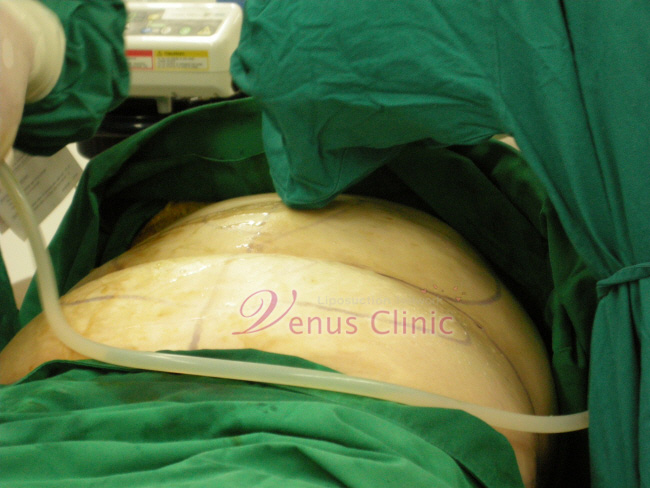
Dr. Fournier of France, called the father of liposuction, who led the way to modern liposuction, operates without any machines, using only the negative pressure of a syringe.
Now, liposuction, a technique recently developed and advancing very rapidly, is becoming a procedure that people living in modern times can hardly refuse, almost like destiny.
Therefore, I hope that liposuction techniques will be standardized as soon as possible, and that formal training programs will be created for doctors in cosmetic surgery who have not received formal training, so that unfortunate incidents like this do not happen again.
[ Dr. Jung, Director, Venus Clinic]