Liposuction for Health
What do you think about obesity? You probably think of it as a state in which you have gained weight because you eat more than other people, and one that can surely be fixed with steady exercise and dieting. In fact, most people in Korea do not think of obesity as anything more than simply "having put on weight." As society advances and modern lifestyles change, people have come to value an efficient life over a healthy one, and as a result the adult obesity rate in Korea has recently been rising rapidly.
According to the "2005 Korea National Health and Nutrition Examination Survey" report, the obese share of Korean adults aged 20 and over was 26.3% in 1998 and 30.6% in 2001, reaching 31.7% in 2005, and the trend is now rising even more clearly.
There is a condition called metabolic syndrome (metabolic syndrome X). It is a syndrome that shows test findings such as high blood pressure, hyperinsulinemia, insulin resistance, elevated free fatty acids, high LDL cholesterol, low HDL cholesterol, and microalbuminuria, and eventually leads to various cardiovascular diseases such as non-insulin-dependent diabetes, hypertension, and arteriosclerosis. The risk factor for this metabolic syndrome is obesity, and there are reports that obesity is the cause of 68–72% of diabetes cases. Solving obesity is therefore a way to prevent arteriosclerotic disease, the leading cause of death in humans.
As the obese population grows and people with obesity become a common sight, attitudes toward obesity have become more lenient, and people no longer see it as something serious.
In Korea too, however, I believe obesity should be recognized medically as a "disease," not merely something that comes from lifestyle habits. In fact, the United States, one of the countries with high obesity rates, recognizes obesity as a serious social problem: many people are treated surgically for obesity, and in severe cases insurance coverage applies. Troubled by its high obesity rate, the country continues to look for ways to improve the situation.
If we keep seeing obesity as merely a lifestyle error and do not treat it, then beyond the health risks it brings, people may also struggle in their social lives because of lost self-confidence and stress about their body shape. I think it is important to actively recognize and understand these facts, and, alongside personal management, for society as a whole to view obesity not with pity or blame but as a "disease" that needs treatment, and to accept treatments such as liposuction surgery in a positive light.
Obesity should now be regarded as a disease that threatens human life.
Ways to address severe obesity include diet therapy and exercise therapy. There are also surgical approaches such as bariatric surgery, which removes part of the stomach or bands the stomach. Besides these surgical approaches, large-volume liposuction may also be worth considering.
Large-Volume Liposuction
Thanks to steady technical progress and established scientific theory, today's liposuction can be performed safely, and local anesthesia alone has become sufficient for surgery. However, it is true that conventional liposuction had difficulty removing large amounts of fat, so it was performed only to contour the bodies of people of normal weight or slightly overweight. Large-volume liposuction cannot be done with local anesthesia alone, so it required general anesthesia, and because a single surgeon had to operate alone, the operating time grew long and the risk of surgical complications increased. For these reasons, large-volume liposuction became a procedure that was inevitably avoided.
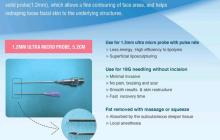
However, using Venus Clinic's two-doctor (Tudak) liposuction and sedation anesthesia, we have shortened the operating time for patients with severe obesity to about the average time for patients of normal weight, so that they can go home after 1–2 hours of recovery. Because two surgeons operate, there is physical leeway not only for thorough fat removal but also for superficial liposuction that helps loose skin contract after surgery, so in many cases patients have been satisfied with the result without needing skin excision.
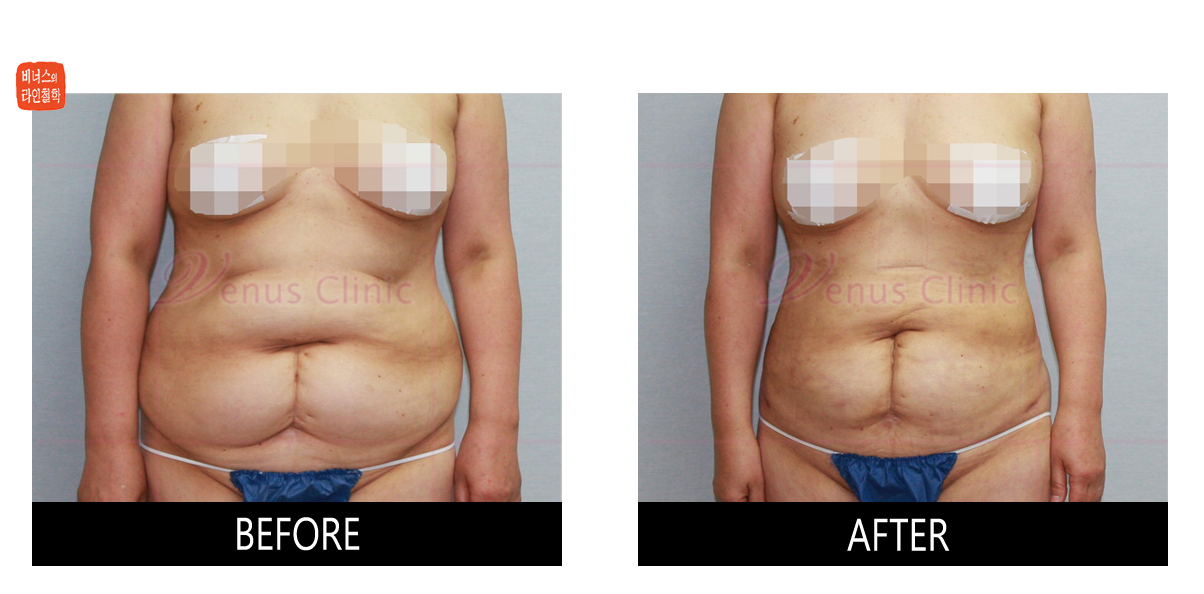
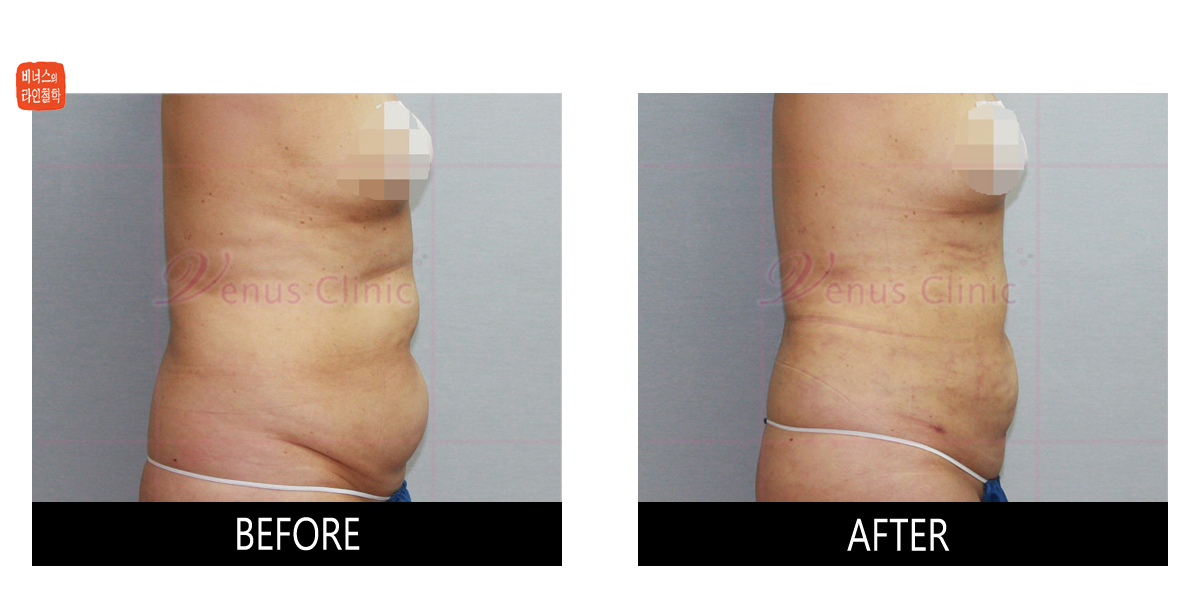
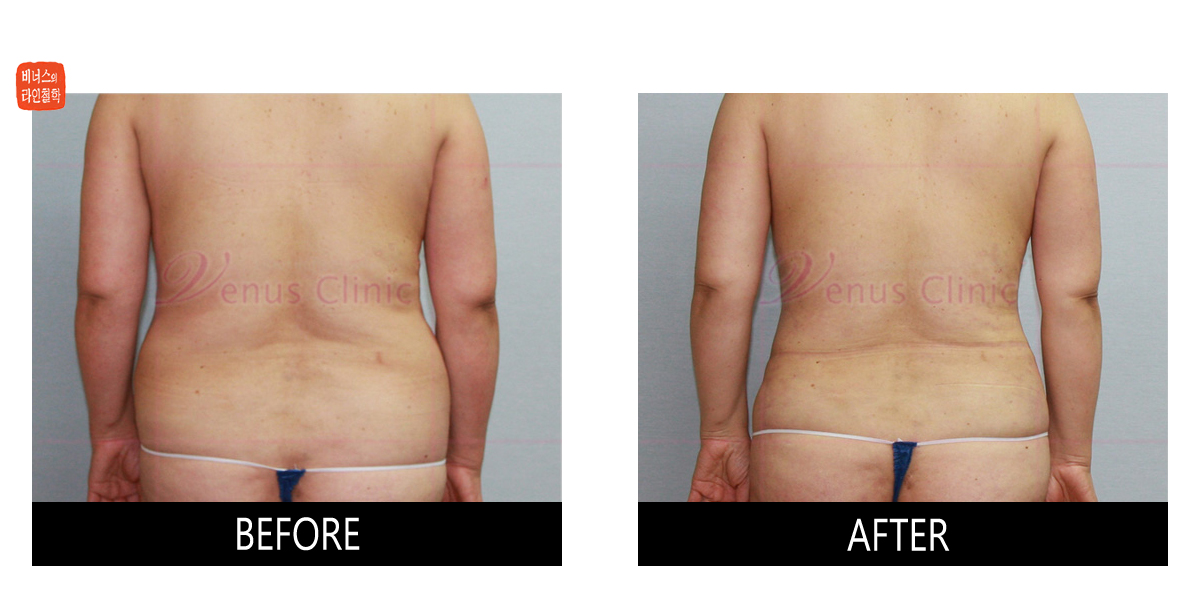
Liposuction should be performed by a board-certified surgeon with extensive liposuction experience. In two-doctor liposuction, two board-certified surgeons operate together, a system that gives patients confidence and allows surgeons to perform more meticulous surgery while removing a large volume of fat.
In fact, a paper based on interviews with patients after large-volume liposuction reported that they tended to diet and exercise more diligently to maintain their improved body image after surgery and to take a more active part in social life. Another paper has also reported that satisfaction after large-volume liposuction in patients with severe obesity is considerably higher than after ordinary liposuction.
In addition, people with severe obesity find it hard to diet and exercise. Once body fat is reduced surgically, the body's basic energy use decreases, appetite tends to decrease, and mobility improves, so they can be more physically active and find dieting easier. Rather than struggling up a high mountain, barely reaching the top, and then giving up from exhaustion, which is the yo-yo effect, it is like taking an elevator to the summit and then walking down without strain: after liposuction, it can be easier to start a diet.
In conclusion, large-volume liposuction removes excess fat tissue to a degree that is harmful to the body, and by reducing the insulin insensitivity caused by fat tissue, it may offer a chance to help lower the risk of diabetes and cardiovascular disease.
In other words, large-volume liposuction at Venus Clinic is performed not only as a cosmetic procedure but also with the aim of maintaining and improving health. Of course, after large-volume liposuction, the most important thing is the effort to maintain and reduce weight through healthy eating habits and lifestyle.
It is important now to recognize obesity not as a temporary symptom but as a disease that must be improved through consistent effort, and to act on that. Why not look around you and offer people with severe obesity who are struggling with dieting the chance to take care of their health and their figure at the same time?